As one of the students in my U.S. women’s history class put it, “Women are just like men; except that they are different.” For all that men and women have had in common these many millenia, women’s experience has often been different.
The past is never dead. It's not even past
As one of the students in my U.S. women’s history class put it, “Women are just like men; except that they are different.” For all that men and women have had in common these many millenia, women’s experience has often been different.

More on the historical interactions between the US and Africa
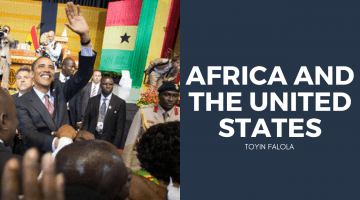
Often wrongly considered to be on the periphery of the history of the United States, Africa has played an important role politically, economically, and culturally from before American independence until the present day.

On August 6, 1945, the United States of America became the first (and so far only) nation to use atomic weapons against an enemy. Since then, the world has wrestled with questions about the bombings of Hiroshima and Nagasaki: Did the A-bombs save American and Japanese lives by hastening Japan's surrender?
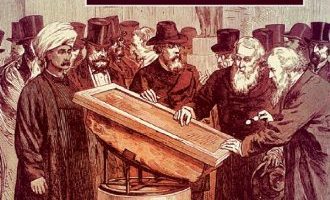
In this work, Zachary Lockman seeks to introduce a general audience to the history of the study of Islam and the Middle East in the United States and Europe, with particular attention to US studies from the mid-twentieth century. The importance of this book lies in Lockman’s attempt to reach the general public with information about the history, politics, and culture of the Middle East.
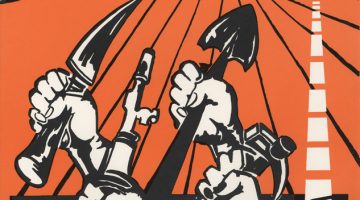
These posters were circulated in Nicaragua in 1980 when campaigns to celebrate the end of dictatorship, to increase literacy and to improve public health were central policy concerns.

There was no reprieve from the cold or the hail that accompanied it. With each passing year, the weather claimed more homes, livestock, and children, even as the labor never ceased. In the late sixteenth century, the forests of Lorraine, once an independent duchy near the Netherlands, Luxembourg, and Franche-Comté, now part of northern France, […]
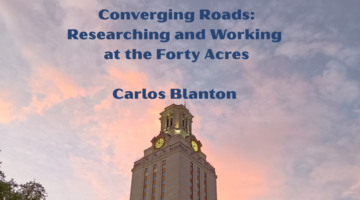
I learned a few months ago that the old Star Seeds Café near the UT campus had been demolished, a casualty of the I-35 expansion project. I was sad about this not because I miss the food—the old Star Seeds was always an acquired taste. My sense of loss, rather, has to do with the fact that […]
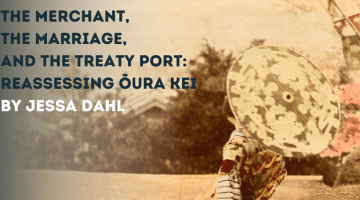
Ōura Kei’s name is not widely known outside Japan, but she was one of Nagasaki’s most famous residents. One of the Japan’s first exporters of green tea, Ōura has become known as one of her home city’s three “heroic women” (女傑, joketsu), who are celebrated for their exploits during Nagasaki’s treaty port period, which spanned […]

“It was the whiteness of the whale that above all things appalled me. But how can I hope toexplain myself here; and yet, in some dim, random way, explain myself I must,else all these chapters might be naught.”[1] These few words show how difficult it was for Herman Melville, in his novel Moby Dick, to […]