• New
  • Features
  • Reviews
  • Texas
  • Teaching
  • Digital
  • Watch & Listen
  • Authors
  • About

The past is never dead. It's not even past

Not Even Past

The Latest from Longhorn PhDs

In November we wrote to everyone who received a PhD in History at UT Austin since 2000 to find out what they were doing.  We are curious about our former students’ careers and adventures and we want to celebrate their achievements in whatever line of work they pursued.

And we still do! We hope everyone who didn’t write back immediately will send us news of their work, travels, lives.
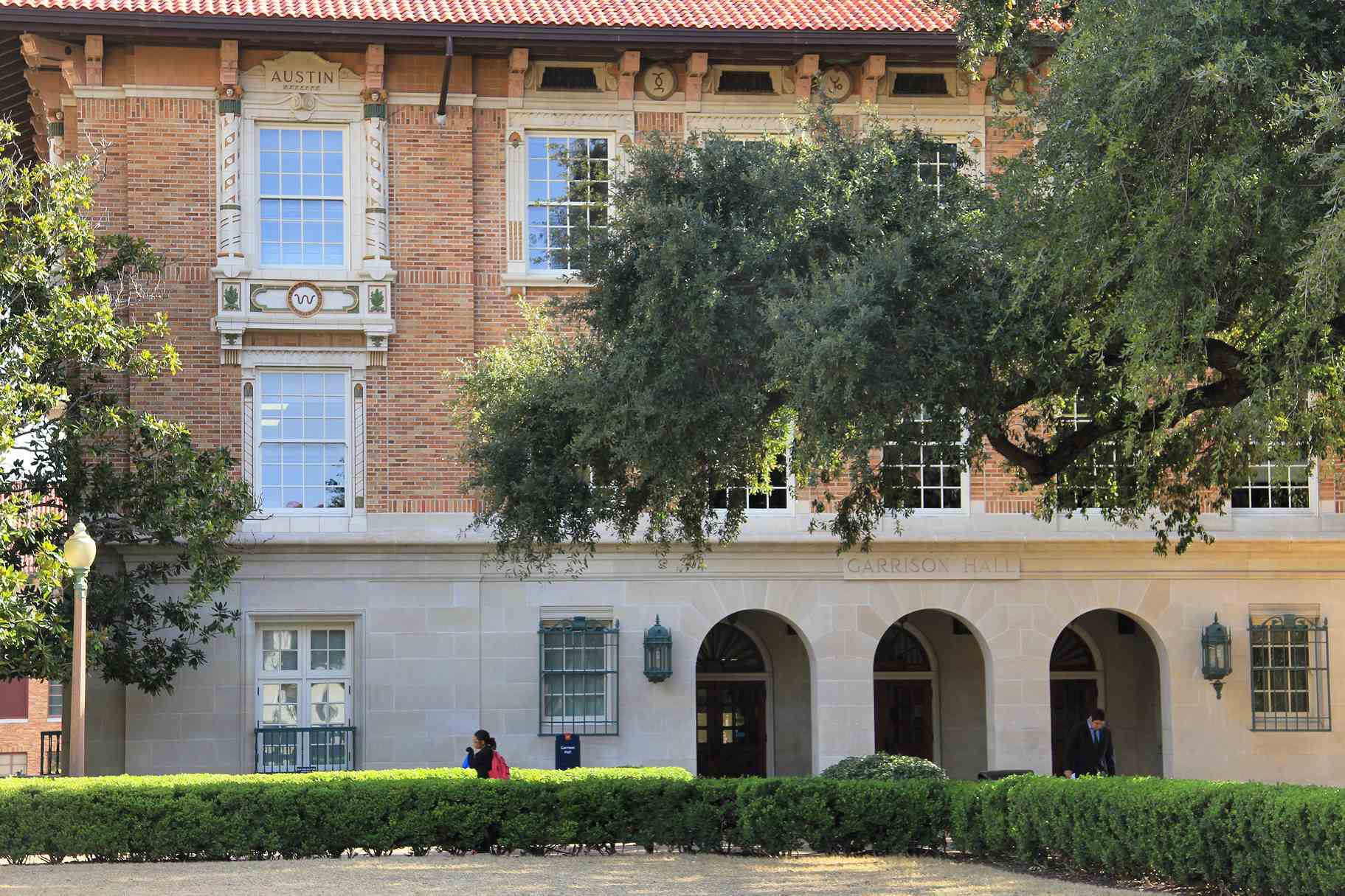
Photograph of the front facade of Garrison Hall on the campus of the University of Texas at Austin

Greg Cushman (2003 PhD) is an Associate Professor at the University of Kansas and he has just published a new book called Guano and the Opening of the Pacific World: A Global Ecological History (2013).  One of his UT professors, Bruce Hunt, said that the book got an absolute rave review in “Science” and added that “It’s the best book on bird crap you’ll ever read.”

Stuart Rockoff has become Executive Director of the Mississippi Humanities Council.

Matt Childs is an Associate Professor and Director of the History Center at the University of South Carolina where he started teaching in the fall of 2009. Matt is the author of The 1812 Aponte Rebellion in Cuba and the Struggle against Atlantic Slavery (2006), which was a finalist for the 2007 Frederick Douglass Book Prize, and he has co-edited with Toyin Falola The Yoruba Diaspora in the Atlantic World (2005) and The Changing Worlds of Atlantic Africa: Essays in Honor or Robin Law (2009). Most recently he co-edited with his former UT profs, James Sidbury and Jorge Cañizares-Esguerra, The Urban Black Atlantic during the Era of the Slave Trade (2013), which was featured in the New Books series this spring at the UT Institute for Historical Studies.

David Imhoof wrote to say that he is an Associate Professor and Chair of the History Department at Susquehanna University and he has just published his first book: Becoming a Nazi Town: Culture and Politics in Göttingen between the World Wars.

Roger Martinez, is Assistant Professor of history and Director of the Sephardic and Crypto-Jewish Studies Program at the University of Colorado at Colorado Springs.

Ken Aslakson let us know that he teaches at Union College in Schenectady, NY where he just got tenure. His book Making Race in the Courtroom: The Legal Construction of Three Races in Early New Orleans is just about to be published by NYU. He wrote to us from France where he was completing a month-long invited professorship at the University of Toulouse.

Lauren Apter Bairnsfather (PhD 2008) works in the Office of the Dean of the UT Austin College of Liberal Arts where she supervises Grants Services, conducts institutional research for the Dean, and serves as contact for Humanities Research Awards. She has written articles for the AHA newsletter Perspectives and for Not Even Past about careers for history PhDs outside the professorate.

Anju Reejhsinghani has been Assistant Professor of Latin American and Caribbean history at the University of Wisconsin-Stevens Point since Fall 2010.  She recently saw fellow UT Latin American history PhDs Bonar Hernández (East Stroudsburg University) and Ben Narvaez (University of Minnesota-Morris) at the North Central Council of Latin Americanists conference she helped to organize on her campus in September 2013. In January 2013, she developed and led one of the University of Wisconsin System’s first for-credit, short-term study abroad programs to Cuba; she is repeating the program in January 2014.

Kristen Oertel was a professor at Millsaps College in Jackson, Mississippi, for ten years, where she won the Outstanding Young Faculty award in 2003.  She left Millsaps in 2010 to accept the Mary F. Barnard Chair in 19th-Century American History at the University of Tulsa.  She published her first book, Bleeding Borders: Race, Gender, and Violence in Pre-Civil War Kansas with LSU Press in 2009. Her second book, Frontier Feminist: Clarina Howard Nichols and the Politics of Motherhood (Kansas, 2011) won the Armitage-Jameson Prize for the best book in women’s and gender history from the Council of Western Women’s Historians.  She says that “It’s sometimes tough to wear my Texas Longhorns t-shirt while living in Oklahoma, but I never waste an opportunity to wax poetic about my time at UT.”

Matt Heaton (PhD 2008) has been an Assistant Professor in the History Department at Virginia Tech. He has published Black Skin, White Coats: Nigerian Psychiatrists, Decolonization, and the Globalization of Psychiatry. (2013) and edited with Toyin Falola, A History of Nigeria in 2008.

Miguel A. Levario is an Associate Professor at Texas Tech University. He published Militarizing the Border: When Mexicans Became the Enemy (2012).  He has also recorded an episode for 15 Minute History on Mexican-American immigration.

Anna Taylor writes: “I am happy to share my news, since I had such an excellent experience in the PhD program. My advisors were Martha Newman and Alison Frazier, and they did a wonderful job of preparing me for the academic job market, as well as supervising the dissertation.” She recently published Epic Lives and Monasticism in the Middle Ages, 800-1100 (2013), and also received tenure in the Department of History at the University of Massachusetts, Amherst, where she teaches a variety of courses on western civilization, medieval history, religion, monsters, and animals.

Faik Gur teaches at Ozyegin University in Istanbul and has just published an article in Historical Research, the journal of the Institute for Historical Research in London: “Sculpting the nation in early republican Turkey” (vol. 86, no. 232 [May 2013]).

David M. Lauderback has taught history at Austin Community College since 1996. Dr. Lauderback has served as a Fellow for the ACC Center for Public Policy and Political Studies for many years and partnered on numerous events, such as Texas Independence Day Celebration, Constitution Debate Night, the Mock Hearing on Health Care, the Earth Fair, and numerous teach-ins and lectures for ACC students and the community. He earned the Rising Star and Guiding Star awards from ACCs Student Life for his work with the Center for Student Political Studies and the Silver Star Children’s Literacy project. And, just this spring, Dr. Lauderback received recognition as recipient of a John and Suanne Rouche Excellence Award from the League for Innovation in Community College instruction.

Frances (Franni) Ramos wrote to tell us that In June 2013, she was promoted to Associate Professor with tenure at the University of South Florida.  In 2012, she published Identity, Ritual, and Power in Colonial Puebla, which was awarded the Rocky Mountain Council for Latin American Studies Michael C. Meyer Award for Best Book in Mexican History published over the past five years (2008-2012).  In the spring of 2013, she spent five months researching at the John Carter Brown Library with the support of an NEH, and she just received an Outstanding Research Achievement Award from USF. In August 2012, she also had a baby girl named Ellie!  And she says, “I miss UT.”

Andrew Falk sent us a long newsy note that says in part: “it’s great to hear from Austin again, and I’m glad to give you an update.  I keep up with the UT History Department regularly, including the impressive Not Even Past site.”

[We just had to include that!] “The short answer to your question is this: things are great and UT prepared me very well, indeed!” [We couldn’t resist that either.]

“After earning my PhD from UT Austin in 2003, I got a postdoc at the University of Georgia.  Then I received an academic appointment at Christopher Newport University.  It’s a mid-sized liberal arts college focused on undergraduate education.  Located in Newport News, Virginia, CNU is situated in the beautiful Hampton Roads area between Colonial Williamsburg and Norfolk….At UT I worked most closely with Michael Stoff and Mark Lawrence and, therefore, teach classes in the same areas: modern US politics, culture, and foreign relations.  Like Mike Stoff, I’ve led my students on several study abroad trips, including to China and throughout Europe.  My first book, Upstaging the Cold War: American Dissent and Cultural Diplomacy, 1940-1960 was published as part of the “Culture, Politics, and the Cold War” series of the University of Massachusetts Press in 2010…. In Virginia I’ve managed to find Stubbs sauce, Shiner beer, and Bluebell ice cream, but the homesickness endures….Hook ’em.”

Julie Hughes writes: “I’ve been at Vassar College as an Assistant Professor of History since Spring 2010. My book Animal Kingdoms: Hunting, the Environment, and Power in the Indian Princely States first came out in 2012 in South Asia, where it was published by Permanent Black. In 2013, Harvard University Press published their edition of Animal Kingdoms. I just had an article on the idea of wilderness in the Indian princely states accepted for publication in the journal Modern Asian Studies, and will have a chapter on wild boar hunting in a forthcoming volume, Shifting Ground:People, Animals, and Mobility in India’s Environmental History,edited by K. Sivaramakrishnan and M. Rangarajan, from Oxford University Press. In November 2013, I was an invited speaker in the Yale Agrarian Studies Program’s Colloquium Series and, in March 2014, I will be giving a talk at the Nehru Memorial Museum and Library, New Delhi, as part of their public lecture series ‘Science, Society and Nature.’ I hope all is well down there in Austin – I must say I miss it, especially when the weather starts getting cold up here!”

Paul Rubinson wrote to say “Not sure how much detail you want about my career, but I got my PhD in 2008 (an ominous year to start the job search) and managed to luck out with a TT job.” He is an Assistant Professor of History at Bridgewater State University (Bridgewater, MA). He’s published 4 articles on international science:

“The Global Effects of Nuclear Winter: Science and Antinuclear Protest in the United States and the Soviet Union during the 1980s,” forthcoming in Cold War History (published online February 15, 2013.); “Internationalism in a National Security State: U.S. Scientists and the Cold War,” in Artemy Kalinovsky and Craig Daigle, eds., Routledge Handbook of the Cold War. Forthcoming from Routledge in Summer 2014; “‘For Our Soviet Colleagues’: Scientific Internationalism, Human Rights, and the Cold War,” in Petra Goedde, William Hitchcock, and Akira Iriye, eds., The Human Rights Revolution: An International History (New York: Oxford University Press, 2012), 245–64; and “‘Crucified on a Cross of Atoms’: Scientists, Politics, and the Test Ban,” in Diplomatic History, Vol. 35, No. 2 (April 2011), 313–49.

Saheed Aderinto, (PhD 2010) is an Assistant Professor at Western Carolina University. His book, When Sex Threatened the State: Illicit Sexuality, Nationalism, and Politics in Colonial Nigeria, will come out in Fall 2014. He has edited another book and published over a dozen articles, and is working on a book about guns and arms control in Nigeria.

Stefanie Wichhart  is an Associate Professor at Niagara University, near Niagara Falls NY, where she teaches both Middle Eastern and European history. She has recently published two articles, one on the Iraqi Kurds in World War II in the Journal of Imperial and Commonwealth History and the other on democracy debates in Iraq during World War II in the Journal of Contemporary History.

Eric Meeks (PhD 2001) writes to say that he is currently the department Chair and Associate Professor at Northern Arizona University. His book Border Citizens:  The Making of Indians, Mexicans and Anglos in Arizona was published in 2007.  It won several book awards and one of his articles, entitled “The Tohono O’odham, Wage Labor, and Resistant Adaptation, 1900-1930,” earned the 2004 Bolton-Kinnaird Award as the best article in borderlands history that year from the Western History Association, and the Oscar O. Winther Award for the best article appearing in the Western Historical Quarterly in 2003. He added: “I must say, UT Austin gave me a superb education, which I am very thankful for!”

Photo: Garrison Hall, UT Austin (Wikimedia Commons/User Larry D. Moore)


The views and opinions expressed in this article or video are those of the individual author(s) or presenter(s) and do not necessarily reflect the policy or views of the editors at Not Even Past, the UT Department of History, the University of Texas at Austin, or the UT System Board of Regents. Not Even Past is an online public history magazine rather than a peer-reviewed academic journal. While we make efforts to ensure that factual information in articles was obtained from reliable sources, Not Even Past is not responsible for any errors or omissions.

“The Die is Cast”: Early Texans Face the Comanches

This article is part of an occasional series of articles highlighting the fascinating collection of historical documents in the Briscoe Center for American History at UT Austin.

by Nathan Jennings

The Telegraph and Texas Register was the most influential newspaper in the region between colonial settlement and the Civil War. Based in Houston and intended for popular consumption, the nationalistic editorials in this publication offer a window into how the newly formed Lone Star Republic viewed the challenges of rapid territorial expansion into contested territories along the lower Great Plains.

One editorial in the Telegraph, published on November 3, 1838, provides a particularly revealing view of the new republic’s reaction to increased conflict with the Penateka Comanche people. This specific time in Texas’s history represented a transitional stage between the Texas Revolution of 1836 and the Anglo-Indian Wars that exploded across the plains between 1839 and 1841. Though the Anglo-American colonies of Mexican Tejas had frequently grappled with smaller tribes east of the Colorado River, they had yet to decisively engage the massed cavalries of the Plains Indians. The Telegraph article by Francis Moore was written in response to a recent Comanche victory over a group of settlers, and focused on the confrontation emerging in the San Antonio region.

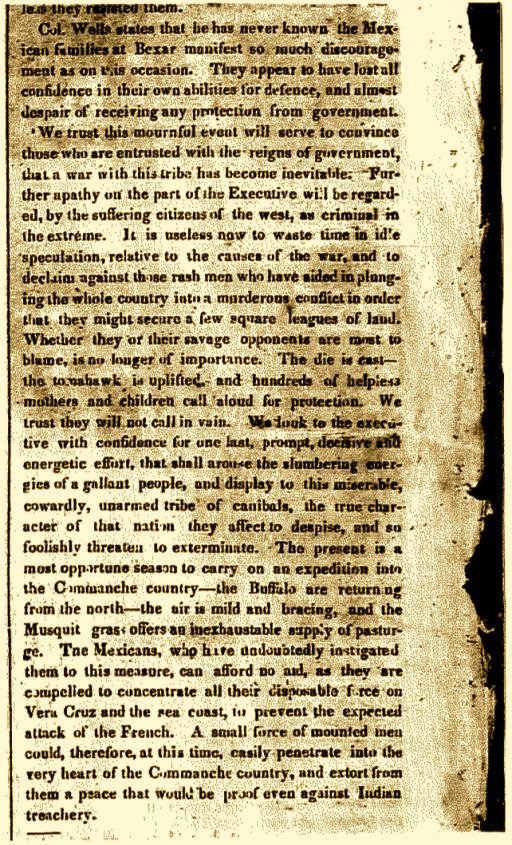
Page from the Telegraph and Texas Register newspaper from Nov. 3, 1828

Moore’s editorial sheds light on three ways Anglo-Texans perceived the Comanche and the threat of their power.  First, the article emphatically stated that “war with this tribe has become inevitable” and called for mobilization by the Texas government. This enthusiasm for large-scale warfare represents a transition from the Texans’ historical reliance on localized militia to a society-wide engagement with national armies. Second, the editor admits the culpability of “rash men” who have “aided in plunging the whole country into a murderous conflict” in order to seize western property, but then fatalistically disregards this causality, shifting blame onto the Native population: “The die is cast — the tomahawk is uplifted, and the hundreds of helpless mothers and children call aloud for protection.”

The third point reveals a tactical shift in ideas about defeating the Native American warriors. Moore suggested that the republic launch the offense with an “expedition” of “mounted men” to “penetrate into the very heart of the Comanche country.” This shows that by 1838, Anglo-Texans had fully embraced the cavalry culture of the region. They also apparently understood that their own defensive strategies were insufficient against arguably the most lethal raiders in North America, who were defending their territory against European settlers who were seizing and occupying it.

Page from the Telegraph and Texas Register newspaper from Nov. 3, 1828

The editorial’s prescriptions –to mobilize the army and population for a large-scale, cavalry war — would soon become tragic reality. Over the next three years the Texan and Comanche peoples clashed in an unprecedented scope of ethnic warfare to decide the fate of West Texas. While both peoples launched massive and destructive invasions into each other’s heartlands, the Anglo-American sustained use of expeditionary methodology suggested by the Telegraph proved decisive. By 1845 Texas broke the power of the southern Comanche for a generation and the Lone Star Republic solidified its control of the territories between the Red River and the Rio Grande.

The full text: 

We trust this mournful event will serve to convince those who are entrusted with the reins of government, that a war with this tribe has become inevitable. Further apathy on the part of the Executive will be regarded, by the suffering citizens of the west, as criminal in the extreme. It is useless now to waste time in idle speculation, relative to the causes of the war, and to declaim against those rash men who have aided in plunging the whole country into a murderous conflict in order that they might secure a few square leagues of land. Whether they or their savage opponents are most to blame, is no longer of importance. The die is cast-the tomahawk is uplifted, and the hundreds of helpless mothers and children call aloud for protection. We trust they will not call in vain. We look to the executive with confidence for one last, prompt, decisive and energetic effort, that shall arouse the slumbering energies of a gallant people, and display to the is miserable, cowardly, unarmed tribe of cannibals, the true character of that nation the affect to despise, and so foolishly threaten to exterminate. The present is a most opportune season to carry on an expedition into the Comanche country-the Buffalo are returning from the north-the air is mild and bracing, and the mesquite grass offers an inexhaustible supply of pasturage. The Mexicans, who have undoubtedly instigated them to this measure, can afford no and, as they are compelled to concentrate all their disposable force on Vera Cruz and the sea coast, to prevent the expected attack of the French. A small figure of mounted men could, therefore, at this time, easily penetrate into the very heart of the Comanche country, and extort from them a peace that would be proof against Indian treachery.

More amazing finds at the Briscoe Center:

Standard Oil writes a “history” of the old south

And Stephen F. Austin visits a New Orleans bookstore


The views and opinions expressed in this article or video are those of the individual author(s) or presenter(s) and do not necessarily reflect the policy or views of the editors at Not Even Past, the UT Department of History, the University of Texas at Austin, or the UT System Board of Regents. Not Even Past is an online public history magazine rather than a peer-reviewed academic journal. While we make efforts to ensure that factual information in articles was obtained from reliable sources, Not Even Past is not responsible for any errors or omissions.
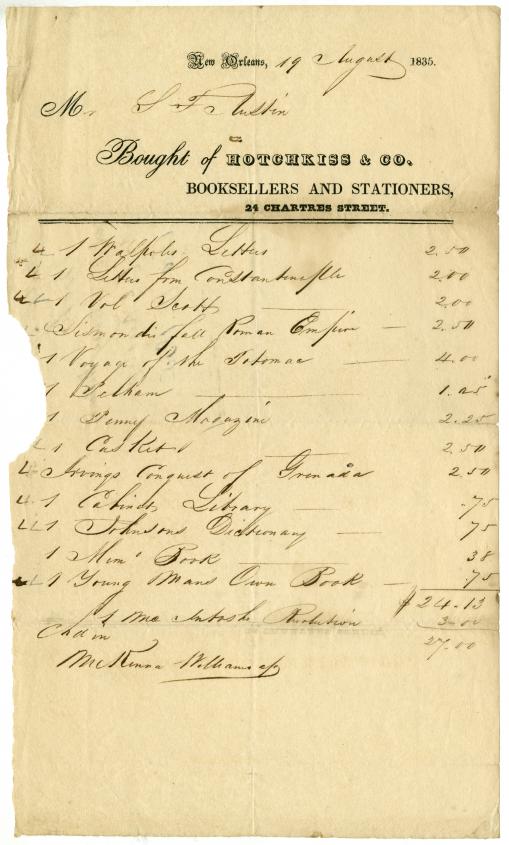
Stephen F. Austin’s bookstore receipt

This is the first in an occasional series of articles highlighting the fascinating collection of historical documents in the Briscoe Center for American History at UT Austin.

by Brenda Gunn

In July 1835, after two years in Mexico, part of that time confined to a jail cell, Stephen F. Austin received a passport issued by the Mexican government. Austin had gone to Mexico on a diplomatic mission, when Texas was still under Mexican rule, but set off to return home to Texas, where the political climate had shifted and tolerance for Mexican rule had deteriorated. On his way back, he spent time in New Orleans, purchasing several books that might provide clues to his state of mind.

Austin’s passport and the receipt for his book purchases are part of a collection held at The Briscoe Center for American History at UT Austin. The passport confirms that Austin boarded the Wanderer and set sail from Veracruz bound for the United States. The exact date of Austin’s landing in New Orleans is unclear, but the New Orleans Bee mentions Austin’s stay on Aug. 12, 1835.

image

Stephen F. Austin’s 1835 receipt for Hotchkiss & Co. Booksellers and Stationers in New Orleans (Image courtesy of the Briscoe Center for American History)

While in New Orleans, Austin visited Hotchkiss & Co. Booksellers and Stationers on Chartres Street, where he spent $27 on books. It is clear that Austin was interested in conflicts. Listed on the receipt were two recent publications: A History of the Fall of the Roman Empire by J-C-L Sismondi and History of the Revolution in England 1688 by Sir James Mackintosh (both published in 1834). Austin also purchased Washington Irving’s military history, Spanish Conquest of Granada.

These choices suggest a shift from Austin’s long-held moderate outlook regarding Texas’ relationship with Mexico toward resignation that conflict was inevitable.

Other purchases listed on the receipt, however, reflect very different preoccupations.

image

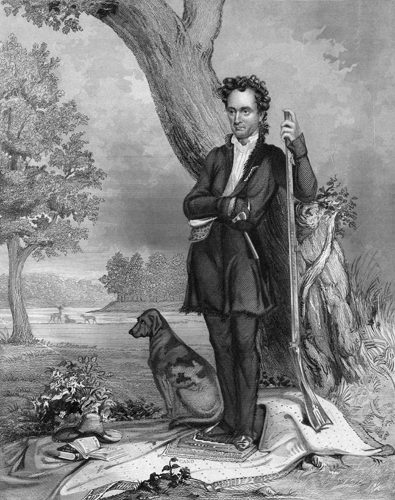
19th century depiction of Stephen F. Austin (Image courtesy of the Briscoe Center for American History)

An issue of the monthly literary magazine, Atkinson’s Casket: or Gems of Literature, Wit, and Sentiment and a copy of Penny Magazine, which focused on British culture, exhibit the cultural interests of the future revolutionary. Since Austin wrote often and at length, it also seems fitting that the receipt includes a copy of Samuel Johnson’s Dictionary of the English Language.

Austin also bought the Young Man’s Own Book: A Manual of Politeness, Intellectual Improvement, and Moral Deportment and Sacred Classics, or Cabinet Library of Divinity, featuring sermons on a variety of topics. Most of the books Austin bought that day are works of nonfiction and convey a serious frame of mind in August 1835.

He did leave room for a novel: Pelham: Or the Adventures of a Gentleman, a tale of a young man with political aspirations — a topic that may not have been far from Austin’s heart.

***

Check out more DISCOVER pieces: 

Ann Twinam explains how a 19th century Peruvian “bought” his whiteness

And Danielle Sanchez discusses her family’s confusing, and often painful, history of immigration, race and prejudice.

Austin’s Municipal Abattoir

By Betsy Frederick-Rothwell

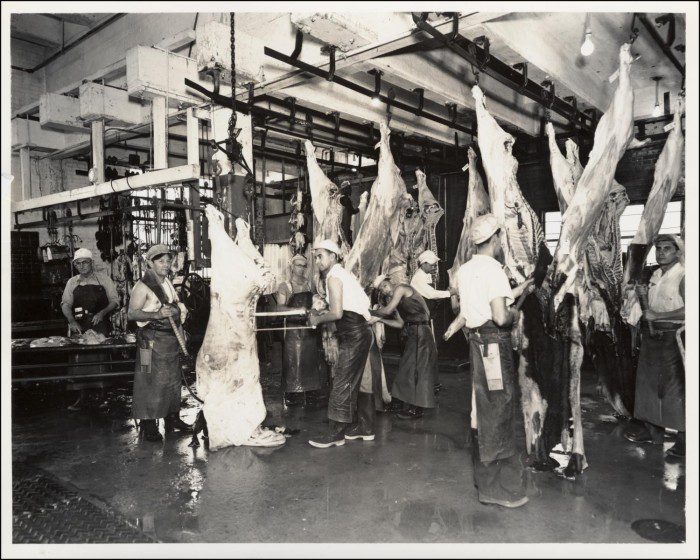
In late October 1939 a photographer from the Bureau of Identification spent the day among both warm and chilled beef carcasses, shrouded sides of pork, and racks of washed and dried offal, documenting the daily activities of the Austin Municipal Abattoir.  The building’s foreign name (abattoir is French for slaughterhouse) and the photographer’s dramatic black and white images obscure the rather prosaic purpose of the documentation effort.  The photographs illustrated not a volume of contemporary art, but rather an annual report written by the superintendent of the city-owned slaughterhouse for the City of Austin council members, informing the city managers of monthly revenues, recent building improvements, and new markets for slaughter by-products.   A formal report such as this, with detailed operational descriptions and illustrations, was probably necessary because the city council members likely would not have visited the abattoir—then located at Pleasant Valley and East Fifth Street—in the regular course of business in the same way they may have toured the earlier-built public library or even the soon-to-be-completed Tom Miller Dam.  Although the abattoir was a signal of Austin’s “modernity,” and its operation was critical to a hygienic life in Austin, most residents likely preferred that it be out of sight.

While a municipally funded and operated slaughterhouse may seem strange to Austin residents today, the city abattoir was a common feature of many urban centers in the early twentieth century.  The French term for the facilities implies their origins in the large cities of Europe, but the widespread construction of city-owned slaughterhouses in American cities was a response to the exclusion of domestic slaughterhouse inspection in the Pure Food and Drug Act of 1906. The statue only required federal inspection of meat intended for interstate or foreign trade; for meat produced in slaughterhouses intended for sale within the city or the state, inspection was not required.  The city abattoir, where inspection of meat for local markets could be assured, was proposed as a remedy.

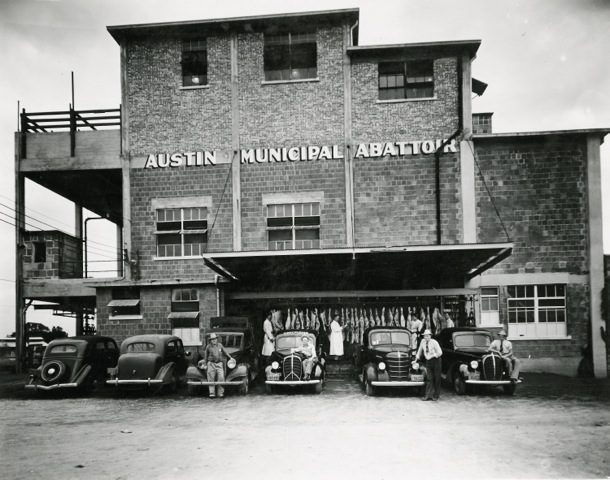
Black and white image of Austin's Municipal Abattoir as it appeared in 1939

Austin’s Municipal Abattoir as it appeared in 1939 (Photo Credit: PICA 00609, Austin History Center, Austin Public Library)

A bond issue passed in 1929 funded the Austin Municipal Abattoir’s 1931 construction as a concrete-frame building with brick and hollow-tile infill. The building’s legislated purpose, easily sanitized construction materials, and highly controlled inspection, slaughter, and rendering processes conjure a narrative common to almost all cities in the United States that wished to be “modern” and hygienic.  The plant’s highly standardized workflow as described in the 1939 report gives a sense of why many radical writers at the time presented the modern slaughterhouse (or more pointedly the slaughter “factory”) as another step in the march toward the technological control of nature. Area ranchers bringing their animals to the Austin Municipal Abattoir for slaughter surrendered their yield not to an individual butcher but rather to an Abattoir intake clerk, who issued the rancher a “slaughtering ticket” that would eventually be exchanged for the finished product, a processed carcass with the adequate number of inspection stamps to make it acceptable for delivery to markets in Austin and surrounding small towns.  The work of the Austin Abattoir was executed in carefully defined steps to increase operational efficiency.  According to the abattoir’s annual report, in 1938 alone, the seventeen employees of the Austin Abattoir responsible for inspection, killing, butchering, washing, and chilling processed 22,975 cattle, 6,825 hogs, and 1,239 sheep and goats, with similar numbers adding up for 1939.

Black and white photograph of the Austin Abattoir's slaughter room from the Bureau of Identification

Bureau of Identification image of the Austin Abattoir’s slaughter room, October 1939 (Photo Credit: University of North Texas Libraries, The Portal to Texas History, http://texashistory.unt.edu; crediting Austin History Center, Austin Public Library, Austin, Texas)

The building’s relatively late construction date and location within the city evoke a story particular to Austin at the beginning of the twentieth century.  The City of Austin considered sponsoring a municipal abattoir as early as 1913, and Paris, Texas, a town somewhat smaller than Austin, was the first city in the United States to build a city-owned slaughterhouse in 1909.  However, heavy municipal debt resulting from the construction of the Austin Dam limited funds for other citywide improvements until the late 1920s, when an official city plan for beautification and improvement was passed by the city council.  That plan, passed in 1928, also served the purpose of instituting racial segregation on a citywide scale.  African Americans, who prior to 1928 lived in neighborhoods throughout Austin, were refused city services in all locations except those neighborhoods east of current-day Interstate Highway 35. Not surprisingly, the city located the Austin Municipal Abattoir at the city boundary on the far east side of this segregated neighborhood.   Although proximity to the primary railroad lines was certainly a factor in locating the facility at the city’s eastern limit, the plant’s location in a segregated neighborhood and its distance from downtown embodies contemporary city leaders’ desire to keep this necessary public utility “invisible” to the city’s most prominent residents.  However, the plant would not have been easy for its immediate neighbors to ignore; anecdotal accounts from other cities with similar abattoirs tell of terrible smells emanating from such buildings.

The Austin Abattoir’s closing in 1969 represented yet another shift in city dwellers’ relationship to the meat they consumed on an ever increasing scale.  Changes in meat distribution networks and widespread availability of in-home refrigeration made city support of a local processing and preservation plant seem less critical.

Research for this article is based in part on:

Eldred Perry, “City of Austin Municipal Abattoir – Annual Report for the year 1939,” Austin History Center, Austin, TX.


The views and opinions expressed in this article or video are those of the individual author(s) or presenter(s) and do not necessarily reflect the policy or views of the editors at Not Even Past, the UT Department of History, the University of Texas at Austin, or the UT System Board of Regents. Not Even Past is an online public history magazine rather than a peer-reviewed academic journal. While we make efforts to ensure that factual information in articles was obtained from reliable sources, Not Even Past is not responsible for any errors or omissions.
Lady Bird Johnson, In Her Own Words

by Michael L. Gillette

Between 1977 and 1991, Michael L. Gillette, executive director of Humanities Texas and former director of the LBJ Library Oral History Program, sat down with Lady Bird Johnson to discuss her childhood, family life and experiences as First Lady. For the first time anywhere, Not Even Past is publishing audio segments from these incredible conversations.

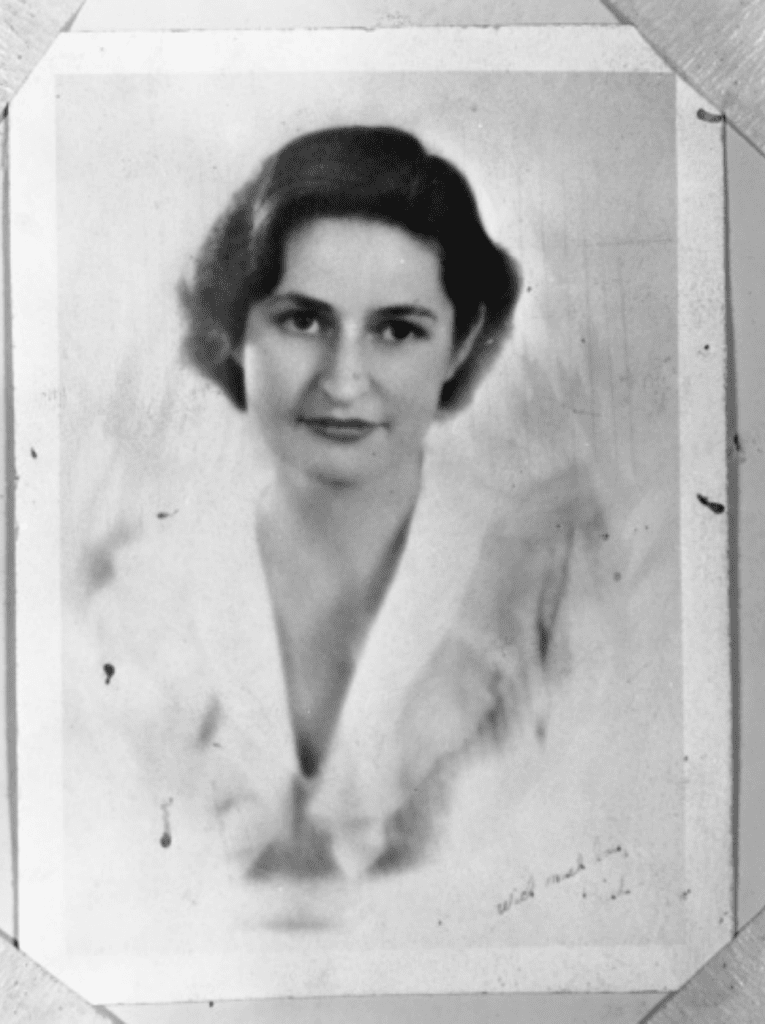
image

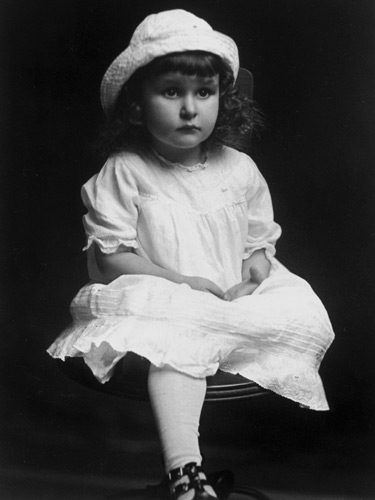
Lady Bird, 1915 (Image courtesy of the LBJ Library)

What happened when a young Lady Bird and a friend traveled to New York City in June 1934? Hear her impressions of Chinatown, Depression era poverty and a “museum for fish” she visited.

How did Lady Bird and LBJ meet? In this segment, she describes their very, very brief courtship and Lyndon’s almost immediate proposal.

After LBJ’s proposal, Lady Bird went out to San Marcos to meet Lyndon’s parents. Here she talks about first meeting Mr. and Mrs. Johnson and her impressions of the old Texas family.

“You’ve brought a lot of boys home, and this time you’ve brought a man.” These were the words of Lady Bird’s father after meeting Lyndon for the first time. Hear more about that initial encounter and life at the “Brick House,” Lady Bird’s family home in Karnack, TX.

Credits:

Claudia “Lady Bird” Johnson Oral History Interviews, by Michael L. Gillette, LBJ Library

The Many Histories of South Austin: The Old Sneed Mansion

By Dennis Fisher

You wouldn’t think much of the limestone walls hanging on for dear life as you walked along Bluff Springs to get to the grocery store or the bus stop. Not least because they are set back about thirty feet from the road and concealed by trees. I first heard something about the walls and the Sneed mansion they once supported while walking along the Onion Creek greenbelt in South Austin.  “The mansion on the hill was built by slave labor,” a local told me.

I decided to explore for myself on a recent drizzly Sunday.  The entire neighborhood, mostly apartment complexes, a few empty lots, and bus stops, has grown up around this small patch of land, which has been just barely “preserved” (given its dilapidated state) by city officials.  Walking past the crumbling walls of the Sneed mansion, marked by graffiti and littered with plastic bottles, evokes not only Austin’s past but also a sense of loneliness.

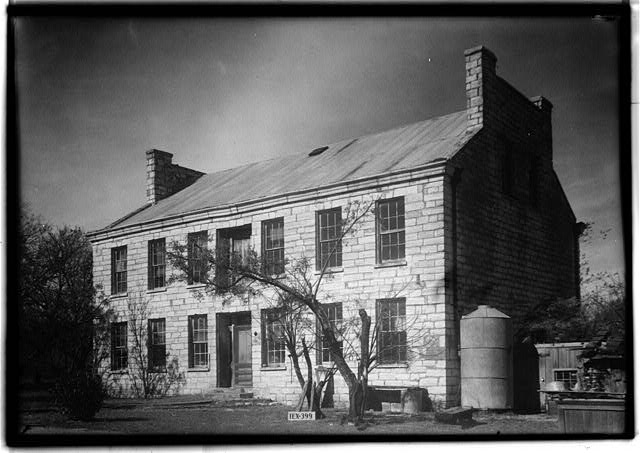
A black and white 1936 photograph of the Sneed House still intact taken by the Historic American Buildings Survey

A 1936 photograph of the Sneed House still intact taken by the Historic American Buildings Survey (Image courtesy of the Library of Congress)

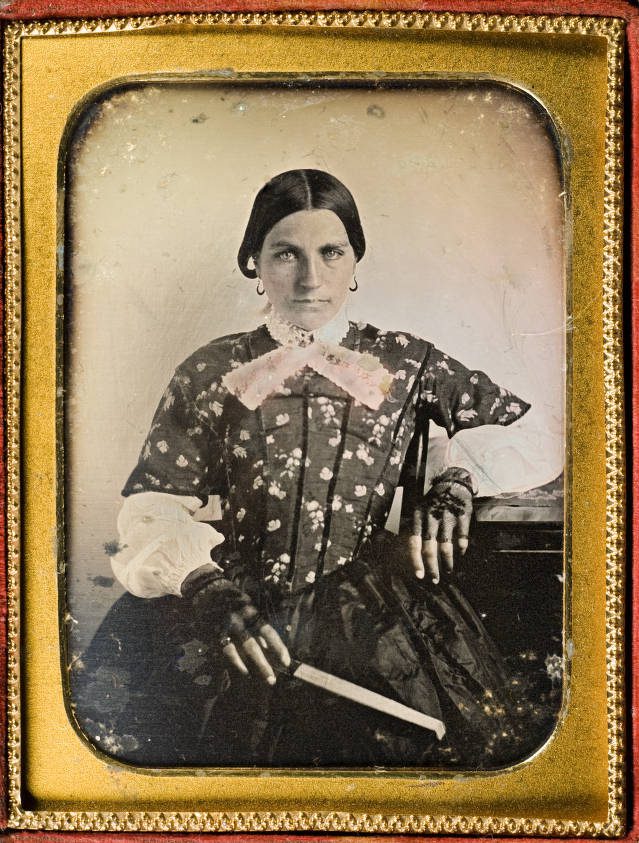
Sebron Sneed Sr. was born in Kentucky in 1802.  He spent his early years bouncing around—first in the Missouri militia in 1823 and later in Arkansas practicing law.  He married Marinda Atkins of Tennessee in 1824 and they both ended up in Austin, Texas in 1848 after the conclusion of the War on Mexico, making a new home for themselves.  They both joined the Pleasant Hill Baptist Church—which still stands today on William Cannon across IH-35.  Sebron started the local Democratic Party chapter in 1857.  It’s probably not too hard to discern what the Sneed family thought about Texas in the 1850s.  Coming from the Appalachian borderlands into newly conquered territory they probably hoped to prosper in a land that would soon expell its Native inhabitants—Tonkawa, Apache, and Comanche peoples around here—and in a place where black slavery was firmly entrenched and outside of the reach of the troublesome former Mexican government as well as the current Federal one—up until 1861, that is, when Lincoln was elected to the presidency.  Sebron Sneed Sr. owned 21 people as property in 1860.  One of them, Nancy Jane, was purchased by Sneed as “the highest bidder . . . of a certain mulato girl” in Arkansas in 1848 just before he relocated to Texas.  We have no idea what Nancy Jane, almost entirely lost to us in the historical record, must have thought, felt, and dreaded–torn from her relatives and brought to a strange land.

Daguerreotype of Marinda Atkins (1809-1878), wife of Sebron Sneed, ca. 1849-1850 in an ornate gold frame

Daguerreotype of Marinda Atkins (1809-1878), wife of Sebron Sneed, ca. 1849-1850 (Image courtesy of Southern Methodist University, Central University Libraries, DeGolyer Library)

The location chosen for Sneed’s mansion still makes good sense.  It stands on a hill that lifts slightly to the west but then drops down to where IH-35 currently sits.  The land gently slopes downward on all remaining sides.  Close by on the north and east sides of the house wind small streams that gently make their way downhill.  Limestone, soft and porous, is readily available in this area.  All of south Texas (and extending down into Guatemala and Belize) was covered by a shallow sea some sixty million years ago, which left behind as its primary legacy a thick layer of limestone—great for building houses and pyramids as well as collecting and channeling water into natural wells, creeks, and aquifers.

Sneed made his money in the legal profession.  His papers, located at the Briscoe Center for American History at The University of Texas, are full of promissory notes from clients.  In 1860, he paid fifty dollars in “occupation taxes” as a lawyer.  By looking at his tax receipts we find that he owned enslaved people, horses, cattle, and land in Del Valle (just east on Highway 290)—the numbers vary from year to year suggesting he sold people as well.  In 1864, he paid his county taxes in kind with 545 bushels of corn.  During the war he made money by selling two enslaved men—Peter and Isaac—to Confederate General Magruder for building fortifications at Galveston.  If Sebron saw Texas as a promised land, his vision and future rested firmly on the foundation of white supremacy.  Furthering that vision, Sneed opened his mansion in south Austin as a recruiting station at the outset of the Civil War and later as a convalescent home for returning wounded soldiers.  Both he and his son fought in the war—he as a provost marshall and his son as a captain.  Sebron Sr. would die in 1879, at the time engaged in “agricultural pursuits”—the records shed little light on this post-war aspect of his life.  He would be buried in the adjoining family cemetery along with his wife, other family members, and “infant Sneed.”  After the war, his son moved downtown to Colorado and 3rd and kept busy as a lawyer, acting Comptroller, and later as superintendent of Travis County schools.

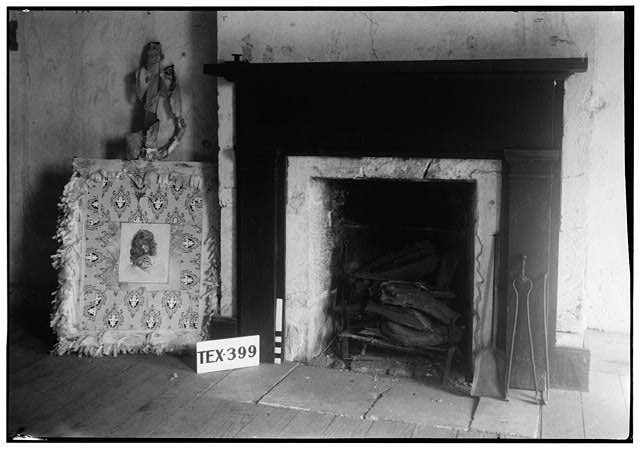
Black and white photograph of the second floor fireplace of the Sneed House, 1936

Second floor fireplace of the Sneed House, 1936 (Image courtesy of the Library of Congress)

Today echoes of that era linger in both small and not so subtle ways.  Ranch owners along the Onion Creek greenbelt still regularly take their horses out along the trails and locals flock to McKinney Falls to play along the limestone and creeks that crisscross the area. Confederate flags still find a place at rallies at the capitol as well as on t-shirts and pickup trucks.  But today south Austin at William Cannon and IH-35 looks very different.  Anglo-Americans, African-Americans, Native-Americans, Mexican-Americans, and Mexicans all call this place home.  Hispanic Texans constitute the majority of enrolled students in a state that could swing Democratic in a decade or less in a country that has twice elected an African-American to be president. Looking at what remains of the Sneed mansion serves to remind us of the very different histories that have inhabited these places.

If you’d like to learn more about the Sneed family:

A 1982 issue of the Austin Genealogical Society which includes an 1860 letter from Sebron Sneed jr. to his wife

The Sneed House’s city zoning information

A guide to the Briscoe Center’s Sneed family papers


The views and opinions expressed in this article or video are those of the individual author(s) or presenter(s) and do not necessarily reflect the policy or views of the editors at Not Even Past, the UT Department of History, the University of Texas at Austin, or the UT System Board of Regents. Not Even Past is an online public history magazine rather than a peer-reviewed academic journal. While we make efforts to ensure that factual information in articles was obtained from reliable sources, Not Even Past is not responsible for any errors or omissions.
Lady Bird Johnson interviewed by Michael Gillette

By Michael Gillette

I had already conducted the first five oral history interviews with Lady Bird Johnson when she telephoned my LBJ Library office one day in the spring of 1978. Her first words were “Hello, Mike. How would you like to do something zany?”  Before I could speculate what she could possibly mean by “zany,” she explained: “Would you like to accompany me to my fiftieth high school reunion in Marshall, Texas?”  I eagerly accepted the invitation.

The trip was an extraordinary adventure in time travel that added rich context to her oral history narrative.  The reunion with old Marshall High School friends brought out her youthful spirit and warmth. As she addressed the gathering, I thought of her graduation fifty years earlier when her shyness was so excruciating that she was relieved to learn that her class ranking—the third highest–spared her from having to give a speech. But now, as the former first lady delivered an eloquent, humorous, nostalgia-filled speech, she spoke effortlessly.

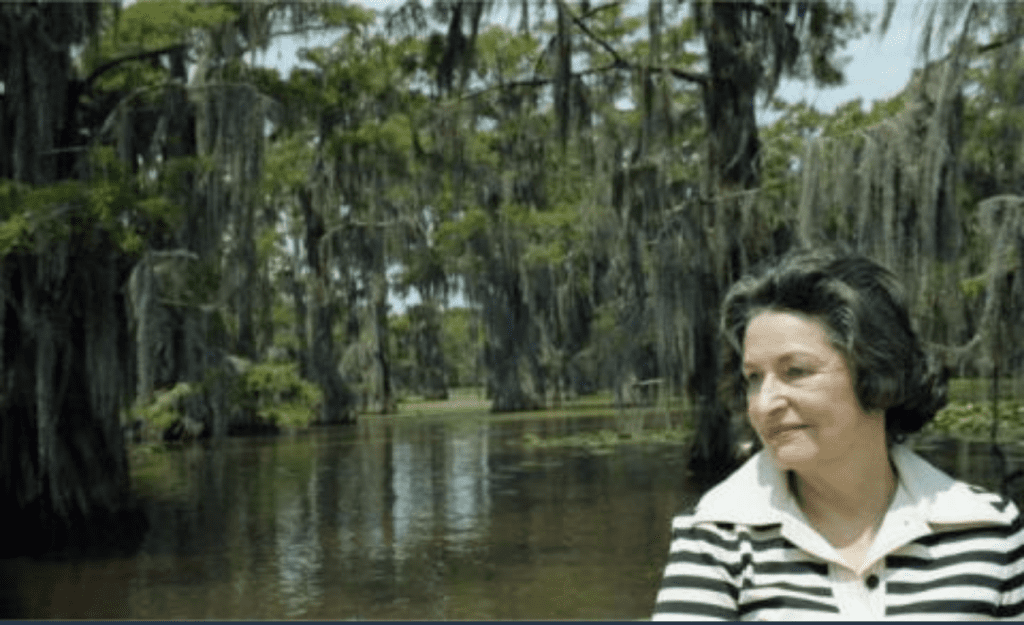
The East Texas trip took us to several landmarks of her youth. We walked around the stately antebellum Brick House, where she was born. We stopped at the beautiful, lonely country Scottsville cemetery where her mother was buried when Lady Bird was five years old.  We climbed into jon boats and ventured onto Caddo Lake amid the haunting majestic Cypress trees, laden with Spanish moss. I could readily see how she had developed her love of nature in such a spectacular setting.

In August 1977, almost a year before our trip, I had begun the series of oral history interviews with Mrs. Johnson that would ultimately comprise forty-seven sessions. Our interviews usually took place on weekends at the LBJ Ranch, where interruptions were minimal. My oral history staff and I would prepare a chronological outline for each year, along with a thick file of back-up correspondence, appointment calendar entries, and press clippings. Mrs. Johnson would review the entire folder of material to refresh her memory and make notes before we began recording each interview. Over a span of fourteen years, I conducted the first thirty-seven interviews. After my transfer to the National Archives in Washington in 1991, Harry Middleton, the LBJ Library director, continued the interviews.  

In 2011, two decades after my departure from the LBJ Library staff, I learned that the library was preparing to release Mrs. Johnson’s long-sealed interviews in May of that year. I immediately prepared a book proposal to Oxford University Press, which had recently published a new edition of my Launching the War on Poverty An: Oral History. Once Oxford approved the project, my task was to edit her 470,000 words into a manuscript of less than half that length in time to publish it before Mrs. Johnson’s centennial in December 2012.

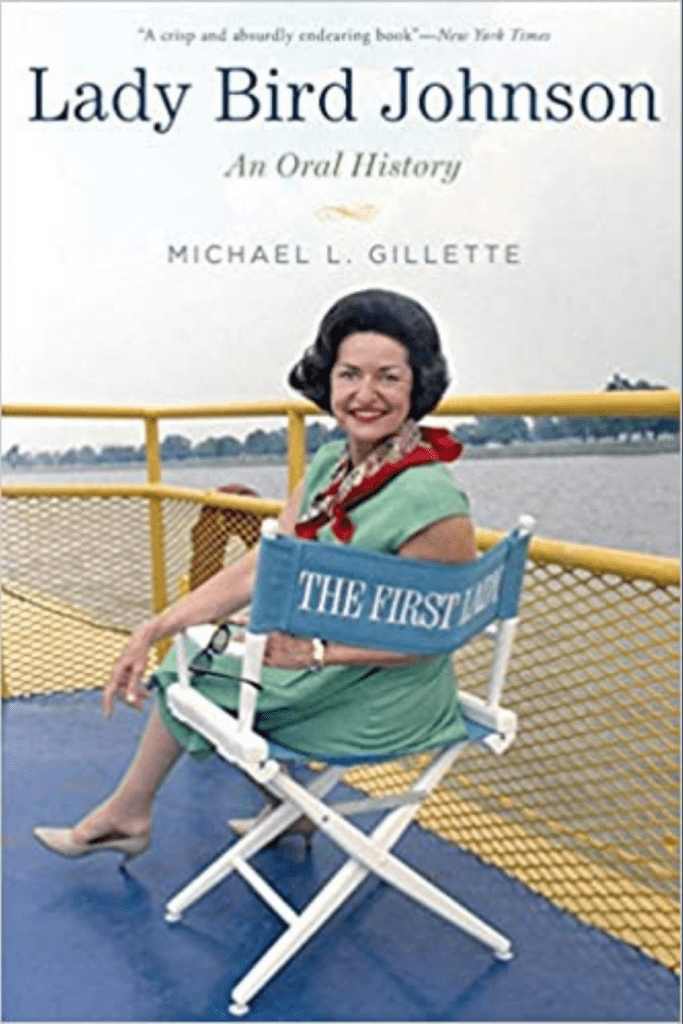
Lady Bird Johnson: An Oral History consists of three concurrent tracks.  The first track presents her perceptive observations of life in two capital cities during a span of four decades. As a witness-participant, she vividly describes the events and personalities that shaped our world.  The second track is the phenomenal political rise of Lyndon Johnson through a combination of good fortune, consummate political skill and resourcefulness, and incredibly hard work. The third and most compelling track is the transformation of a shy Southern country girl into one of the most admired and respected first ladies in American history.

If the picturesque rural setting of her youth fostered a love of natural beauty, her isolation also imposed self-reliance and a love of reading. There simply wasn’t much else to do. Her education was pivotal to her transformation.  Two years at St. Mary’s College in Dallas instilled an appreciation of the English language, a measure of independence, and an enduring religious faith. Next came her four years at the University of Texas, which brought not only academic rigor, but also an active social life that she had never enjoyed before. In Austin she became more confident, more aggressive, and more willing to extend herself.

But a glimpse of Claudia Taylor’s life in mid-1934 suggests that something is missing.  She is smart, intellectually curious, and shy but popular with many friends in Austin.  Although she is not beautiful, her charm and appealing presence make her attractive to a succession of college beaus.  She has just graduated with her second degree, majoring in Journalism.  She has also earned a secondary teaching certificate, but she seems to view teaching as an opportunity to travel to exotic places rather than a vocation. She has also taken typing and shorthand courses so that she can, if necessary, secure a job as a secretary.

And yet she has no real plans for her future. Instead of pursuing a career, she takes a graduation trip to New York and Washington and then moves back to Karnack to spend a year remodeling the Brick House for her father. Her plan is, in her words, just “to see where fate led me,” as if she were a mere spectator of her own life. What is missing here is ambition; ambition that gives drive, direction, and purpose to life.

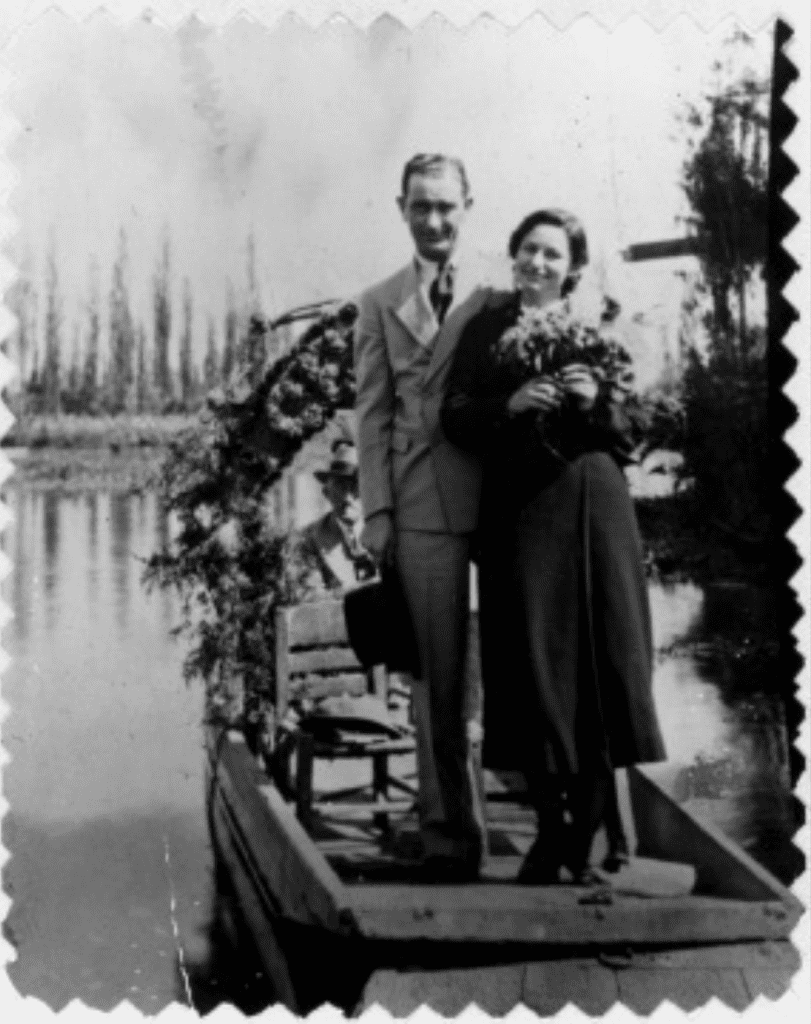
But Lady Bird’s life dramatically changes on September 5, 1934, with a chance encounter while she is visiting her friend Gene Boehringer in the state capitol. Suddenly, a young man named Lyndon Johnson walks in. He asks her to have breakfast the next morning. After breakfast and a day-long drive around the hills of Austin, he asks her to marry him.

The introduction of this powerful, unexpected force creates a terrible dilemma for Claudia Taylor. She is pressured to make the most important decision of her life within a span of less than three months. She barely knows the young man, and the fact that he is 1,200 miles away during most of their brief courtship makes it difficult to become better acquainted. But she must agree to marry this young man and move to Washington, or he will drop out of her life forever as quickly as he entered it. Her fear of losing him ultimately prevails over her innate caution.

If opposites attract, one can easily imagine that there was, as she described, “something electric going on” when they first met. The two were strikingly different in many ways. She was conservative, cautious, and judicious; he was liberal, impulsive, and always in a hurry.  Her calm, gracious, shy demeanor contrasted with his expansive, demanding, volatile temperament.  If she was thrifty, he was given to acts of extravagant generosity.  She was essentially private and self-reliant, while he desperately needed people around him. She was a studious reader of books; he was at heart a teacher whose text was experience.

But what did she see in Lyndon Johnson? It was his drive, his forcefulness, his raw, honest ambition to which she was attracted.  As she wrote during their courtship, “I adore you for being so ambitious and dynamic.”  He gave her what she was missing; he shared with her his ambition, his sense of purpose.

The man whom Mrs. Johnson characterized as “a regular Henry Higgins,” contributed to her transformation in two ways.  First, he “stretched” her, as he did everyone around him, challenging her to do more than she thought possible.  At his urging, she extended herself to speak in public, to run the congressional office in his absence, to manage a radio station, and to renovate the dilapidated LBJ Ranch.  His increasing confidence in her day after day, year after year, spurred her on.  He also facilitated her growth by placing her in the daily company of intelligent, sophisticated women and men in Washington during the 1930s, 40s, and 50s, as she phrased it, “the society he thrust me into.” She attended and hosted countless teas and dinners for some of the nation’s most informed and interesting personalities, among them: George Marshall, Eleanor Roosevelt, Lady Astor, Tommy Corcoran, Marjorie Merriweather Post, Anna Rosenberg Hoffman, Paul Porter, Oveta Culp Hobby, and Josephine Forrestal. Through the Congressional Club for spouses, the Seventy-fifth and Eighty-first clubs, the Senate Ladies Club, and the Texas establishment in Washington, she participated in an extraordinary, continuing salon for almost thirty years before entering the White House.

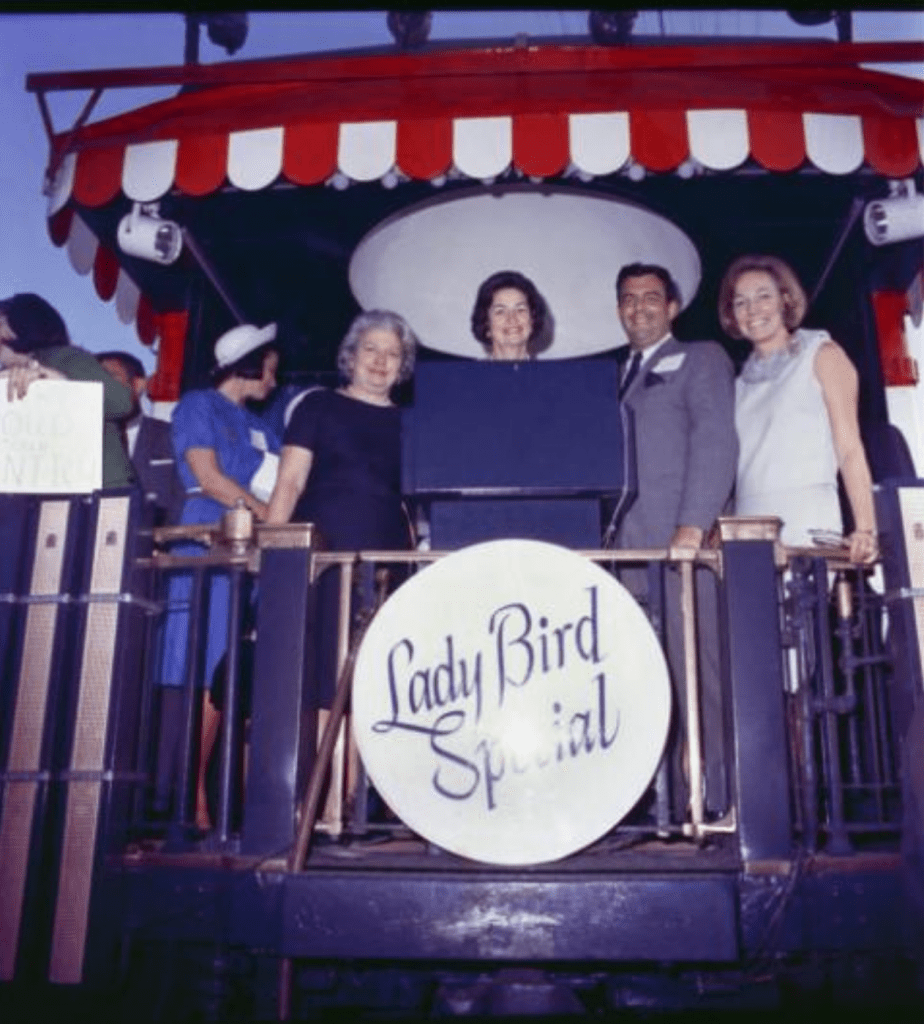
The more Lady Bird Johnson changed and grew, the more she influenced LBJ’s life and his fortunes in a high-pressure profession. Her husband reaped the benefits of her warmth and grace as a hostess. Sam Rayburn, Dick Russell, and others who were instrumental in advancing LBJ’s career frequently enjoyed informal dinners in the Johnson home. And as Lady Bird Johnson’s political involvement and sophistication grew, her role in her husband’s rise to power expanded. Throughout his career, her good judgment and soothing comfort kept him on an even keel, while mending fences that he had damaged. Although she was virtually excluded from his first campaign for Congress in 1937, she became increasingly active in each of his successive races, and, by 1948, her role in the 87-vote cliff-hanger against Coke Stevenson was pivotal.  When a kidney stone attack immobilized LBJ and he was on the verge of withdrawing from the race, she spirited him away to the Mayo Clinic, while keeping him from the press. She overcame her fear of public speaking to campaign for him throughout the state in the run-off.  Finally, in the 1964 Presidential campaign, she rode the Lady Bird Special train through the South to become the first First Lady to campaign independently for her husband.

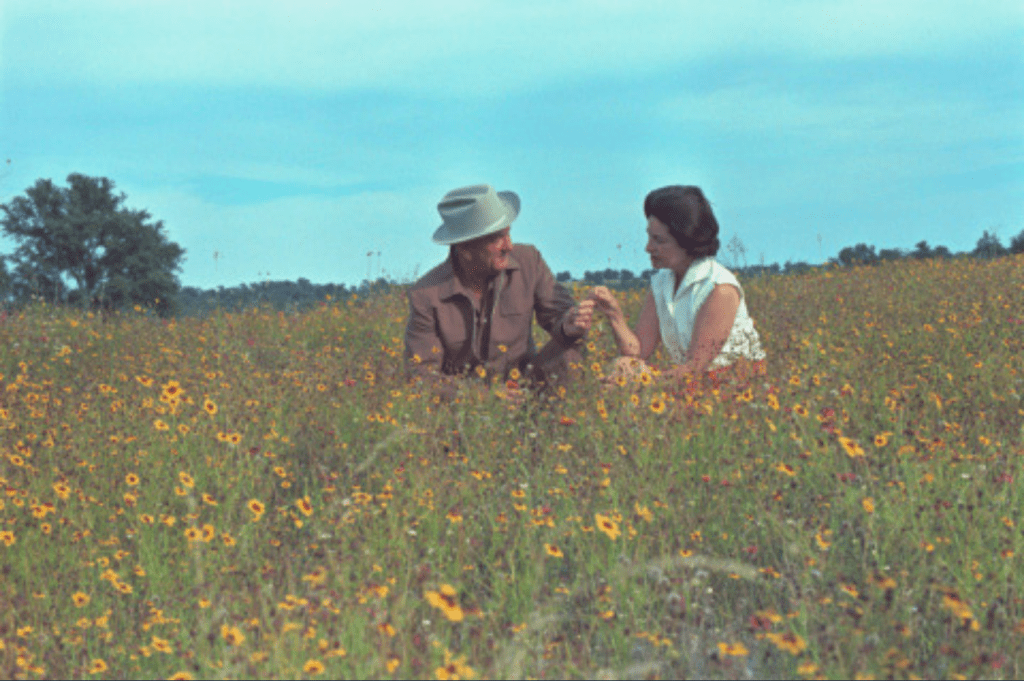
An apprenticeship as a congressional wife, a Senate wife, and as a frequent stand-in for Jacqueline Kennedy during the Vice Presidential years made Lady Bird Johnson one of the best prepared First Ladies ever to enter the White House. Her experience and skill served her well during the tumultuous 1960s.  She assembled a professional staff in the East Wing of the White House and mobilized legions of influential, resourceful women and men to beautify and conserve the nation’s environment. With Washington, DC as their initial focus, they created a spectacular showcase for millions of American tourists could see what was possible in their own hometowns.  Next she traveled through the country to draw attention to its scenic beauty and the threats to the nation’s environment. To her, beautification was just one thread in the larger tapestry of clean air and water, green spaces and urban parks, scenic highways and country side, cultural heritage tourism, and significant additions to our system of national parks.

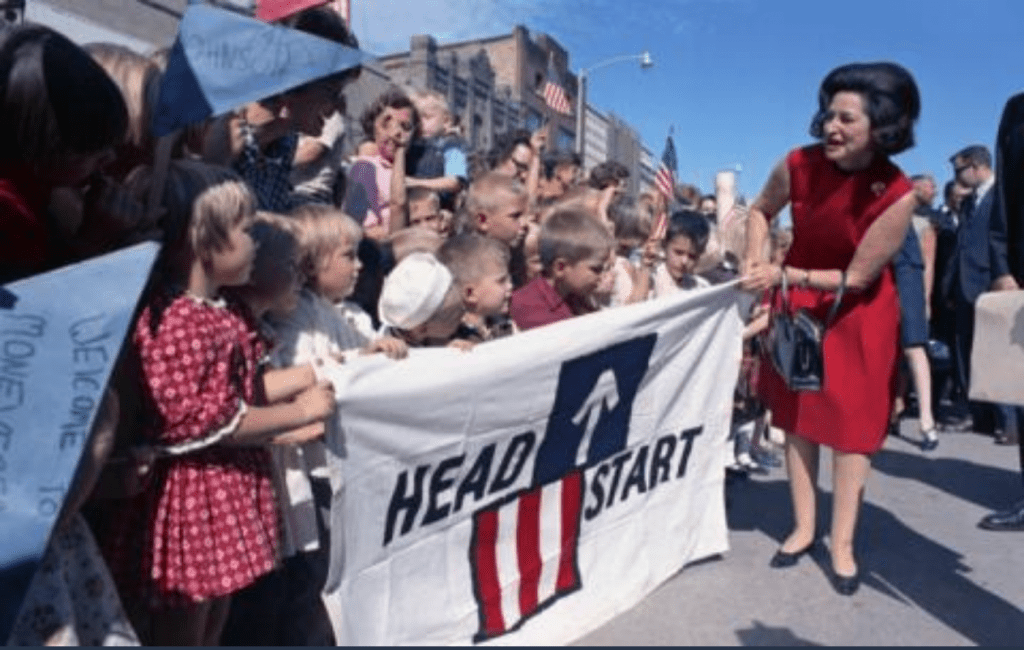
Lady Bird Johnson’s environmental leadership was only one facet of her remarkable legacy as first lady.  She also continued her predecessor’s quest for authentic furnishings and important American art for the White House.  She recognized the achievements of women with her Women Doers Luncheons. Embracing the Head Start program, she gave it the prominence of a White House launch.

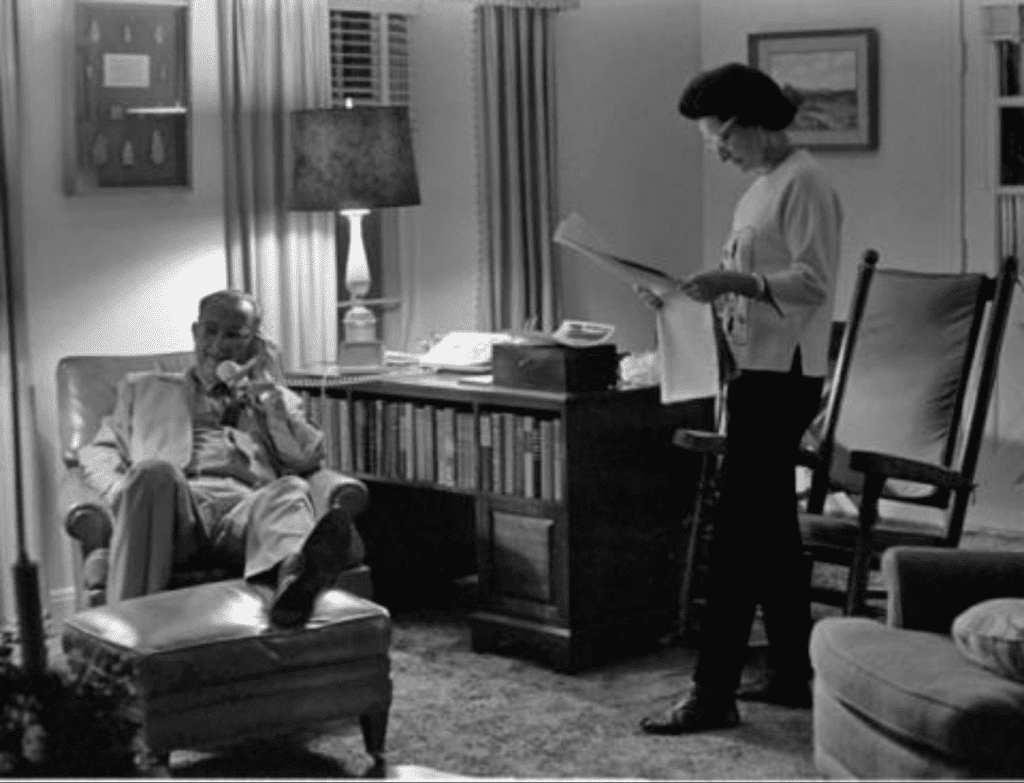
She participated gracefully in an endless succession of presidential trips, state dinners, congressional receptions, and other social events, including two White House weddings. At the same time, she provided LBJ with, in her words, “an island of peace” throughout his heady, turbulent presidency. Finally, she bequeathed to posterity an historical legacy: her White House diary of more than 1,750,000 words and forty-seven oral history interviews, comprising almost another half-million words.

Michael L. Gillette, Lady Bird Johnson: An Oral History

Download video transcript

You might also enjoy:

Michael L. Gillette, Liz Carpenter: Texan

Related links:

Dear Bird: The Courtship Letters
Lady Bird Johnson Wildflower Center
Lady Bird Johnson at the LBJ Library and Museum
The Fastest Courtship in the West, from The Vault, Slate’s History Blog

Women Shaping Texas in the Twentieth Century

By Cristina Metz

Throughout the twentieth century, women began occupying influential public roles. A new exhibit at the Texas State History Museum, Women Shaping Texas in the Twentieth Century, tells the history of Texas women who revolutionized key areas, such as healthcare, education, civil rights, the workforce, business, and the arts. The objects on display in the exhibit, curated by Dr. Paula Marks, professor of American Studies at St. Edward’s University, include historic photographs of women’s social clubs and political activism, and other examples of material culture, such as a World War II nurse’s uniform, as well as several works of activist art. There is even a formal dress straight out of Texas Governor Ann Richard’s closet! In addition to the exhibit, the museum will host a lecture series that will expand on central themes in Texas women’s history and it will soon open a related exhibition called Enduring Women: A Photography and Oral History Project about women living and working on the land in west Texas. These will undoubtedly enrich the experience of visitors to the museum and promote a deeper appreciation for the accomplishments of thousands of ordinary women.

To inaugurate the exhibit and related events, the museum held a symposium on December 8, 2012, titled The Future of Texas Women’s History. Moderator Paula Marks, posed a series of questions to a panel of distinguished historians—Nancy Baker Jones, Judith McArthur, Cynthia Orozco, Merline Pitre, Rebecca Sharpless, Jean Stuntz, imageand Elizabeth Turner—that focused on the past and current state of historical scholarship about Texan women. The panelists represented a cohort of professional historians who began expanding the fields of women’s and gender history, especially that of the U.S. South and Southwest in the last three decades. Their responses reflect this unique position as professionals in a male-dominated field and suggest ways of expanding what we know about women’s lives.

One question that Marks asked was why women’s history became popular in the 1970s. The panelists pointed out that it took a long time for U.S. women’s history to develop. Not only was the scholarship lacking women, so was the historical profession itself. Dr. Merline Pitre recalled, for instance, that she went through her entire undergraduate and graduate career without having had a single female historian for a professor. A 2005 report of the AHA Committee on Women Historians shows that Dr. Pitre’s experience accurately reflected the dismal state of the field for women given that they filled only 5.9 percent of full professorships in American universities. What accounted for an increase in the number of women historians—and historians doing women’s history—said another panelist, was a growing cadre of women’s liberation activists turned academicians.

Women’s history is today a field unto its own, with its strengths and weaknesses. Several panelists lauded the richness of the scholarship on Texan women. It is growing in quantity and improving in quality. Persistent challenges, however, stem from the struggle for sources. Professional historians spend years gathering primary source material that undergirds their historical analyses, as opposed to what one panelist called descriptive histories of “‘gee wiz’ spectacular women.” A lack of research funding makes it that much harder for historians to produce the texts that today’s readers need in order to engage critically with the legacies of women’s key roles in Texan politics, culture, and society.

Another strength of current scholarship is the growing body of work that details imageminority women’s experiences. Scholars like Ruthe Winegarten have published books about tejanas and black Texas women. In this area, however, there is still room for improvement. Cynthia Orozco, a professor of History at Eastern New Mexico University, underscored the persistent scarcity of Latina and other minority historians. She was emphatic in her challenge to current historians to support Latina/o students who show a potential for historical research and writing. Her own academic trajectory is replete with examples of the immense challenges that women of color face along the path toward becoming academic historians. She received her B.A. from The University of Texas at Austin in 1980, but was advised to accept an offer of graduate admission at UCLA because it was one of the few institutions where she would have enough support to become a historian of Chicana/o history.

These challenges highlight the promise of future research on the history of U.S. women, especially right here in Texas. The distinguished panel identified areas in need of investigation including, for example, women in grassroots politics, the Texas women’s movement of the 1970s and its response to issues beyond the Equal Rights Amendment, and the struggle for black women’s suffrage. The symposium pointed the way for those who aspire to write women’s histories. It also highlighted the importance of collaboration among scholars to continue to expand the field since, as the exhibit proves, women in Texas have made great strides in many areas, but, as the panelists agreed, there is still more work to be done.

Enduring Women: A Photography and Oral History Exhibit, February 2 – May 19, 2013

You may also enjoy:

Michael Gillette, “Liz Carpenter: Texan”

Photo Credits:

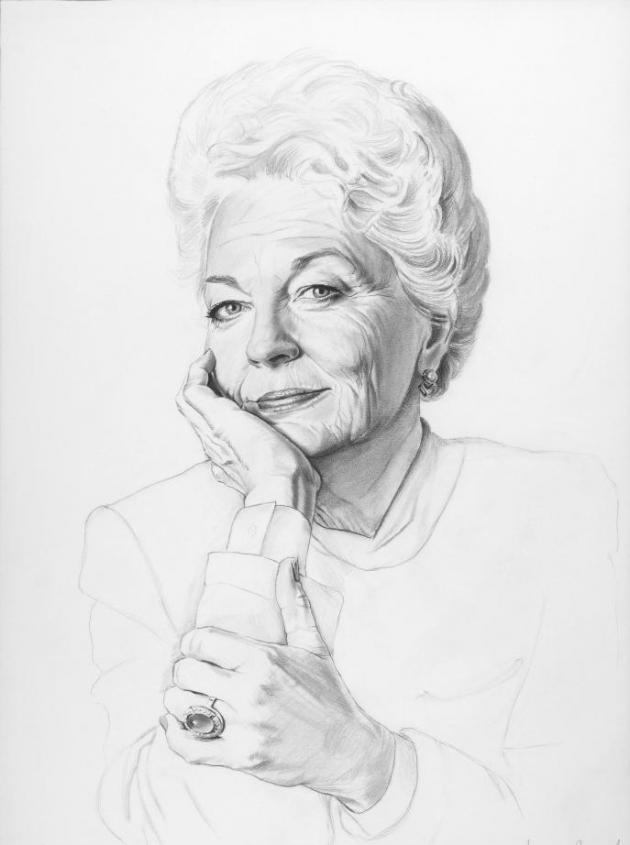
Portrait of former Texas Governor Ann Richards (Image courtesy of user: Clarkwrichards/Wikimedia Commons)

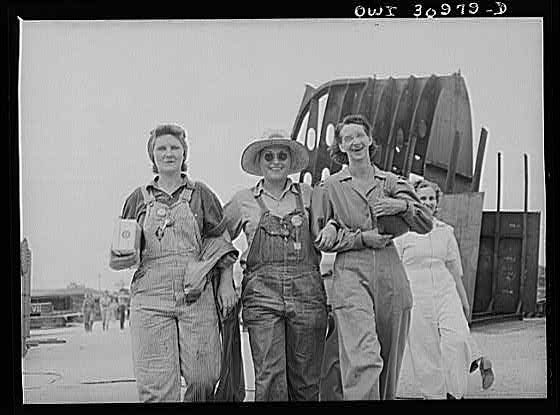
Women shipyard workers, Beaumont, Texas, 1943 (Image courtesy of Library of Congress)

Images used under Fair Use Guidelines: See Wikipedia:Non-free content.


The views and opinions expressed in this article or video are those of the individual author(s) or presenter(s) and do not necessarily reflect the policy or views of the editors at Not Even Past, the UT Department of History, the University of Texas at Austin, or the UT System Board of Regents. Not Even Past is an online public history magazine rather than a peer-reviewed academic journal. While we make efforts to ensure that factual information in articles was obtained from reliable sources, Not Even Past is not responsible for any errors or omissions.
An Architectural History of Garrison Hall

By Henry Wiencek

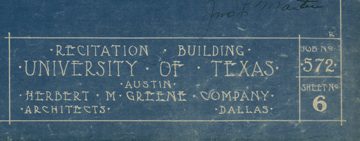
As students and faculty members resume their classwork at Garrison Hall this semester, it is worth examining the iconic building’s colorful history and architectural conception. The first stages of Garrison’s development began in 1922 as the Board of Regents sought a new campus plan for the university. Although the Board had been employing the eminent New York City architect Cass Gilbert—whose achievements include the U.S. Supreme Court building, the Woolworth Building and various state capitols—pressure from local architects to patronize a Texas firm resulted in Gilbert’s termination. Subsequently, the University hired Herbert M. Greene of Dallas, James White of Illinois and Robert Leon White of Austin, who collaborated on a 1924 campus plan that included the future Garrison Hall.

Architects Tag for Garrison Hall at the University of Texas at Austin

Construction began in 1925 and finished the following year, producing the 54,069 square foot edifice at a cost of $370,000. Initially known as the “Recitation” building the new structure eventually borrowed its name from George Pierce Garrison (1853–1910), the history department’s first chair and a founding member of the Texas State Historical Association. Hired by the university in 1884, Garrison assumed responsibility for teaching the entire history curriculum and earned a reputation for domineering style. Even after the department hired additional faculty in 1891, Garrison refused to allow his colleagues to teach any U.S. subjects.

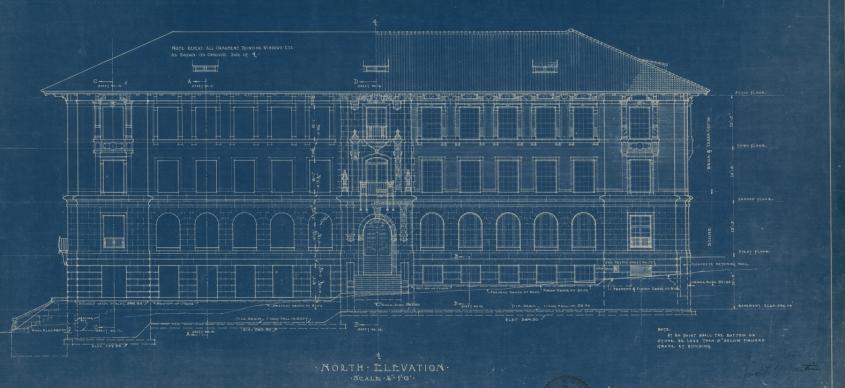
Blueprint of the architectural drawing of Garrison Hall at the University of Texas at Austin

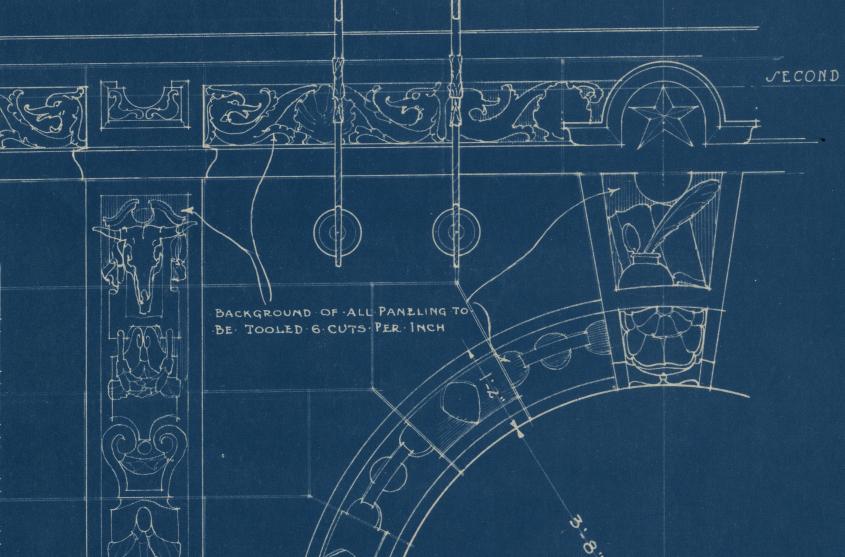
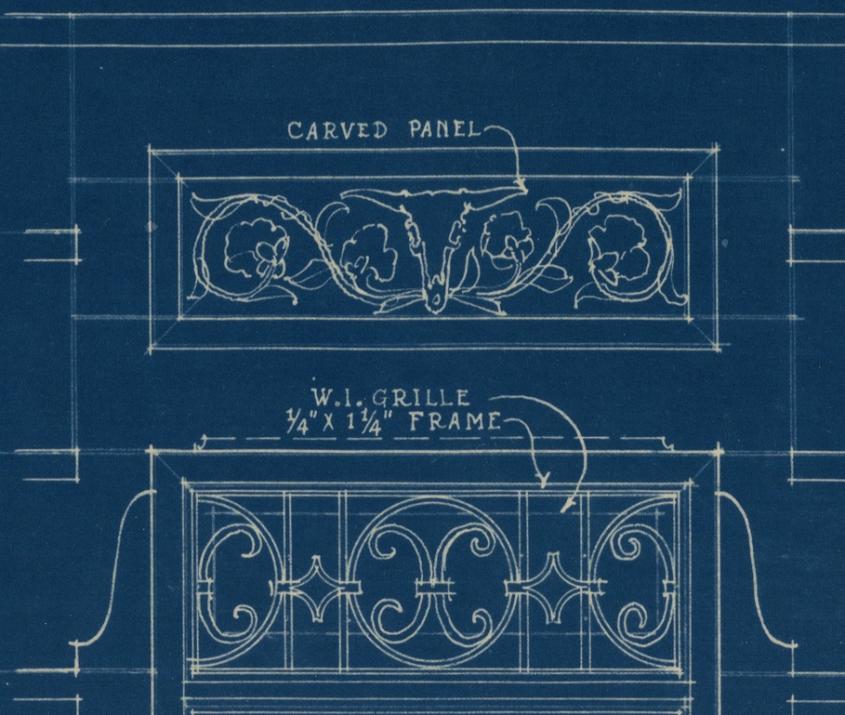
The building’s design blended classical aesthetics with Texas iconography—pairing wide archways and Ionic flourishes with renderings of cacti, steer skulls and 32 Texas cattle brands. Texas pride is also evident on the second floor’s exterior, which is adorned with the names of prominent state figures: [Stephen F.] Austin, [William Barret] Travis, [David G.] Burnet, [Sam] Houston, [Mirabeau B.] Lamar, and [Anson] Jones.

Detail on the blueprints of the architectural drawings of Garrison Hall at the University of Texas at Austin

Throughout its existence, Garrison has accommodated numerous departments, including English, government, psychology, sociology, philosophy, economics and history—its only continuous occupant. However, Garrison has also housed other, less desirable, elements of the university as well. William Battle, Chairman of the Faculty Building Committee, described these “residents” in an October 1931 letter to Goldwin Goldsmith, the Architecture Department’s Chair: “I noticed that the north entrance to Garrison Hall is a harboring place for bats. It is evident to the senses of both sight and smell.” Responding one week later, Goldsmith lamented that “I do not see how to protect the entrances from these loathsome creatures, but Miss Gearing tells me that the Comptroller’s office has an excellent way of dealing with them. It is apparently by using fire-extinguishing apparatus.” Fortunately for Garrison’s present occupants, the University resolved this unintended infestation.

Details of the Skull Freize on the blueprints of the architectural drawings of Garrison Hall at the University of Texas at Austin

In 2008, Garrison underwent an extensive renovation that modernized its facilities while restoring its historic features. In addition to its remodeled interior, the building also resides amidst a very different University of Texas. The UT tower, completed in 1937, now dominates the campus; and no longer do students use the halls for “loitering and smoking” as history professor Walter Prescott Webb (1888–1963) once observed. Nonetheless, Garrison maintains a strong continuity with its history and functions as both a figurative and literal time capsule: the building’s hollow cornerstone contains university newspapers, correspondence and ephemera dating back to the early 20th century.

All photos courtesy of:

The University of Texas Buildings Collection
The Alexander Architectural Archive
The University of Texas Libraries
The University of Texas at Austin

Works Cited:

Nicar, Jim, Texas Exes, UT Heritage Society, and UT History Central, “An Ode to Garrison Hall”
Steinbock-Pratt, Sarah, “Some Notable Personalities in the History Department”


The views and opinions expressed in this article or video are those of the individual author(s) or presenter(s) and do not necessarily reflect the policy or views of the editors at Not Even Past, the UT Department of History, the University of Texas at Austin, or the UT System Board of Regents. Not Even Past is an online public history magazine rather than a peer-reviewed academic journal. While we make efforts to ensure that factual information in articles was obtained from reliable sources, Not Even Past is not responsible for any errors or omissions.
Boxing Shadows, by W.K. Stratton with Anissa “The Assassin” Zamarron (2009)

By Anne M. Martínez

In November 2005, Anissa “The Assassin” Zamarron entered the ring for one of her most important bouts: a chance to win the Women’s International Boxing Association junior flyweight title. At 35, fighting in her opponent’s hometown and having lost her last four fights, Anissa was considered the underdog. San Antonio’s Maribel Zurita, a decade Zamarron’s junior, had earned the title three months earlier and was overwhelmingly favored to retain it. After ten full rounds, as the fighters awaited the scoring result from the judges, Anissa took comfort in the belief that she had fought the best match of her career. In the eight months since her last fight, she had eaten better and trained harder than ever before, and her preparation paid off: her trainer, Richard Lord agreed. “You did a great job,” he repeated, as the ring announcer came to the microphone. Anissa didn’t know it at the time, but it was her last fight, and she won: WIBA junior flyweight world champion!

Movie poster of the movie Boxing Shadows

Boxing Shadows tells the story of Anissa Zamarron’s life in Central Texas, including her rise to two-time world champion boxer. To those unfamiliar with the sport, Boxing Shadows offers a primer on the training, traveling, and match-ups of the early years of professional women’s boxing. Zamarron fought in the first sanctioned women’s bout in New York State along with a number of international bouts before women’s boxing was much of a blip on the radar of most American sports fans.

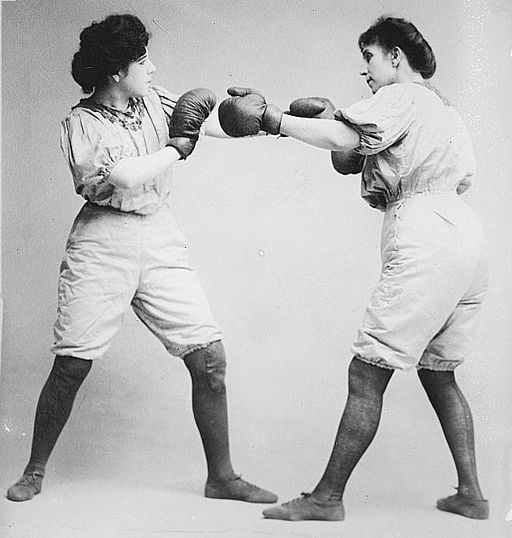
Black and white image of the Bennett sisters boxings, c. 1910

The Bennett sisters boxing, circa 1910.

But the book, co-written by Zamarron and sports writer Kip Stratton, is about much more. Boxing was not just a meal ticket for Zamarron, it was a life-saver. She was born in San Angelo, Texas, and her family moved to the Austin area when Anissa was seven. Shortly after, her parents separated and her family was divided. Her brothers — her heroes — lived with their father and Anissa went with their mother who, having married in her teens, relished a freedom she had never experienced before, to work full time, go to happy hour every night, and date. The loss of the structure of family life, the longing for the company of her brothers, and the rough and tumble apartment complex where she spent these formative years pushed Anissa further and further into darkness.

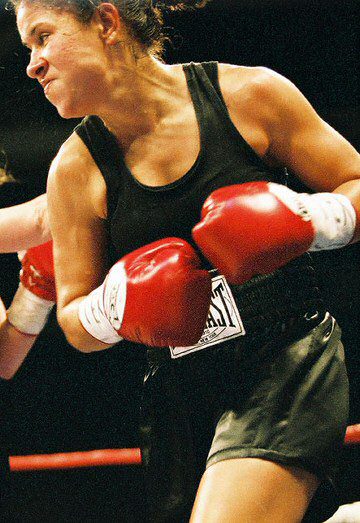
Image of Anissa "The Assassin" Zamarron in the midst of a boxing fight

Anissa “The Assassin” Zamarron (The Women’s Boxing Archive Network)

Anissa felt a strong self-loathing as early as second grade, began cutting herself in middle school, and was committed to a mental hospital for the first time in her early teens. She discovered boxing in 1993 at age 23. After years of therapy, self-mutilation, and struggle, boxing was an outlet for the demons that drove Zamarron to hurt herself. Boxing did not end her battles with herself, but gave Anissa ways to work through challenges in the gym, rather than in her mind. Zamarron is open about her struggles with learning disabilities, mental illness, and drug addiction. Her success in the ring offers inspiration for others struggling to overcome similar challenges to reach their goals.

Master-at-Arms Seaman Rhonda McGee, left, spars with Patricia Cuevas during an exhibition match in the preliminary rounds of the 2011 Armed Forces Boxing Championship

Master-at-Arms Seaman Rhonda McGee, left, spars with Patricia Cuevas during an exhibition match in the preliminary rounds of the 2011 Armed Forces Boxing Championship.

Boxing Shadows is devastating in its frankness, uplifting for its courage, and all the more impressive when one meets Anissa. In May of 2012, I visited Anissa at Richard Lord’s Boxing Gym in Austin, Texas to talk about Boxing Shadows. [You can see the video interview at the bottom of this page or on our Youtube channel here.] Zamarron is marked, more than scarred, by her past. She is surprisingly forgiving of those who disappointed her or otherwise contributed to the internal battles she fought as a child. After the interview, Anissa prepared to spar, and even then, nearly seven years after her last bout, in the ninety seconds it took Richard Lord to wrap her hands, the Anissa I had just interviewed was completely transformed. She forgot about the camera, disconnected from everybody in the gym, and began moving like a boxer — even standing still. Focused in a way I had not seen in the half dozen years I had known her, at that moment — “The Assassin” was back.

Video Credits:
Producer: Amanda E. Gray
Co-Producers: Therese T. Tran and Anne M. Martinez
Cinematographer: Therese T. Tran
Editor: Amanda E. Gray
Colorist/Online: Therese T. Tran
Transcriber: Lizeth Elizondo

Photo Credits:
All photos courtesy of Wikimedia Commons
Except the photo of Zamarron in the ring, which comes from the Women’s Boxing Archive Network

You may also enjoy:
More by Anne Martínez,
“Rethinking Borders”
More on women’s athletics: “Title IX: Empowerment Through Education”


The views and opinions expressed in this article or video are those of the individual author(s) or presenter(s) and do not necessarily reflect the policy or views of the editors at Not Even Past, the UT Department of History, the University of Texas at Austin, or the UT System Board of Regents. Not Even Past is an online public history magazine rather than a peer-reviewed academic journal. While we make efforts to ensure that factual information in articles was obtained from reliable sources, Not Even Past is not responsible for any errors or omissions.
« Previous Page
Next Page »

Recent Posts

  • The Radical Spanish Empire Roundtable – Introduction
  • All Eyes on the Petition: Reflections on The Radical Spanish Empire
  • Forgery, Invention, and the History of Skepticism in The Radical Spanish Empire
  • Iberian Subaltern Political Philosophies and The Radical Spanish Empire
  • Lawfare and the Legal Construction of Race in The Radical Spanish Empire
NOT EVEN PAST is produced by

The Department of History

The University of Texas at Austin

We are supported by the College of Liberal Arts
And our Readers

Donate
Contact

All content © 2010-present NOT EVEN PAST and the authors, unless otherwise noted

Sign up to receive our MONTHLY NEWSLETTER

  • New
  • Features
  • Reviews
  • Texas
  • Teaching
  • Digital
  • Watch & Listen
  • Authors
  • About