• New
  • Features
  • Reviews
  • Texas
  • Teaching
  • Digital
  • Watch & Listen
  • Authors
  • About

The past is never dead. It's not even past

Not Even Past

Review of The Global Interior: Mineral Frontiers and American Power (2018) by Megan Black

banner image for Review of The Global Interior: Mineral Frontiers and American Power (2018) by Megan Black

In The Global Interior, Megan Black uses the Department of the Interior’s (DOI) controversial history to examine how the U. S. government wielded political and economic power to access natural resources in the American West and influence international policy. The book’s title illustrates the irony of a department responsible for internal affairs being involved in foreign policy. Covering the Department of the Interior’s evolution over the course of two centuries, Megan Black examines its effectively colonial approach to securing access to resources and expanding U. S. power, from the occupation of the American West to the recent use of technologies such as Landsat satellites to map resources and open them to private American companies.
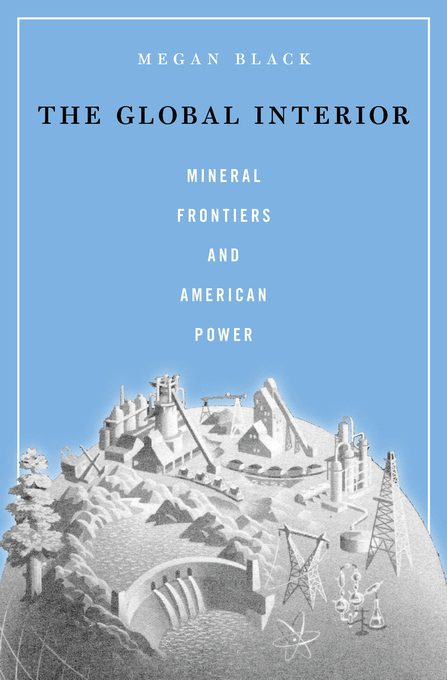
book cover

Created in 1849, the Department of the Interior’s initial objective was the development of the American West. In the wake of military-led expansion, control over territory passed into the civilian hands of the Interior, creating a benevolent cover-up that concealed a colonial enterprise. The Department of the Interior assisted in the colonization of territory expropriated after the Mexican-American War and facilitated the expansion of capitalism into Indigenous lands. However, the closing of the Western frontier in the 1890s forced the Interior to expand its activities overseas under the guise of national security and based on the colonial framework. Hence, the activities of the Interior supported cooperation with developing countries to trade and extract minerals essential to American industry during the 20th century. For instance, President Franklin D. Roosevelt’s Good Neighbor Policy in the 1930s established relationships with Latin America in part through cooperative mineral ventures and land-use planning. The Department of Interior’s procedures for exploiting resources were replicated by the United States in Latin America, the Philippines, Japan, and other sites around the world.

Black analyzes both the hard and soft edges of Interior’s global strategy. The Department simultaneously supported the exploitation of natural resources and nature conservation programs, providing intelligence about natural resources in a way that would benefit US commercial exploitation. In the mid-1960s, Stewart Udall, a DOI official, promoted multiple conservation programs across Latin America while offering technical support to foreign governments interested in developing their mineral economies. Subsequent decades saw the Department of the Interior extend US influence into the developing world’s agricultural sector since modern farming depends on mineral fertilizers like phosphorus and nitrogen.

Stewart Udall (right) and Lady Bird Johnson touring Grand Teton National Park, August 1964
Stewart Udall (right) and Lady Bird Johnson touring Grand Teton National Park, August 1964. Source: Wikimedia Commons.

Due to the geographical scale of its influence, the Department of the Interior’s work was often accomplished through support for private economic activity. However, President Reagan’s deregulation policies in the 1980s also had an impact on the Interior’s funding. Stigmatized as a costly middleman, Interior had to reduce its role. At this point (and towards the end of the book), Black turns her narrative back towards the heartland of the United States to examine an unusual organization: the self-styled “Indigenous OPEC.” Black shows how the Interior’s retreat and the emergence of a market system in its place led Indigenous communities to organize themselves as capitalist institutions in dialogue with private companies. Curiously, the wastelands allocated to Indigenous people by the Interior ended up being rich in minerals, including oil.

Using the tools of environmental history, The Global Interior contributes to debates about environmental politics and international relations, demonstrating the intricacies of cooperation and unilateralist policies. The Global Interior draws a connection between mineral policy, varying forms of colonialism, and international conservation. The book argues that U. S. environmental policies are designed to accrue economic benefits and ensure access to natural resources around the world. Black highlights the tension between environmentalism and economic production.


Daniel Silva is a Ph.D. student in Geography and Environment at the University of Texas at Austin. He conducts research on land use change, environmental policy, and agricultural economics. Co-authored policy briefs and papers with a focus on the Brazilian Amazon and the Cerrado biome.

The views and opinions expressed in this article or video are those of the individual author(s) or presenter(s) and do not necessarily reflect the policy or views of the editors at Not Even Past, the UT Department of History, the University of Texas at Austin, or the UT System Board of Regents. Not Even Past is an online public history magazine rather than a peer-reviewed academic journal. While we make efforts to ensure that factual information in articles was obtained from reliable sources, Not Even Past is not responsible for any errors or omissions.


Review of Wild by Design: The Rise of Ecological Restoration (2022) by Laura J. Martin

banner image for Review of Wild by Design: The Rise of Ecological Restoration (2022) by Laura J. Martin

In Wild by Design, historian Laura Martin points to an irony at the heart of our contemporary ecological moment: in the face of human-made threats to the earth’s biosphere, it is only through further intercession into the workings of nature that humankind may remediate the harm that it has already caused. The notion that through conscious action, people have the potential to revivify or enhance natural systems is not, however, new. The assumption rests at the heart of the field of ecological restoration, whose history within the United States during the 20th century Martin seeks to recount. 

Martin writes that historians have typically presented the history of 20th-century environmental management as a duel between environmental conservation and preservation. The former asserts that certain designated lands should be actively managed to guarantee the long-term availability of economically desirable natural resources. Environmental preservation, on the other hand, has sought to protect lands from any human footprint whatsoever. The logic of ecological restoration has long existed as a middle ground between these two poles, but its history, when it has been written of, has been traced back only as far as Aldo Leopold’s 1949 Sand County Almanac. In her book, Martin casts her gaze farther down the well of the past to the early 1900s, and beginning there, she traces a deeper and longer history of ecological restoration in the United States.

book cover

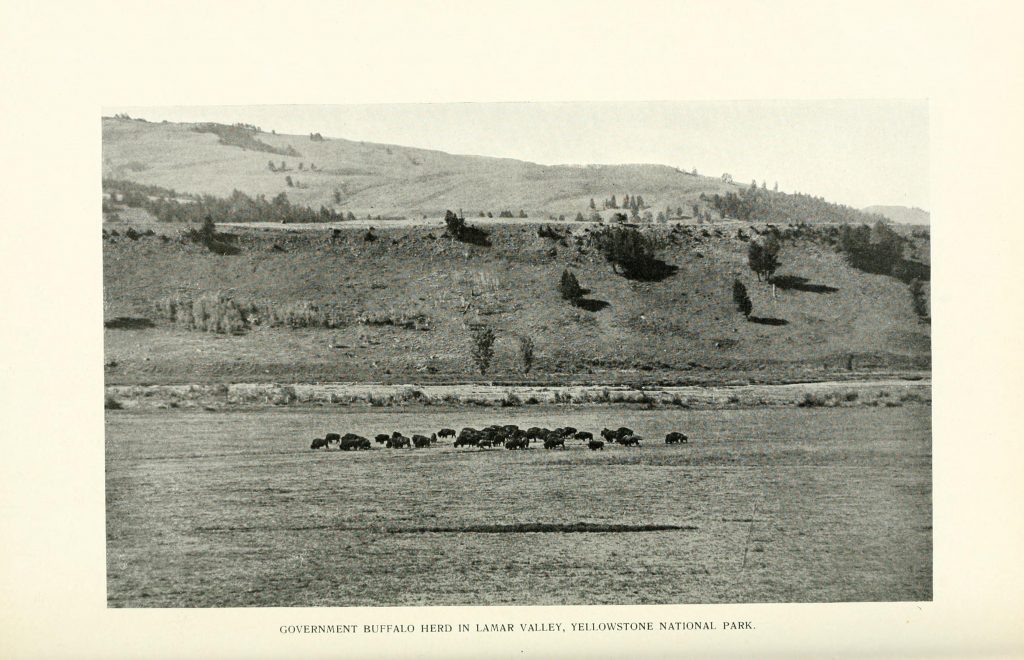
Martin begins her narrative with the American Buffalo Society in the early 20th century and its ambition to create game reservations in order to repopulate portions of the Great Plains after they had been depleted of buffalo. From there, Martin advances chronologically up to the present moment. She concludes her monograph with a discussion of the practice of off-site mitigation, the contemporary approach to minimizing environmental harm that attempts to compensate for destruction done to one ecosystem by restoring another. As a whole, the book traces how efforts to revitalize United States wilderness areas have evolved from attempts to restore only a single species to now much grander schemes that aim to guard the resiliency of entire ecosystems. Martin successfully shows in clear prose how ecological restoration evolved from the pursuit of many small, private organizations into an institutionalized scientific field whose knowledge shapes the majority of federal ecological management policy today. Martin reconstructs this history by working through government documents, published and unpublished scientific papers, news clippings, and other sources.

As Martin weaves her narrative together, she is at pains to show how the evolving understandings of nature’s workings that lay at the heart of restoration efforts interfaced with contemporary material, political, and cultural circumstances. Thus, Martin emphasizes how the studies and conceptual frameworks that have advanced ecological restoration as a field have also benefitted from and furthered the harm done to historically oppressed groups within the United States. In addition, Martin shows that at the heart of ecological restoration’s history lie shifting understandings of what constitutes “wildness” and frequent debates around what should be the baseline against which an ecosystem’s current health is measured.

A photograph of a "government buffalo herd" in Yellowstone National Park from the American Bison Society's 1907 Annual Report.
A photograph of a “government buffalo herd” in Yellowstone National Park from the American Bison Society’s 1907 Annual Report. Source: Wikimedia Commons.

Martin’s ability to construct narratives from primary sources and, in the process, chart an intellectual, political, and cultural history of ecological restoration is extremely impressive. However, as is typically the case with histories that cover long lengths of time, any one of her chapters feels like it could be expanded into its own book. Furthermore, in limiting its scope to the United States during the 20th century, Martin’s work begs the question of whether the history of ecological restoration can be geographically and temporally broadened beyond one country.

Finally, Martin’s narrative focuses exclusively on the knowledge and actions of an extremely limited number of actors and official institutions. Given her concern with environmental justice and the deleterious effects that restoration efforts have had on oppressed groups, it is curious that Martin does not devote more space to recovering their voices. Ultimately, the book invites a richer genealogy of the knowledge and experiences that fed and were informed by the development of ecological restoration.

Such comments are, however, not meant to detract from the value of Martin’s work. Her book adeptly situates, both politically and culturally, the development of ecological restoration in the United States during the 20th century. Wild by Design constitutes a well-crafted, clearly written work defined by sharp analysis. As such, it is suited to everyone from informed general readers to specialists in environmental history and the history of science.


Gaal Almor is a 2nd-year PhD student in the History department at UT Austin. His research centers on questions of legal rights and epistemology in the early modern Atlantic.

The views and opinions expressed in this article or video are those of the individual author(s) or presenter(s) and do not necessarily reflect the policy or views of the editors at Not Even Past, the UT Department of History, the University of Texas at Austin, or the UT System Board of Regents. Not Even Past is an online public history magazine rather than a peer-reviewed academic journal. While we make efforts to ensure that factual information in articles was obtained from reliable sources, Not Even Past is not responsible for any errors or omissions.
Contraception – Letters from French Women, 1960s-70s

From the editors: One of the joys of working on Not Even Past is our vast library of amazing content. Below we’ve updated and republished Judith Coffin’s illuminating, powerful and moving article on contraception in France, which was first published in 2012. Given recent developments related to reproductive rights, we feel this article could not be more timely.

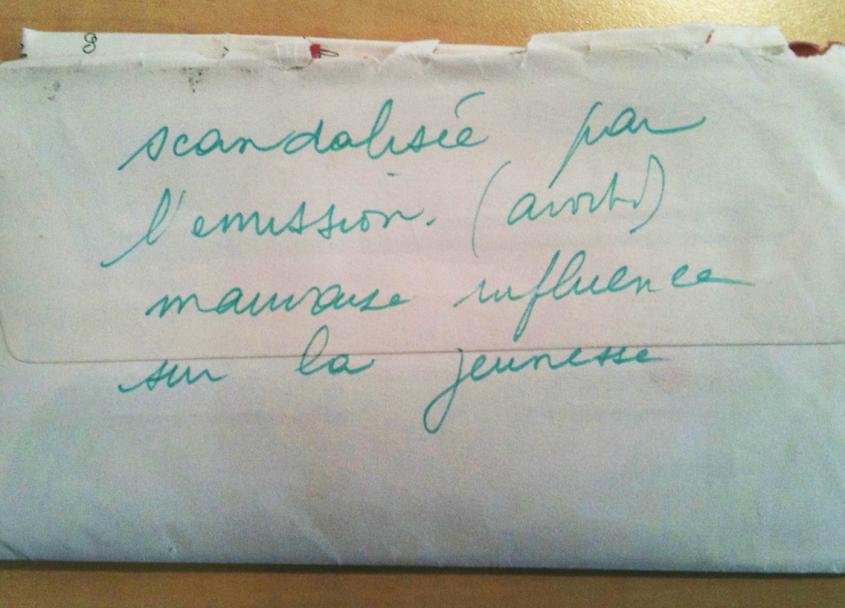
In 1967, Radio Luxembourg recruited Menie Grégoire, a well-known journalist and expert on “women’s” issues, to host an audience Q&A program on the airwaves. Radio Luxembourg was a privately-owned radio station; its shows were first produced in Paris and then cabled to and broadcast from Luxembourg.  But the program reached deep into France. By 1970, nearly 2.5 million listeners tuned in to listen to Grégoire, and her program displaced the advice-from-experts programs and old-school family radio dramas that Radio Luxembourg had carried since the end of World War Two. Remarkably for historians, Grégoire saved and classified all the letters her listeners sent the program (nearly 100,000 of them), and she took notes on their telephone calls (around 16,000). Those papers are now in the archives of the Indre et Loire, outside of Tours, in France. Historians who want to work in the collection need Grégoire’s permission to do so and they cannot reproduce any of the letters in their entirety or identify any of the correspondents. But the letters offer a remarkable portrait of France in the years before and after 1968, the more unusual for being focused on provincial France rather than Paris.

“Pregnant. Just had twins. Wants abortion”: One of the letters in Menie Grégoire’s collection, with her notes on the envelope, at the archives of the Indre et Loire. Photo courtesy of the author.

Listeners wanted to discuss any number of issues: work, housing (in short supply as the economy expanded), credit and debt, the struggles of family businesses, and everything having to do with sex. They asked about sexual dilemmas and crises, pregnancy, family life, parents or in-laws (helpful intrusive, or both), and children, but contraception and abortion topped the list of women’s concerns. (Men wrote as well: they, too, were and are implicated in fertility and reproduction.) In 1967, the same year that Grégoire began broadcasting, the Neuwirth law made it legal for the first time, to discuss contraception in public – and cautiously opened the door to approving the sale of selected oral contraceptives, IUDs, and diaphragms. The law had overwhelming public support, but met institutional resistance. The Pope struck back with a papal encyclical reiterating the Church’s opposition to contraception, startling public opinion in France and much of the world, which had expected the Church to soften its position. Some pharmacists refused to fill prescriptions for the pill and some doctors were reluctant to write them. Many women mistrusted “chemical” treatments. “Nature will take its revenge,” warned a French senator who had opposed the bill, stoking fear: “No cycle, no libido, no fantasies . . . breasts so painful that they can’t be touched, and psychic (sic) problems thrown in for good measure. And nature’s first revenge is that the partner becomes less interested [. . .]” (Gauthier 1999: 151).

“Scandalized by the program (abortion). a bad influence on youth”: Grégoire’s notes on the envelope of another letter in her collection. Photo courtesy of the author.

Small wonder that different contraceptive methods and their ramifications loomed so large in the questions listeners sent in to Grégoire’s program. Countless women wrote Grégoire asking where and how they could get a safe and legal abortion – which usually meant going to Switzerland. Grégoire could not provide that information directly, but other listeners often responded by passing on stories of their own experiences. (Abortion would be partially legalized in 1975.)

“Good letter on contraception, abortion, sex ed. but thinks that Gisele Halimi went too far by talking about pleasure.” Halimi, with Simone de Beauvoir, founded the organization “Choice.” Photo courtesy of the author.

The letters in the archive testify to women’s fears — of pregnancy, new forms of contraception, their parents, neighbors, or husbands. They also testify to women’s desire for reliable information, to the humiliations of having to depend on doctors for birth control, to the enormous complications that everyday sexual life created and strategies for dealing with them, and to the widespread wish among ordinary women to control their own decisions about reproduction.

 February 13th, 1970:

I am 68, and while listening to you talk about contraception, I can’t help but think that these women are lucky – people are paying attention to them and they dare talk. (Fonds Menie Grégoire 66 J 30)

December 12th, 1967:

“Personal” written on the envelope.

Help me.

I am 17 ½ and like all girls I have my problems. My parents bought a pastry shop and café. We are open every day. I have to hurry home after school to work: wash the dishes, tidy the house, do the laundry, mop the floor, etc. My father works all night, and so he sleeps during the afternoon. My parents never have time: they only have work. They get along very well, but this is not a private life, and certainly not a family life.

[. . .] When I was young, if a pregnant woman came into the store my mother always sent me out — to fetch a broom, or something. They have never explained anything to me. Even last week, when the radio was talking about the pill during the news, my mother turned it off . . . . I can see she is afraid of having this conversation and I don’t want to upset her. (66 J 37, 925)

December 12, 1967th:

Letter from a woman 25, who has been married for four years and has a three-year-old girl. That birth was very difficult, and neither she nor her husband wants more children.

[. . .] every month is nothing but fear and anxiety, fear to find myself pregnant for a second time. That’s my life, always worrying about that fear I can’t describe but that gets inside me and makes me look at everything differently. . . . Of course I have heard talk of means of contraception, but I don’t know who to go to. I am ashamed to go to my doctor and tell him my little problems. I’m afraid he’ll make fun of me.  (66 J 230)

February 11th, 1974:

Letter from 45-year old woman.

I’m afraid I am pregnant. We have always used withdrawal. But now my husband is having problems, and so sometimes he isn’t careful. I think you’re going to find me old fashioned . . . . But I have to tell you that we have always dealt with doctors who are quite cold, and we haven’t dared raise the subject. (66 J 231)

December 21st, 1967:

Letter from a regular listener. One of countless stories about extra marital pregnancies and how women and men dealt with them.

When I was 15, I ‘frequented’ a boy one year older. I got pregnant. His parents refused to let us marry. So I had my child, and continued to work on my family’s farm. The boy came back, I got pregnant again, and I agreed to marry him. We lived with my parents. Living with my father was nearly impossible. My husband worked in a bakery, where he worked all night. Since I had two children, I had very little time for him. A combination of that and the “scenes” with my family drove him away, leaving me with my two children. For the next five years, I worked as a maid while my grandmother took care of the children. I only got to come home on the weekends to see them.

[. . .] Then I married a man, a widower with 3 children. We have two children together. I didn’t love him at the beginning but I am learning to. Today many people admire me for marrying a man (who I didn’t love). I have put my life back together. (66 J 37, #932)

December 8th, 1967:

Letter from a 30-year-old.

Please send me the list of the books that you provided during your show last Saturday on sexual education and contraception. Send me the publishers too, so I can order them by mail. Can you include the list from the week before? I wrote down “the pill: yes or no,” but I didn’t get the rest down.

Here’s the problem. [. . .]

I am 30. I have been married nine years. Both of our parents were divorced. This was difficult for me, less so for him.

I am shy. I got married. We had our first child, a daughter. A sunny household. [Ménage sans nuage.] Then my health started to fail. I have thyroid problems and irregular periods. [. . .]

In the summer of 1965, fate descended on us. We didn’t want a child and one was coming.

My husband was transformed. He felt betrayed. He closed himself off. . . . I refused all sexual relations. I love him but I am afraid. I gave in once, and when my period was late, I was seized by the darkest fear. It was only my thyroid.

We still have no sexual relations.

I can’t talk about this with my family doctor – he always just wants another baby. When he comes to our house, he asks whether we have “ordered up a little brother for our girls.” I just stand there. I don’t know how to answer him. (66 J 40, #1805)

July 17th, 1971:

Letter from 27 year old, responding to another young woman’s story on Grégoire’s program.

I don’t know how to tell you about this, I’ve never spoken about it (except to my husband).

I got pregnant just before we were married. We went to a doctor who gave me a shot to bring back my period [these were hormone shots], and nothing happened, I was pregnant. Horrible.

[She was the third of five girls, she said. She couldn’t tell her parents.]

My mother has a lot of principles (for her, an unwed mother ‘une fille mere’ is a bitch ‘une chienne’) and she calls herself a Christian. My father is very strict. Everyone knows him in the village, and everyone likes him, but he is completely rigid with his family. When I was working, I wasn’t allowed to go out at night. [. . .]

I had an abortion. That cost us 100,000 francs. I was incredibly lucky to have an elderly nurse who didn’t massacre me. Then I had a D and C.

After that, I used a diaphragm for three years. Then I had a baby.

I hope my child will have a different experience. (66 J 22)

July 5th, 1971:

Letter from a school teacher, married for three years to another school teacher, who is just finishing his military service. She refuses to describe herself in the clichéd terms of women’s magazines. She isn’t “a woman disappointed by marriage” and her husband isn’t “cheating.”

You give such good advice on the radio that I don’t hesitate to write you to tell you my problem.

[. . .] I’m pregnant again and my second baby is going to be born just about a year after the first. [. . .]

I know that lots of women “manage” [‘débrouillent’] as we say, to get rid of a pregnancy that they don’t want. But aren’t they worried about their own lives? I only see one solution – legal abortion done by a doctor, but — where do you go? Who can give you information? There’s a lot of talk about the subject these days, but even so, I think that it is hard for you to find an address for me. I thought about Switzerland. Do you think you could find at least some information? I am only two months pregnant, and I want to do something now. (66 J 228)

May 5th, 1971:

Letter from a woman, 25, married for 7 years. She is unapologetic and angry, and her husband shares her feelings.

I’m writing you about abortion. I am Catholic, though not practicing. So you understand that I would be against, if my case were not so complicated.

I am five months pregnant with my fifth child, and the oldest will be seven years old at the end of the year. I can tell you, if I had been able to find a doctor who would have accepted to give an abortion the right way, I would have been fully willing, despite my principles. But in France there is no possibility, except clandestine and dangerous.

You are going to say that I could have controlled these births. Of course! I took the pill for 18 months, and then something was irregular and I went eight days without taking it and thought I was protected, which only helped me get pregnant.

So I am for abortion in certain cases, though only if under medical supervision. I hope that these Messieurs who make laws will think. I am strong and helped by my husband, and he helps hold me up, but how many other women. [. . .] (66 J 228)

This article is connected to but does not draw from my recent book, Sex, Love, and Letters: Writing Simone de Beauvoir. For more on that book, see

https://notevenpast.org/ihs-book-talk-sex-love-and-letters-writing-simone-de-beauvoir-by-judith-g-coffin-university-of-texas-at-austin-history-faculty-new-book-talk/

https://notevenpast.org/an-intimate-history-of-the-twentieth-century/

https://www.cornellpress.cornell.edu/book/9781501750540/sex-love-and-letters/

Recent works on the history of sexuality in Europe and the US:

Beth Bailey, “Sexual Revolution(s)” in The Sixties: From Memory to History, edited by David Farber (1994).

George Chauncey, Gay New York: Gender, Urban Culture and the making of the Gay Male World, 1890-1940 (1994).

Hera Cook, The Long Sexual Revolution: English Women, Sex, and Contraception 1800-1975 (2004).

Stephanie Coontz, A Strange Stirring: The Feminine Mystique and American Women at the Dawn of the 1960s (2011).

Kate Fisher and Simon Szreter, Sex Before the Sexual Revolution: Intimate Life in England 1918-1963 (2010).

Elaine Tyler May, America and The Pill: A History of Promise, Peril, and Liberation (2010).

Roundtable Review of Jeremi Suri’s Civil War by Other Means

Roundtable Review of Jeremi Suri’s Civil War by Other Means

From the editors:

Historical scholarship is underpinned by rigorous investigation of sources and archives. But historians can also leverage their knowledge of the past to think critically about the present. Jeremi Suri, the Mack Brown Distinguished Chair for Leadership in Global Affairs at the University of Texas at Austin, exemplifies this practice. In October, Dr. Suri published his fifth book, entitled Civil War by Other Means: America’s Long and Unfinished Fight for Democracy. As its title suggests, the book reinterprets the history of the American Civil War in order to shed new light on the ongoing struggle for racial justice in the United States.

To mark the publication of Civil War by Other Means, Not Even Past invited three scholars of American history, each with unique expertise, to review the book. Their reviews are published below.

book cover


banner image for Brandon Render's review

As a teaching assistant for a United States history course at the University of Texas at Austin, I would ask my students a simple question: who won the Civil War? The students, after sharing confused glances with each other, would often respond with “The North?” or “The Union?” I assured them that it wasn’t a trick question before describing the history of our campus. In 2015, the university moved a statue of Confederate President Jefferson Davis from the South Mall to the Briscoe Center for American History, a museum and archive also located on campus. The Davis statue was commissioned by university benefactor George Littlefield and dedicated in 1933 – almost seventy-years after the Civil War ended. In 2017, during my first week of graduate school, the university removed four more statues commemorating Confederate figures and took down the Confederate flags throughout the campus. The students were of course correct that the Union defeated the Confederates on the battlefield, but as the physical landscape of campus suggests, many of the Southern symbols and ideals lived on. Students walked past these Confederate monuments each day, yet they did not fully grasp how the campus connected past and present.

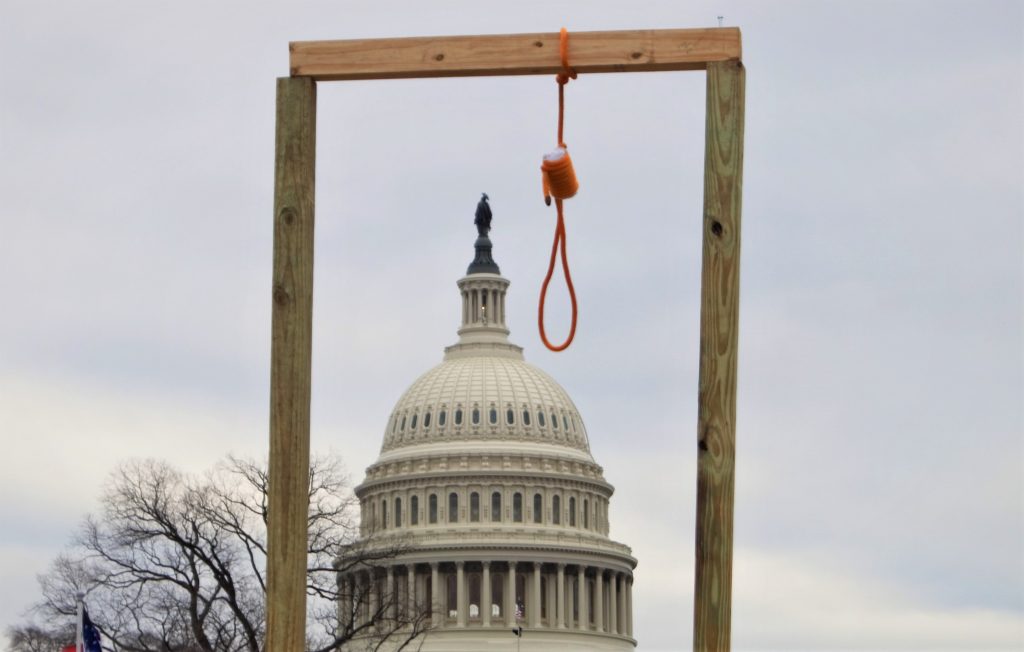
After reading Jeremi Suri’s Civil War by Other Means, I’m considering another question: when did the Civil War end? According to Suri, the Civil War has continued into the twenty-first century. Through political posturing, racial terror, and disenfranchisement, Suri argues that the late 1860s and ‘70s did not represent “a culmination but a continuation” of the Civil War. In the January 6th Riot and the Insurrection at the Capitol Building in Washington, D. C., the same ideas that motivated Confederate leaders to secede from the Union also pushed white nationalists to storm the halls of Congress and physically intimidate elected officials. Rioters invoked the memory of the Confederacy through symbols, including the Confederate flag and a noose – two images with deep connections to white supremacy. In Civil War By Other Means, Suri’s adept interpretation of the explicit and subtle forms of division after the military struggle between the Union and Confederacy offers valuable perspectives in how we view the conflict today.

Beneath cloudy skies, a noose hangs from a makeshift gallows erected by rioters during the Insurrection at the U. S. Capitol on January 6th, 2021. The Capitol dome is visible in the background, farmed by the gallows.
A gallows in front of the Capitol during the Insurrection on January 6th, 2022. Source: Flickr/Tyler Merbler. License: Creative Commons 2.0.

Suri’s book blends popular narratives with often overlooked events to illustrate the depths of the political and ideological battle that took place before, during, and after the Civil War. While standard understandings of the conflict establish a clear ending with Robert E. Lee’s surrender to Ulysses Grant in April 1865, Suri takes an alternative approach by examining the continued efforts to maintain a “Southern way of life.” For example, it is well-known that Andrew Johnson’s preferential treatment of secessionists played a role in his impeachment in 1868. Yet, many people are unaware of the Confederates that traveled further south into Mexico and formed an alliance with Mexican Emperor Maximilian I in an attempt to develop a Confederate colony near the U.S.-Mexico border. Former Confederate supporters and politicians held fast to notions of forced servitude, developed memorials and symbols to honor soldiers, produced conditions that led to the formation of the Ku Klux Klan, and reinforced white supremacy in the two decades following the military conflict. There is ample evidence not of the end, but the extension of the Civil War.

Suri’s Civil War by Other Means deftly captures the evolution of historical interpretation. As our collective memory of the Civil War changes, the views of the people dedicated to remembering the conflict – for better or worse – evolve as well. This is particularly important in the current political climate. In addition to the Insurrection at the Capitol, racial justice protests demanded the removal of Confederate memorials. In many cases, protestors refused to wait for public officials to take action and, instead, engaged in the destruction or removal of monuments themselves. As Suri argues, this is integral to the contemporary culture wars that can be traced back to the decades following the Civil War and how policies, practices, and ideas shaped the “Lost Cause” of the Confederacy. Since then, an ideological struggle has taken shape in classrooms, courtrooms, and the general public based on interpretations of the Civil War.

Americans’ collective memory of the Civil War, as evidenced through the January 6th Riot, continues to influence contemporary society, politics, and culture. Suri’s important study of the two decades following the military conflict is necessary for how we teach and remember the Civil War – not only in the South, but beyond the former Confederacy. Now that I’m teaching outside of the South for the first time, I’m aware that historical memory of the Civil War is not only dependent on what we learn in the classroom, but what we also see in our daily lives. Although I haven’t encountered Confederate symbols where I currently live and work in Utah, there are remnants of the white supremacist ideologies that motivated secession in 1861 and resonates with groups of people in the American West – an area of the U.S. with a problematic racial history itself.

Suri’s engaging and accessible writing style makes Civil War by Other Means a critical addition to the growing body of scholarship on historical events and collective memory. This book stands out for its simple but thought-provoking questions, which forces readers to wrestle with the meaning of history and how it shapes our day-to-day lives. Whether in the classroom or around the kitchen table, Suri’s Civil War by Other Means will spark hard conversations about history, memory, and citizenship.

Brandon James Render is an assistant professor of history at the University of Utah in Salt Lake City. His current book project, Colorblind University: A History of Racial Inequity in Higher Education, explores the intellectual genealogy of racial colorblindness throughout the twentieth century


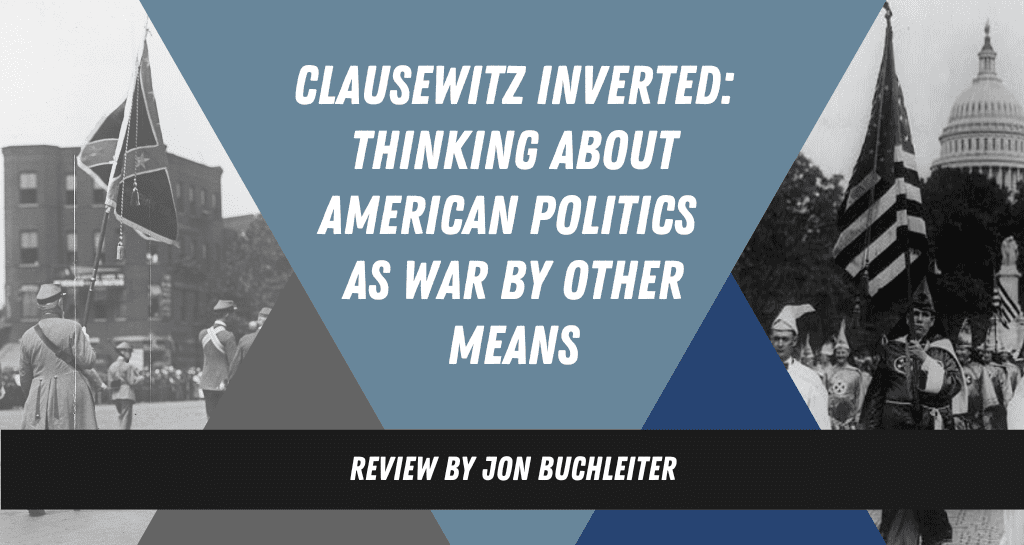
banner image for Jon Buchleiter's review

Two sequential survey courses covering the full arc of US history undergird historical education at nearly every university in the country. Programs disagree, however, about which year should divide the two courses. Many schools draw the line at 1865, highlighting the surrender of Confederate forces and the end of open hostilities in the Civil War. Others split their courses in 1877, using the ostensible end of Reconstruction as a bookend. Jeremi Suri’s Civil War by Other Means shows why delineating between the two “halves” of American history is so difficult no matter where the cut is made. Suri dispels the notion that the Civil War ended with Robert E. Lee’s surrender at Appomattox. He instead explains how the war moved from “muddy battlefields to the marble halls of Congress, various statehouses, a theater, and a train station.”[1] The war’s transmutation underscores the challenge of periodizing this juncture in American history.

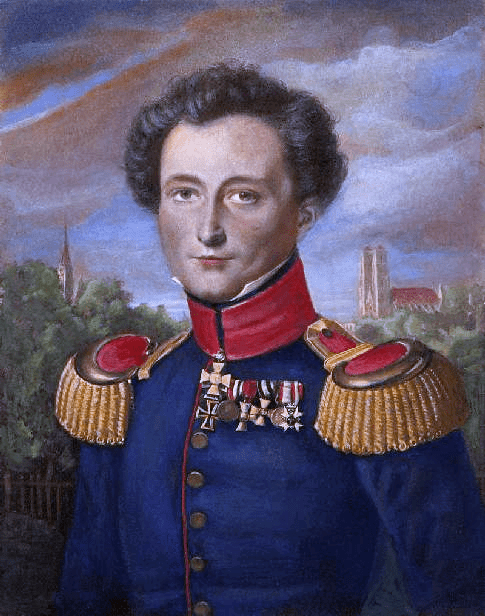
In this nineteenth century portrait by Karl Wilhelm Wach, a smiling Carl von Clausewitz sports a row of medals and a blue military uniform with a high red collar and large epaulettes. Trees and church spires are visible in the background.
A nineteenth-century portrait of Carl von Clausewitz by Karl Wilhelm Wach. Source: Wikimedia Commons.

The book’s title is a subtle nod to the German military theorist Carl von Clausewitz, who famously asserted that “war is the continuation of politics by other means.” Suri’s argument inverts this observation to elucidate how political struggles, from 1865 onward, constituted a continuation of war by other means. In depicting these various means, Suri traces the lionization of John Wilkes Booth, follows former Confederates to the failed colony of Carlota, illustrates the intrigues of Andrew Johnson’s impeachment, and recounts the withdrawal of federal troops from their postbellum occupation of the American South – effectively ending Radical Republicans‘ efforts to establish a multiracial democracy. As with so many good histories, the strength of this narrative comes from the striking characters whom Suri profiles. Figures ranging from Matthew Fontaine Maury, a celebrity scientist and ardent defender of white supremacy, to Henry Adams, an indefatigable Black community organizer, to Charles Guiteau, the poster child of fragile masculinity, populate an absorbing account of the battle between exclusive and inclusive visions of democracy.

Suri centers his first five chapters on key groups who emerged from Civil War battlefields with unfinished business. The first two chapters contrast the martyrdom of President Abraham Lincoln and Booth, his assassin. The commemoration of both serviced a renewed “mobilization” of men and women on the opposing sides of the unresolved conflict.[2] The next chapter follows Confederate exiles, who refused to accept defeat and migrated to Mexico with ambitions to regroup and relaunch the “Lost Cause.” Meanwhile, newly emancipated African Americans sought to secure the rights and opportunities promised them by the reconstruction amendments. In this postwar period, fissures within the Republican Party emerged as Southern resistance tested the resolve of Lincoln’s party to realize his vision of a multiracial democracy.

The final five chapters detail several of the new battles of the enduring Civil War. The first presidential impeachment pitted Republicans against the defiant accidental president Andrew Johnson. Former Confederate states witnessed recurring outbursts of vigilantism that occupying Union forces struggled to curb. The next battle took the form of the contested election of 1876, finally “resolved” through the withdrawal of federal troops from the South and the election of a “caretaker” executive in Rutherford B. Hayes. Finally, the assassination of James Garfield marked a defeat for Republicans that left African Americans more “repressed than at any time since Appomattox.”[3]

Civil War by Other Means demonstrates how contemporary experiences can generate fruitful new examinations of moments already richly chronicled by earlier generations of historians. While this account does not tread much new scholarly ground or unearth unexamined sources, it eloquently provides a succinct framework for thinking about the long-standing struggle for democracy and inclusivity. Events of the past several years have laid bare how incomplete this struggle remains today. It’s a dismaying state of affairs, but it also underscores the value of reexamining our past to help inform efforts toward improving our democratic society. To this end, Suri’s closing chapter addresses “our troubles today,” identifying historical lessons and proposing ways to pull up the “intricate roots” of racism and white supremacy.[4] These ideas define Suri’s scholarly activism, which he cites as an inspiration for his book. They also strike a much-needed optimistic note to close an often dispiriting description of the United States’ democratic deficiencies.

Suri has crafted a book with appeal for a broad audience. It can simultaneously speak to young adults seeking to understand the historical origins of the United States’ ongoing dialogue on race as well as scholars looking for a concise account that explains how debates about race infused U. S. politics during the era of Reconstruction and beyond. Regardless of the perspective from which readers approach Civil War by Other Means, we can only hope they heed its call to take up the task of building a better democracy. As Suri closes this excellent book, there’s “lots of good work to do.”

Jon Buchleiter is a graduate student in the Department of History at the University of Texas at Austin. He studies the institutionalization of nuclear arms control and disarmament efforts as an important element of US foreign policy during the Cold War. At UT, Jon is a graduate fellow with the Clements Center for National Security.


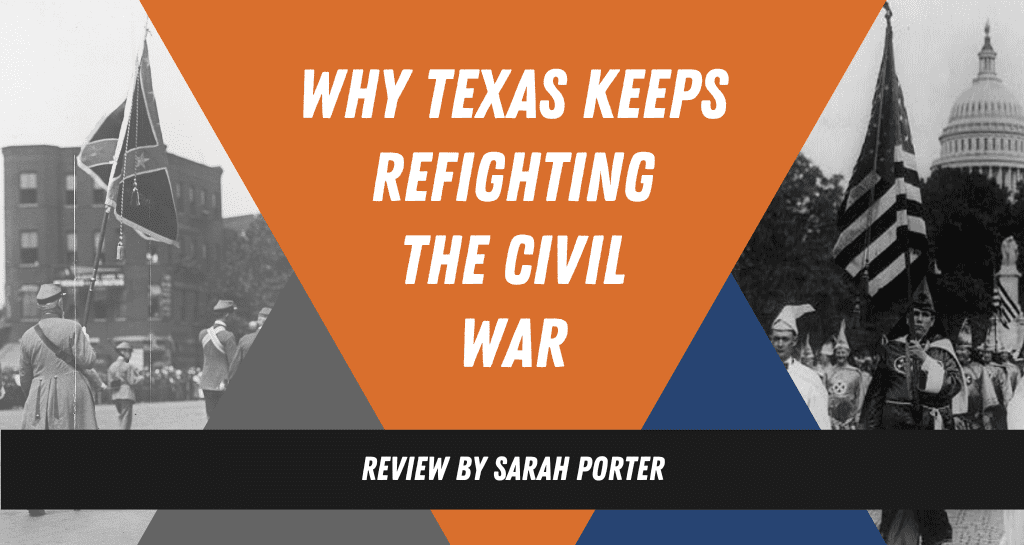
banner image for Sarah Porter's review

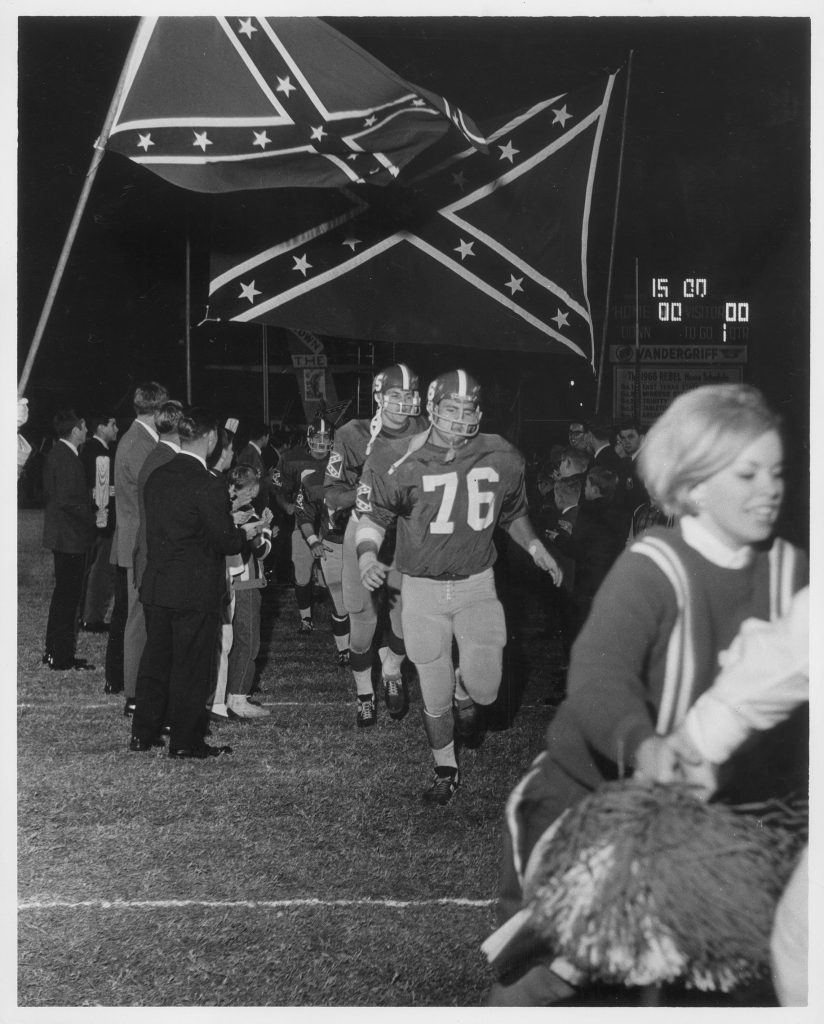
During the 1950s and 1960s, following the U.S. Supreme Court’s decision in Brown v. Board, white Southerners opposing school integration used Confederate symbols, alongside violence and intimidation directed toward Black students, to express their defiance. In 1957, for instance, the local school board in Tyler, Texas, decided to rename the city’s new, all-white high school after Robert E. Lee. Students adopted “the Rebels” as their mascot, and they proudly displayed the Confederate flag at school events. In Tyler and elsewhere, young people born generations after the Civil War resurrected these images as a way to articulate their own politics. According to Jeremi Suri, these incidents were not merely efforts to cling to the past but actually represented a continuation of the war in the American political imagination.

Three football players run onto a playing field applauded by a large group of spectators; a cheerleader leads the charge. Two very large Confederate flags fly overhead.
Cheerleaders and football players at Arlington State College–now the University of Texas at Arlington–run onto the field beneath Confederate flags in this undated photo. Source: University of Texas at Arlington Photograph Collection, University of Texas at Arlington Libraries. “Arlington State College (A. S. C.) football players running under Rebel flags.” UTA Libraries Digital Gallery. n.d. Accessed October 25, 2022.

In Civil War by Other Means, Suri examines the tumultuous decades immediately following the Civil War. Unsettled debates over democracy and citizenship resurfaced with renewed strength during this period, and they “created a pattern for exclusion, violence, and coup plotting that repeated in the twenty-first century.”[5] The political compromises that Republicans and Democrats brokered between 1865 and 1885 left many of the war’s underlying issues unresolved. Most notably, Republicans’ desires for moderation and national reconciliation encouraged politicians, from Andrew Johnson to Rutherford Hayes, to exercise leniency toward the white South at the expense of freedpeople. Drawing from a large body of secondary literature, along with presidential papers, congressional records, and periodicals, Suri demonstrates how these “lingering embers” have erupted at key moments in U.S. history.

Perhaps one of the most powerful examples that Suri uses is the literal continuation of the war by Confederate generals who refused to admit defeat. Following the official surrender at Appomattox, groups of Confederate soldiers traveled south into Mexico in hopes of recreating a Southern planter aristocracy. Upon returning to the United States, these “exiles” did not abandon their visions for society. Instead, they worked to reinscribe racial hierarchies as architects of the New South. They served as state legislators, funded Confederate monuments, joined historical associations, and accumulated wealth through various business ventures. Alexander Watkins Terrell offers one example. After returning to Texas, Terrell became a state legislator and authored a slate of restrictive voting bills passed during the early twentieth century. Designed to disenfranchise Black voters, these bills established the state’s direct primary system, extended poll tax requirements to primary elections, and permitted political parties to prescribe qualifications for voters. Terrell’s biography supports Suri’s conclusion: “The men who fled the American South after Appomattox were also the men who made the American nation in the next decades. They converted the treachery of their exile into a narrative of courage, loyalty, and commitment.”[6]

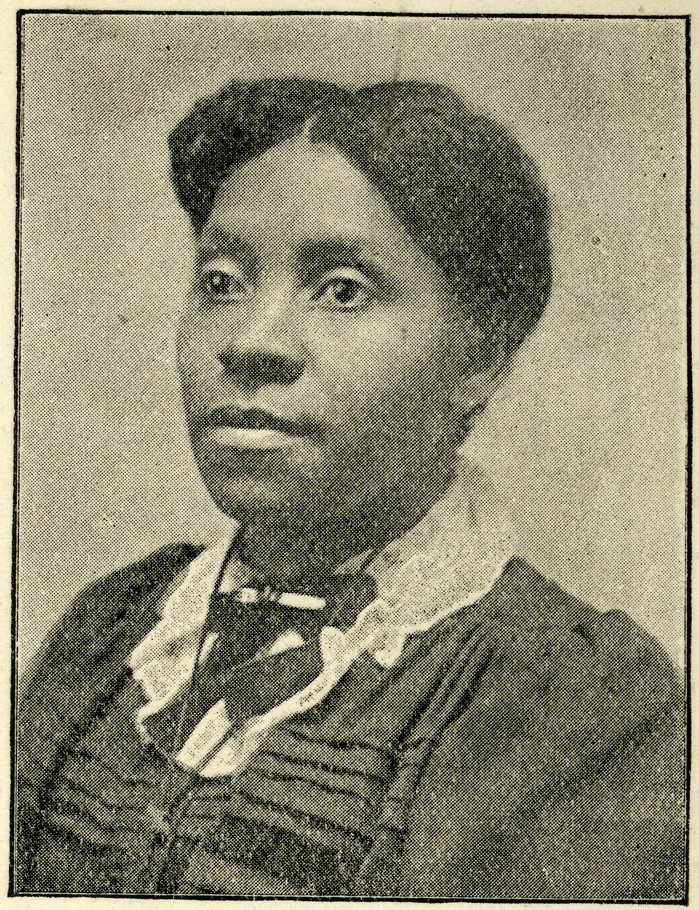
While Terrell and his colleagues worked to undermine federal civil rights legislation and restrict voting rights, Black Americans consistently pushed for more expansive visions of citizenship as voters, soldiers, and elected officials. Debates about American democracy did not only take place in the national capital and state legislatures, however. They also materialized at the local level, in the churches, schoolhouses, and other community institutions that formerly enslaved people built following emancipation. While Suri explores how Black men redefined citizenship through military service and political participation, his emphasis on formal politics sometimes obscures Black women’s contributions. In addition to serving as nurses, educators, and caretakers, Black women who lacked access to traditional political channels sought other ways to assert their visions for society. They played active roles in advocating for individual and collective restitution. For instance, in 1870, Henrietta Wood filed a suit against her former enslaver in a federal court and, after a decade of litigation, won her case. Later, during the 1890s, Callie House mobilized people across the South through the National Ex-Slave Mutual Relief, Bounty, and Pension Association. House and her colleagues lobbied for pensions for ex-slaves and eventually filed suit against the federal government, inspiring many subsequent efforts for reparation. Including these often-overlooked struggles in the narrative would strengthen Suri’s argument and expand our understanding of how these conflicts played out on multiple levels.

A black-and-white photograph of Callie House, who wears a ruffled dress with a lace collar.
A photograph of Callie House, a leader of the national movement to provide pensions to formerly enslaved people. Source: Wikimedia Commons. Original image in the collections of the Department of Veterans Affairs, National Archives Record Group 15.

Suri does many things well in this book. His conceptualization of ongoing debates about American democracy as a continuation of the Civil War “by other means” is compelling, and it offers a useful framework for people interested in exploring contemporary U.S. politics through an historical lens. Suri’s engaging writing style also makes the book appealing to a wide audience. He manages to make complex political history not only accessible but actually enjoyable to read. Finally, this book provides a timely and important critique of several key features of the U.S. political system. In Suri’s words, Southern resistance “thrived [because] it had many advantages in the American democratic system.”[7] By identifying some of these features—including the structure of the electoral college, election certification procedures, and longstanding efforts to restrict voting rights—Suri challenges his reader to think critically about the future of American democracy.

Sarah Porter is a graduate student in the Department of History at the University of Texas at Austin. She studies twentieth century social movements, policing, and mass incarceration in the United States.


[1] Jeremi Suri, Civil War by Other Means: America’s Long and Unfinished Fight for Democracy (New York: Public Affairs, 2022), 261.

[2] ibid., 27.

[3] ibid., 256.

[4] ibid., 270.

[5] ibid., 9.

[6] ibid., 65.

[7] ibid., 259.

The views and opinions expressed in this article or video are those of the individual author(s) or presenter(s) and do not necessarily reflect the policy or views of the editors at Not Even Past, the UT Department of History, the University of Texas at Austin, or the UT System Board of Regents. Not Even Past is an online public history magazine rather than a peer-reviewed academic journal. While we make efforts to ensure that factual information in articles was obtained from reliable sources, Not Even Past is not responsible for any errors or omissions.
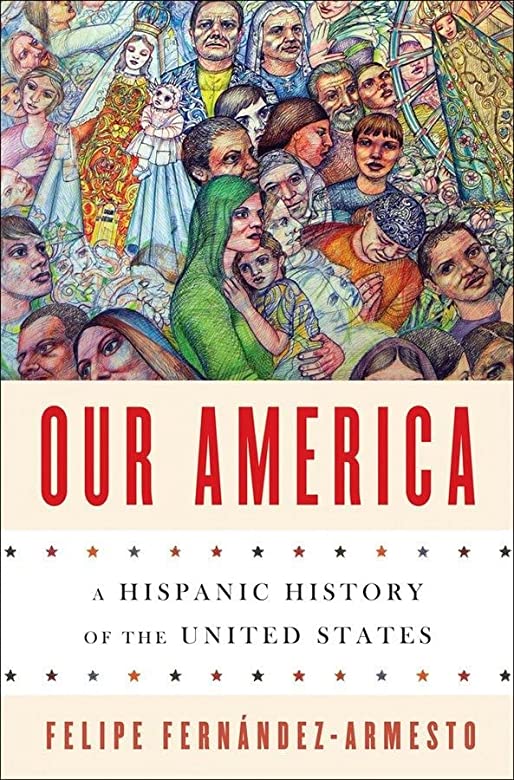
Review of Our America: A Hispanic History of the United States, by Felipe Fernández-Armesto (2014)

banner image for Review of Our America: A Hispanic History of the United States, by Felipe Fernández-Armesto (2014)

From the editors: One of the joys of working on Not Even Past is our huge library of amazing content. Below we’ve updated and republished Jorge Cañizares-Esguerra’s brilliant and moving review of Felipe Fernández-Armesto’s magisterial Our America: A Hispanic History of the United States.

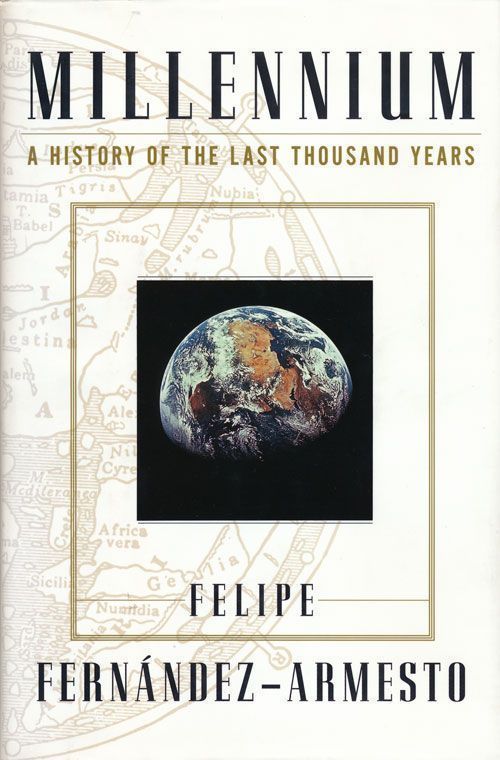
I first came across Felipe Fernández-Armesto many more years ago than I care to admit: I met his words first, before I met him. I was dazzled by Felipe’s Columbus: the flow, the style of his writing, the power of his argument. And then I came across Millennium. I had just finished graduate school and I was earning my bread and butter teaching large survey classes of Latin American History, and even larger ones of World History. I was to offer kids sweeping panoramas: from the age of the dinosaurs to current events, namely, the Cold War. Global history was yet to produce a multimillion dollar textbook industry. So Millennium came to me as a breadth of fresh air: irreverent, fast paced, learned, entertaining, full of strange and fascinating vignettes, from Ming China to Peronist Argentina. I was then writing my How to Write the History of the New World. I had a fellowship to the John Carter Brown Library.

book cover for Millennium

One of the first things I learned at the JCB was that Felipe occupied the office right next to ours. We had 8 cubicles. His was for him, alone. He kept sherry in his office. His accent and demeanor made him seem unapproachable. I don’t remember the official title he was given, some kind of JCB lordship: The Lord of the Rings, I think. During the fellows’ luncheons he would tear into the other fellows’ arguments with probing, disarming questions, prefaced always by a learned and most insightful comment on any and every field of expertise. When asked about his own research, he would reply “civilizations.” It turns out, that year, he was writing that book. The whole thing was frightening to me at the time.

The John Carter Brown Library's MacMillian Reading Room: a large, richly decorated hall with a high ceiling. Low bookshelves and large pieces of art line the walls.; desks with work stations stand in the middle of the room. A few researchers are visible at the desks.
The John Carter Brown Library’s MacMillan Reading Room, Brown University, Providence, Rhode Island. Source: Wikimedia Commons.

And then one day, I noticed Felipe spoke Spanish. I approached him for the first time in Spanish and a friendship emerged. He came for dinner and met my kids, Sebastian and Andrea, both then toddlers. Later Felipe would read my manuscript and help me improve it before it became a book; he wrote a blurb when it was published; promoted it in England and beyond; got it noticed in The Economist; passed judgment on my tenure; followed me around with letters of support in my peripatetic existence. Felipe and his awesome power changed my career and buoyed up my self-esteem. I owe him big.

Felipe and I share something beyond friendship and a common language: our view of the past. The book before us, Our America, epitomizes that shared view. It is about turning perspectives upside down. It is about reading self-satisfying narratives of the past irreverently, mockingly, unsparingly. It is about elucidating the political work that History, with capital H, does. History creates myths that move and inspire, but it also creates myths that silence. Our America is a book about myths: the fountain of youth, the cities of Cibola, the pursuit of King Arthur, the realm of Queen Calafia, the curse of Zorro, the revenge of Moroni, the republic of Hesperus. Our America narrates the history of the United States from a perspective I have often tried to use myself: from the South, rather than the East.

book cover for our America

The book is divided into three periods: 1) when Hispanics loomed large over the colonial territories that are now the United States; 2) when Hispanics lost power in the 19th century as the Anglo-imperial frontier expanded into the West, Mexico, the Caribbean, Central America, and the Pacific, and when Hispanics came to be seen as racially inferior, misbehaving children to spank and educate; and 3) when Hispanics in the 20th century slowly crawled their way back from marginalization to claim forcefully a central role in the polity, demographically, politically, and culturally.

The first period uses the myths of the fountain of youth, the cities of Cibola, the knights of King Arthur, and the realm of Queen Calafia to demonstrate how the Hispanic dimensions of US colonial history shaped its every detail, from Roanoke to Jamestown, to Plymouth, to Massachusetts Bay, to Charleston, to the Ohio River Valley, to the siege of Yorktown. From the Puritan plantations to the American Revolution. Hispanics shaped every colonial event described in college textbooks.

The second period makes for tearful, tragic reading:  losses, lynching, brutality, and racial slurs aimed at Hispanics, Indians, and Blacks, all lumped together. Felipe follows El Zorro and the Mormon prophet Moroni to describe the losses of California, Texas, the Rockies, the Marianas, Guam, the Philippines, and Puerto Rico, where Hispanics, Blacks, Comanche, Sioux, Apache, and Pacific Islanders had created shared worlds together for generations. Those shared worlds were found in the prairies, on the Mississippi (from the Ohio all the way to Louisiana), and on the Pacific coast (from Monterrey and Baja to Manila). These worlds surrendered to industrialization, machine guns, railroads, steamboats, industrial tractors, and millions of land hungry illegal immigrants from England, Germany, Italy, Ireland, Norway, and Central Europe, who came to the land to act as, say, Texas Rangers and carry out genocide.

The third period is not less tragic; it narrates the age of braceros and forced deportation, from the Great Depression to the Great Recession. Felipe reminds us that liberal Obama, who won his first and second presidency on the back of the Hispanic vote, has deported 1.4 million undocumented immigrants, four times as many as George W Bush, who only managed to deport 400,000. But this age of violence and racism, and merciless labor exploitation, has also experienced the Return of Aztlan: a huge demographic explosion, the Chicano movement, Cesar Chavez, and Civil Rights. And it also seems to be on its way to turning the Anglo republic into a republic of Hesperus, the king of the Hesperides, whose islands the chronicler Fernandez Oviedo claimed where in fact Hispanic colonies.

Seven men in work clothes pose for a photograph in a beet field near Stockton, California in this black-and-white photograph.
Marjory Collins, photographer. Stockton (vicinity), California. Mexican agricultural laborer topping sugar beets. 1943. Source: Library of Congress Prints and Photographs Division.

There is little with which to take issue in this book. I share Felipe’s perspective and passion. I wish I could claim I also share his panache, wit, and style. The book is filled with insight, one-liners, and striking reversals of traditional narratives. Let me share with you a few:

  1. Describing how millions of acres were stolen from rancheros in Texas, Nuevo Mexico and California in the 19th century to create large Anglo latifundias, Felipe points out: “The notion that US rule always broke latifundias and introduced morally superior smallholders is risible.”
  2. His account of guerrilla fighters and rebels like Joaquin Murrieta who acted as social bandits in Texas and California explores also the emergence of the literary character of El Zorro as the first superhero to emerge in the US. Felipe then adds: “It is to me a delicious irony that a great line of American superheroes, with their lone trajectories, their alienating experiences, the disguises that place them outside society, and the astonishing dexterity with which they stun evildoers, goes back to a prototype who was a legend of anti-US resistance.”
  3. His description of what the arrival of Anglo capital and law into New Mexico meant, is guided by the reading of the autobiography of Agnes Morely Cleaveland. After a description of her romantic narrative of frontier violence and odd Anglo characters, Felipe bitingly concludes: “Agnes Cleaveland was the chronicler of the Americanization of New Mexico, and her evidence, because it is neutral, is decisive in demonstrating that the United States was not a “civilizing influence.” On the contrary it brought more lowlifes, scapegraces, and refugees from civilization to the colony than ever before.”

I could multiply the examples, but you get the point.

I would not do my job if I were not to deliver some critical comments on Felipe’s book. So to conclude, let me offer a few.

I enjoyed the first section more than I did the second and the second more than I did the third. The third section on the revitalization of Aztlan and the return of Hispanics into the mainstream of America follows the Chicano narrative too closely to offer fresh insights. How to present Hispanics as something more than undocumented or exploited laborers? How to populate the more recent history of the Hispanic diaspora with Nobel Prize winners, scientists, philosophers, economists, opera singers, and captains of industry to offset the dominant image of popular culture, one of curvaceous Shakira and awesome yet corrupt baseball players? And there is the history of the reverse: the “USification” of Latin America, namely, the transformation of a region by capital, values, and returnees from the United States. In the South there lies the Anglo just as deeply within as lies the Hispanic within the North. We can no longer sever the Hispanic from the Anglo, neither here nor there.

The second section on tragic outcomes, therefore, could have been balanced by a more continental approach of mutual influences, cutting both ways. It could have yielded a narrative of Hispanic influence and continental creativity beyond the bandit and the pistolero. I have in mind the printing presses of Philadelphia that in the first half of the nineteenth century became an endless source of books and ideas, shaping Latin America’s public sphere, just as much as did the books printed in London or in Paris in Spanish in the nineteenth century. There is also the case of the origins of American international law and the law of nations that Greg Grandin has so insightfully described in a recent article in the American Historical Review. Grandin shows that jurisprudence and identities, both in the North and South, were the product of codependences and mutual influences. In short, the Hispanic 19th century in the US is much more than dispossession and violence (for other examples of what is possible, see also Gregory Downs’ provocative essay on the Mexicanization of 19th-century American Politics).

The first section is for me the most satisfying and the one about which I know most. It manages to do what was a call to arms for me in 2006, namely, to Iberianize the early modern Atlantic. There are a few Puritan Conquistadors walking through Felipe’s pages. I therefore felt confirmed, justified, in short, delighted. But even here more could be done. I have encountered, for example, English Calvinist debates on colonization, in the 1610s in 1629 that were thoroughly shaped by Iberian categories of dominium and sovereignty. The odd figure of Roger Williams with his radical ideas about religion and state can better be interpreted if we put him in dialogue with Las Casas. Williams knew well the ideas about the radical separation of spiritual and temporal sovereignty so forcefully presented by Bartolomé de Las Casas and Francisco de Vitoria to undermine any Spanish claims of rightful possession of property and authority in the Americas. Williams got to his ideas about state and religion by first offering a critique of Calvinist and Stuart notions of dominium and sovereignty in America. This facet of Williams completely escaped Edmund Morgan’s pioneering study published 50 years ago. In 2012 it continues to escape John Barry, whose Roger Williams and the Creation of the American Soul remains as parochial as Morgan’s. Both Barry and Morgan should have known better had they not be so provincially Anglo: to study Williams is to study Las Casas and Vitoria. To paraphrase Berry and to capture Felipe’s spirit, to study the creation of the American soul is in fact to study the creation of the Hispano-American soul.


The views and opinions expressed in this article or video are those of the individual author(s) or presenter(s) and do not necessarily reflect the policy or views of the editors at Not Even Past, the UT Department of History, the University of Texas at Austin, or the UT System Board of Regents. Not Even Past is an online public history magazine rather than a peer-reviewed academic journal. While we make efforts to ensure that factual information in articles was obtained from reliable sources, Not Even Past is not responsible for any errors or omissions.

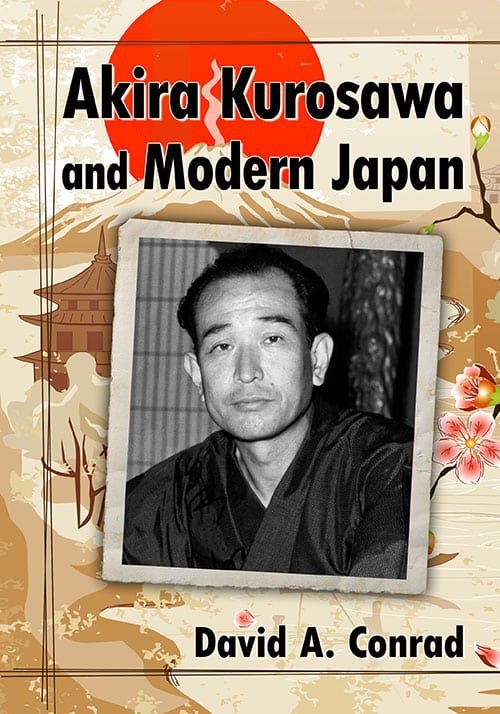
Review of Akira Kurosawa and Modern Japan (2022) by David Conrad

banner image for Review of Akira Kurosawa and Modern Japan (2022) by David Conrad

Akira Kurosawa (1910-1998) must be one of the most written-about directors in film history. There are over 20 books in English exclusively devoted to Kurosawa. These include Donald Richie’s The Films of Kurosawa (1965), David Desser’s The Samurai Films of Akira Kurosawa, (1983), Stephen Prince’s The Warrior’s Camera: The Cinema of Akira Kurosawa (1991), Yoshimoto Mitsuhiro’s Kurosawa:
Film Studies and Japanese Cinema
(2000), just to name a few—not to mention studies in which Kurosawa serves as a crucial point of reference.

As the first Japanese director to win at an international film festival and the most well-known outside of Japan, Kurosawa has attracted prolonged interest and extensive studies not only because of his idiosyncratic style but also to the shifting cultural and historical contexts under which his films were conceived and produced. The director remained active throughout his career of over 50 years from the mid 1940s to the 1990s and made 30 films in total.

While many existing studies strive to articulate the enticing form and aesthetics of this film master, historian David Conrad’s Akira Kurosawa and Modern Japan (2022) contributes to the large body of Kurosawa scholarship by putting the turmoil and transformation of Japanese society in the latter half of the 20th century under the spotlight when reading Kurosawa’s films.

book cover

Unlike many previous studies, which tend to focus on a small body of Kurosawa’s films (such as his samurai films, for example) or on a single film at length, Conrad pays equal attention to all Kurosawa’s films. The plot, narrative, film technique and style of the film play only a partial role in Conrad’s appreciation of Kurosawa, and he seamlessly interweaves biographical information, anecdotes, and sociopolitical context into his readings. Each one of Kurosawa’s films, in their own way, provides a window into a specific moment of Japan’s modern history and captures the zeitgeist of that moment. In this way, Conrad sees even the “historical dramas” (jidaigeki) of the director as “contemporary drama” (gendaigeki), and as he aptly puts it, all of Kurosawa’s films could be treated as “products of the jidai (meaning “period” or “era” in Japanese) that make up Japan’s dramatic, painful, inspirational, contradictory 20th century” (1).

The author often opens a new chapter by laying out the social backdrop and historical events around the year when the film was released, before diving into the film. Kurosawa’s career spanned the Shōwa era (1926-1989), the reign of emperor Hirohito, to the Heisei era (1989-2019), with the accession of his son Akihito. Conrad divided the director’s oeuvre into four periods: “The War Years” includes 3 films from Sanshirō Sugata (1943)to Sanshirō Sugata Part II (1945), “The Occupation Years” with 10 films from The Men who Treaded on the Tiger’s Tail (1945) to Ikiru (1952), “The Miracle Years” includes 10 films from Seven Samurai (1954) to Redbeard (1965), and “The Global Years” with 7 films from Dodesukaden (1970) to Mādadayo (1993). This reminds us that this study is as much about Kurosawa the auteur as it is about modern Japan.

Each chapter deals with one film, and the author reads the scenes, images and dialogues closely to excavate details in which history seeps through. Several recurring motifs come to the fore in Conrad’s study of the correlation between Kurosawa and modern Japan. First is the U.S.–Japan relationship. The role played by the U.S. in shaping Japan’s postwar domestic and foreign policies cannot be overemphasized, and Conrad maps out a well-rounded picture of the changing power dynamic between the two nations through Kurosawa’s Drunken Angel (1948), The Bad Sleeps Well (1960), Yojimbo (1961), and Kagemusha (1980), among others.

The second key issue is censorship, from the wartime military government (1940-1945) to the Occupation forces (1945-1952) and the post-occupation Japanese government. Referencing both the production records and interviews with the director, Conrad identifies the varying nature and logic of these different censorship regimes and the ways that Kurosawa navigated multiple transitions from one phase to another or within one dominant regime. For example, Conrad points out that despite the fact that “feudal themes” were prohibited after the beginning of the Occupation, Rashōmon (1950), a film set in premodern Japan and containing obvious “feudalistic” content, was produced and made its way onto the big screen only because the start of the Korean War (1950-1953) had rendered it imperative for American censors to loosen control in order to show “democracy” in action. Kurosawa seized the opportunity and exploited the fertile ground of Japan’s past for storytelling.

The third topic central to Conrad’s reading of Kurosawa is the shifting gender politics of modern Japan. From Taishō women’s rights movements in the 1920s to women working in the military factories during wartime, from the pan-pan phenomenon (i.e., street prostitutes who served mainly the GIs) during the Occupation to the emerging feminist activists since the 1960s, Conrad shows how Kurosawa engages through his films with matters of women’s rights and status in modern Japan.

One of the merits of Conrad’s approach is the ways in which he reads the social dynamics and history of 20th-century Japan out of Kurosawa’s jidaigeki (films situated in premodern Japan before the mid-19th century). He argues persuasively that “jidaigeki imitate the past but tell us about their present.” (101) For example, Kurosawa’s Seven Samurai (1954) takes place in 1586 Sengoku Japan and tells a story focused on seven masterless samurai helping farmers repel a group of bandits who harass the village and loot their crops. Despite the temporal distance between the story’s setting (1586) and the time when the film was made (1954), Conrad thoughtfully demonstrates how the 16th-century peasants’ conundrum in the film mirrors that of Japanese farmers working under American’s land reform policies after 1947. Moreover, the feudal caste structure between peasant and samurai in the film sheds light on the enduring social inequalities and fixed class hierarchy in post-Occupation Japan when the nation as a whole got wealthier. The elaborate village defense plan and the ad hoc soldiers in the film offer a political parallel to Japan’s de facto army, the Self Defense Force, established with the help of the U.S. in 1950 as a reaction to Korean War.

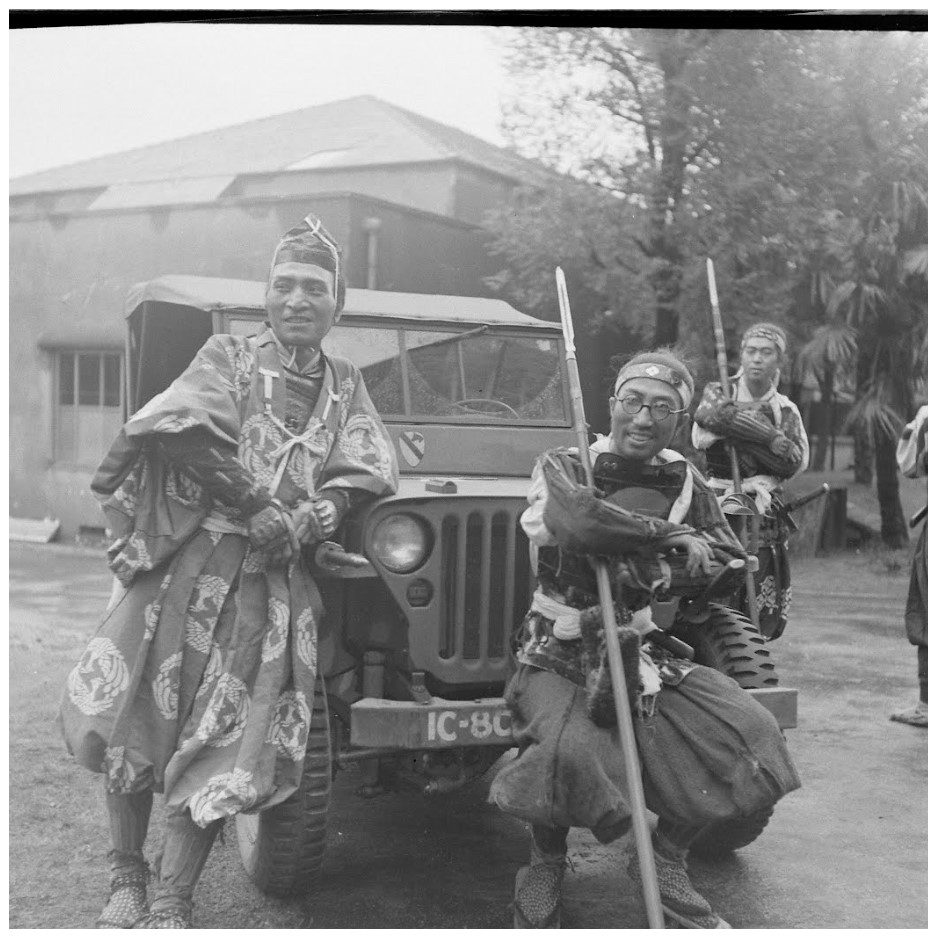
Historical drama meets modern Japan: three male actors--all dressed incongruously in period clothing, two of whom are holding wooden spears--pose for a photo in alongside an American-made Jeep during the filming of a Kurosawa movie in 1945.
Three actors in period clothing pose for a photo in front of an American-made Jeep during the filming of Kurosawa’s historical drama The Men Who Treaded on the Tiger’s Tail (1945). Source: Wikimedia Commons.

This kind of analysis is what makes this book distinct from both the conventional historical textbooks and even film studies. It focuses on the contextual dimension of an auteur’s oeuvre without ever losing sight of the films themselves. It uses film as a portal leading its readers to an understanding of the entangled and layered nature of wartime and postwar Japanese history.  Readers learn both political and historical “hard facts” but also aspects of Japanese culture including traditional wedding attire, garbage disposal regulations, folk monsters, evolving beauty standards, and even the Japanese obsession with cats.

Akira Kurosawa and Modern Japan is a historically- and culturally-grounded study of the director. It is both an informative and enjoyable read for anyone who finds the director’s works appealing and wish to know more about the historical and social condition that made them possible.


Yunfei Shang is a PhD student in the Department of Asian Studies at the University of Texas at Austin. She works on East Asian cinema, film and media theory, digital cinema and media revolution. Her dissertation project deals with the popularity and influence of Japan’s media products especially film, TV documentary and drama in mainland China since the late 1970s.

The views and opinions expressed in this article or video are those of the individual author(s) or presenter(s) and do not necessarily reflect the policy or views of the editors at Not Even Past, the UT Department of History, the University of Texas at Austin, or the UT System Board of Regents. Not Even Past is an online public history magazine rather than a peer-reviewed academic journal. While we make efforts to ensure that factual information in articles was obtained from reliable sources, Not Even Past is not responsible for any errors or omissions.
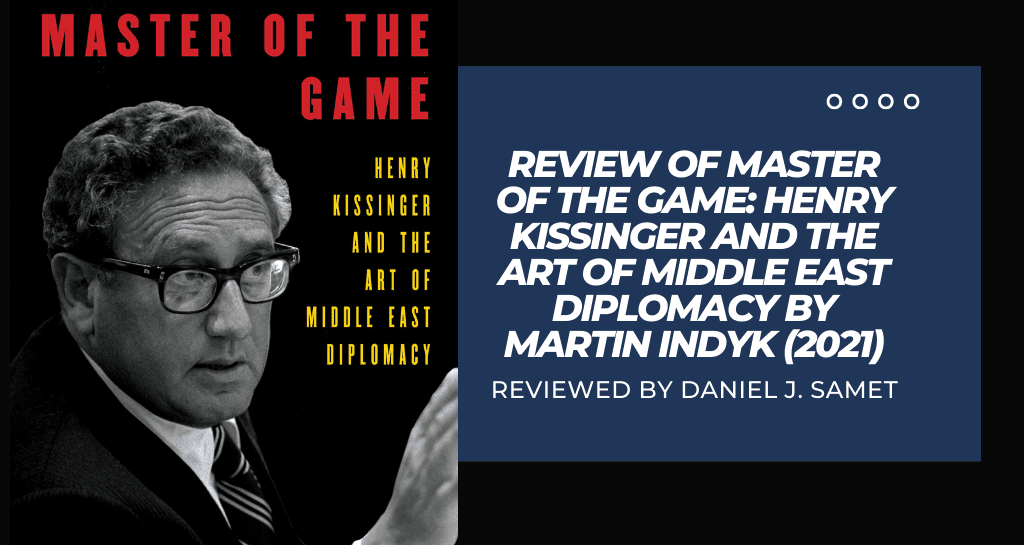
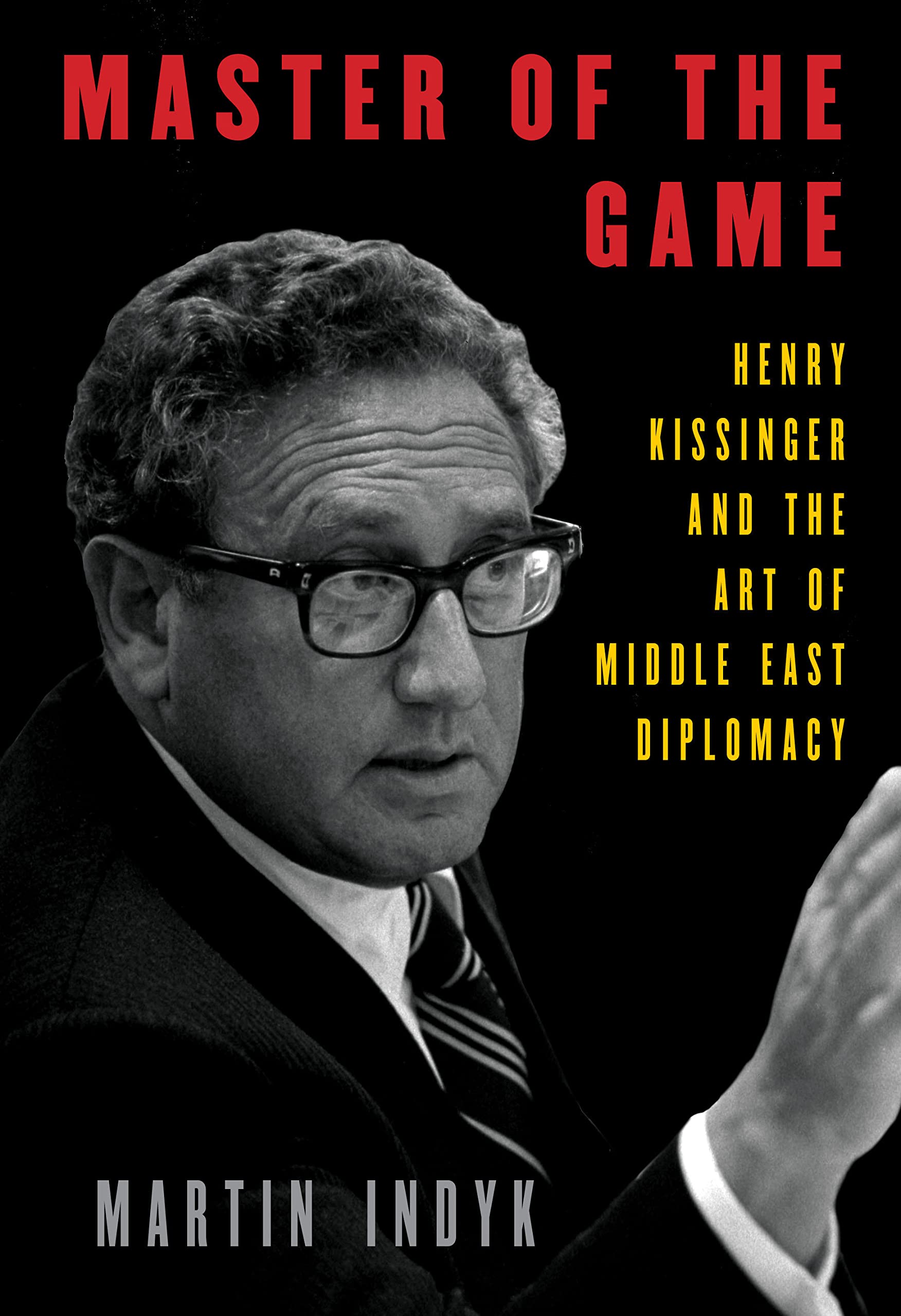
Review of Master of the Game: Henry Kissinger and the Art of Middle East Diplomacy (2021)

banner of Review of Master of the Game: Henry Kissinger and the Art of Middle East Diplomacy (2021)

This is no ordinary work of history. That’s a good thing. As opposed to many scholarly studies, this book has an author with real-world experience in his field. Martin Indyk, who served as U.S. Ambassador to Israel and Assistant Secretary of State for Near Eastern Affairs under Clinton and Special Envoy for Middle East Peace under Obama, knows the Middle East like the back of his hand.

The same could not be said of his biographical subject before the Yom Kippur War. While orchestrating détente with the Soviet Union and an end to America’s presence in Vietnam, Henry Kissinger had his mind elsewhere and spared few thoughts for the Middle East. But that changed abruptly when Israel and its Arab foes took up arms once again in October 1973.  

Thereafter Kissinger went above and beyond in his regional outreach. Master of the Game documents how over the next two years, the secretary of state held many meetings with Arab and Israeli interlocutors in seeking a lasting peace. From his shuttle diplomacy came a string of disengagement agreements: two between Israel and Egypt and one between Israel and Syria. In Kissinger, Indyk sees a brilliant practitioner of statecraft whose pragmatic, incremental approach succeeded where others had failed.

Driving Kissinger’s relentless diplomacy was a particular vision for the Middle East. This vision, argues Indyk, modeled itself on the order Metternich, Castlereagh, and Talleyrand forged for post-Napoleonic Europe (the subject of Kissinger’s dissertation-cum-monograph A World Restored). The question of whether a bespectacled academic well-versed in European statecraft could apply his wisdom to the Middle East was soon answered.  

Although Indyk is mainly interested in American decision-making, Arab and Israeli officials are not mere bystanders in his story. He writes at length about how the likes of Ismail Fahmy, Yitzhak Rabin, and Hafez al-Assad sized Kissinger up, not just the other way around. No number of American carrots and sticks could make both sides come to terms with one another. Those were decisions they alone could make. Present and prospective policymakers should bear in mind that however strong the United States may be, Middle Eastern countries can always push back.       

Henry Kissinger meeting King Faisal in Riyadh, Saudi Arabia to review the Middle East peace process and bilateral relations on March 19, 1975.
Henry Kissinger meeting King Faisal in Riyadh, Saudi Arabia to review the Middle East peace process and bilateral relations on March 19, 1975. Source: Saudi Press Agency

Indyk shares lessons he has drawn from Kissinger’s accomplishments. One of these is the role of domestic politics. In the United States, Kissinger faced pressure from pro-Israel voices to be as generous as possible toward the Jewish state. Israel witnessed a premiership change during the period in question (due to Golda Meir’s perceived weakness) and had many constituencies to placate. The Egyptian and Syrian governments were not democratic but nonetheless were mindful of public opinion.          

Some of the strongest lessons are those unique to Israeli-Palestinian peacemakers. As Indyk observes, Washington cannot make things happen on its own. All the more so when it eagerly pushes Arab and Israeli officials to the negotiating table where “a sense of urgency is often absent” (304). The fact that Americans are keen to strike deals does not mean Arabs and Israelis are.   

Although he does not deify Kissinger, Indyk risks overstating his importance. Kissinger clearly played an important role in bringing Arabs and Israelis together and negotiating  the details of their agreements, but is it fair to anoint him “Master of the Game?” Calling him as much masks Kissinger’s considerable shortcomings in his shuttle diplomacy.

These are shortcomings that Indyk acknowledges. For instance, Kissinger’s ignorance of Middle Eastern politics made him “underestimate the importance of the Palestinian issue in the legitimation of his American-led order” and sideline King Hussein and the Jordanians when they could have been invaluable peace brokers (554). Kissinger’s amoral realism left little room for matters beyond power politics, but he would learn the hard way that Arab leaders were willing to go to the mat for the Palestinians.

That realism was the only reason why Kissinger was in the Middle East in the first place. In facilitating these Arab-Israeli negotiations, he sought to wrest Egypt, and to a lesser extent Syria, from the Soviet sphere. In so doing, he also hoped to create a stable balance of power that would avert wars like the one in 1973.

Ultimately, Israel grew strong enough to resist pressure to give concessions to Arab adversaries, and it has neither concluded a peace treaty with the Syrians nor a final-status agreement with the Palestinians. Yet Indyk shows convincingly that Kissinger did not intend for Israel to turn into the regional superpower it became. Such an outcome was discordant with his Metternechian worldview and did not redound to his goal of making Egypt and Syria centerpieces in a new U.S.-aligned Middle East. Then as it does now, self-interest mainly explained America’s presence in that far afield place.    

This photograph depicts President Gerald R. Ford and ambassadors from countries in the Middle East seated around a table in the Roosevelt Room at the White House on the day he was sworn into office. Meeting participants include Abdelkader Maadini of the Algerian Interests Section, Ashraf A. Ghorbal of Egypt, Riad Sabri of Jordan, Jamil Al-Hassini of Kuwait, Joseph Akl of Lebanon , Ali El-Gayed of Libya, Saad Taib of Morocco, Ahmed Macki of Oman, Adullah Saleh Al-Mana of Qatar, Ibrahim Al-Sowayel of Saudi Arabia, Mamoun Abdel Gadir Yousif of Sudan, Sabah Kabbani of Syria, Amor Ardhaoui of Tunisia, Hamad Abdul Al Madfa of the United Arab Emirates, and Yahya H. Geghman of Yemen. Secretary of State Henry A. Kissinger and State Department officials Alfred L. Atherton and David A. Korn also attended.
President Gerald Ford and Secretary of State Henry Kissinger meet with ambassadors from the Middle East in the Roosevelt Room, circa 1974. Source: Gerald R. Ford Library

For all of Indyk’s criticisms of Kissinger, his admiration of the man is palpable. Indyk’s service in two administrations that failed to achieve a final Israeli-Palestinian peace deal has helped him appreciate how extraordinary Kissinger’s diplomatic accomplishments in this part of the world were. As Indyk shows in Master of the Game, negotiation, and diplomacy require considerable skill.

Those at odds with Indyk’s methodological approach might say he gives too much importance to  Kissinger the individual. Why not give credit to the legions of government staff and civil-society actors who worked so hard to make these agreements happen? Does Kissinger truly deserve the star billing he gets? These are genuine questions, but, in my view, the choice to make Kissinger the central figure in this story stands up to scrutiny. Arab and Israeli leaders negotiated through him. No one else spent more time in conversation with them or diplomatic capital in bringing both sides together. Kissinger undoubtedly was the sine qua non.    

On a separate note, this book puts the lie to charges that the United States has given Israel whatever it wants. To the contrary, there is ample evidence of U.S.-Israel friction. The Israeli side often frustrated Kissinger. The barbs traded with Prime Minister Golda Meir could be ferocious. She could not believe a fellow Jew could be so dismissive of Israel’s security interests, while he resented Israeli intransigence. Under Rabin’s government, too, the Americans and Israelis gave each other an earful over seemingly minute details. Thanks to plentiful American and Israeli sources, Indyk makes exchanges like these lively and engaging. In this way, Master of the Game is the latest installment in a literature that has cast the U.S.-Israel relationship as one of tension and compromise rather than harmony. See Dennis Ross’ Doomed to Succeed: The U.S.-Israel Relationship from Truman to Obama (2015) for another example.

Master of the Game: Henry Kissinger and the Art of Middle East Diplomacy:  Indyk, Martin: 9781101947548

Evidence in the book should also dispel the view that Kissinger was heartless. On his way out of Israel without a peace treaty in March 1975, Kissinger started crying after declaring “we have no other goal except to enable the young people in this area to grow up without the fear of war” (478). While he has been criticized for his alleged callousness, this book shows that Kissinger, albeit unwaveringly devoted to his craft, was not immune to emotion.                 

Those who’ve had enough of America’s misbegotten adventures in the Middle East might be tempted to skip this book. That would be their loss. Master of the Game tells the story of an overall successful policy of negotiation. A superpower got many of its sought-after objectives by engaging a handful of middle powers. As great-power rivalry returns to Asia, Europe, and elsewhere, American policymakers would do well to learn from Kissinger’s example.  

In telling a remarkable story, Master of the Game proves it is possible to write well without sacrificing scholarly standards. The book includes its fair share of colloquial gems—Israeli Defense Minister Moshe Dayan “sounded like an excited bro planning a fraternity party” while talking to Kissinger, we’re told (256). Forgoing the heavy prose that can mar academic writing, Indyk makes this book accessible to the lay reader. That might be a function of his time in the government, where it pays to shun the abstract for the concrete.        

At the same time, Indyk’s book is firmly grounded in historical evidence. Among the archives Indyk consults are the Nixon and Ford Presidential Libraries, the Department of State’s Office of the Historian, and the Israel State Archives. He gives the sources their due. Policymakers in search of historical background and practical advice would do well to read this book. Inside they will find a road map for remedying seemingly intractable disputes, not only in the Middle East but perhaps in the world beyond.  


Daniel J. Samet is a Ph.D. student in History at the University of Texas at Austin, where he is a Graduate Fellow at the Clements Center for National Security.  

The views and opinions expressed in this article or video are those of the individual author(s) or presenter(s) and do not necessarily reflect the policy or views of the editors at Not Even Past, the UT Department of History, the University of Texas at Austin, or the UT System Board of Regents. Not Even Past is an online public history magazine rather than a peer-reviewed academic journal. While we make efforts to ensure that factual information in articles was obtained from reliable sources, Not Even Past is not responsible for any errors or omissions.

    

Review of Pulp Empire: The Secret History of Comic Book Imperialism (2021)

banner image for Review of Pulp Empire: The Secret History of Comic Book Imperialism (2021)

Over the last decade, the Marvel Cinematic Universe (MCU) has grown into the most profitable media franchise in history. As of January 2022, the MCU accounted for four of the top ten-grossing films of all time. The expansive collection of films ranging from Iron Man (2008) to Spider-Man: No Way Home (2021) has captured the imagination of new generations of viewers and taken the genre to new heights of commercial and critical success. In Pulp Empire: The Secret History of Comic Book Imperialism, Paul Hirsch explores the origins of these superheroes who have experienced such a profound renaissance in recent years. Hirsch examines comic books as instruments of American empire and unpacks the complicated relationship between government and publishers that have shaped these comic books’ imagery and messages over their eighty-year history.

book cover for Pulp Empire: The Secret History of Comic Book Imperialism

Hirsh’s book marks an impressive effort to elucidate the political, cultural, and diplomatic legacies of an artifact that has been regarded by many as “trash.” Such attitudes have meant that cartoons’ history has “been obscured through shame, malice, and benign indifference.” Yet, Hirsch has turned up treasures through his tenacious research and the full-page, full-color reprints splendidly illustrate his analysis throughout.

Pulp Empire traces the dynamic relationship between the industry and state and federal governments, a connection that influenced comic books’ development throughout the twentieth century. Hirsch characterizes the emergence of comic books in the 1930s as products that exploited the creative energies of marginalized men and women. Writers and artists were stingily compensated for their work, while publishers began profiting handsomely as the pamphlet’s popularity rose. American entry into World War II led the industry in a new direction as the US government sought to use comic books as propaganda to generate support for the war effort and promote racial stereotypes about the nation’s adversaries. The government largely stopped regulating the medium following the war and, during subsequent decades, the industry began to depict darker stories as American society lived under the pall of nuclear warfare. Pages were soon filled with gruesome images of crime, violence, and the destructive effects of atomic explosions.

cover for  "The Fighting Yank," on the cover of Startling Comics
“The Fighting Yank,” on the cover of Startling Comics #10, Sept. 1941. Art by Elmer Wexler. Source: Digital Comic Museum

Such seedy scenes and pervasive racist attitudes in comic books invited criticism on several fronts. Hirsch profiles anti-comic campaigners who decried these pamphlets as corrupting influences on American youth that contributed to rises in crime and juvenile delinquency. Others took a different tack and warned that stories effused with racial enmity eroded American credibility as a beacon of hope and democracy abroad during the intensifying ideological conflict of the Cold War. Hirsch shows how these efforts ultimately resulted in self-imposed censorship.  New covert collaboration between the government and publishers crafted fresh characters and narratives to serve as propaganda designed to condemn communism and improve attitudes toward the United States. Several superheroes who have gained acclaim in recent films, such as Iron Man, Thor, and Spider-Man, were born from this public-private partnership and acted as implicit (or in some cases explicit) agents of US foreign policy.

Pulp Empire is filled with fascinating anecdotes and incisive analysis of the ephemera of the US empire. This book offers something for an array of audiences, from fervent comic book fans to historians of American foreign policy. Hirsch deftly deals with several dimensions of comics’ hidden history, from their perpetuation of racist and sexist tropes to their use as a unique tool of soft power popular abroad across class lines. Finally, Hirsch’s analysis of the debates over the atomic age played out in comic book pages proves both entertaining and enlightening. Pulp Empire effectively interrogates the intersection between politics and popular culture and profiles how superheroes have been deployed to serve American expansionist goals. 


Jon Buchleiter is a third-year Ph.D. student in the Department of History at the University of Texas at Austin. He studies United States history with particular interest in US foreign policy of the Cold War. His current research examines the institutionalization of arms control and disarmament efforts and successive administrations approached and prioritized arms control initiatives. At UT, Jon is a Graduate Fellow with the Clements Center for National Security and Brumley Fellow with the Strauss Center for International Security and Law. Jon received his BA in Peace, War, and Defense and Political Science from the University of North Carolina at Chapel Hill.

The views and opinions expressed in this article or video are those of the individual author(s) or presenter(s) and do not necessarily reflect the policy or views of the editors at Not Even Past, the UT Department of History, the University of Texas at Austin, or the UT System Board of Regents. Not Even Past is an online public history magazine rather than a peer-reviewed academic journal. While we make efforts to ensure that factual information in articles was obtained from reliable sources, Not Even Past is not responsible for any errors or omissions.
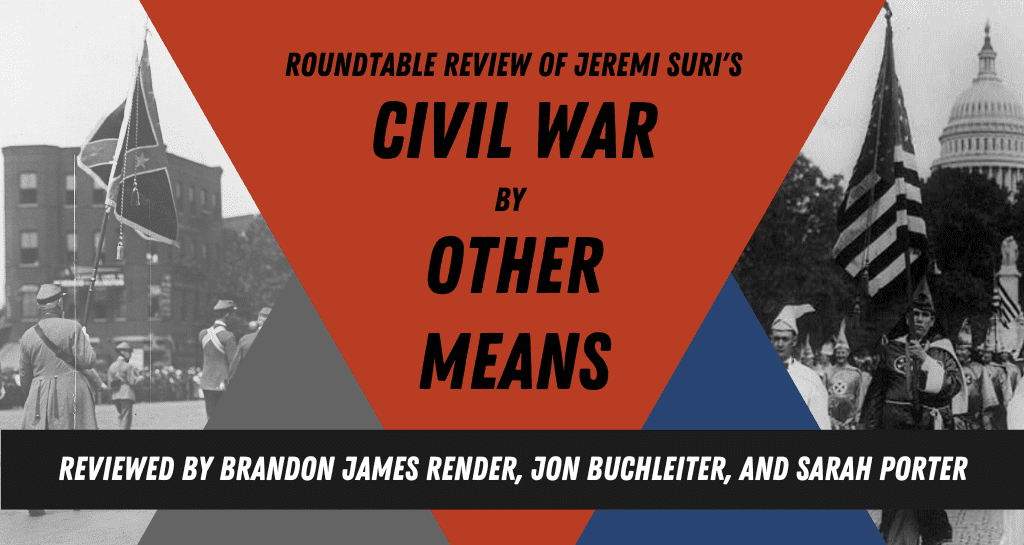
Review of The End of Ambition: The United States and the Third World in the Vietnam Era (2022)

banner image for Review of The End of Ambition: The United States and the Third World in the Vietnam Era (2022)

While most Americans are likely to think of President Lyndon Baines Johnson (LBJ) in connection with the Vietnam War, Johnson himself wanted to be remembered in terms of his domestic achievements in the form of the Great Society. Lacking in many accounts of LBJ are his policies toward the rest of the world. In The End of Ambition, Mark Atwood Lawrence brings into focus U.S. foreign policy during the Kennedy, Johnson, and Nixon administrations, by focusing on the Third World, with the notable exclusion of Vietnam, during LBJ’s tenure. Few scholars are better positioned to undertake this study. Lawrence is currently the Director of the LBJ Presidential Library and Museum and an accomplished scholar specializing in the Vietnam War and more broadly in the history of U.S. foreign policy in the 1960s and 1970s. As an historian steeped in the politics of the era, Lawrence addresses an important shortfall in scholarship on the Johnson Administration and U.S. foreign policy in general.

book cover for The End of Ambition : The United States and the Third World in the Vietnam Era

Lawrence begins by considering the legacy bequeathed to LBJ by John Fitzgerald Kennedy (JFK). Johnson began his presidency by committing to JFK’s agenda and maintained much of his team. This proved problematic as JFK had often failed to establish clear objectives or priorities and seemed to lack a fixed set of guiding principles. In Lawrence’s words the Kennedy administration was a “conglomeration of tendencies, rather than [an] executor of a core set of ideas.” Lawrence reviews the Kennedy Administration’s approach to four countries—Brazil, India, Iran, Indonesia—and one region—Southern Africa—to provide context for his investigation of the Johnson administration’s approach. Supporters of Kennedy might object to Lawrence’s critical portrayal of the JFK administration as lacking context and depth. However, considering Lawrence’s focus on LBJ’s foreign policy pertaining to the Third World, he does an admirable job in providing the right amount of context critical to a nuanced exploration of LBJ’s approach to the third world, without overwhelming the reader.

LBJ’s ambitions in the domestic context were clear, as was his desire to focus on domestic affairs over foreign policy. In line with this basic intent, the Johnson administration adopted a distinct approach to the Third World that, for better or worse, resolved the ambiguities of JFK’s administration. LBJ sought to lower U.S. ambitions in the Third World and reduce risk while shoring up U.S. control over global affairs by establishing or bolstering cooperative regimes. Despite the judgment of many, including LBJ himself, that he lacked foreign policy expertise, LBJ’s approach to international affairs was rooted in intellectual tendencies distinct from those of JFK, not ignorance. Where JFK sought to transform, LBJ sought to manage. Still, Lawrence points out that LBJ was more visionary than JFK in areas that today we refer to as transnational issues. Further, while LBJ’s ambitions in foreign policy may have been tempered by his desire to focus on domestic affairs, he nonetheless displayed the state-building impulse of the 1930s in both the domestic and foreign arenas. This might be expected based on LBJ’s admiration of Franklin Delano Roosevelt and LBJ’s desire to bring to full fruition the wider new deal program.

Five case studies form the heart of Lawrence’s book, covering U.S. policy toward Brazil, India, Iran, Indonesia, and Southern Africa. Central to LBJ’s foreign policy in each of these case studies was a desire to minimize U.S. burdens so as to not further distract from efforts in Vietnam as well as Johnson’s broader goal of advancing the Great Society program. This was the key driver in the LBJ administration’s bringing to power, or enhancing relations with, often authoritarian regimes that could effectively govern and reduce the potential for conflict or communist advances while acting in concert with U.S. interests more broadly. In Brazil, LBJ presided over transformative events and constructed a new relationship with a military regime that effectively dismantled Brazilian democracy. The administration’s patterns and policies in Brazil informed his approach to the Third World for the duration of his tenure. These tendencies included favoring the development of constructive change and democracy over the long-term by countering the danger’s posed by communist movements.

A general labeled "anti democratic rulers" says to President Johnson: "Where I'm in charge, there's absolutely no danger of democratic government being subverted."
This cartoon by Herb Block was published in the Washington Post on May 3, 1965, a few days after U.S. Marines landed in the Dominican Republic to bolster a friendly regime. The cartoon hints at the Johnson administration’s attraction to reliable authoritarian leaders across the Third World. Source: The Herb Block Foundation

With India, LBJ shared Kennedy’s hope that resistance to Chinese expansion would serve as a basis for cooperation, but by early 1966 he was losing hope for reasons including India’s lack of support for U.S. actions in Vietnam. In LBJ’s approach toward India, we see another principle emerge: the emphasis on economic development more so than military assistance. This certainly held true in the case of U.S. policy toward Iran. There was also a China angle in enhancing relations with Tehran as a hedge against Islamabad’s improving relations with China.

In Indonesia, the rise to power of the military led to the “evisceration of the world’s third-largest communist party.” Still, among the countries explored, Indonesia was the most resistant to U.S. influence. The Johnson administration wisely opted for a low-key approach, playing the long game by building influence in select elements of the Indonesian military and society. LBJ and his team viewed Indonesia as a success story that gave American leaders renewed confidence that the Vietnam War was achieving important results even absent a clear military victory. Johnson felt that if the United States had not taken a stand in Vietnam the countercoup in Indonesia in 1965 and the defeat of communism would not have come to pass.

A meeting of the National Security Council on January 7, 1964, reached consensus on the need to keep providing aid to Indonesia despite Sukarno’s provocations. CIA Director John McCone sits at the far end of the table, with Budget Director David Bell to his right and Attorney General Robert F. Kennedy to his left. Around the table in a clockwise direction are Undersecretary of State W. Averell Harriman, Secretary of State Dean Rusk, President Johnson, Defense Secretary Robert S. McNamara, Assistant Secretary of Defense William Bundy, Air Force General Curtis LeMay, an unidentified official, and National Security Adviser McGeorge Bundy.
A meeting of the National Security Council on January 7, 1964, reached consensus on the need to keep providing aid to Indonesia despite Sukarno’s provocations. CIA Director John McCone sits at the far end of the table, with Budget Director David Bell to his right and Attorney General Robert F. Kennedy to his left. Around the table in a clockwise direction are Undersecretary of State W. Averell Harriman, Secretary of State Dean Rusk, President Johnson, Defense Secretary Robert S. McNamara, Assistant Secretary of Defense William Bundy, Air Force General Curtis LeMay, an unidentified official, and National Security Adviser McGeorge Bundy. Source: LBJ Library photo by Yoichi Okamoto

Even though Southern Africa held less strategic importance to the United States, it provoked more political controversy. This was based on intersections with the U.S. domestic context, specifically civil rights. Here Lawrence’s case study differs in that it involves a region, not just a nation, though Rhodesia is the primary focus. Despite the differences, the same patterns and policies were clearly in evidence including a desire to minimize U.S. direct involvement, particularly any type of military involvement. Vietnam was certainly a consideration, but one can also appreciate a sense of realistic assessments and expectations regarding the importance of the region and what U.S. power could accomplish. Although one could argue that an appreciation of U.S. constraints emerged only due to Vietnam, such a judgment seems to underestimate LBJ’s priorities. It is likely that LBJ would have opted for such an approach even absent Vietnam as his priority was the Great Society. In fact, Lawrence’s work supports the contention that LBJ had across a broad basis a preference for restraint overseas and action on the home front.

Lawrence not only covers this history of foreign policy during a critical period in American history, but he also considers patterns and precedents. The title of the book may be mildly misleading in this regard. Lawrence asserts that the United States is shaped by the competing impulses of worldmaking and self-interest. In this context Lawrence asserts that the United States has faced multiple inflection points in which it curbed its worldmaking ambitions in favor of a narrower pursuit of its self-interest. It might be more accurate to say that the United States tempered its ambition, but that the pattern that Lawrence alludes to in the ebbing and flowing of American ambition remains intact and returned with a vengeance in the 1990s.

Lawrence’s volume raises many important issues including the relationship between domestic and foreign policy that in total represent the national interest. There are few case studies as potentially rich in this regard as LBJ’s basic dilemma – Vietnam vs the Great Society. Such a study would provide additional context and understanding of the priorities and rationale guiding how the Johnson administration faced the rest of the world, aside from Vietnam. For scholars of the Cold War, the Kennedy and Johnson presidencies, and U.S. foreign policy toward the third world more generally, Lawrence’s The End of Ambition makes an invaluable and much needed contribution.


Bryan Port is a doctoral student at the University of Texas at Austin and a civil servant with the Department of the Army assigned to U.S. Army Futures Command as a strategist. He is a historian of the United States focusing on U.S. intellectual history. His research interests include the construction and application of the idea of national interest as well as grand strategy. Bryan holds a M.A. in National Security Studies from Georgetown University and a M.S. in National Security Strategy from the National War College. His ongoing research centers on American progressive leaders and thinkers of the first half of the 20th century. 

The views and opinions expressed in this article or video are those of the individual author(s) or presenter(s) and do not necessarily reflect the policy or views of the editors at Not Even Past, the UT Department of History, the University of Texas at Austin, or the UT System Board of Regents. Not Even Past is an online public history magazine rather than a peer-reviewed academic journal. While we make efforts to ensure that factual information in articles was obtained from reliable sources, Not Even Past is not responsible for any errors or omissions.
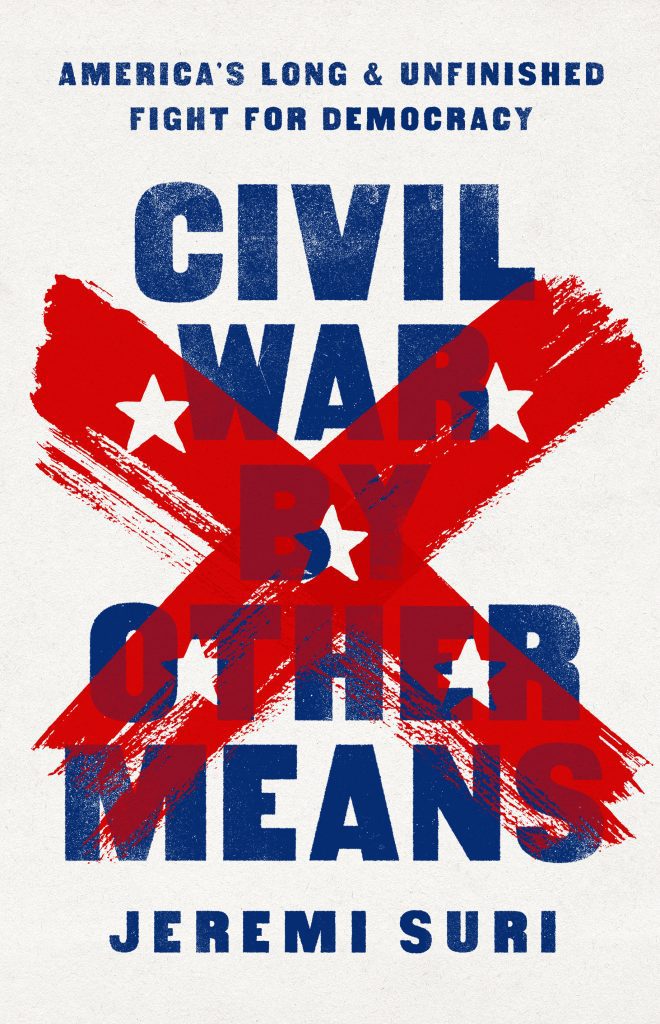
Review of The Approaching Storm: Roosevelt, Wilson, Addams, and their Clash over America’s Future (2021)

banner image for Review of The Approaching Storm: Roosevelt, Wilson, Addams, and their Clash over America’s Future (2021)

In 1914, the United States was an emerging world power. Many of its citizens looked forward to a future defined by more extensive American involvement in global affairs. However, their growing optimism also masked profound disagreements about the kind of role Americans should play on the world stage. Some wanted their country to challenge the political, economic, and military dominance of its European and Japanese rivals. Others hoped that American leaders would ensure perpetual peace by extending the scope of international law, liberal democracy, or corporate capitalism. Rival policy agendas vied for attention in the halls of power and the popular press, sparking heated public debates that touched on virtually every aspect of American foreign relations. The debates themselves, which highlight the broad spectrum of possibilities open to American foreign policymakers at the dawn of the “American Century,” are endlessly fascinating. But because of their variety and complexity, they are also quite difficult to study.

book cover for The Approaching Storm: Roosevelt, Wilson, Addams, and their Clash over America’s Future

The Approaching Storm, a forthcoming book by popular historian Neil Lanctot, attempts to solve this problem by focusing exclusively on the contentious debate over the possibility of American intervention in the First World War. The outbreak of war in Europe at the end of July 1914 dramatically intensified the rivalry between hawks and pacifists in the United States, bringing their worldviews—and the differences between them—into much sharper focus. The ensuing “clash over America’s future” pitted some of the country’s most influential politicians and thought leaders against one another. Three of them occupy center stage in Lanctot’s book: President Woodrow Wilson; his archrival Theodore Roosevelt, who became the leading advocate of military preparedness and war with Germany; and Jane Addams, a world-renowned social reformer and pacifist. The Approaching Storm colorfully describes their involvement in the intervention debate. More ambitiously, it also tries to locate the source of their profound disagreements about the future of American foreign policy. Lanctot contends that his protagonists’ “starkly different” responses to the First World War reflected their “unique visions of what America could and should be” (21).

Although The Approaching Storm is based on extensive archival research, it is primarily intended for popular consumption and eschews extensive engagement with relevant historical scholarship. Nevertheless, professional historians and policy experts will find plenty to admire in Lanctot’s accessible and engaging book. The author is at his best when he writes about Addams, whose pacifism seems a logical extension of her commitment to social justice and her faith in the meliorative power of expertise. His portraits of Roosevelt and Wilson are less analytically rich, but they’re still incisive. The Approaching Storm hints at a relationship between Roosevelt’s obsession with manliness, his assertive approach to domestic politics, and his eagerness for war. It also calls attention to Wilson’s “Machiavellian” political savvy, subtly challenging outdated realist caricatures, which cast the President as a hapless idealist.

Lillian Wald (left) and Jane Addams (right) speak with press correspondents
Lillian Wald (left) and Jane Addams (right) speak with press correspondents, circa 1916.
Source: Library of Congress

Lanctot’s boldest and most provocative intervention may be his decision to reframe the wartime intervention debate as a three-cornered contest. Much has been written about the rivalry between Roosevelt and the more cautious Wilson, who initially supported American neutrality. Yet in The Approaching Storm, it is not Wilson but Addams who draws the sharpest contrast with the hawkish “TR.” Long before Wilson began touting his plans for a League of Nations, Addams envisioned and tried to execute an ambitious, dynamic peacekeeping strategy. Her ultimate goal was to place the United States at the head of a conference of neutral powers capable of ending the war in Europe by diplomatic rather than military means. Lanctot takes this plan very seriously, praising Addams’ pragmatism and pointing out how close she came to winning allies in high places.

Addams, of course, did not emerge victorious from the intervention debate. Instead, in April 1917, Congress—to Roosevelt’s delight and at Wilson’s request—declared a “war to end all wars” against Germany. It was a fateful decision, signaling that the United States was now willing to use armed force against perceived threats to world order. But as The Approaching Storm makes clear, the choice for war was far from preordained. By presenting Addams’ pacifism as a viable policy agenda, Lanctot’s book reminds us that the seemingly inevitable transformation of the United States into a great military power was not, in fact, inevitable at all. Between 1914 and 1917, American leaders could have steered their country down a very different path, committing themselves to forging world peace without fighting Wilson’s “war to end all wars.” Today, as shifts in the global balance of power make American military supremacy increasingly difficult to maintain, that’s something worth thinking about.


John Gleb is an America in the World Consortium Pre-Doctoral Fellow at the Henry A. Kissinger Center for Global Affairs in Washington, D. C. He is also a doctoral candidate in the Department of History at the University of Texas at Austin, where he earned his MA in May 2020. John received his BA at the University of California, Berkeley, from which he graduated with High Honors and Highest Distinction in 2017. At UT, he is a Graduate Student Fellow at the Clements Center for National Security and has appeared as a guest on The Slavic Connexion, a podcast affiliated with the Department of Slavic and Eurasian Studies. He is also fluent in French. John’s research focuses on the rise of the American national security state and on the relationship between foreign and domestic politics in the United States. He is especially interested in the concept of political consensus, a yearning for which has decisively shaped the worldview and activities of American foreign policymakers since the turn of the twentieth century. John’s dissertation will examine attempts to forge a foreign policy consensus both inside and outside the halls of government between 1900 and 1950. Thanks to those early consensus-building campaigns, the national security state that emerged during the Cold War would consist of more than just a cluster of institutions: as John will show, it also encompassed (and continues to encompass) a system of shared values and ideas from which those institutions had to draw power in order to compensate for their formal weakness.

The views and opinions expressed in this article or video are those of the individual author(s) or presenter(s) and do not necessarily reflect the policy or views of the editors at Not Even Past, the UT Department of History, the University of Texas at Austin, or the UT System Board of Regents. Not Even Past is an online public history magazine rather than a peer-reviewed academic journal. While we make efforts to ensure that factual information in articles was obtained from reliable sources, Not Even Past is not responsible for any errors or omissions.
« Previous Page
Next Page »

Recent Posts

  • The Radical Spanish Empire Roundtable – Introduction
  • All Eyes on the Petition: Reflections on The Radical Spanish Empire
  • Forgery, Invention, and the History of Skepticism in The Radical Spanish Empire
  • Iberian Subaltern Political Philosophies and The Radical Spanish Empire
  • Lawfare and the Legal Construction of Race in The Radical Spanish Empire
NOT EVEN PAST is produced by

The Department of History

The University of Texas at Austin

We are supported by the College of Liberal Arts
And our Readers

Donate
Contact

All content © 2010-present NOT EVEN PAST and the authors, unless otherwise noted

Sign up to receive our MONTHLY NEWSLETTER

  • New
  • Features
  • Reviews
  • Texas
  • Teaching
  • Digital
  • Watch & Listen
  • Authors
  • About