• New
  • Features
  • Reviews
  • Texas
  • Teaching
  • Digital
  • Watch & Listen
  • Authors
  • About

The past is never dead. It's not even past

Not Even Past

From There to Here: Lina de Castillo

By Lina de Castillo 

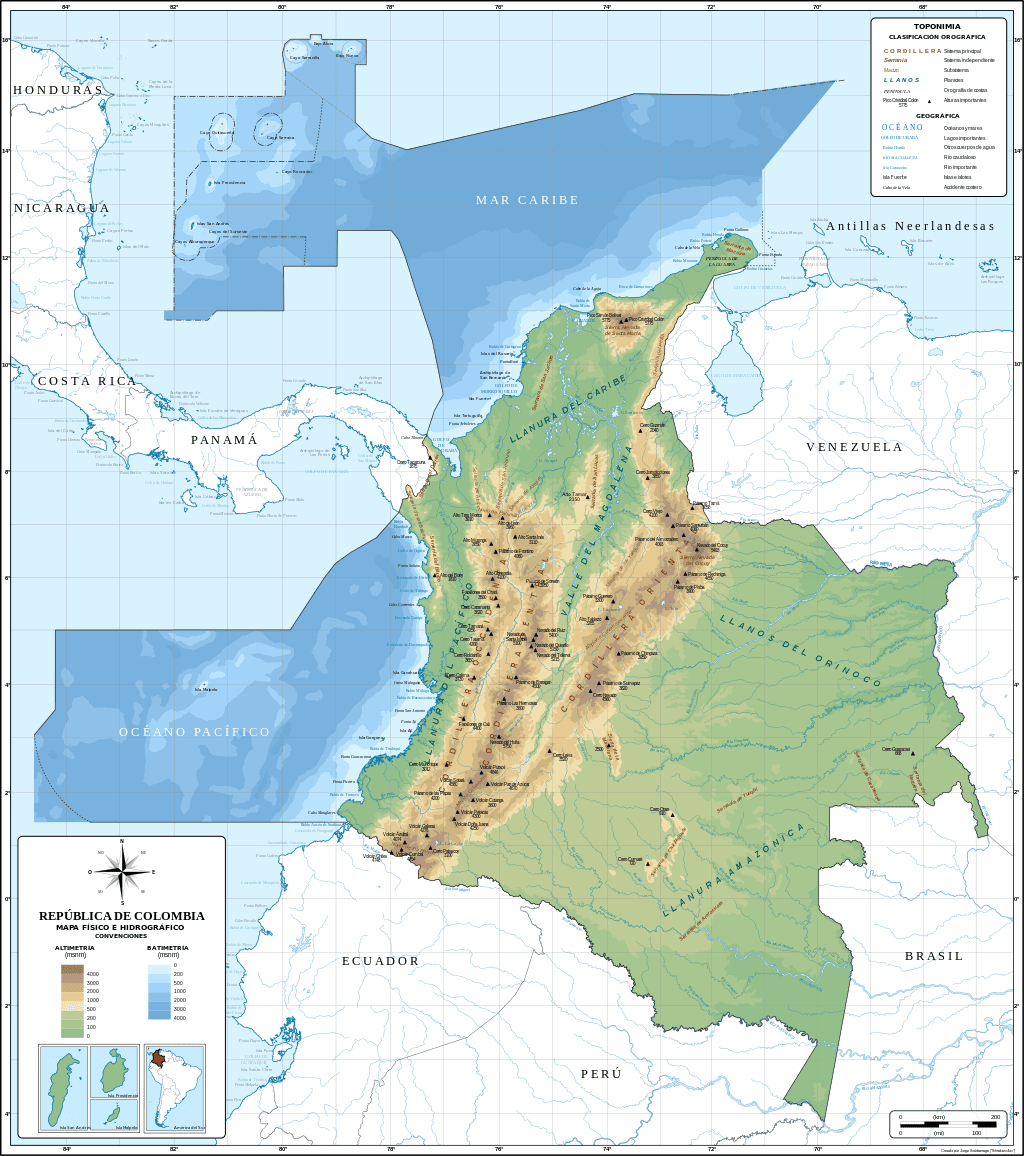
Map of Columbia (via Wikipedia)

In September of 1980, my mother took a calculated risk. As a talented singer with perfect pitch frustrated by a broken marriage and limiting law career, my mom left Bogotá, Colombia to pursue her dream of opera singing. My father, already starting his second family, agreed that my brother and I needed to go with her. My maternal grandparents followed us to the United States soon thereafter. While my mother worked hard to win first prize at international lyric-opera competitions with the help of a renowned voice coach, my brother and I worked hard to learn English and excel in school with the help of caring teachers, our grandparents, and kind friends. We both were inspired by our mother’s tremendous efforts and her willingness to take risks. Although my daily life during the school year took place in Westchester County, New York, an important part of my childhood also took place in Bogotá, where I spent many summers and occasional winter breaks with my Colombian family. I yearned to learn more about the place of my birth. I also missed my family terribly when I wasn’t with them. At the same time, I appreciated the security, opportunities, and friendships I found in the United States.

Curiously, although Latin America was often included in the content of our social studies textbooks, we rarely got the chance to actually study the region. As an undergraduate student at Cornell University, I finally found courses that began to teach me about Latin America, including a course on US-Latino literature (the gendered sensitivity evoked by “Latinx” had yet to be imagined). For the spring semester of my junior year, I decided to ‘study abroad’ at home in Colombia. Doing so proved to be one of the most eye-opening and academically satisfying experiences of my life up to that point. The international relations seminar I took with Juan Gabriel Tokatlian at la Universidad de los Andes helped me see more clearly the problems that come with treating a public health crisis (drug addiction) through militarization and strategies of war. At the Javeriana University, I signed up for a graduate-level seminar on the Annales school, a style of historiography developed by French historians in the 20th century that stresses long-term social history. A fellow student openly revealed his Marxist leanings and offered memorable critiques of our readings. These conversations for the first time allowed me to realize that there could be different schools of thought when it came time to develop historical analyses. Upon graduation, I decided to return to Colombia, where I taught a version of the US-Latino literature course at the university level, but only until my supervisor required that I teach the 19th-Century Colombian History survey. These experiences, together with the friendships I made with colleagues at la Javeriana and los Andes made one thing clear: if I wanted to be serious about teaching and researching at the university level, I needed to pursue graduate study in the United States. At the end of the day, the only career track that would allow me to bi-locate between my two beloved homes, the United States and Colombia, was the historical profession.

Also in this series:

Tatjana Lichtenstein
Julie Hardwick
Toyin Falola
Yoac Di-Capua
Susan Deans-Smith
The Politics of a Handkerchief: Personal Thoughts on the Motif of Female Activism in Argentina

By Paula O’Donnell

(All photos are courtesy of the author unless otherwise stated.)

Windswept litter and flaming logs on asphalt. Backlit figures swaying to handmade percussive instruments and bongos. High school seniors from Colegio Nacional huddled for warmth on the sidewalk, resting foreheads on shoulders for brief shut eye. A neighboring group of teens hoisted Argentine flags that read Movimiento Estudiantil Liberación. They danced and chanted, their makeshift bonfire illuminating passionate faces, streaked with glittering green paint. Tens of thousands filled the park, mostly young and female. Their necks adorned with green handkerchiefs, an aesthetic marker of political and ethical community.

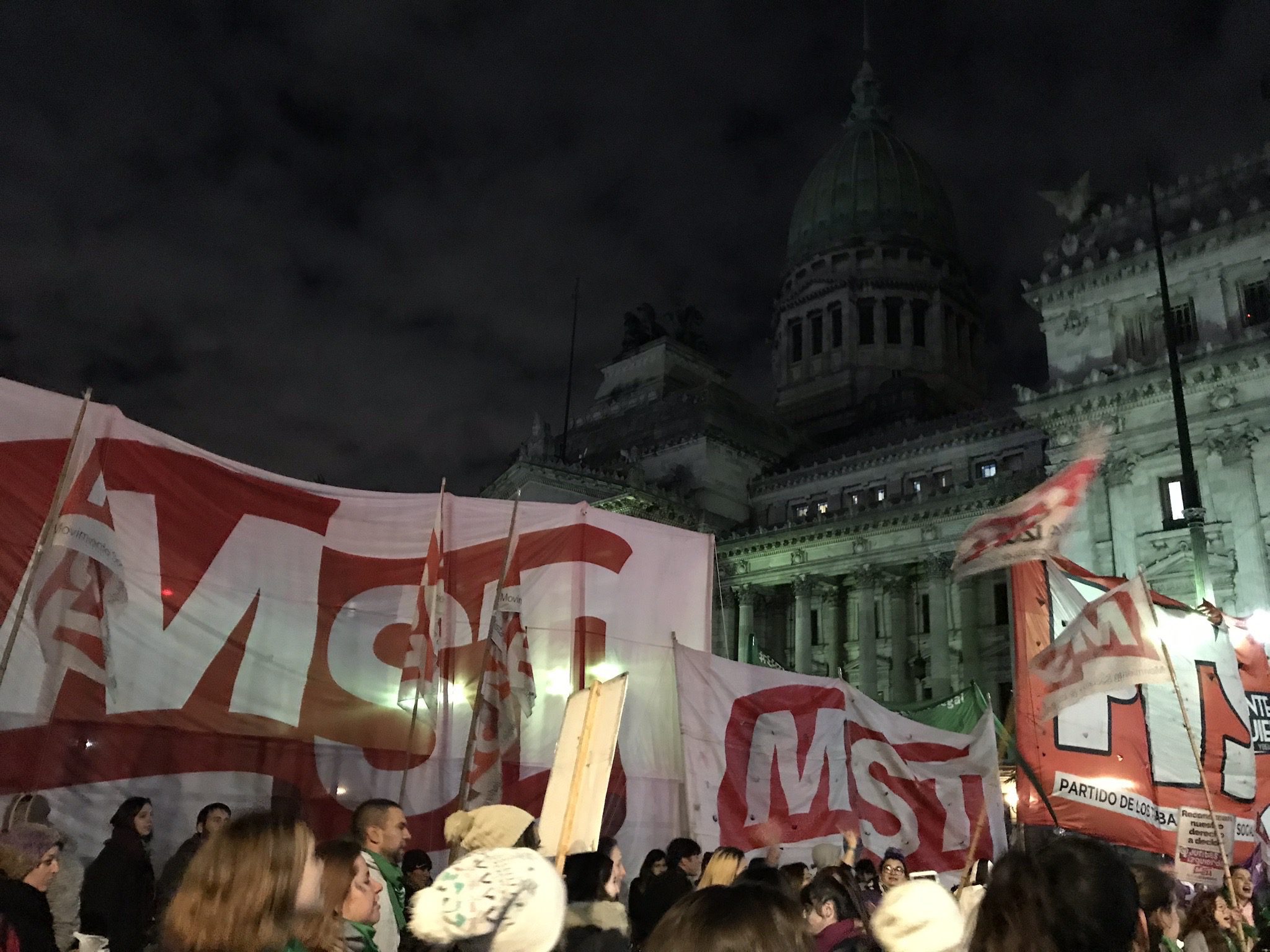
It was June 13, 2018 at around 10:30 pm when my mother and I joined the lively demonstration taking place outside of Argentina’s Congressional palace. After seeing intriguing images of the protest on the news, we were eager to witness the spectacle with our own eyes. We entered Plaza del Congreso just as the sun receded behind the neoclassical citadel in which the House of Deputies deliberated. Argentina’s lower house of Congress was voting on a bill that would decriminalize abortion in the first fourteen weeks of pregnancy. As political elites quarreled in their palace, a discussion that would last nearly twenty hours, protestors flooded the plaza outside to noisily advocate for the bill. Empty tour buses from countless distant provinces lined up along the avenues north of the blocked-off parameter. Inside the square, a cacophony of voices, symbols, and bodies deluged the space. Signs, banners, canopies, and tents exhibited slogans and logos of Tendencia Guevarista, Juventud Radical, Frente Popular Darío Santillán… and innumerable other left-wing political organizations.

A loquacious group of teen artists sat on checkered blankets exhibiting sketches, magnets, and stickers for sale. My mother paid a blond boy with a nose-ring ten pesos for a magnet, which she handed to me, “un regalo – a present.” In bright red letters on a green background, it read “¡CUIDADO! EL MACHISMO MATA” (Careful! The patriarchy kills.) More than anything, I wanted a green handkerchief like everyone else, but no one seemed to know where they came from.

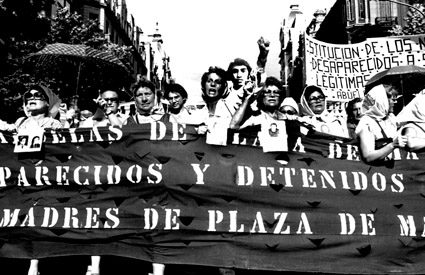
As a historian, I was impressed with the visual symbolism inherent in the handkerchiefs. I was immediately reminded of the photographs many of us have seen of elderly Argentine women defying a murderous military dictatorship. Las Madres de la Plaza de Mayo were middle-aged and elderly women who lost children and husbands to the military junta that ruled Argentina between 1976 and 1983. At great personal risk, these women met at the presidential palace every Thursday, beginning in 1977, to hold a vigil, wearing images of their missing kin on strings around their necks and plain white handkerchiefs on their heads.

It is reasonable to speculate that most of Las Madres de la Plaza de Mayo would not have considered themselves feminists, and it is even less likely they would have supported abortion rights. The historian Diane Taylor has pointed out that these women mobilized to defend their roles as mothers and wives, and they exploited traditional representations of femininity (purity and subservience to male family members) to mobilize shame. Even so, they remain national icons of feminine resistance in the public sphere.

Certainly, Las Madres paved the way for other female activist organizations, some of whom aligned themselves more directly with reproductive rights. For instance, Las Abuelas de la Plaza de Mayo consisted of women whose daughters or daughters-in-law were pregnant when detained by the military dictatorship. While searching for their missing grandchildren, this political group highlighted the military regime’s practice of kidnapping newborn infants for adoption into “loyal,” Catholic families. Margaret Atwood claims that this pro-natalist practice, with deep roots in Argentine history, was a fundamental inspiration for her novel The Handmaid’s Tale. Today, Las Abuelas continue to search for their grandchildren, many of whom are now in their late 30s or 40s and unaware of their biological heritage.

Las Abuelas de la Plaza de Mayo (via Wikipedia)

It goes without saying that today’s generation of activists in Buenos Aires operates in an entirely different historical context, with distinct political objectives. However, the symbolic implications of the pieces of cloth they wear on their bodies appear to acknowledge the role Las Madres and Abuelas played in legitimizing female activism. Now as then, Argentine women have shown they can provoke concrete political changes by assertively occupying public spaces.

As I think back to that Wednesday, I still remember wading through the sea of green, dazed and impressed with the demonstration unfolding. The closer to the palace we moved, the more boisterous and frenetic the crowd became. About fifty feet from the limestone and marble building, it became difficult to move. Here, banners rose fifteen feet into the air, most of them advertising Trosky-ist political parties, such as Movimiento Al Socialismo or Movimiento Socialista de los Trabajadores. The clamorous singing and drumming left my ears ringing after we painstakingly made our way out of the mosh pit. It was a rowdy rock concert with no central performer to orient the crowd and no security team to direct flows of human traffic. An overstimulation of sound, color, and corporal energy contrasted conspicuously with public displays of exhaustion nearby: teenagers sleeping in truck beds, on blankets, and against the iron fence circulating the square. A village of silent camping tents at the periphery of it all.

I spent only an hour or so at the demonstration, a small fraction of the time that most participants sacrificed to stand in the brisk winter night. The next afternoon, the Argentine Chamber of Deputies voted to decriminalize abortion by a narrow margin. This was an unprecedented victory for reproductive rights in a dominantly Catholic society and region of the world. The bill would have made Argentina just the third Latin American nation (after Cuba and Uruguay) to decriminalize abortions, and analysts speculated as to the effects this would have on reproductive rights transnationally. Unfortunately, the victory in the House of Deputies subsequently galvanized a counter mobilization of pro-life Catholics all over the nation. Even Argentine-born Pope Francis spoke out to condemn the legislation, and the country’s Senate ultimately defeated the bill in August. All the same, the bill’s narrow margin to victory and the movement’s prominent visibility were remarkable for a conservative country on a continent where abortion rights are the exception. In any case, the extraordinary June demonstrations deserve to be remembered for their historical and social significance in the larger trajectory of the Argentine feminist movement, rather than the legislative defeat that followed.


For more on gender in Argentina, see Diana Taylor, Disappearing Acts: Spectacles of Gender and Nationalism in Argentina’s “Dirty War,” (Durham: Duke University Press, 1997).

You May Also Like:

UT Gender Symposium: Women’s Bodies and Political Agendas
Women and Social Movements in the United States, 1600-2000

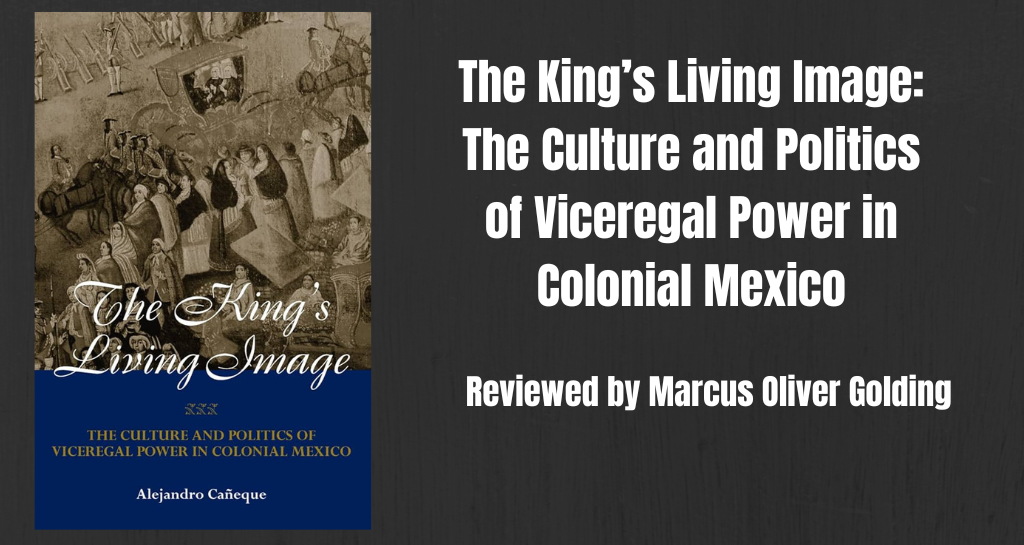
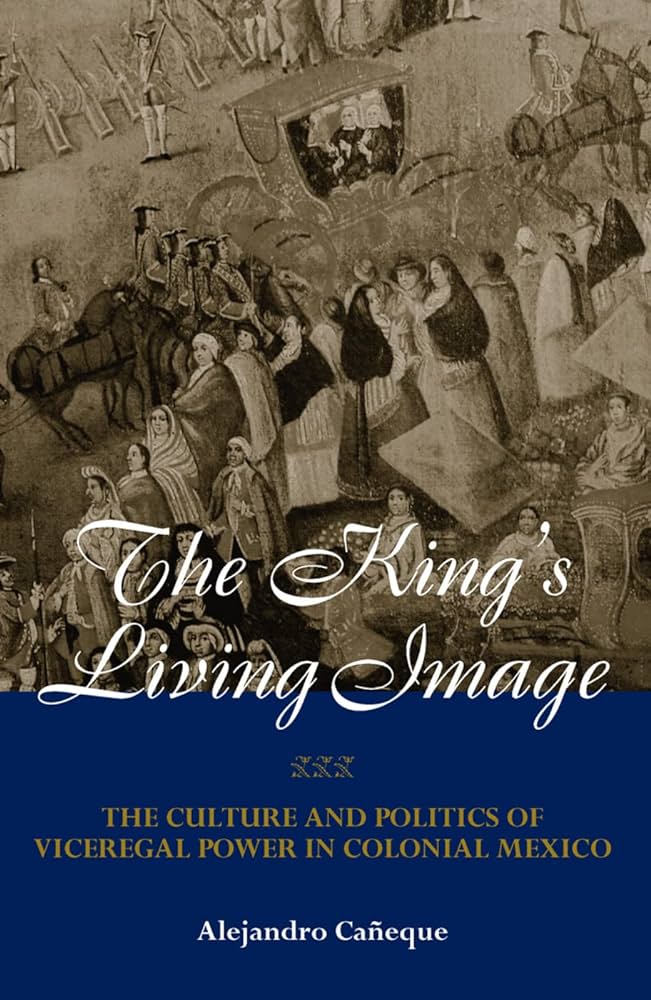
The King’s Living Image: The Culture and Politics of Viceregal Power in Colonial Mexico by Alejandro Cañeque (2004)

Latin American popular culture presents two common tropes about Spanish colonial rule. One is the representation of viceroys as autocrats who ruled without any institutional constraint. This perception “explains” the authoritarian tendencies of Latin American societies in the postcolonial period. The other trope ironically undermines perceptions of authoritarian control by highlighting the margin of discretion that colonial officials enjoyed in the application of the law. One example of this flexible interpretation of the law is a famous phrase uttered by the Spanish American bureaucrats when a royal order came from the metropolis: “I obey but I do not comply” (obedezco pero no cumplo). Officers used this prerogative in some cases to avoid enforcing certain royal policies that they thought might be harmful for the territories in the New World where they ruled in representation of the king. This trope “explains” the apparent disregard of modern Latin Americans for the law. Neither of these representations of colonial rule is accurate.

Alejandro Cañeque’s The King’s Living Image invites readers to reconsider many of the misconceptions about Spanish America found in Latin American popular culture. Cañeque argues that we cannot understand the colonial Spanish bureaucracy with our modern conceptions of the state. In fact, Cañeque refutes the centralizing and autocratic vocation of the Spanish Monarchy for most of the colonial period (until the beginning of the eighteenth century) because those elements associated often with the modern state simply did not appear there. Without a standing army and an extended and centralized bureaucratic apparatus, how did Spain rule over almost a whole continent? Central to the author’s argument is that political beliefs and institutional practices were crucial in sustaining viceregal power and colonial rule. Spaniards imagined the state as a human body in which each body part (institution) played a key role in the system. The king represented the head, but even a king could not move if his legs did not respond. At the institutional level, the king could not procure good governance in the kingdom without the help of his most trusted councilors working in those institutions. The collective action of the whole created a sense of community among all its members.

Cañeque reinforces this idea by stating that political power was transmitted from God to the community, which then transferred it to a king. Thus, the monarch had the absolute obligation to rule for the benefit of the people and the common good. Justice and good governance became the ideological foundations of the Spanish Monarchy. Their fulfillment depended on the cooperation of the head and the different body parts.  Shattering misconceptions about despotism in the Spanish Monarchy, Cañeque claims that this system of government had its analogy in heaven, where God was assisted by the Seraphim, who had the job of purging, illuminating, and perfecting the hierarchies below them. In this framework, the author analyzes the administrative hierarchy in Spanish America from the upper echelons to the local forms of government. Through his study of Viceroyalties, and Audiencias and Cabildos, Cañeque shows how the Spanish Monarchy was structured in a way that any site of power reflected a higher level.

Cañeque focuses in the figure of the viceroy, who represented the living image of the king, playing the role of the head of the political body in Spanish America. Mirroring the celestial court, viceroys had to be exemplary rulers for their subjects. Like the king, they had to rule by virtue, and not by force. If we add to this their mission of dispensing justice, we now can understand the famous phrase “I obey but I do not comply.” Viceroys and other colonial officials did not enforce certain royal policies when they were thought to be contrary to the justice and the laws of the kingdom. Certainly, they could abuse this prerogative for other goals, but its purpose was not the disregard of the law but the protection of the larger conception of justice.

If the viceroy represented the living image of the king, how did the king project his power through the viceroy? Symbolic representations, such as triumphal arches, processions, and the magnificence and pomp in the viceroy’s public appearances, all constituted and sustained viceregal power. People today would see mere spectacle and vanity. But these were the means through which authority was legitimated, especially when coercion on a grand scale was simply impossible. Symbols and political rituals were fundamental for the legitimization of power. Consider modern states and their use of symbols to command respect and loyalty. Think about the purpose of national hymns, or the splendor of national parades. Allegiance to the nation’s flag evokes the same feelings that people would have experienced by seeing the public appearance of the  king’s living image in the figure of the viceroy.

Cañeque’s The King’s Living Image is a readable and well researched contribution that serves as a wake-up call to reexamine many of the misconceptions that have informed Latin American popular culture about Spanish American colonial power.

You May Also Like:

The Archeology and History of Colonial Mexico 
Infrastructures of Race: Concentration and Biopolitics in Colonial Mexico

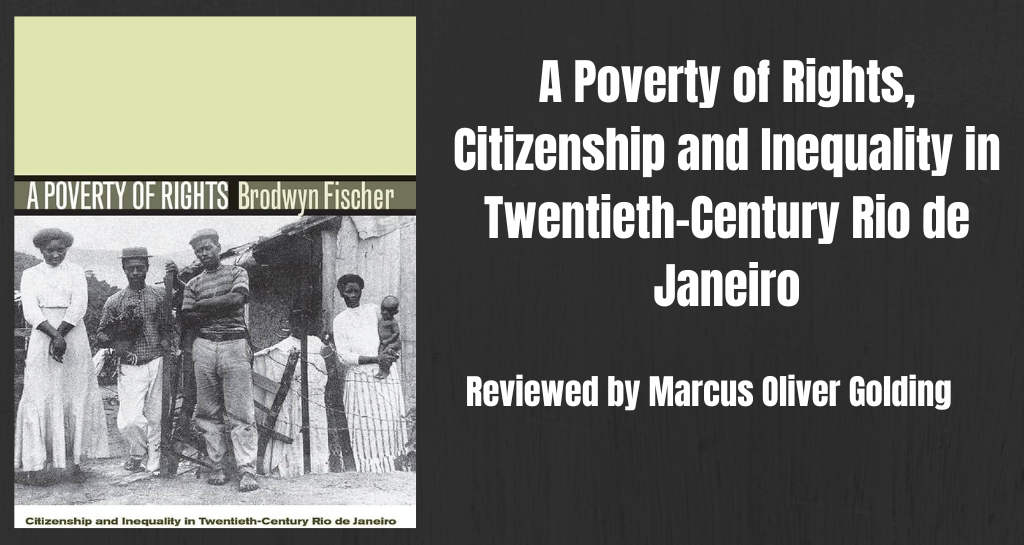
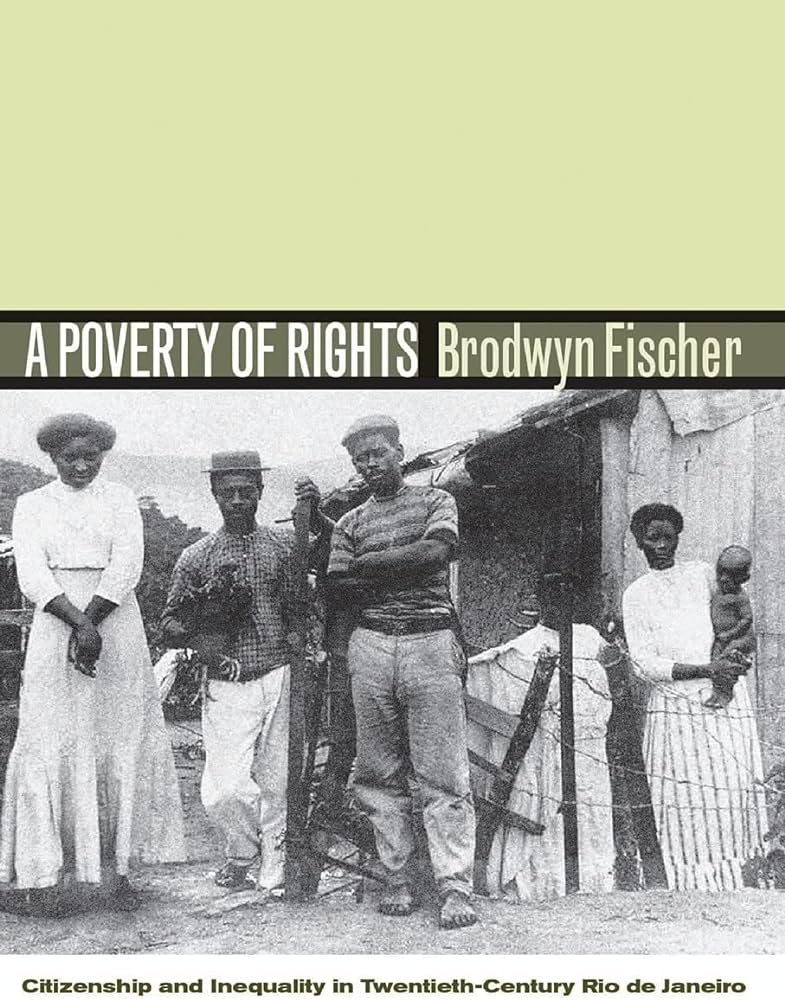
A Poverty of Rights, Citizenship and Inequality in Twentieth-Century Rio de Janeiro by Brodwyn Fischer (2008)

Getúlio Vargas, President of Brazil from 1930-1945, is often credited as the champion of the Brazilian working class during the twentieth century. His policies led to the progressive industrialization of Brazil and to a barrage of labor regulations that protected workers’ rights. However, not everyone benefited equally from these laws. Thousands of poor Cariocas (Rio de Janeiro’s residents) who labored outside the formal economy were not legally considered workers and faced great challenges to attain the rights that Vargas originally intended for the organized working class.

Brodwyn Fischer presents a compelling study integrating urbanization, patronage networks, and conceptions of citizenship in modern Brazil. The book addresses the formation of poor people’s rights in Rio de Janeiro between 1920 and 1960. The basic thesis is that the poor’s claims to economic, social, and political rights were constantly constrained by legal ambiguity and informality, fostering a state of partial but perpetual disenfranchisement. Despite the unprecedented expansion of labor benefits for the workers during the Vargas era, socioeconomic assumptions and bureaucratic hurdles revealed the discrepancy between legislation and social realities. New regulations prevented outright exclusion from rights, but legal ambiguity prevented their full attainment, placing a significant portion of urban poor’s lives outside the sphere of citizenship. Fischer shows how this contest over citizenship rights played out in urban spaces, courtrooms, and in the government bureaucracy.

The implementation of legislation on urban growth in Rio in the early twentieth century shows one such disparity in the ways the poor were both included and excluded from citizenship rights. The sanitary code of 1901 and especially the Building Code of 1903 had lasting impacts on the conceptualization of urban spaces and poor’s place in cities. Both sets of legislation targeted the favelas (informal settlements) for removal, associating them with disease and moral danger. However, the incapacity of the state to enforce those laws enabled tolerance for them and created a venue for the poor to achieve a tenuous hold on land in the city.

Getúlio Vargas’ ascension to the presidency put the poor at the center of his populist project. A network of patronage among politicians, middlemen, and poor residents in the favelas soon arose to defend vulnerable constituents against the laws’ enforcement and to guarantee political support. Vested interests in the slums would prolong their existence in an atmosphere of legal uncertainty. While becoming the only solution to Rio’s housing crisis, favelas remained illegal according to the law. This fact deprived residents of any meaningful claim to urban rights, making vulnerability and dependence a key feature of Rio de Janeiro’s poverty.

Vargas also extended considerable material benefits to the Brazilian working classes mainly through the Consolidation of the Labor Laws of 1943. In the process, a poverty of rights emerged that made workers supplicants rather than fully enfranchised citizens. These reforms were exalted more as public displays of generosity from the president than as the attainment of full rights belonging to the citizens. Vargas’ administration articulated a conception of citizenship underpinned by notions of work, family, and patriotism according to which rights were distributed. In order to access these rights, the poor had to negotiate not only discourses of citizenship in their written petitions to the government, they also needed documentation to claim their benefits. The possession of birth certificates, work ID’s and other bureaucratic hurdles created a multi-tier system in which the procurement of a specific document unlocked the next level of social protections. The precondition of documentation for citizenship turned rights into privileges that benefited only those among the poor who were documented. Political loyalty, bureaucratic agility, and corruption often meant the difference between exclusion or access to benefits.

If Brazilian bureaucracy created serious obstacles for the attainment of rights, courtrooms presented a legal mine field awaiting favela residents. The inconsistent and heterogeneous Brazilian legal system added more ambiguity to the situation of the undocumented poor. Legal decisions often rested on perceptions of individual circumstances and character and as such, poor Brazilians and judicial officials engaged in negotiations of judicial responsibility and sentencing based on open-ended ideas of civic worthiness. Documentation might provide a solid signifier of citizenship permitting Rio’s residents to escape the more nebulous dimensions of social character, class, and circumstance. A positive vida pregressa (brief life history) and the possession of other documents such as a work card, constituted less ambiguous signs of civic honor. Thus, poor people who could not present themselves as such saw their civic rights undermined and a higher risk of conviction in the courts.

Fischer concludes by chronicling a series of conflicts in the favelas that were due to the growth of the city and the rising value of land in the 1950s and early 1960s. The proliferation of local social movements to defend claims to abandoned lands, coupled with networks of support from leftist politicians and favela middlemen, succeeded in preventing most of the public and private evictions in this period. However, this success rested on political loyalty and not in the enfranchisement of their residents per se. Untitled permanence and illegality would continue to constitute the ultimate legacy of the community’s legal battles.

Fischer offers a well-researched and nuanced analysis of ambiguities of citizenship in modern Rio de Janeiro based on the eclectic use of civil and criminal court cases, legal codes, statistics, oral histories and even samba lyrics.

You May Also Like:

Confederados: Texans of Brazil by Nakia Parker
Partners in Conflict: The Politics of Gender, Sexuality, and Labor in the Chilean Agrarian Reform, 1950-1973

Also by Marcus Oliver Golding:

Precarious Paths to Freedom: The United States, Venezuela, and the Latin American Cold War
Paper Cadavers: The Archive of Guatemalan Dictatorship

Satan’s Playground: Mobsters and Movie Stars at America’s Greatest Gaming Resort, By Paul J. Vanderwood (2009)

By Diego A. Godoy

For Tijuanenses, the sight of the Agua Caliente entertainment complex conjures up images of two distinct things.  The first: dogs.   The Tijuana racetrack is home to nearly 700 galgos, Spanish greyhounds that race almost daily.  Adjacent to the track is the multi-use Estadio Caliente, the home turf of Club Tijuana Xoloitzcuintles de Caliente, currently situated in the top-flight of Mexican professional soccer.  The Xolos take their name from the sacred Aztec canine—a hairless, netherworldly little breed, albeit a quite congenial one.  The second: Jorge Hank Rhon, Tijuana’s Trumpian ex-mayor (2004-2007).  Born to a father with one foot firmly planted in politics and the other in business, Hank leveraged his family’s name to facilitate his acquisition of the Agua Caliente grounds in 1985 and subsequently founded Grupo Caliente, Mexico’s largest gambling company.  He rapidly developed a penchant for snorting cocaine (inspiring one local columnist to dub him the “Abominable Snowman”), exotic animal trading, sporting a ridiculous mane, and fraternizing with associates of the Arellano-Felix Cartel.  In time, credible accusations of money laundering, arms- and drug-trafficking, and homicide were levied against Hank and his partners, with one U.S. intelligence report asserting that his family represented “a significant criminal threat to the United States.”

But Agua Caliente’s unsavory history predates Hank’s tenure by several decades.  In Satan’s Playground, Paul Vanderwood (UT History Ph.D., 1970), puts Jazz Age Tijuana on full display through the prism of the legendary tourist center.  Founded in 1928, Agua Caliente was designed in an incoherent fusion of Old War styles and featured palatial amenities mimicking those of European vacation spots like Deauville and Monte Carlo.  While most northern Mexican establishments attracted a heterogeneous clientele seeking respite from the puritanism of Prohibition-era America, Agua Caliente catered to a subset of moneyed elites who thirsted for the most upscale diversions.  A year after its opening, a reporter for the Los Angeles Times toured the casino’s Salón de oro (Gold Room) where it was rumored that gamblers could only wager with gold chips, and later surmised that “there isn’t another place on the continent, outside of a U.S. mint, where you can see so much money piled up before your eyes at one time.” (Sept 8, 1929).  The resort’s iconic racetrack, the site of several industry firsts, was graced by the presence of the finest thoroughbreds, most notably the fabled Seabiscuit.  If betting on horse racing was insufficiently thrilling, one could place money on the bare-knuckled boxer most favored to remain vertical.  And for those aching after a long night of carousing, several Turkish baths were available to sweat away what ailed them.

After an informative tour d’horizon of Baja California’s modern sociopolitical and economic history, Vanderwood proceeds to explain how Agua Caliente came to be.  He traces the resort’s origins to the military man-cum-Governor of Baja California, Abelardo Rodríguez, who, along with 3 snake oil salesmen from the U.S., collectively dubbed the Border Barons, endeavored to capitalize on the dry laws and gaming restrictions imposed on the major metropolises of southern California.  In 1927, having convinced his overseers in Mexico City of Agua Caliente’s economic potential, Rodríguez obtained a development deal, purchased a large plot of land near a natural hot springs (thus the name “Agua Caliente”) from its unwary owner, and used taxpayer money to construct and outfit the enterprise.

Born of a crime, Agua Caliente remained a magnet for illicit activities until its premature closing in 1937.  The book’s chapters are studded with concise accounts detailing onsite murders, fixed games, and abductions, such as the 1932 kidnapping of Zeke Caress, commissioner of the racetrack and degenerate gambler, by Chicago’s Sheldon Gang.  Al Capone and Bugsy Siegel, both resort regulars, also make cameos.  Siegel was so taken by Agua Caliente that he cited it as his inspiration for Las Vegas’ pioneering Flamingo Club, although the visionary behind it was actually Billy Wilkerson, an L.A.-based nightclub owner and founder of The Hollywood Reporter.

One crime in particular takes center stage in Vanderwood’s treatment of the topic.  In 1929, two gunmen with possible mob ties assaulted a car transporting revenues from the resort to a San Diego bank, resulting in the death of the courier and accompanying guard. With the aid of judicial files, newspaper reports, and detective magazines, the author stalked the perpetrators across southern California where they were summarily captured and prosecuted.  Using cases like the Dike Robbery, as this one came to be known, Vanderwood discusses the rise of organized crime on the West Coast and the press’ unblinking eye.  “Have established East Coast and Midwestern syndicates infiltrated California and Baja?  Are Tijuana and Agua Caliente to blame?”  Questions like these preoccupied a simultaneously frightened and fascinated news media.  Several articles on the botched heist focused on the thieves’ use of Thompson submachine guns.  Some fixated on the details of the criminal performance while others loudly anticipated today’s debates.  In the wake of Chicago’s St. Valentine’s Day Massacre four months before, mainstream opinion-makers doubled down on their stance that firearms of such devastating power should never be permitted in civilian hands.  Unsurprisingly, the specter of violent, “professional” crime did not sully the resort’s image.  On the contrary, the gangland presence fueled Agua Caliente’s allure.  The Border Barons, often the victims of threats and extortion attempts, embraced the notoriety.

The majority of the recognizable faces populating the complex, however, did not belong to gangsters.  Agua Caliente absorbed waves of Hollywood royalty in its heyday.  On a weeknight, the likes of Charlie Chaplin, Gloria Swanson, Clark Gable, and Bing Crosby could be sighted sipping Sazeracs while wagering their fortunes.  At least one young talent was discovered there—Margarita Cansino, a lounge dancer who later achieved stardom under the stage name “Rita Hayworth.”  But far more numerous were the would-be actors and actresses desperate to quit their day jobs, the call girls looking for a career change or a more distinguished client list, and the producers hunting for the next big cash cow or casting couch conquest.

As far as President Lázaro Cárdenas was concerned, establishments like Agua Caliente absolutely merited the epithet “Satan’s Playground.”  In July 1935, a year and a half after the repeal of Prohibition, he ordered the region’s casinos closed, and two years later decreed that the rest of the Agua Caliente estate be expropriated and turned into an industrial trade school.  Labor arbiters denied severance packages to the laid off workers of Tijuana’s largest employer.  The Border Barons, on the other hand, fared much better and emerged from this ordeal with their robust bank balances intact.

It is a shame that a deeper investigation into the last 30 years of Agua Caliente’s history, featuring Hank and company at the helm, will not be possible until these parties have long expired.  But Vanderwood’s book makes for an exceptional first installment.  Satan’s Playground offers more than a good story about a lurid vacation spot in a permissive border city.  Figuring prominently are analyses of the evolution of transnational organized crime, border politics, capitalism, and the booms and busts of Tijuana’s vice-tourism industry.  Anyone drawn to these topics will find plenty of stimulating material.  Those with only a passing interest will nonetheless encounter a riveting read in this enviably written blend of social history and “true crime.”

Underground Santiago: Sweet Waters Grown Salty

Underground Santiago: Sweet Waters Grown Salty

Preso en su lecho mi rio pasa, pero se acerca su libertad.
Sus aguas dulces ya son saladas; ya no eres rio, eres el mar.

A prisoner within its banks, my river rolls on, soon to find freedom.
Your sweet waters now have grown salty; you’re no river, now, you are the sea.

                                                       Charo Cofré

Colegio Andacollo was a K-through-12 parish school in old town Santiago.  The Holy Cross Fathers took it as their new mission when the military government kicked them out of Saint George’s, their traditional academy for the elite.  Andacollo was another world.

The original Andacollo was a mountain town in the north where Our Lady of Deep Rocky Mines granted solace and safety to her devoted followers.  Our Andacollo was on the corner of Mapocho and Cautín, in a barrio of old multifamily dwellings, cheap bordellos, and the local seafood market.  The place had a history of union struggle, fiery passion, and a profound commitment to the miracle-working Virgin of Andacollo.  It also had a secret tale of tragedy.

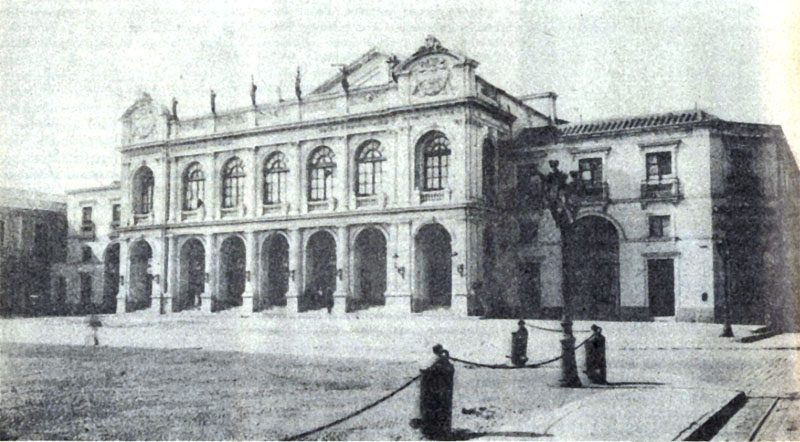
Teatro Municipal in Santiago, Chile
Teatro Municipal in Santiago, Chile (via wikimedia)

Old town Santiago sat atop an ancient network of canals.  Some were small but others were regular aqueducts, lined with stone and brick.  Built for irrigation, they carried quantities of water from Canal San Carlos to the Mapocho River. Before there was pavement.  When Matucana and Avenida Matta were still just vegetable gardens and chicken coops.  Back when every home had tomatoes, basil, and cilantro growing out back.

The central region of Chile is still crisscrossed with canals that were built by a dozen Jesuit missionaries and several thousand local Indians. The intention was to strengthen the native communities against European invasion. Taking advantage of the melting snowpack in the mountains, they transformed a semi-arid wasteland into the now-famous fertile green valleys.

The effect on the indigenous population was the opposite of what had been intended.  In 1550, the conquistadors said that Nueva Extramadura was too poor and not worth the trouble.  By 1750, they had changed their conquering minds. Irrigated and green, the Spanish liked it.  So, they threw out the Indians and the Jesuits, and they set up their haciendas.

One hundred and fifty-three “nice families” colonized with all the rapacious vigor of their prestigious lineages.  They were Spaniards, Basques, and some French.  They brought their cattle and their vineyards.  They brought their illusions of noble breeding and Chile criollo was born.

Their descendants became the barrio alto, the GCU, as they say, Gente Como Uno, (People Like Us), a code that only legitimate members of their tightly-closed circle were supposed to recognize.  It wasn’t about money, comrade, though the GCU did tend to be rich.  It wasn’t about land, either, though they controlled most of it.  The GCU sustained an Old World fantasy of hereditary aristocracy.  They really believed it, and they insisted on marrying their children to each other.  A rich man without a pedigree was called, roto con plata, more or less, a bum with lots of cash.  If he had not descended from the legendary hundred families (who were, in reality, one hundred and fifty-three), he was and always would be an outsider.

The canals in the central valleys are still functional.  They are the reason why there is Chilean wine and fruit at Whole Foods.  Building a canal is no joke.  It has to always go downhill so that the water flows forward and never backs up.  In 1600, that was an engineering masterpiece.

As the population grew in old town Santiago, the canals lost their reason for being.  Family gardens became parking lots and chicken coops became bus stops. They are mostly dry today, an underground labyrinth for which there is no known map.  Only the rats know their way around.

But, until the late ‘60’s and early ‘70’s, the water continued to flow, and there was access at strategic places.  Neighbors would draw a bucket or two to water a shade tree, or to dampen the streets and vacant lots in the summer.  That kept the dust down as boys upheld an important tradition, the continuous game of pick-up soccer, la pichanga.  No shirts, no shoes, no score, house rules.  Everyone played until it was too dark to see your hand in front of your face.  As the brown water flowed constantly down into the rocky Mapocho.

Flowing water was an urban temptation.  Children learned early in life to toss all their trash into the open mouths of Santiago’s filthy underside.  The subterranean monster swallowed everything, without complaining.  What’s more, most homes still had no indoor plumbing.  The canal was where people dumped their chamber pots.  Anyone who drew a bucketful had to watch out for floaters from upstream.  That was emblematic of the ongoing relationship between the barrio alto and los de abajo, the people down below.   It just seemed natural that those in high places would dump their refuse on those who were geographically and socially below them.  That was also the reason why typhoid and hepatitis were so common, down there.

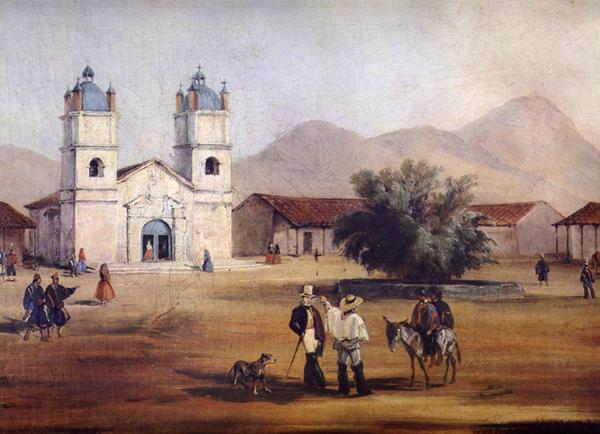
La Iglesia de Andacollo (the church of Andacollo)
La Iglesia de Andacollo (the church of Andacollo) (via wikipedia)

There was an opening in the schoolyard at Andacollo.  It was about two feet wide and three feet long, rimmed with discarded railroad ties.  The canal water rushed by about a foot below the ground level.  Like everywhere else, at Andacollo, the canal water was used to keep the dust down and get rid of the trash.  There was a big willow tree in the middle of the schoolyard that provided shade on hot afternoons.  The groundskeeper would make a trench around it with his trowel, and fill it with water from the canal, using his big iron bucket.

The school was all boys back then, and la pichanga never stopped.  One day, the ball bounced close to the opening.  As tradition demanded, the boy closest ran backwards with reckless abandon, to make the save.  It’s a passion, comrade.  When the ball was in play, nothing else mattered.  He fell into the canal and disappeared.

The foul waters dragged him through their labyrinth.  No rescue was possible; nothing anyone could do.  They found him the next day in the Mapocho River.  His clothes had been ripped off.  His body was twisted and broken, but he was recognizable.  He had been dragged through hell in an unexpected, surprising, and unavoidable way.  I don’t know his name.

Back then, it never occurred to anyone to cover a hole in a schoolyard because someone might fall in.  They told the boys to be careful.  That was part of their education.  They had to learn that any one of them could drop into the abyss at any moment.

That awful day, the dead boy’s classmates learned that destiny could betray you; that there were tragic, violent accidents; that the lives of poor boys didn’t really matter; that in five seconds, it could all be over and done with; that they, too, could disappear and be forgotten.  That day, the boys learned that you have to be clever to survive in a cruel world.

Nowadays, we cover holes like that.  We deceive our children with the illusion that the world is safe and trustworthy.  That has never been true, but if you are under thirty, you were probably brought up to believe it and expect it.

The fickle nature of fate is the elephant in our proverbial living room.  Everyone pretends it isn’t there.  And the willow tree, silent witness to everything, grows tall.

The national anthem says that Chile is the copia feliz del Edén.  That means a happy copy of paradise.  But it’s just a copy, not the real thing.  And Eden was a tricky place, comrade. You do remember what happened there?


You May Also Enjoy:

Partners in Conflict: The Politics of Gender, Sexuality, and Labor in the Chilean Agrarian Reform, 1950-1973, by Heidi Tinsman

Civil War and Early Life: Snapshots of Early War in Guatemala by Vasken Markarian

In Defense of the Crime Story

By Diego A. Godoy

Judicial records usually provide the empirical grist underpinning historical studies of crime, but journalism is the lifeblood of the field.  The efforts of reporters, editors, photographers and illustrators have allowed researchers to resurrect bygone crimes, often in forensic detail.  In the more recent Latin American past, for instance, the intrepid sleuthing of journalists—whose “narco libros” populate the Spanish-language shelves of book retailers—has spared academics from treading on paths far more perilous than graduate school could have ever prepared them for.  Their revelations pertaining to the inner-workings of criminal syndicates and their state cohorts have deepened our information trove, making it possible for researchers to formulate more comprehensive analyses of the underworld.

It would be unwise, however, to pigeonhole the crime story as a mere chronicle of events, as recourse when police or judicial files are sanitized or inaccessible (as can often be the case in Latin America), or as an aid for imbuing one’s work with the narrative thrust facilitated by the beat reporter’s proclivity for anecdote and imagery.  Rather than treating the crime story strictly as a source detailing the particulars of an incident, one would do well to recognize its potential to elucidate a broader range of phenomena, too.

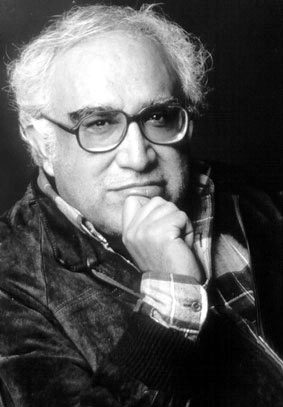
Carlos Monsiváis author of Mexican Postcards (via wikipedia)

Excessively graphic, littered with inaccuracies, and saturated with classist and racist and other biases, Latin American crime papers were once considered little more than pulp trash, and thus beneath serious scholarly engagement.  Thankfully, this prejudice seems to be receding.  In recent years, a handful of Latin Americanist intellectuals have demonstrated how a rigorous analysis of these sources can yield highly original insights.

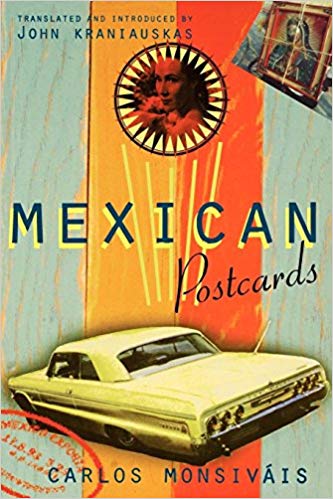
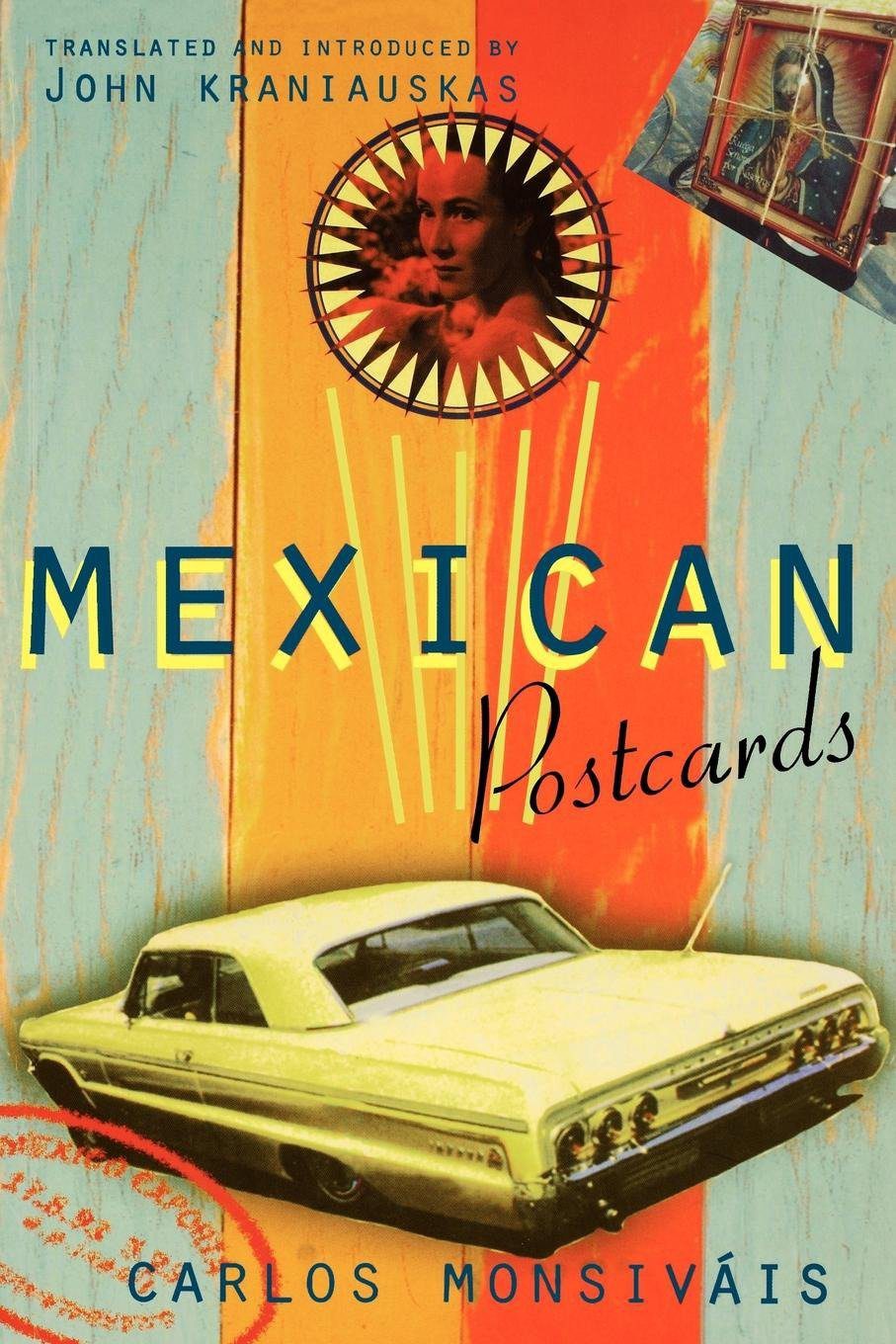
Readers could always count on the late Carlos Monsiváis for incisive takes on Mexican life including crime related affairs.  In his essay collection on modern culture, Mexican Postcards, Monsiváis asserts that the content and presentation of crime news was profoundly altered after the Revolution (1910-1920).  His survey of notas rojas (lit. “red notes/news”)—a popular variety of tabloid showcasing the violence occasioned by robberies, accidents, and crimes of passion—leads him to the conclusion that the press’ crime coverage required a substantial makeover to pique interest and sell papers in the post-revolutionary era.  After a decade of storied military feats and charismatic protagonists, standard crime reporting proved forgettable.  Striving to provoke visceral reactions and satiate morbid curiosities, nota roja journalists settled on the perfect sensationalist formula: obscenely gory visuals—think severed heads and flayed corpses—plus brief, melodramatic narration devoid of commentary, and crude, often facetious, captions.  By the 1960s, entire newspapers adhered to this style, and some even sold in the United States, including ¡Alarma!, the genre’s quintessential publication.  Today, many tabloid journalists still bank on the blood of butchered spouses, but they have also mixed drug trafficking stories into their repertoires.

The consolidation of the Mexican drug trade in the 1970s provided an opportunity for certain segments of the press to traffic in a distinct variety of crime story.  In the media coverage of the narcotics business, Monsiváis discovered a cult of celebrity built on illusory images of criminality.  Rather than minor thievery rings or homicidally jealous lovers, the protagonists of these stories were a different class of criminal who were accorded “the notoriety once reserved for politicians, sports personalities, and film stars.”  Their exploits and life stories were related in prose that was reminiscent of early modern picaresque tales.  Often, the most unsavory aspects of the criminal experience were omitted, or at least obfuscated by the glamour conferred by power and fortune.

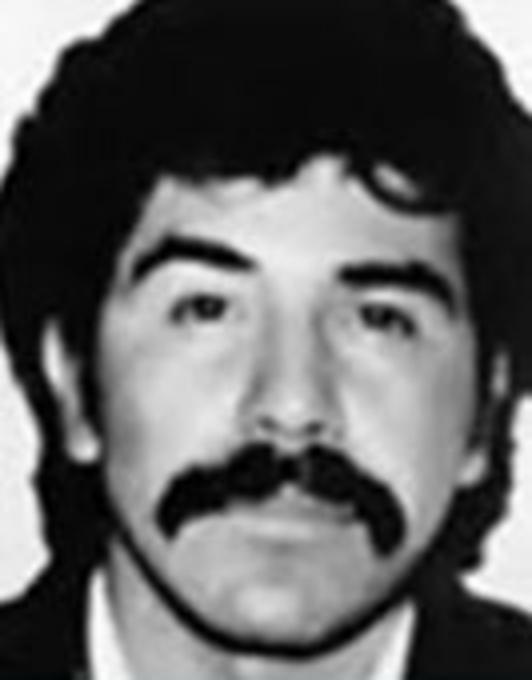
Monsiváis meditates on the case of Rafael Caro Quintero, co-founder of the defunct Guadalajara Cartel.  Many tabloids aided in the cultivation of Caro Quintero’s “social bandit” image, despite his being motivated by personal gain.  His archetypal rags-to-riches story and supposed beneficence to the Sinaloan backwater from which he emerged were artfully tapped by writers.  Seldom did these outlets delve into his organization’s brutal exploitation of poor poppy-farming communities, the effects of their sticky brown product in U.S. cities, or his elbow rubbing with members of Jalisco’s business elite.

Those familiar with the history of the Mexican drug trade will recall that Caro Quintero’s ascendancy was short-lived.  On April 4, 1985, he was arrested for his involvement in the prolonged torture and murder of DEA Agent Enrique Camarena.  Mexican television broadcast the moment when Caro Quintero and associates were escorted into Interpol’s Mexico City headquarters.  Hordes of people tailed the group and shouted “Caro, reveal the corrupt!” “Unmask them all, Caro!” “Names, Caro, names!”  Monsiváis likens this scene to that of a revolutionary hero riding into the main plaza of a town, being greeted by a hopeful peasantry awaiting the dissolution of an unjust government.  Images of the purported social bandit and anticipated whistleblower beamed across the country.

Rafeal Quintero identification picture (via FBI)

Comparable transformations in crime coverage occurred in Buenos Aires during the interwar period.  In While the City Sleeps: A History of Pistoleros, Policemen, and the Crime Beat in Buenos Aires Before Perón, historian Lila Caimari lays the shift in crime reporting at the feet of an array of factors related to “modernity,” namely, technological advances and the importation of U.S. tabloid journalism and Hollywood cinema.  This onslaught of variables coalesced to generate what she dubs the new “languages of crime.”

Caimari recounts how in the late 19th century the Buenos Aires press wrote about crime in “natural-scientificist” language that borrowed terminology from medicine, criminal anthropology, and psychiatry.  Taking cues from English and French journalists, Argentine reporters played detective by attempting to decipher the cause of a perpetrator’s criminality.  But toward the 1930’s, these European influences could no longer compete with the flashier of American tabloids.  Argentine editors, cognizant of the public’s insatiable appetite for detective novels and U.S. gangster cinema, quickly adopted a highly stylized, entertainment-driven approach.

The most prominent national media outlets spearheaded what the author calls the “cinematization of crime reporting” by deploying a vibrant assortment of visual and verbal tools. Popular newspapers La Razón, Última Hora, Crítica, and the illustrated Caras y Caretas employed melodramatic language, references to films, theatricalized reconstructions, photographic staging, and comic strips to accompany their narration.  Stories were chosen for their similarity to contemporary U.S. criminal practices and featured a new protagonist: the pistolero (lit. “gunman”)—a Capone-esque gangster with the latest technological resources at his disposal.  The elements of the criminal performance—weapons, automobiles, attire, and argot—became the main focus for writers, illustrators, and photographers.  In stark contrast to the previous century, the question underlying press accounts of the criminal was no longer why he committed his crime, but how.  And much like in Mexico, many publications contributed to the legends that shrouded criminals’ careers.  Ahora’s stories on the train and bank robber David Segundo Peralta, a.k.a. “Mate Cosido,” were part of a trend in which certain outlets gave organized crime figures the matinee idol treatment.

Following a string of kidnappings—most notably the 1932 abduction and slaying of Abel Ayerza, the son of an affluent family, by Sicilian-Argentine Mafioso Juan Galiffi, a.k.a. “Chicho Grande”—journalists shifted their attention to these protracted dramas.  Now, the victims’ families became the main protagonists, and their visible agony instigated a renewed debate over the proper administration of justice.  Both the public and media voiced their desire for more stringent laws, heightened police presence on the streets, and the reinstatement of capital punishment.

A few decades later, back in Mexico, an analogous phenomenon transpired as the nota roja assumed the role of bastion of the public sphere.  In his latest book, A History of Infamy: Crime, Truth, and Justice in Mexico, Pablo Piccato (UT History Ph.D., 1997),  explores civil society’s efforts to mend the ruptured nexus between crime, truth, and justice that emerged during the post-revolutionary era.  The inefficiency and corruption of the authorities, coupled with the wiliness of certain criminals, often made it impossible for truth and justice to prevail.  Consequently, citizens sought the facts of a case and proper application of the law by engaging in debates in both courtrooms and the press.  Jury trials, in which ordinary people attended proceedings to discuss the full gamut of criminal behavior and settle on truths, were a novelty in the country’s legal history.  But after their abolition in 1929, the nota roja took over as civil society’s primary marketplace of ideas for crime-related issues.

Unlike Mexico’s leading newspapers, many of which counted on government subsidies to stay afloat, tabloids like ¡Alarma! and Detectives were free to lay bare the collusion between state officials and underworld figures.  For readers, these publications came to represent unparalleled sources of important information.  Many even made a habit of writing in to opine on a variety of topics, from how police should go about their job, the likely motives of serial killers, and most commonly, to suggest the rectification of heinous crimes via extrajudicial methods.  Columnists generally concurred with the latter point, arguing that since capital punishment was no longer an option (it was abolished for civil cases in 1937), jailers should be given carte blanche to dispose of those convicted of the most despicable crimes.  Torture, lynching, or a quick and easy bullet to the brain were all deemed fitting punishments. Some favored the so-called ley fuga, or law of flight, a Porfirian-era extrajudicial punishment that empowered police to shoot fleeing prisoners.  In practice, however, the police themselves would often set the prisoner free in order to apply the penalty.

At the heart of Piccato’s study is what he describes as “criminal literacy.”  Rooted in lessons from both notas rojas and fictional narratives, criminally literacy refers to specific knowledge that was essential to safely navigate the dangers of contemporary Mexico City.  It comprised an eclectic mix of information, such as knowing which neighborhoods to avoid, the standard ruses of thieves and con artists, and the potential perils of nightlife.  All of this was certainly helpful in staving off victimization, but it undoubtedly reinforced anachronistic ideas about the perceived differences between good, lawful citizens and bad, unlawful ones.

These and a small number of other authors have been wise to treat the crime story with greater seriousness.  Consequential narratives about certain types of crimes, malefactors and victims, whether accurate or not, are disseminated through newspapers, magazines, radio and television broadcasts, and even literary works.  Unsurprisingly, popular perceptions (as opposed to reality) offer an important indicator of the public’s knowledge.  And frankly, sometimes what people believed is more interesting than what actually occurred.  Cultural histories of crime writing or criminal archetypes as fostered by the languages of mass communication constitute an alluring new research frontier—a sort of history of popular criminological thought—that have the potential to flourish alongside the more traditional scientific and legal historiographies.

Books Discussed:

Carlos Monsivais. Mexican Postcards. Translated and Introduced by John Kraniauskas (1997)

Lila Caimari. While the City Sleeps: A History of Pistoleros, Policemen, and the Crime Beat in Buenos Aires Before Perón (2016)

Pablo Piccato. A History of Infamy: Crime, Truth, and Justice in Mexico (2017)

Further Reading:

Pablo Ansolabehere and Lila Caimari, editors. La ley de los profanos. Delito, justicia y cultura en Buenos Aires (1870-1940) 

Robert Buffington and Pablo Piccato, editors. True Stories of Crime in Modern Mexico

Carlos Monsiváis, Los mil y un velorios: Crónica de la nota roja en México 

Sönke Hansen, Between Fiction and Reality: Policiales and the Beginnings of the Yellow Press in Lima, 1940-1960 in Voices of Crime: Constructing and Contesting Social Control in Modern Latin America, Eds. Luz E. Huertas, Bonnie Lucero, and Gregory J. Swedberg

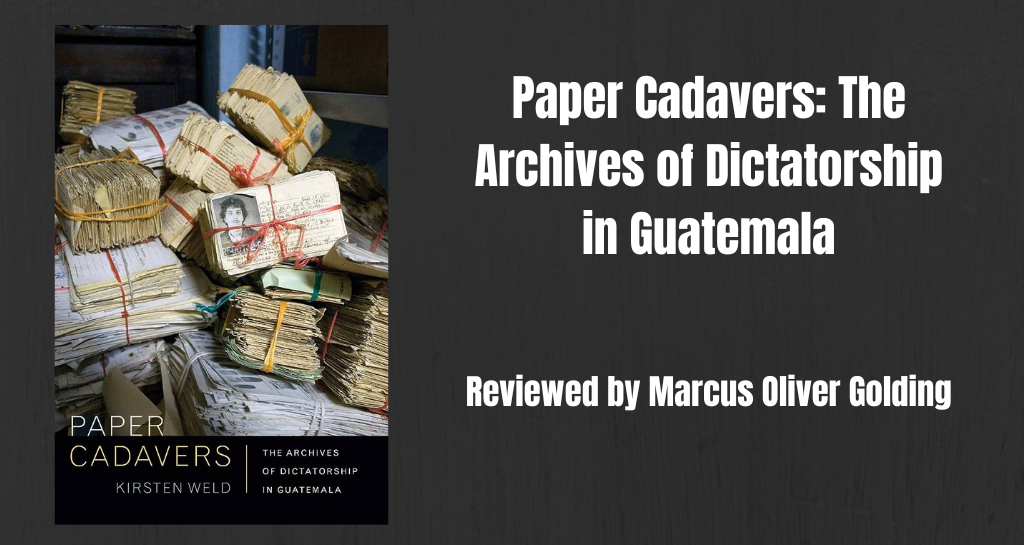
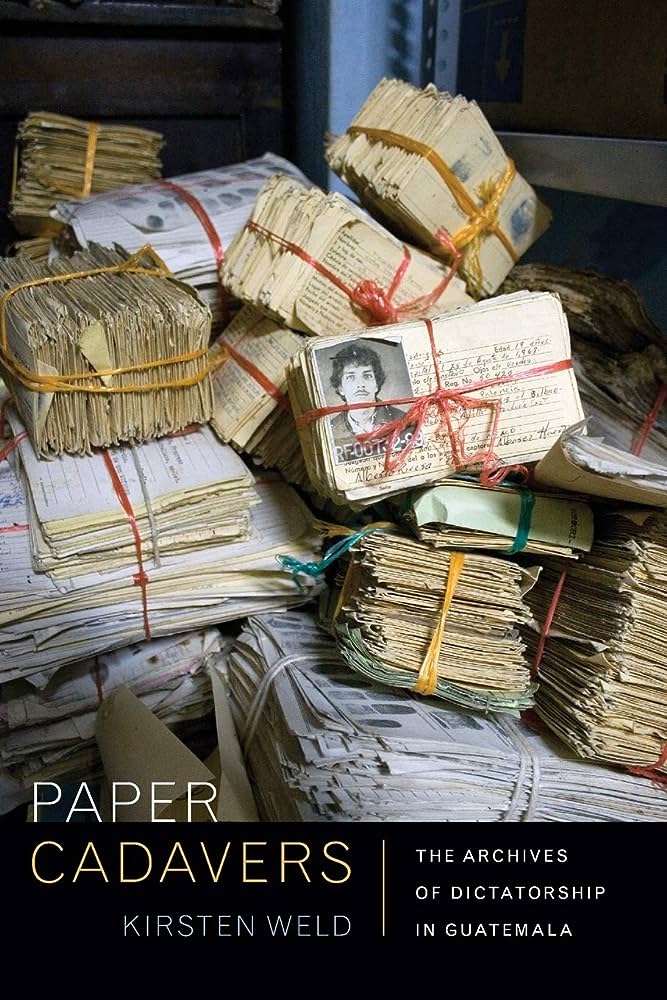
Paper Cadavers: The Archives of Dictatorship in Guatemala (2014)

Archives, especially state archives, have political agendas. Whether private or public, holdings of individual, institutional, and government documents can serve to invade and control the lives of citizens and societies. Their organizations shape historical knowledge and national narratives about the past. Kirsten Weld addresses these political issues of government intrusion, historical memory, and archival knowledge production by focusing on The Project for the Recovery of the National Police Historical Archives in Guatemala (The Project). Weld identifies two different political agendas structuring the National Police Archives from its professionalization in the 1950s until the state of decay in which it was found in 2005. The first agenda served the purpose of surveillance and social control, using archives as a weapon against people considered enemies of the state during the Guatemalan Civil War between 1960 and 1996. The records’ rescue gave these archives a new social purpose geared towards democratic opening, historical memory, and the pursuit of justice for victims of the state’s war crimes. The book chronicles the transition from the first political agenda into the second with the goal of capturing the process through which a new historical narrative about the war was produced.

Weld argues that how people think about archives is critical to understand their role in the generation of new historical narratives. Archival holdings are also telling about the relationship between citizens and the state in the construction of these national histories. The Project helped transform negative perceptions of archives as dumpsters that perpetuate silence and political apathy, into treasures seen as tools for democratization and empowerment. The author combines historical and ethnographic perspectives to understand how the Police Archives transitioned to a new agenda of democratic opening and citizen’s accountability for crimes perpetuated by the state during the Civil War.

Weld uses ethnography and oral histories to explore how The Project came to be, the tensions that erupted between older and new generations working at the Police Archives, and the dangerous political context in which they had to work. She shows how former guerrilla fighters began an uncertain effort to recover the police archives until the institutionalization of the initiative through foreign funding. Due to the messy and decaying state of the police documents, archival preservation required former guerillas to learn concepts of original order, provenance, and chain of custody in order to know how the National Police organized information. Therefore, the norms outlined in the International Standard for Archival Description would undergird the new organizational logic of The Project from the onset.

Working in The Project also entailed understanding the goals that drove people to get involved with the Police Archives in the first place. Weld shows that former revolutionaries were driven to work on The Project by powerful experiences of loss and militancy, fueled by the desire to restore honor and agency to the dead. The young people she studied who came from militant families saw the preservation of police documents as a new way to continue the revolutionary struggle. To those without revolutionary ties, the archives represented a way to put academic training to use and to advance in the recovery of historical memory and truth telling. These experiences will shape the legacy of the Guatemalan Civil War and the next generations’ interpretations of the past.

The growing visibility of this collaborative effort, however, made it the target of military pressures, which raised concerns about the welfare of the archives and its personnel. This threat of violence was not new and was preceded by what the author calls “the archival wars,” — battles between citizens and the state over the access and meaning of state documents. Weld presents the different strategies rulers and ruled have used since the beginning of the Civil War to limit or expand access to records. These include legislation to block or undermine the preservation of state information, the demand to know what information the state holds about a particular citizen, or the successful publication of reports about disappeared Guatemalans.

Drawing from state archives and human rights reports, Weld also focuses on the institutional history of the National Police. The restructuring of this institution from 1954 to 1974, through counter-insurgency aid from the U.S, led to the establishment of efficient record keeping systems as a means to enact effective social control. The Central Records Bureau and the Regional Communications Center are just two initiatives that helped the Guatemalan state  monitor its citizens. Better archives, modern equipment, and professional personnel became synonymous with the battle against “subversion.” This counterinsurgent mentality of the police accounted for most of the urban violence in the 1980s. The transition to democracy in 1986 perpetuated the counterinsurgency approach into the post-conflict period, explaining the militarized and centralized nature of the new National Civil Police.

Finally, the author delves into the successes and risks that the new archival agenda of social reconstruction and historical revisionism faces in Guatemala today.  By working toward the passage of national archives system laws, and creating archival science programs in national universities, the Project has inaugurated a new archival culture in Guatemala, one that seeks a more democratic and transparent relationship between government and citizens. But the military’s institutional opposition to The Project reveals resistance to a new historical memory that subverts old narratives of a triumphant nation against communism.

Weld combines an impressive set of written sources with an ethnographic approach and oral histories of people who worked in the Project. These sources serve her well in capturing the transition from one archival agenda to the other. The author’s writing style is clear and fluid. This is a critical study that intertwines new interpretations about urban violence in Guatemala with a growing literature on historical memory and the politics of state archives in post-conflict societies.

_________________________________________________________________________________________

The views and opinions expressed in this article or video are those of the individual author(s) or presenter(s) and do not necessarily reflect the policy or views of the editors at Not Even Past, the UT Department of History, the University of Texas at Austin, or the UT System Board of Regents. Not Even Past is an online public history magazine rather than a peer-reviewed academic journal. While we make efforts to ensure that factual information in articles was obtained from reliable sources, Not Even Past is not responsible for any errors or omissions.

Civil War and Daily Life: Snapshots of the Early War in Guatemala

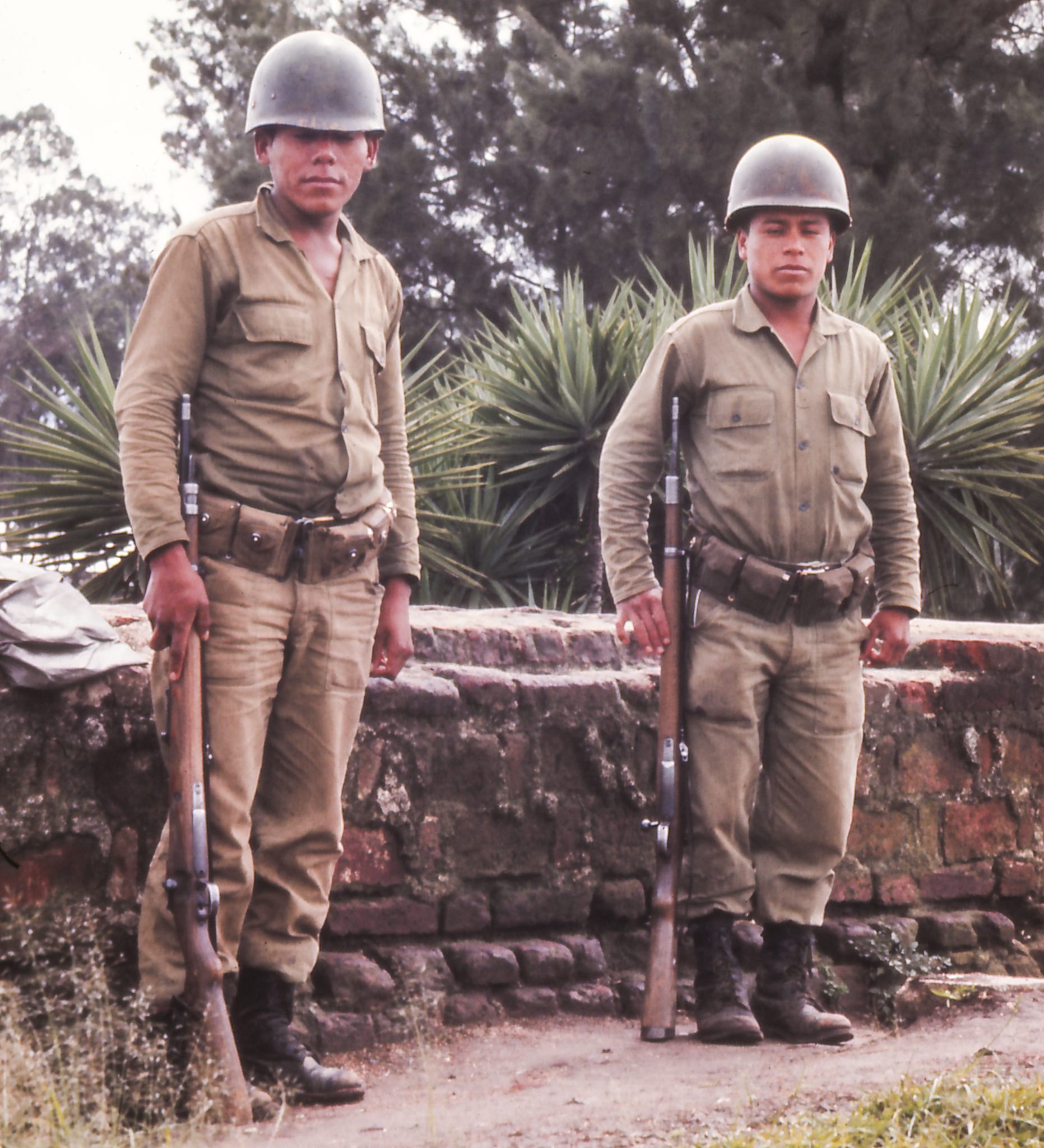
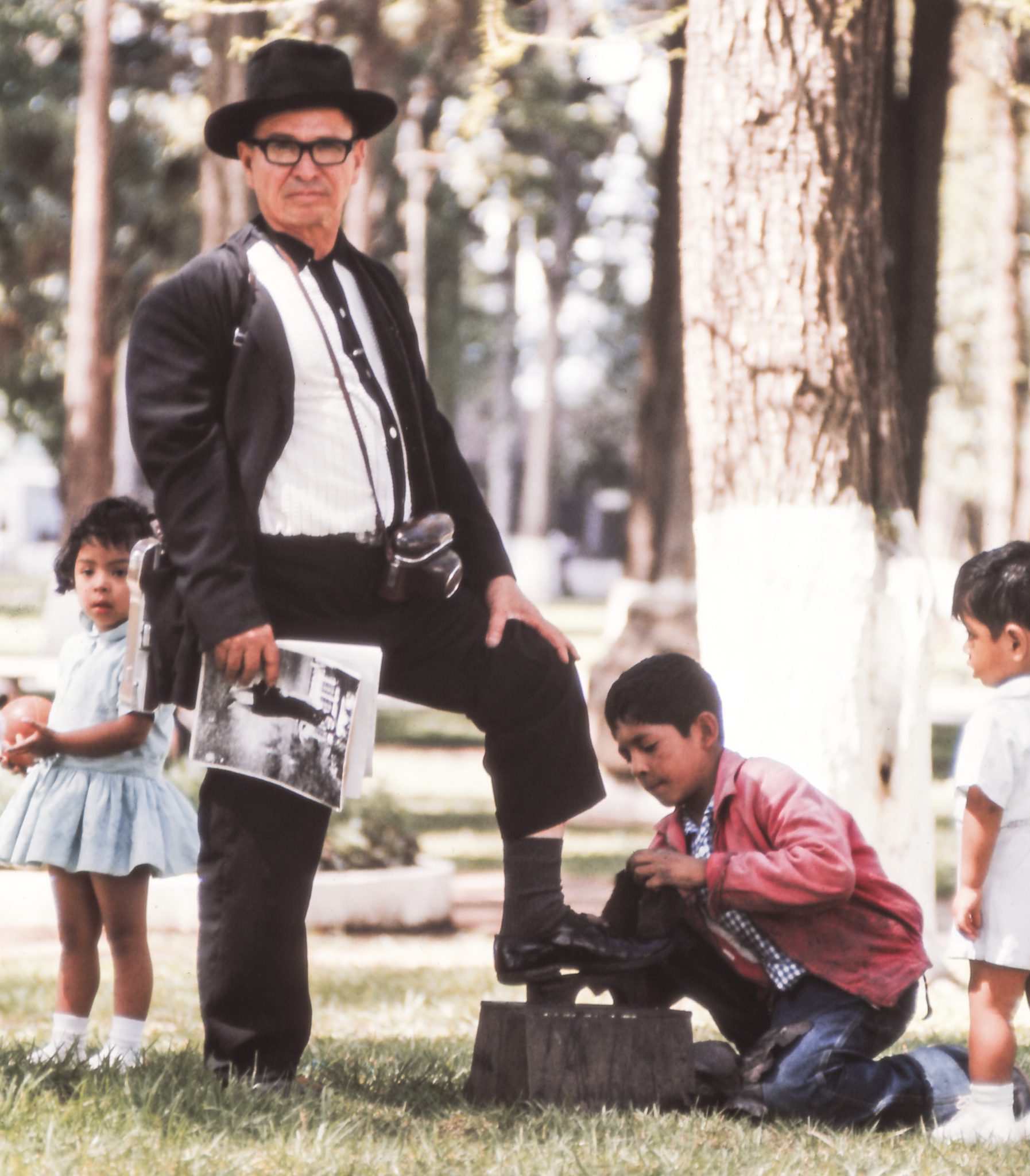
Two young Guatemalan soldiers abruptly pose for the camera. They rush to stand upright with rifles at their sides. On a dirt road overlooking an ominous Guatemala City, they stand on guard duty. This snapshot formed the title page of an exhibit at the University of Texas at Austin’s Benson Latin American Collection in 2018. A collection of these and other documents by Rupert Chambers will become part of a permanent archive at the library. The photographs depict the year 1966, a time of martial law and increasing state repression of leftist movements and supporters of reform. A storm was brewing in Guatemala.

Historians can situate this collection of photographs in the context of Guatemala’s civil war. The Guatemalan military was mobilizing to eliminate leftist guerrilla armies, which had recently arrived on the scene. Leaders of these rebel armies framed their struggle in the hope of democratic reform.  The Guatemalan state would not budge.  The state military agenda rested on two pillars:  fierce Cold War anti-communism and protection of the Guatemalan oligarchs’ monopoly on land and labor. Nearly two decades later Guatemalans would learn of the brutality of a military regime that would go to any lengths, including genocide against innocent indigenous-Mayan civilians, to suppress the insurgency.

Was this snapshot of two young foot soldiers a sign of what was to come? It is convenient to position these two soldiers as symbols of the violence that ensued in coming decades. But in 1966, terror had not yet reached its apex. The conflict was still, in part, a “gentlemen’s war,” fought between members of the upper and middle classes. At the time, foot soldiers, many of whom came from poor Mayan communities, were unaware of the military operations that would define the ensuing decades. They experienced the same ominous environment of uncertainty that most Guatemalans did.

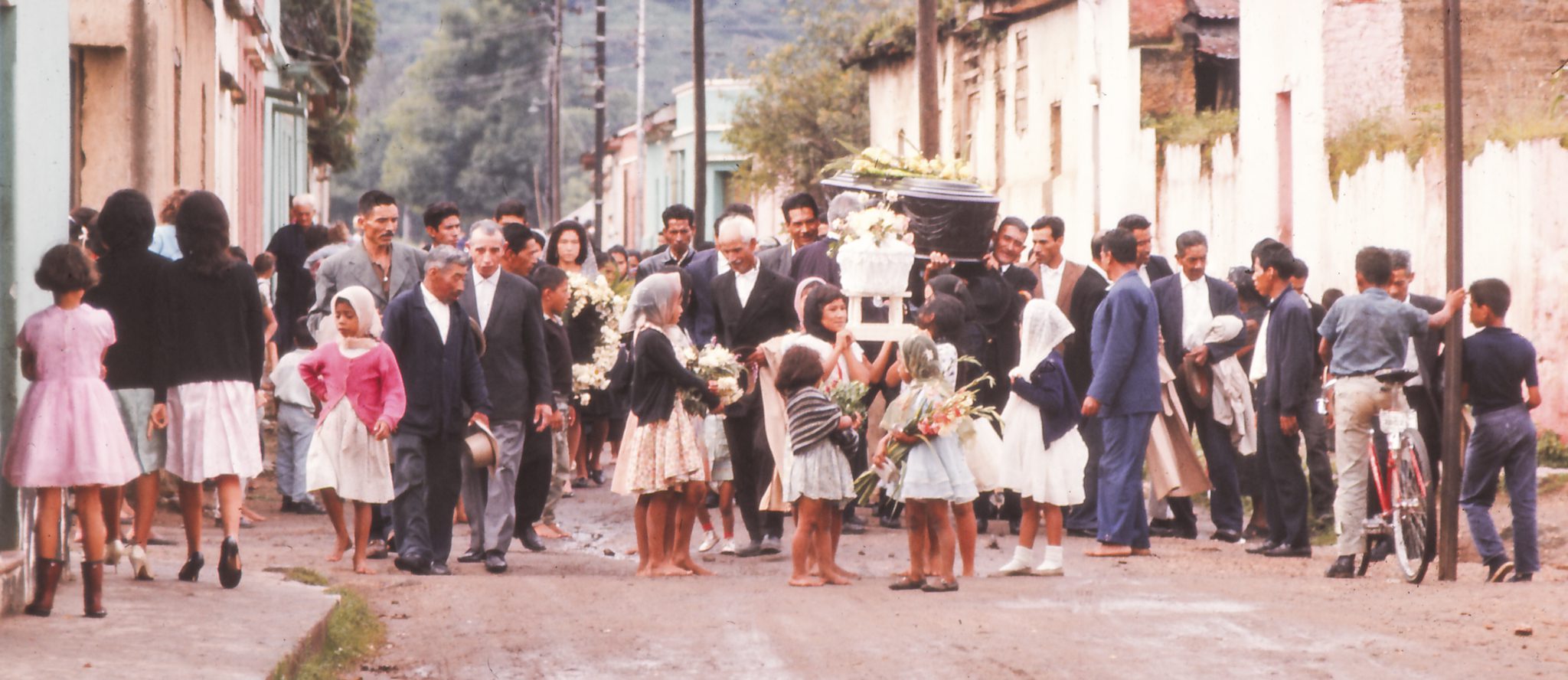
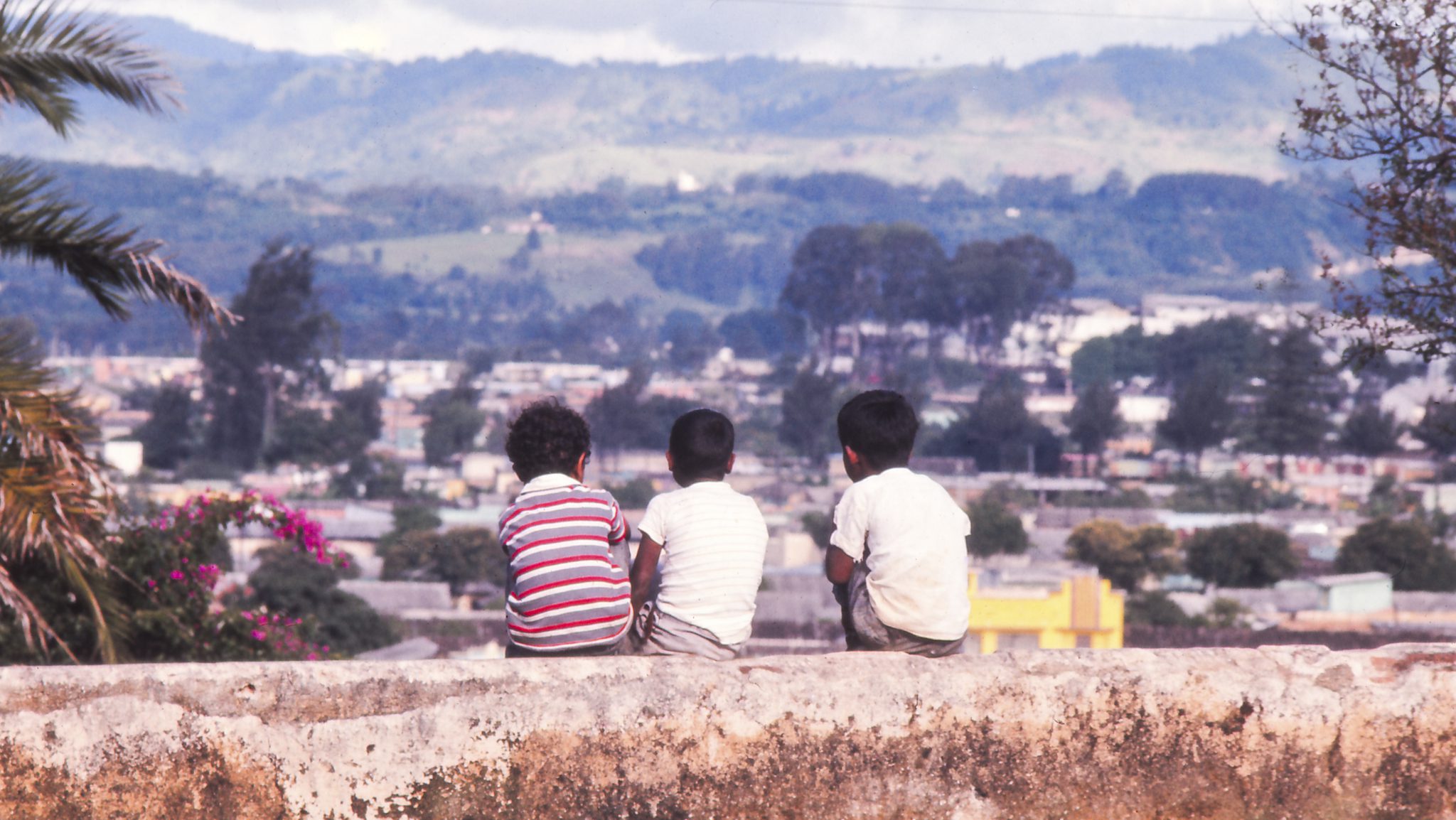
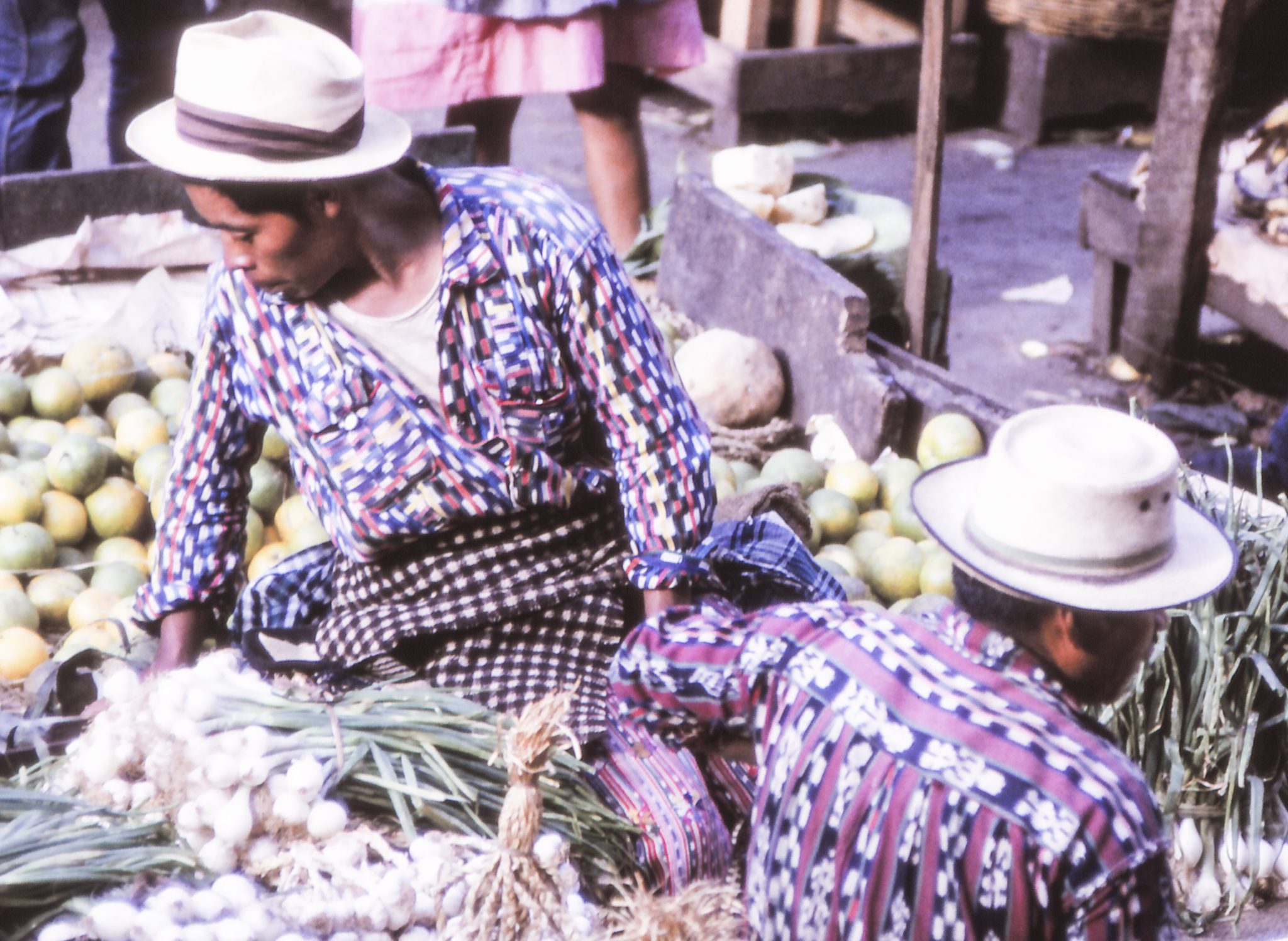
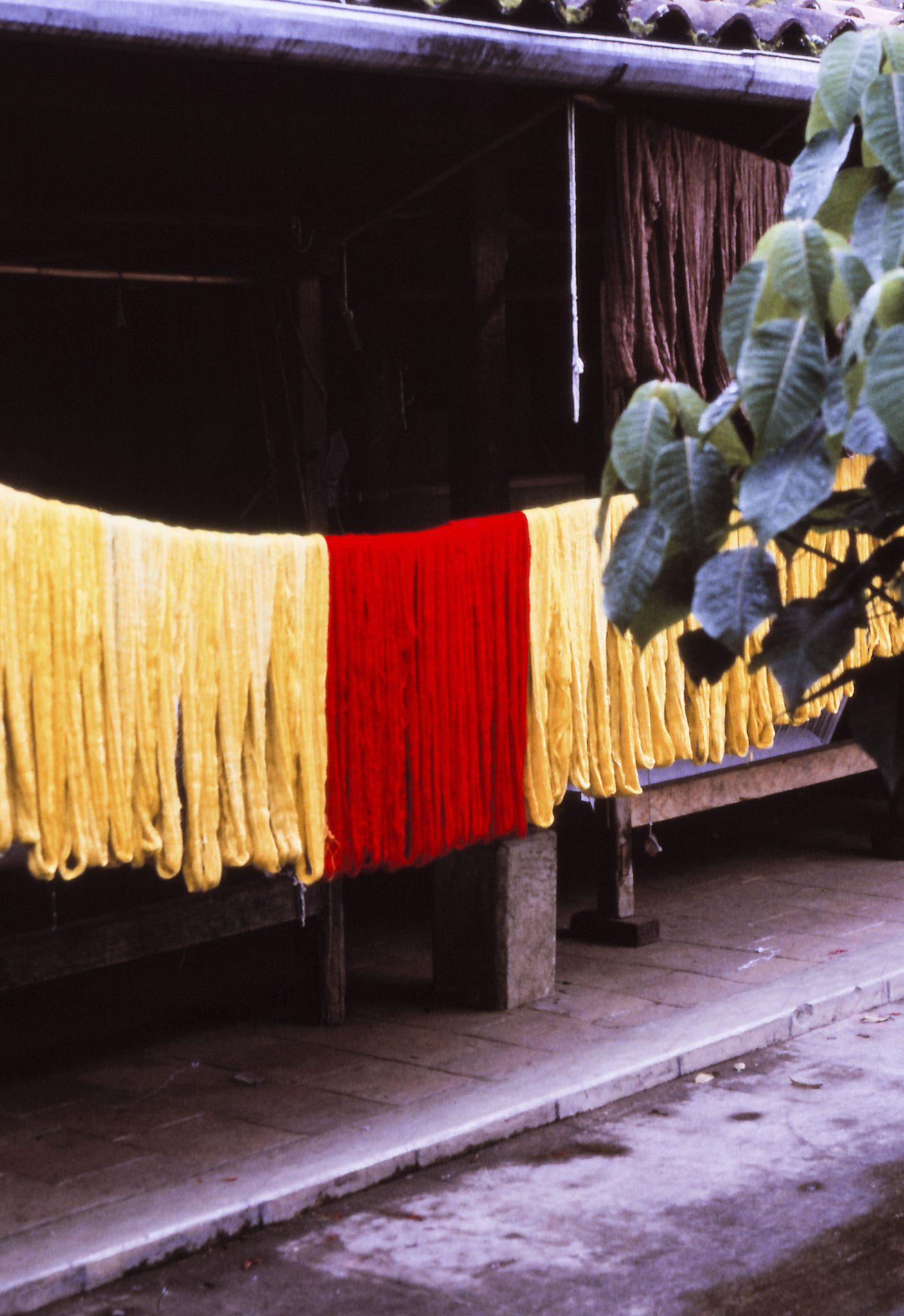
This past February, the author of these photographs, Rupert Chambers, reflected on his work for a public audience at the Benson Latin American Collection and took time to answer my questions. He visited Guatemala in 1966 as a UT graduate student doing historical research. There, Chambers documented the streets and people of Guatemala City and rural towns. He photographed Mayan women at local markets, children selling goods, and funeral processions through the streets. The camera lens captures citizens who continued to make a living, coping through poverty, violence, and discrimination. How do these photographs help us understand the context of the civil war?

As an American in a highly fragile moment in Guatemala, Chambers reflects on the lack of awareness among Americans in Guatemala about the military and political conflict at the time. “They [Guatemalans] knew we [the U.S. Government] had overthrown their revolution in 1954; we had not yet admitted it to ourselves.”  He was referring to the CIA administered revolt that replaced Guatemala’s 10-year old democratic government with a right-wing regime.

In 1966, roughly a decade into the Vietnam war, U.S. military advisers were exporting their anti-communist military infrastructure into their neighbor in Central America. Guatemalan generals obligingly received aid in the form of training, as well as technical and material support. The American military also authorized thousands of Guatemalan military commissioners to help combat the perceived communist threat. In the 1980s, the military collaboration was more obvious to American observers. In 1966, however, Americans in Guatemala were still in the dark. Chambers remembered how “few of us were aware of the full extent of U.S. support and intervention.”

An air of uncertainty occupied the minds of ordinary Guatemalans as well. Chambers spoke about this overall atmosphere, pointing out that most Guatemalans were aware of the conflict but not the extent, and no one would have used the term “civil war” at that juncture.  “While not exactly the calm before the storm, the mid-1960s gave only clues and portents.”

Behind the scenes, networks of right-wing terror groups flowed in the capital city. Signs of terror reared their ugly heads. Chambers described witnessing street signs of the mano blanco (white hand). The “white hand” was a symbol for a clandestine terror organization that used death lists to assassinate democratic leaders and decorated the corpses of their victims with threatening notes. In the 1960s, Guatemala would become one of Latin America’s first settings of “forced disappearances.”

Despite this violent background, Rupert Chambers’ photographs provide an important perspective on the “day-to-day.” As Chambers states, “Guatemalans had lived in a context of violence for so long that in the mid-sixties this all appeared to them as more of the same, a constantly fluctuating level of violence, a cause for concern but not yet something very much out of the ordinary as it was soon to become.”

Chambers prompts historians to consider whether we can we document a tragedy before it happens. Photographer Sally Mann once stated that “photographs open doors into the past, but they also allow a look into the future.”  Historians may examine such photographs for clues of terror, silence, and ambiguity. There is something deceptive, however, about looking at these photographs solely through the prism of what was to come; something deterministic. The precariousness of Guatemala’s situation was as much a product of history as it was an unfortunate feature of daily life. And while Guatemalans feared the past and future, their dignity remained in the present.

Photo documentary evidence of state violence also has a history. About a decade after Chambers’ 1966 photographs, a new wave of visual records would help document the violence in Guatemala, spearheaded by the likes of Jean-Marie Simon, in her book Guatemala: Eternal Spring, Eternal Tyranny, and Pamela Yates, in her documentary, When the Mountains Tremble.  Such visual documentation propelled human rights efforts to combat the impunity of the Guatemalan state apparatus, which was responsible for around of 90% of civilian deaths during the war.

Chambers’ photographs embodied one of the earlier stages of the documentation of the civil war. His photographs document an underexamined area of history in the ambiguities and fears of daily life under violent regimes. While photography was Chambers’ hobby, he intentionally set out to document human dignity, something he claimed to learn much about from the people of Guatemala. Chambers continues this work in his new project in Mexico.

(All photos here are published with the permission of the photographer.)

An Anticipated Tragedy: Reflections on Brazil’s National Museum by Edward Shore

Black Amateur Photography by Joan Neuberger

Media and Politics from the Prague Spring Archive by Ian Goodale

_________________________________________________________________________________________

The views and opinions expressed in this article or video are those of the individual author(s) or presenter(s) and do not necessarily reflect the policy or views of the editors at Not Even Past, the UT Department of History, the University of Texas at Austin, or the UT System Board of Regents. Not Even Past is an online public history magazine rather than a peer-reviewed academic journal. While we make efforts to ensure that factual information in articles was obtained from reliable sources, Not Even Past is not responsible for any errors or omissions.

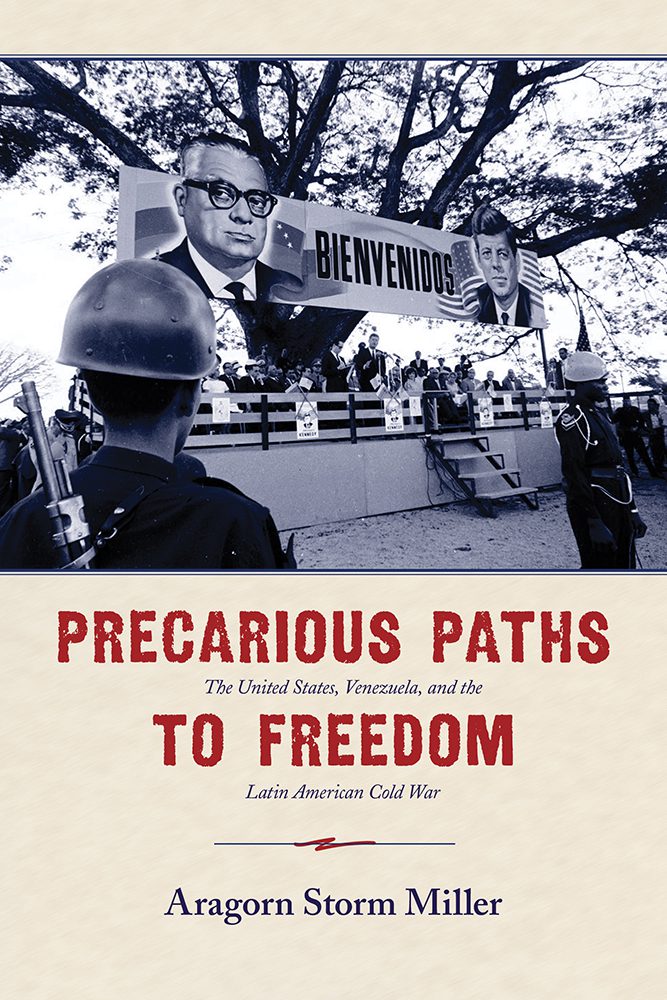
Precarious Paths to Freedom: The United States, Venezuela, and the Latin American Cold War (2016)

By Marcus Oliver Golding

The role of the United States during the Cold War is one often marked by tragedy, repression and the support for authoritarian regimes throughout the western hemisphere. That perception is shared throughout Latin America, which makes one wonder if there are cases in which U.S. foreign policy actually helped Latin Americans in their quest for socio-economic development and democratization during this turbulent period. Aragorn Storm Miller invites us to rethink US-Latin American relations by exploring the unusual case of Venezuela during the 1960s. In Precarious Paths to Freedom, he examines the economic and military partnership between these two countries that proved to be essential to achieving the twin goals of economic development and democratization while fending off political extremism. As many other places in Latin America at the end of the 1950s, Venezuela emerged from ten years (1948-1958) of military dictatorship looking to democratize and modernize. Soon, however, the Cuban revolution offered an alternative path to socio-economic development in the region. The rivalry between the United States and Cuba  would threaten the stability of the hemisphere. To navigate these turbulent waters, politicians in Venezuela had to strike the right balance between appeasing popular demands and suppressing political extremism to preserve democracy and achieve economic prosperity.

Miller shows how the administrations of Rómulo Betancourt (1959-1964) and Raúl Leoni (1964-1969) deftly courted American policymakers for economic resources while severing diplomatic ties with Latin American autocracies regardless of their ideology. The Betancourt Doctrine, as it became known, stood as a norm of Venezuelan diplomacy during the 1960s despite the constant support that the United States provided for military dictatorships elsewhere in the hemisphere. By studying these diplomatic episodes, Miller also underlines the fact that U.S. power was not absolute, and that Latin American agency weighed heavily in shaping the histories of the region.

Throughout the book the author analyzes how this joint effort in democratization and modernization connected local developments to the broader ideological clashes between Cuba and the United States, and between these two and China and the Soviet Union globally. In the struggle for political peace, Venezuela became the target of internal and external extremism testing the resolve of moderate politicians and the centrist government coalition. Likewise, the American-Venezuelan partnership went through several trials from radicals on both sides of the political spectrum that threatened to derail the prospects for democratic governance. First came right-wing reactionaries who carried out several failed attempts to unseat Rómulo Betancourt between 1958 and 1960. The most shocking of these plans was spearheaded by a traditional ally of the U.S., the dictator Rafael Leónidas Trujillo (1930-1961) of the Dominican Republic.  who financed a mission to kill Betancourt. The plan consisted in detonating a bomb near the passing presidential motorcade that killed the driver but only wounded the Venezuelan president. After this episode, the demise of the extreme right was succeeded by leftist insurgencies from 1962 to 1969.

The Venezuelan Communist Party and the Movement of the Revolutionary Left first tried to achieve power in alliance with disaffected leftist officers in the army with whom they engineered two failed military uprisings (El Carupanazo and el Porteñazo both in 1962). The next phase of the insurgency involved guerrilla warfare with significant support from external communist allies. The discovery of crates full of Cuban weapons at the Paraguaná Peninsula in 1963, and the successive landings of Venezuelan guerrillas with some Cuban troops and instructors in Tucacas (1966) and Machurucuto (1967), are only some of the episodes that the author addresses in order to show how Venezuela became the prime target for Cuba’s hemispheric plans during this decade.

Miller devotes approximately two thirds of the book exploring the genesis of the guerrilla movement, the divisions that plagued it early on, its financial connections with Cuba and the Italian Communist Party, its lack of popularity among ordinary people, and its failure to achieve power through violent means. However, the Venezuelan government perpetually struggled to eliminate this threat from the urban and rural areas of the country. Through a two-prong strategy that involved beefing up the Venezuelan military in counterinsurgency methods and national civic actions, coupled with the issuing of presidential pardons of imprisoned insurgents to reintegrate them to mainstream politics, the administration of Raúl Leoni dealt the final blow to the guerrillas. In this shared effort to preserve democracy the United States’ contribution in military aid became crucial.  Its funding is what allowed the Venezuelan government to create multiple ranger battalions that were decisive in the final offensives against the guerrilla in 1967 and 1968.

By 1969, the second peaceful transfer of power from one civilian government to another (and the first in the country’s history from a governing party to the opposition )  seemed to mark the triumph of moderate forces over extremism and the consolidation of democracy in Venezuela. Miller concludes by pointing to three factors that made possible this extraordinary political outcome. The special rapport that existed between the American and Venezuelan presidents during this period assured a sound footing for diplomatic cooperation and economic and military aid. On the other hand, The Puntofijo Pact, a formal arrangement signed in 1958 between the mainstream political parties in Venezuela (AD, COPEI and URD), enshrined the commitment of the political elite to preserve democracy at all costs. Finally, the deep-seated popular beliefs in a democratic regime led the Venezuelan people to constantly support the system through massive participation in electoral politics.

Using a concise and enjoyable writing style, Miller reminds us that despite the appalling record of authoritarian violence in the hemisphere, American foreign policy also showed some bright spots through the successful democratization of a Latin American country during the Cold War.

« Previous Page
Next Page »

Recent Posts

  • The Battles of the Alamo and the Myth of Southern Exceptionalism
  • Primary Source: Magic, Metal, and Medicine in Leonhard Thurneysser’s Paracelsus
  • Faculty Spotlight: Dr. Kate Imy
  • La Historia del Tiempo Presente en México: un campo en construcción
  • The History of the Present Time in Mexico: A Field in Formation
NOT EVEN PAST is produced by

The Department of History

The University of Texas at Austin

We are supported by the College of Liberal Arts
And our Readers

Donate
Contact

All content © 2010-present NOT EVEN PAST and the authors, unless otherwise noted

Sign up to receive our MONTHLY NEWSLETTER

  • New
  • Features
  • Reviews
  • Texas
  • Teaching
  • Digital
  • Watch & Listen
  • Authors
  • About