• New
  • Features
  • Reviews
  • Texas
  • Teaching
  • Digital
  • Watch & Listen
  • Authors
  • About

The past is never dead. It's not even past

Not Even Past

IHS Panel: From the May Fourth Movement to the Communist Revolution

The year 2019 marks the 100th anniversary of the May Fourth Movement and the 70th anniversary of the ending of the Communist Revolution in China. Beginning with the unreserved embrace of Western values by “enlightenment” intellectuals, the three decades following World War I in China witnessed dramatic transformation on all fronts, ending in the establishment of a communist government that would rule China to the present day. To make sense of the impacts and legacies of these two historical events as well as the ironies and contradictions that were intrinsic to them, our panelists will discuss the impact of the May Fourth movement on social and intellectual life in Republican China, the opportunities and dilemmas that confronted Chinese women in their involvement in the Communist Revolution, and the strategy and tactics behind Communist success in the Civil War in 1949.

Featuring:

“Rethinking of the May Fourth Discourse: Family, Marriage and Women in the Chinese Revolution”
Xiaoping Cong
Professor of History
University of Houston

“The Making of “Youth” in Modern China: Reflections on the May Fourth Movement”
Iris Ma
Postdoctoral Fellow and Lecturer, Lyndon B Johnson School of Public Affairs
University of Texas at Austin

“From 1919 to 1949: The May 4th Movement and Communist Strategy and Tactics in China’s Civil War”
Harold Tanner
Professor of History
University of North Texas

Huaiyin Li, moderator
Professor of History
University of Texas at Austin


The views and opinions expressed in this article or video are those of the individual author(s) or presenter(s) and do not necessarily reflect the policy or views of the editors at Not Even Past, the UT Department of History, the University of Texas at Austin, or the UT System Board of Regents. Not Even Past is an online public history magazine rather than a peer-reviewed academic journal. While we make efforts to ensure that factual information in articles was obtained from reliable sources, Not Even Past is not responsible for any errors or omissions.
IHS Panel: Brexit in Global and Historical Context

The United Kingdom’s withdrawal from the European Union would seem to mark an abrupt and unexpected break with post-WWII efforts to bring about greater European integration. Yet like most sudden historical breaks, a look beneath the surface reveals longer-term processes. This panel will discuss how Brexit can be understood from several angles: a) long-term developments in the UK and between the UK and continental Europe, b) Brexit’s challenge to the EU and its impact on internal national debates elsewhere in Europe, and c) Brexit in light of the recent upsurge of global populism.

Featuring

“Brexit: How Did We Get Here and What Awaits Us?”
Zeynep Somer-Topcu
Associate Professor, Department of Government
The University of Texas at Austin
liberalarts.utexas.edu/government/faculty/zs3955

“The Political Economy of Brexit, in the UK and the EU”
James K. Galbraith
Lloyd M. Bentsen Jr. Chair in Government/Business Relations and Professor of Government
Lyndon B. Johnson School of Public Affairs, and Department of Government
The University of Texas at Austin
lbj.utexas.edu/directory/faculty/james-galbraith

“The Janus Face of Brexit: UK-Europe Relations from Napoleon to Nigel Farage”
James Vaughn
Assistant Professor, Department of History
The University of Texas at Austin
liberalarts.utexas.edu/history/faculty/jv8775

Miriam Bodian, moderator
Professor of History, and
Director, Institute for Historical Studies
The University of Texas at Austin
https://liberalarts.utexas.edu/history/faculty/mb35382

Other IHS Talks:

Climate and Soil: The Environmental History of the Maya
The Influenza Pandemic of 1918-1919
Debt: A Natural History


The views and opinions expressed in this article or video are those of the individual author(s) or presenter(s) and do not necessarily reflect the policy or views of the editors at Not Even Past, the UT Department of History, the University of Texas at Austin, or the UT System Board of Regents. Not Even Past is an online public history magazine rather than a peer-reviewed academic journal. While we make efforts to ensure that factual information in articles was obtained from reliable sources, Not Even Past is not responsible for any errors or omissions.

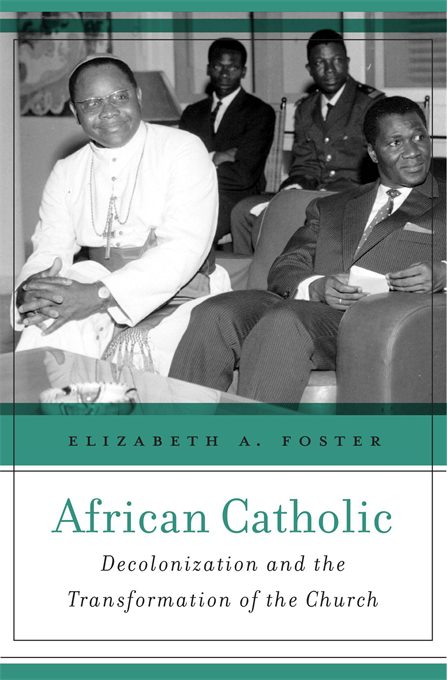
African Catholic Decolonization and the Transformation of the Church by Elizabeth A. Foster (2019)

by  David Whitehouse

(This article was originally posted on Imperial and Global Forum)


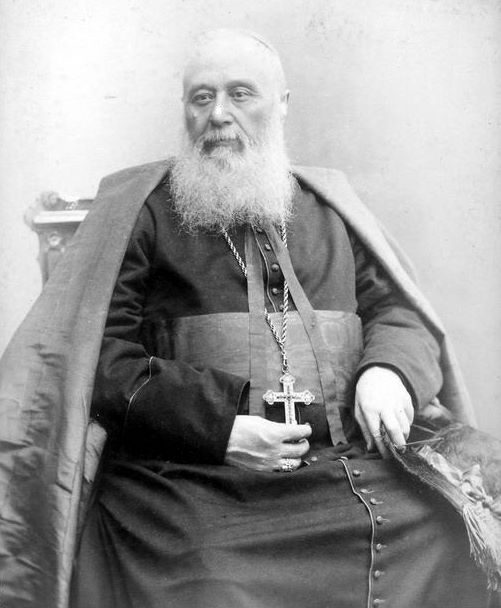
On July 1, 1888, Charles Lavigerie, founder of the White Fathers Catholic missionary order, gave a speech to a packed Saint-Sulpice Church in Paris in which he denounced the evils of slavery in Africa. The event was a public relations triumph, with African children who had been repurchased from slavery being paraded by the Fathers, clad in white burnouses with red fezzes on their heads, on the church steps. In the late nineteenth century as in the 1950s, slavery was used by the Catholic Church to galvanize public opinion and to raise funds. Lavigerie was not an isolated forerunner of post-war Catholic radicalism. He trained a generation of missionaries to enter the field as convinced anti-slavery activists, as well as supporting a series of military operations against slavery in Africa, with varying degrees of success. And yet until now Catholic missionaries have usually been relegated by historians to the status of obedient cogs in colonial state machines. Elizabeth Foster’s new book offers a major challenge by showing how missionary leaders like Lavigerie and his successors had aims that were often in clear conflict with those of the colonial state – a conflict between French Catholic missionaries and the colonial powers that resurfaced in a big way after the Second World War.

An emphasis upon political transition from colonial regimes to independent states dominates the literature on African decolonization. But decolonization, defined by Foster as the “ending or limiting of European hegemony” that involved power systems that were clearly outside of state apparatus, was a much broader process (p. 11). The book effectively uncovers the conflict between colonial state and Catholic mission in Africa in the 1950s. Foster sees the emergence of a more robust Catholic Left in France against a backdrop of colonial crisis as a key development. Catholicism in France, Foster argues, had previously been the almost exclusive property of the conservative Right. The Catholic Church hierarchy therefore struggled in an “awkward dance” in the 1950s as it sought to reconcile conservatives with radical anti-colonialists (p. 14). To make its provocative case, the book draws on a rich supply of archival sources in France, Italy, and Senegal, as well as a wide range of periodicals.

Charles Lavigerie (via Wikipedia)

Another main strength of the book lies in its illumination of the bifurcation between European and Christian identity that Catholic missionary work in Africa entailed. Catholic intellectuals such as Joseph Michel sought in the 1950s to “reclaim and reorient the church as a defender of the oppressed, colonized populations” of the French Empire (p. 100). As Foster argues, the Catholic church was considerably more successful in keeping its adherents in post-colonial Africa than in Europe. World War Two looms large as a turning point here, complementing other recent scholarship. According to Darcie Fontaine, for example, the war is similarly seen as the turning point in the development of French Catholic thinking about the colonies, as Christian theology was used in France as a basis for resistance to Nazism.[1]This can, however, lead to obscuring the continuity of missionary agendas and practice.

In Foster’s account, racial hierarchy keeps its orthodox place as a guiding paradigm of missionary thinking.[2] Foster argues that racist disdain for évolué Africans was common among missionaries and that blatant Catholic racism only became institutionally unacceptable in the 1950s. The new generation of post-war missionaries had more enlightened attitudes than the old guard they replaced. Missionary longevity in the field, the assumption appears to be, solidified racism. This begs the question of why Catholic missionaries would want to work among “unredeemable” and “inferior” peoples for so long.[3] For Lavigerie, setting Africans free from slavery and building the kingdom of Christ in Africa were intended as achievements that would fully match or surpass the establishment of Christianity in Europe. Why would these goals have resonated with peoples who were considered as inherently inferior? Foster’s book begins to provide answers.

Foster’s focus is on the period of decolonization, and the chronological gap between her discussion of Lavigerie and the 1950s paves the way for a new field of research. So, too, would the addition of Protestant missionary sources. After all, Foster makes quite clear the French hostility to American Protestant missionaries. Protestants usually answered back, and denominational rivalry was itself a potential driver of more polarised political stances taken by missionaries on the ground in Africa. Foster’s work thus raises big questions about how Catholic missionaries’ anti-slavery agenda shaped developments and denominational conflict in the first half of the twentieth century across the vast swathes of sub-Saharan Africa in which Christian missions operated. This important book starts the process of giving radical missionary currents their due place in models of colonialism and decolonization.


David Whitehouse is a freelance editor at the Africa Report published by Jeune Afrique in Paris and a PhD candidate at Exeter researching the impact of missionaries in Rwanda and Burundi 1900-1972.

bugburnt

[1] Darcie Fontaine, Decolonizing Christianity: Religion and the End of Empire in France and Algeria (Cambridge: Cambridge University Press, 2016).

[2] For example, Mahmood Mamdani, When Victims Become Killers: Colonialism, Nativism, and the Genocide in Rwanda (Princeton: Princeton University Press, 2001).

[3] Adas has even argued that that Europeans in the early centuries of expansion into Africa and Asia rarely used race to explain what they saw as their superiority, but rather Christianity and, much later, technological accomplishment. See Michael Adas, Machines as the Measure of Men: Science, Technology and Ideologies of Western Dominance (Cornell: Cornell University Press, 2014).

bugburnt

You May Also Like:

Remembering Dutch Decolonization through Historical Fiction
Gender and Decolonization in the Congo
The Great Betrayel: Jean-Paul Sartre and the Arabs

bugburnt

IHS Panel: The Influenza Pandemic of 1918-1919: 100 Years Later

The influenza pandemic of 1918-1919 was one of the deadliest natural disasters in history, causing the death of 50 to 100 million people worldwide. This panel will be a wide-ranging discussion of the 1918-1919 outbreak and subsequent episodes from a historical, sociological, and medical perspective.

Featuring:

“Improved Approaches to Combat a Future Pandemic”
Robert Krug
Professor Emeritus, Molecular Biosciences
University of Texas at Austin

“The Flu in Texas”
Abena Osseo-Asare
Associate Professor of History
University of Texas at Austin

“One Hundred Years Later: Unknowns of the 1918 Flu Epidemic”
Sahotra Sarkar
Professor of Philosophy, and Integrative Biology
University of Texas at Austin

Miriam Bodian, moderator
Professor of History, and
Director, Institute for Historical Studies
University of Texas at Austin

Climate and Soil: The Environmental History of the Maya
Revolutionizing the Way We Fight Disease 


The views and opinions expressed in this article or video are those of the individual author(s) or presenter(s) and do not necessarily reflect the policy or views of the editors at Not Even Past, the UT Department of History, the University of Texas at Austin, or the UT System Board of Regents. Not Even Past is an online public history magazine rather than a peer-reviewed academic journal. While we make efforts to ensure that factual information in articles was obtained from reliable sources, Not Even Past is not responsible for any errors or omissions.
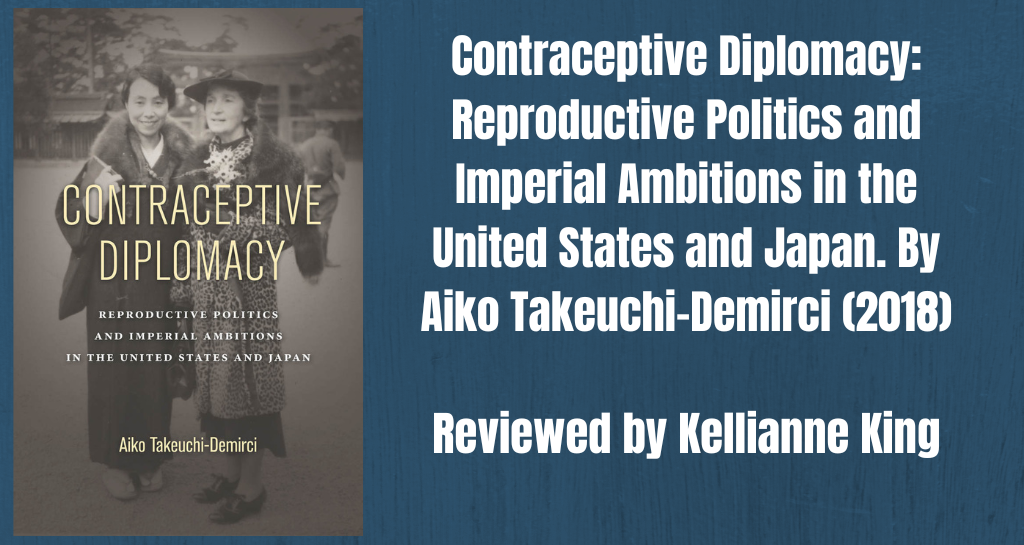
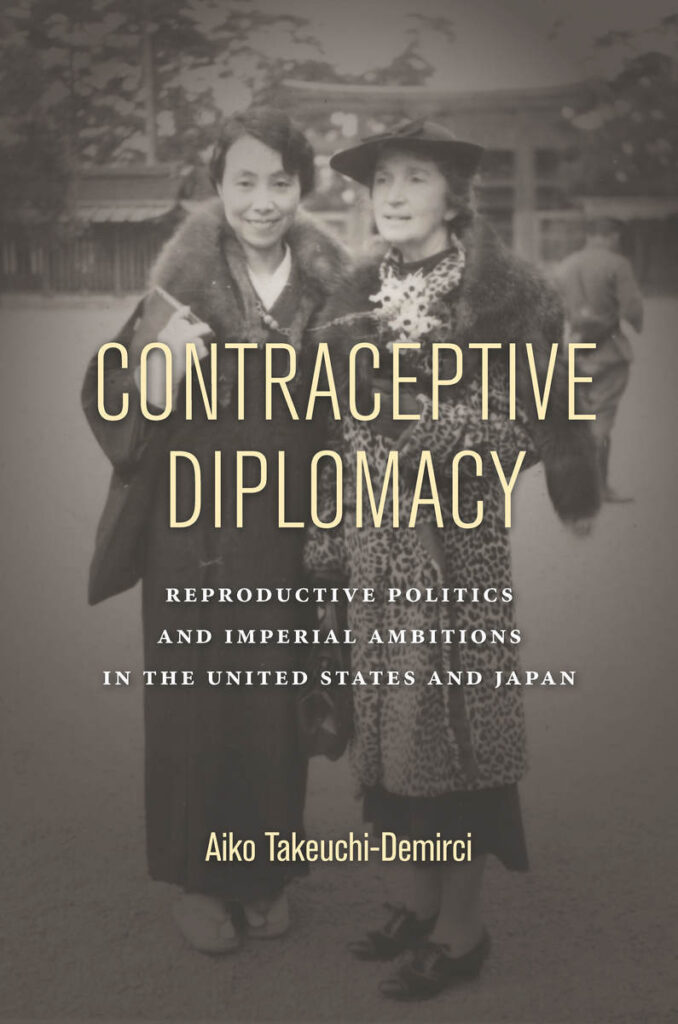
Contraceptive Diplomacy: Reproductive Politics and Imperial Ambitions in the United States and Japan. By Aiko Takeuchi-Demirci (2018)

In her first book, Aiko Takeuchi-Demirci enters a longstanding conversation surrounding twentieth-century eugenics projects. Contraceptive Diplomacy adopts a transpacific approach to reproductive politics, focusing on joint Japanese-American efforts to curb population growth and maintain strong national bodies. Takeuchi-Demirci grounds her analysis in two women central to the movement: Margaret Sanger and Ishimoto Shizue. As she traces Japanese-American relations and birth control activism throughout the century, Takeuchi-Demirci finds that state governments’ racial fears and desire for international dominance eclipsed Sanger’s and Shizue’s feminist goals. Rather than provide women more control over their own reproduction, Japan and the United States harnessed eugenics discourse to demonstrate their cultural and scientific advances and reduce “undesirable” populations.

Takeuchi-Demirci begins by highlighting Sanger’s trip to Japan following World War I. Already infamous in the United States for her birth control activism, Sanger’s decision to move her work abroad allowed her to escape the frustrations she experienced in her domestic efforts. The Japanese government saw in Sanger’s call a way to resolve a host of social problems by limiting the population, while an active women’s movement, well aware of her work, welcomed Sanger as a fellow woman dedicated to reproductive rights. Moving from the post World War I moment to the tense years leading up to the Second World War,  Takeuchi-Demirci shows that Sanger and Shizue maintained a connection throughout the conflict, albeit with tensions, and reframed birth control as a way to obtain international peace by balancing the world order. Anti-Japanese feelings in the United States ultimately inspired an immigration ban. Fearing “The Yellow Peril,” the U.S. government became concerned that Japanese migrants, who supposedly reproduced at alarming rates, would overrun the white population. The U.S. government also blamed Japan’s “aggressive” imperialism on Japanese women’s robust fecundity. Around the same time, Sanger began to temper her radicalism and joined forces with eugenicists interested in population control. Despite the fact that these men wanted to promote reproduction in white women while reducing it among non-white, Sanger nevertheless saw the alliance as an opportunity to promote birth control as a benefit for women.

In U.S. occupied Japan after World War II, caution about population control following the Nazi genocide did not prevent the U.S. from promoting birth control behind the scenes or from claiming that these efforts were indigenous-led. In particular, Takeuchi-Demirci argues, the United States hoped reducing the population and enhancing its quality would defend against communist infiltration. When birth rates did in fact decline, the U.S. envisioned replicating their approach throughout Asia. Takeuchi-Demirci shows how the Japanese continued these efforts and linked them to “New Japan,” the empire’s more modern, progressive successor.  Sanger participated in these activities by pushing to develop new birth control technologies using Eastern countries, and people, as a testing ground. Japan hesitantly accepted this offer, but insisted on leading the project to mitigate any Western exploitation. The Japanese eventually lost interest in the population control movement as birth rates continued to fall, to the distress of the United States, which remained intent on preventing communism’s spread through modified populations.

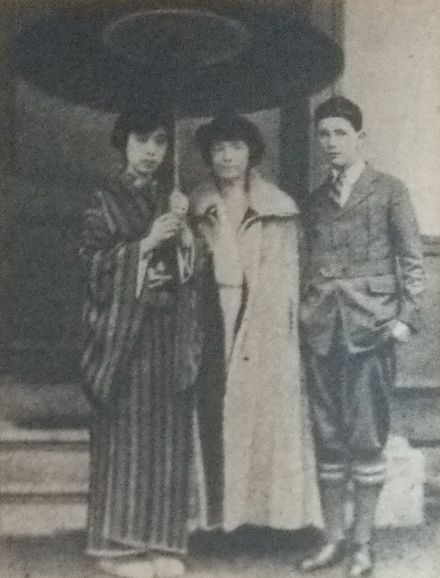
Ishimoto Shizuko in 1922 (via Wiki Commons)

Contraceptive Diplomacy travels uncharted territory by investigating transpacific attempts to bolster state power through a combination of birth control and eugenics. Takeuchi-Demirci’s work reminds us that U.S. eugenics projects did not exist in isolation, but on the world stage during a century fraught with international conflict. In working together to promote population control, Japan and the United States actually competed to demonstrate their cultural and scientific superiority. Feminist-led initiatives became, as Takeuchi-Demirci calls it, “a tool for patriarchal control and world domination” (210). Born in an anti-imperialist and socialist climate during the first World War, birth control traveled in imperialistic ways to facilitate international diplomacy. Takeuchi-Demirci shows the different ways discourses can be manipulated to serve dominant desires, and how even those who initially resisted this co-option, such as Sanger, become complicit. While the argument that eugenics served state goals is not particularly new, Takeuchi-Demirci does shed light on previously ignored Japanese-American projects. Her work makes this scholarly oversight appear all the more glaring given Sanger’s extensive involvement with the Japanese government and women’s groups.

Not all of Takeuchi-Demirci’s goals are achieved, however. Her stated intention to trace her narrative through Sanger and Schizue does not materialize; in fact, Schizue seems confined to the first few chapters, before disappearing as Sanger steals the show. While the women’s understated presence may make sense in light of the state’s tightening control over birth control, Sanger’s continued appearance seems to privilege the Western activist. Nevertheless, Takeuchi-Demirci’s has produced a fine book, as well as a relevant one. Her epilogue notes continuing twenty-first century eugenics projects and renewed fears about non-white reproduction outstripping that of whites (one thinks, for example, of United States anxiety over supposed Mexican “anchor babies.”) Contraceptive Diplomacy will appeal to a wide variety of readers, including those interested in international relations, twentieth-century United States or Japanese history, gender history, and the history of medicine.

Kellianne King is a graduate student pursuing a dual-title in History and Women, Gender and Sexuality Studies at Penn State University. Her areas of interest include nineteenth and twentieth century United States history as well as the history of medicine and psychiatry.

Notes from the Field
The “Knock Knock Who Is There” Moment for Japan
Racing the Enemy

When Answers are not Enough: The United States Holocaust Memorial Museum

By Jimena Perry

(All photos are courtesy of the author.)

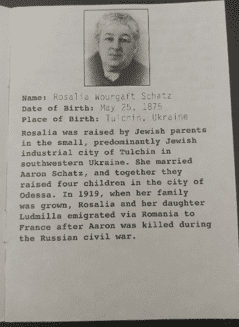
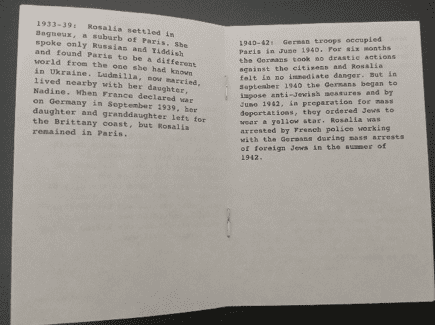
The only facts we know about Rosalia Wourgaft Schatz are that she was raised by Jewish parents in the city of Tulchin in southwestern Ukraine. In 1919 her family emigrated to France and in 1940 when the Germans occupied Paris and began their anti-Jewish politics, she, like many other Jews, was forced to wear the yellow star. In 1942 she was deported to Auschwitz where she was murdered at age 67.

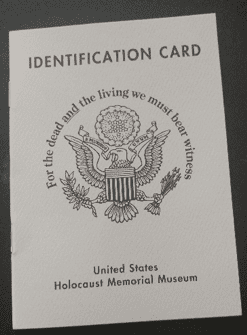
Rosalia’s brief life story is registered in the Identification Card #1847, found at the United States Holocaust Memorial Museum, founded in 1983 in Washington, D.C. Her IC is one of thousands that can be find in a shelf near the venue’s second floor elevators, that take you up to the main floors of the permanent exhibit. Before starting the tour, visitors can take an identification card like Rosalia’s, to go through the display with an actual target of the Nazi regime in their hand. The idea is that every person who enters the exhibit will get to know at least one victim. The short biographical information found in these cards are the only data we will ever know of many of the casualties of the Nazis, aside from the fact that they were one of the approximately 6 million Jews killed during the Holocaust.

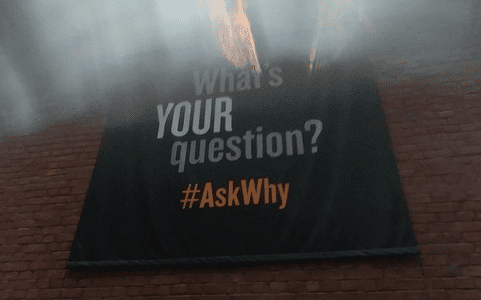
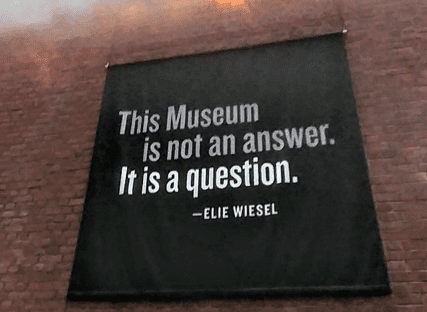
Once on the main exhibit floors, people can see the atrocities of the Nazi regime against Jewish, Roma, Armenian, and other minority populations. One of the main purposes of the curators of the United States Holocaust Museum is to encourage and promote the audience to keep asking “Why?” There is plenty of evidence of the torture and brutality committed by the Germans against their target populations but the basic question, why? still remains unanswered. The need to elucidate responses, find more explanations, and ignite further discussion fuels the intention of the museum professionals. This is evident at the very entrance to the building where vistors see two big posters that state: “This museum is not an answer but a question” and “What`s your question? #AskWhy”

As basic as these inquiries may seem and despite the myriad answers they have produced, there is something missing for the victims and their families. The basic Why? is still hovering in the back of the minds of those who endured and survived the Holocaust.

It is a question that the curators, employees, and researchers of the museum use to create historical memory narratives that include the victims, remember and honor them, and counteract versions that deny that these violent events did actually happen.

Raising awareness of the past to understand contemporary issues is one of the bridges built by memory museums because they demonstrate with facts, testimonies, documents, and images that atrocities like the Holocaust occur. In this sense, the United States Holocaust Memorial Museum is considered a pioneer in display and representation of difficult topics. Another of the main objectives of the professional team of the museum is that the world will not allow the repetition of these brutalities. In the current political climate not only in the United States but in Latin America, for instance, where racism, discrimination, and exclusion are acquiring strength, to know that genocide is real and can happen is key. To deny or distort the Holocaust or other violent conflicts invalidates the victims’ voices, and prevents people like Rosalía and many others from finding justice.

This museum, as most memory sites, however, generates polemics. Should the past be relived in a setting like a museum? Do the survivors feel retraumatized by the displays? Is it not better to forget what happened? Apparently not since during the last decades there has been a huge proliferation of memory museums and displays, which demonstrates that diverse communities want to know what happened in order to restore the social fabric of their societies, to decide what to pass on to future generations, and to attempt to prevent atrocities from happening once more.

Other Articles You Might Like:

The End of the Lost Generation of World War I
The Radiance of France
The Museum of Sour Milk

Also by Jimena Perry:

More than Archives
Too Much Inclusion 
My Cocaine Museum 


The views and opinions expressed in this article or video are those of the individual author(s) or presenter(s) and do not necessarily reflect the policy or views of the editors at Not Even Past, the UT Department of History, the University of Texas at Austin, or the UT System Board of Regents. Not Even Past is an online public history magazine rather than a peer-reviewed academic journal. While we make efforts to ensure that factual information in articles was obtained from reliable sources, Not Even Past is not responsible for any errors or omissions.
A Longhorn’s Life of Service: Tom Ward

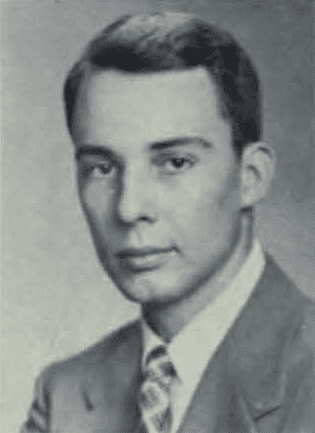
Black and white photograph of a headshot of Tom Ward

By Nicholas Roland

On March 23, 1961, recently-inaugurated President John F. Kennedy held a press conference at the State Department on Laos, a country little-known to most Americans at the time. Using a series of oversized maps, Kennedy detailed the advance of Communist Laotian and North Vietnamese forces in the country’s northeastern provinces. Rejecting an American military solution to the situation, Kennedy argued for a negotiated peace and a neutral Laos in hopes of containing the advance of communism in Southeast Asia. Before the Bay of Pigs disaster, before the Cuban missile crisis, and before serious escalation of American involvement in Vietnam, Laos presented the young president with his first major foreign policy dilemma. Kennedy’s wish for a peaceful, neutral Laos would be nominally achieved the following year, after months of negotiations. In accordance with the peace settlement, the United States withdrew its military advisors. The North Vietnamese did not.

In Austin, Texas, a University of Texas graduate and staff member, Tom Ward, was one of the few Americans paying keen attention to the situation in Southeast Asia in the early 1960s. Born in 1931, Ward grew up in Austin, in the 1930s and 1940s a sleepy college and government town hardly recognizable as the rapidly developing, cosmopolitan capital that Texans are familiar with today. In a recent interview, Ward recalled his upbringing in the Old Enfield neighborhood, when the street’s paving ended at the Missouri-Pacific Railroad tracks, now Mo-Pac. At that time the University of Texas loomed even larger than it does today. As a boy, Ward attended a nursery school run by the university’s Department of Home Economics. He later attended many UT football games, paying a quarter to sit with his friends in a children’s section in the north endzone dubbed “the Knothole Gang.” In the pre-air-conditioned summers, Ward played in Pease Park and swam at Deep Eddy and Barton Springs. “I had a very pleasant experience growing up in Austin,” he remembers.

After graduating from Austin High School in 1949, Ward entered the University of Texas. He initially majored in business administration and pre-law, but finally decided to pursue his real interests: government and history. After graduating in 1954 with a degree in government and substantial coursework in history, Ward volunteered for the military. Having grown up during the Second World War, Ward said, “I felt that there was definitely an obligation to be in the service.” In 1955, Ward was sent to Fort Ord, California, for basic and advanced infantry training. He was initially designated to be sent as a replacement to Korea, but when it was discovered that he had a college degree he was reassigned to an anti-aircraft guided missile battalion at Fort Bliss, Texas. After serving out his time in the El Paso area, Ward returned to Austin, where in 1957 he began graduate work. He accepted an offer to work in the university admissions office the following year. It was at about this time that American involvement in Southeast Asia began to make headlines.

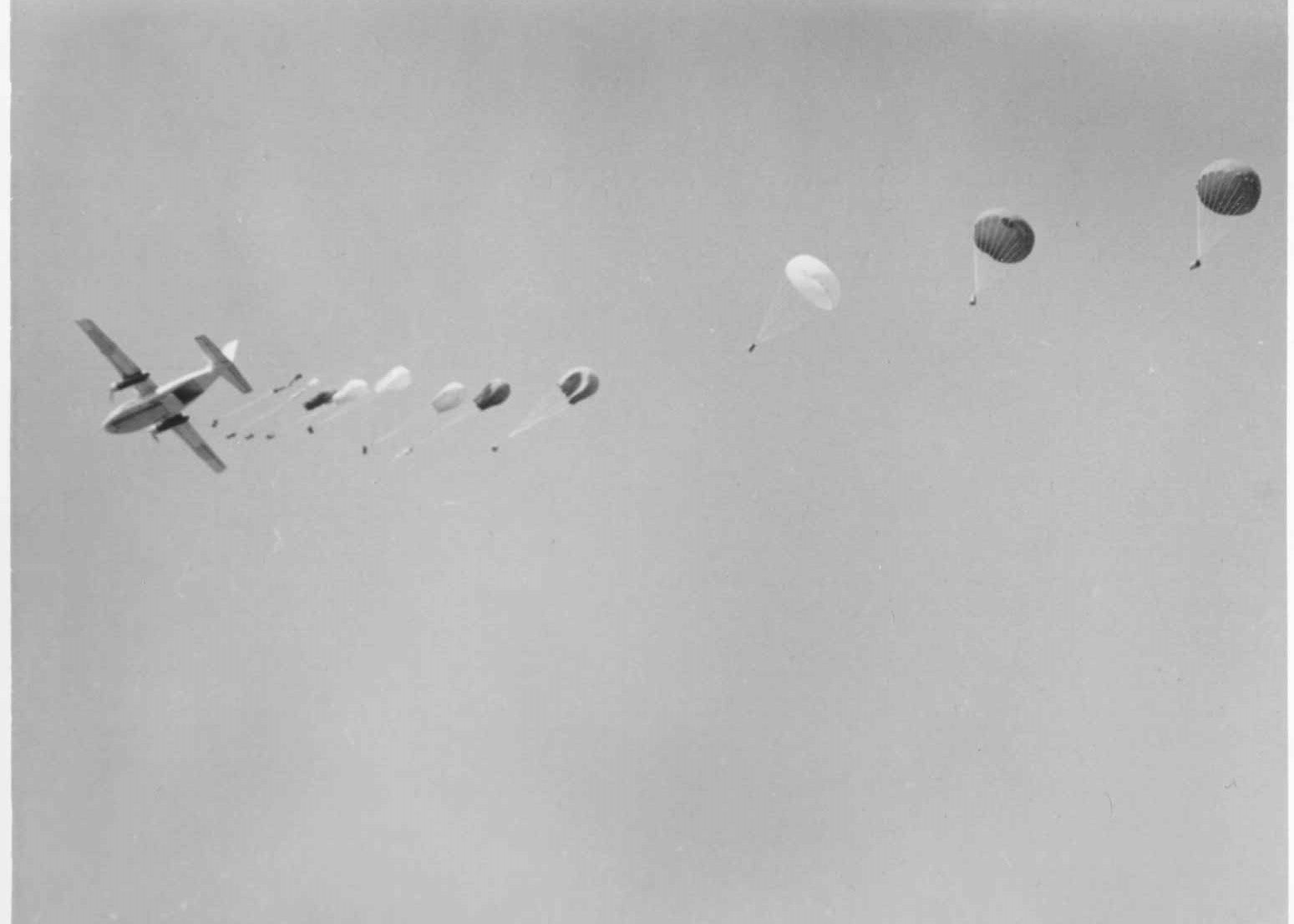
Black and white photograph of a twin-engine airplane dropping supplies via parachute during flight
Air drop of supplies

Ward had long held interests in government, history, and international relations, especially regarding Southeast Asia. He recalls with fondness that these interests were nurtured during his years at UT through courses in history, jurisprudence, and international relations with professors like William Livingston, James Roach, and Malcolm MacDonald in government; R. John Rath, Walter Prescott Webb, Otis Singletary, and Oliver Radkey in history; and George Hoffman in geography. In 1961, Ward had even taken a leave of absence from his position at UT to travel in Asia with a fraternity brother, a six-month trip that took them from Japan through East and Southeast Asia, India, the Middle East, and Europe, contracting hepatitis A along the way after drinking rice wine with a group of locals in Burma (now Myanmar). His adventures in 1961 were a harbinger of things to come. Ultimately, Tom Ward was destined for a life of service and overseas adventure far from the small, slow-paced Texas city where he had grown up.

In 1962, after the short-lived farce of Laotian neutrality, President Kennedy responded to the continued Communist insurgency in the country by increasing America’s aid to the Royal Lao government through the Central Intelligence Agency and the United States Agency for International Development (USAID) channels. Kennedy hoped that a combination of assistance to ethnic minorities and economic aid to the country in general could stem the advance of the Communist Pathet Lao and their North Vietnamese allies without drawing US conventional military forces into the conflict. Given his experience and interests, it is little wonder that a professor at UT subsequently recommended Tom Ward to one of the State Department recruiters that fanned out over the country in search of potential aid workers for the American effort in Southeast Asia. With USAID in its infancy, Ward was interviewed by an official from the Bureau of Indian Affairs, the closest thing the U.S. government had at the time to a source of expertise in working with indigenous populations. Despite his awareness of the ongoing conflict in the country, Ward recalled, “I volunteered for Laos. … And the reason I wanted to go to Laos, [was] because of my experience at the university and I knew about Laos.” Before his new adventure commenced, however, one last memorable occasion on the Forty Acres came on March 9, 1962, when Ward was one of 1,200 students who packed into the Texas Union to hear an address on civil rights by Dr. Martin Luther King Jr.

Ward became one of six recruits selected to serve in Laos, with another twelve destined for Vietnam. Several months were spent at the University of California at Berkeley for training in local languages, Southeast Asian studies, and community development. Although they were civilian aid workers, Ward recalls, “community development training could also be considered counterinsurgency.” By April 1963, Tom Ward had become a foreign service officer and arrived in Laos, joining what became known as America’s “Secret War” in the small country.

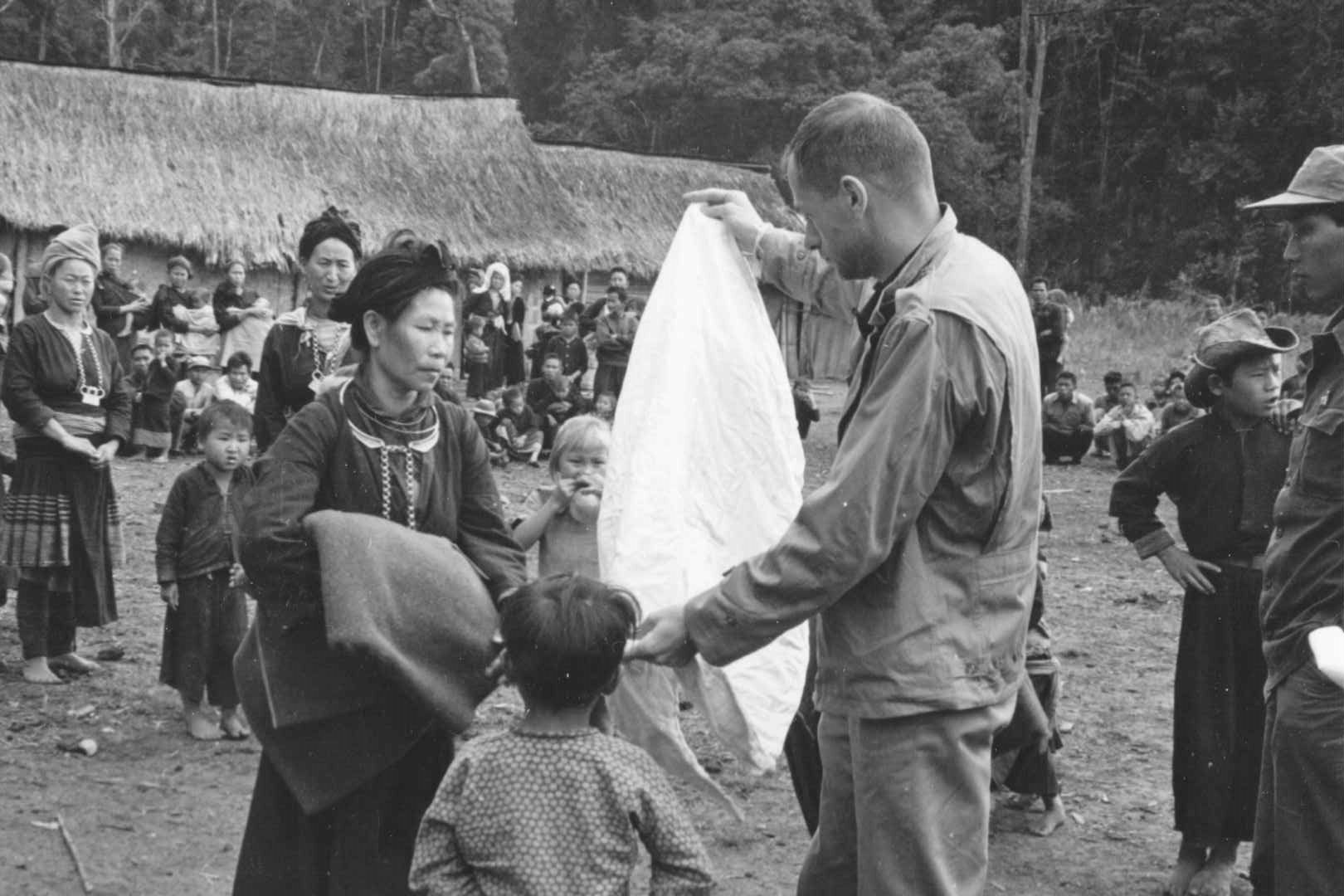
Upon arrival in Laos, Ward found himself living with the Hmong ethnic minority group in a village called Sam Thong, working to coordinate the delivery of food, medical care, basic education, and other forms of humanitarian relief. Ward’s partner was the irascible Edgar “Pop” Buell, a former Indiana farmer and widower who had come to Laos in 1960 to work for International Voluntary Services, a private forerunner to the Peace Corps. It was in the mountainous northeastern provinces that the Pathet Lao guerillas were most active, and the indigenous Hmong formed the backbone of the CIA’s clandestine anti-Communist fighting force. In other words, Ward was now in a war zone.

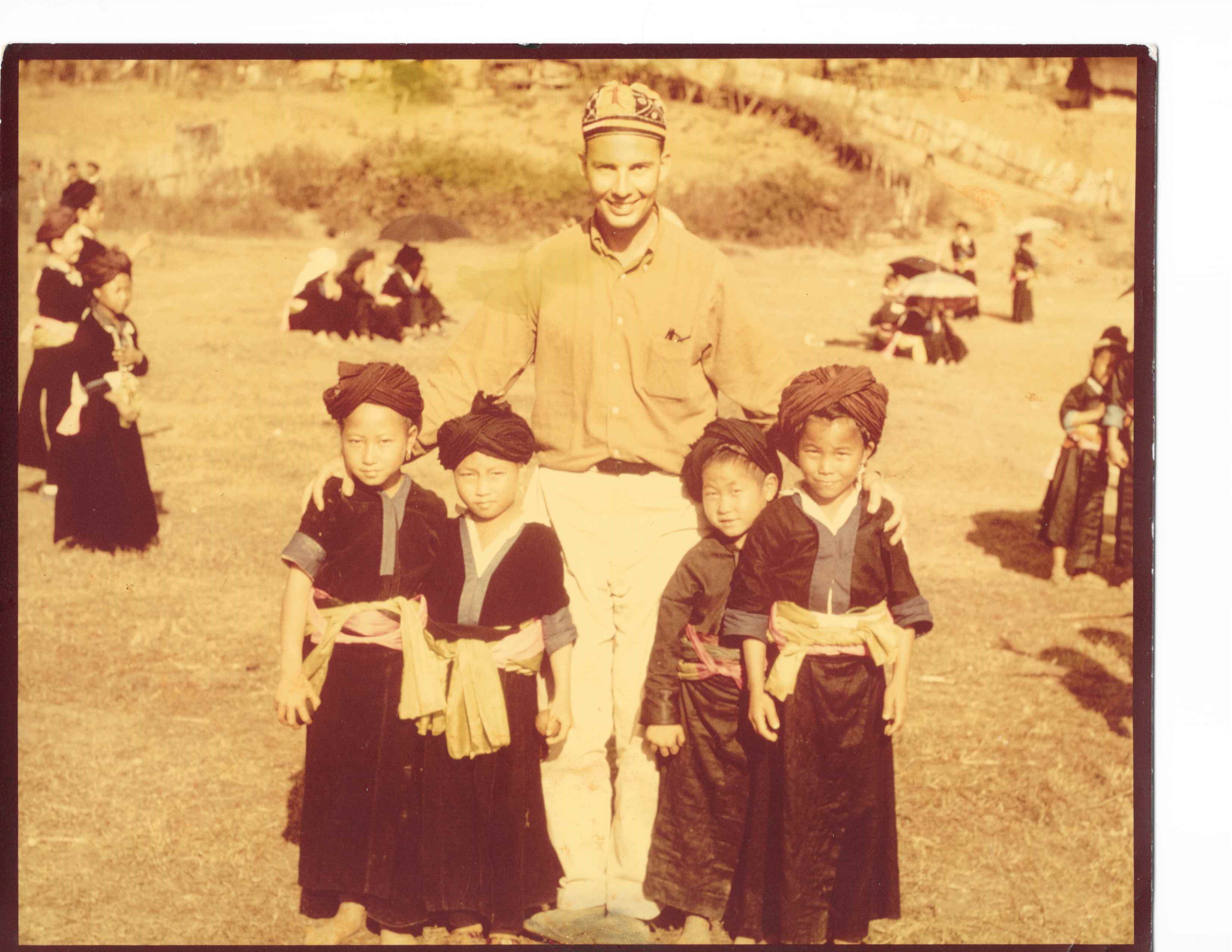
Black and white photograph of Tom Ward with Hmong children in Sam Thong, Laos in 1965
Tom with Hmong children in Sam Thong, Laos, 1965

Ward and Buell’s humanitarian work was necessitated by the Communist forces’ disruption of the traditional cycles of Hmong agriculture. By providing the Hmong with aid and basic services, the U.S. and Laotian governments hoped to maintain a counterinsurgency in the country and to strengthen the legitimacy of the Royal Lao government. “I lived in a grass hut with bamboo walls, a grass roof, dirt floor, no electricity, no plumbing, [and] a [55]-gallon drum out back for water. That’s where you bathed, and you lived like the local people did and ate their food,” recalls Ward. In addition to Ward and Buell, a CIA intelligence officer and a paramilitary officer were stationed nearby to coordinate training and military support for the Hmong.

Black and white photograph of Americans distributing relief supplies to Hmong villagers
Distribution of relief supplies

Although Ward’s work in Laos was focused on humanitarian relief, the dangers of operating in a war zone were a fact of daily life. The only two roads leading into northern Laos were both blocked, so Ward and other American personnel were forced to move around the countryside on small short takeoff and landing (STOL) aircraft operated by Air America, a CIA-owned dummy corporation that played a vital role in the agency’s paramilitary efforts. Although “these were the best pilots in the world,” Ward says, travel in the war-torn country was filled with danger. Ward recounts many landings on airstrips that were shorter than 250 feet in length, or in some cases simply clearings on the side of a mountain. The planes negotiated low visibility and rugged terrain without instruments and avoided enemy anti-aircraft fire by flying as high as 10,000 feet, despite a lack of onboard oxygen. Once, Ward was supposed to go back to the capital city of Vientiane for a break, but a fellow aid worker had a date planned with a local woman and wanted Ward’s seat on the next plane. Ward gave up his spot on the flight. He learned later that the plane had crashed in the forest and had not been located for three days. Incredibly, the aid worker with whom he had swapped flights was still alive, albeit with severe burns that forced his evacuation from the country. On another occasion, mortar rounds began to land on a nearby position. With helicopter transportation seemingly unavailable at the time, Ward and his fellow workers prepared to walk out of the danger zone to safety. Finally, helicopters came and they were evacuated. Another memorable incident was the recovery of a US pilot who had been shot down and rescued by the Hmong.

Tom Ward served in Laos until January 1968, just before the Tet Offensive in neighboring Vietnam, at which time he was reassigned to the US mission in Thailand. As U.S. military involvement in Vietnam escalated, both aerial bombardment and ground fighting spilled over into Laos and Cambodia. Ultimately, all three countries would fall to Communist forces in 1975. Reflecting on the trajectory of events in Southeast Asia, Ward believes that the joint effort between the CIA and USAID was a successful counterinsurgency campaign that was derailed by U.S. military escalation in the region. “I think we . . . were there for the right reason and we did a good job,” says Ward, “and that forces beyond us took over and that’s why it ended up like it did.” Ward continues, “overemphasis on the military was counterproductive as far as I’m concerned.” Rather than a conventional military victory achieved through massive air power and ground combat, Ward believes that a counterinsurgency campaign could have achieved much different results in Southeast Asia.

Black and white photograph of eight armed Hmong fighters
Hmong fighters

In contrast to Laos, for a variety of reasons anti-Communist efforts in Thailand were ultimately successful. Like other Southeast Asian countries at the time, in the 1960s the Thai government sought American help to counteract a rural Communist insurgency. Ward worked for USAID in the Accelerated Rural Development program (ARD) between 1968 and 1975. This joint Thai-U.S. program sought to improve the local economies of the country’s troubled rural areas, thereby relieving their grievances and instilling confidence in the central government. Ward says the program was “like in the New Deal.” “I was in Chiang Rai for two years,” he continues, “and [I] worked with these programs in education, in health, and providing . . . improved rice seed to farmers, building roads so they could get their crops to market and this sort of thing.” Although the Communist insurgency continued in Thailand until 1989, Ward believes that “the standards of living were definitely raised in those areas. And if you go look at them today, it’s unbelievable the difference. You know, you have universities in a lot of these different places, a lot of these provinces where there was little economic development.”

After twelve years in Laos and Thailand, Ward returned to Washington, D.C., to work for the USAID Office of International Training. For the next five years, his career took him on short-term assignments to Nigeria, Tanzania, Egypt, Burma, Nepal, and Pakistan, helping to select candidates identified by their governments for graduate degrees and specialized technical training in the United States. From its founding to the time that he departed the program, Ward recalls, “we’d trained over 10,000 people” in fields such as agriculture, public health, finance, education, and a variety of governmental functions.

Ward was then assigned to Indonesia as a Development Training Officer working with the Indonesian government to select candidates for graduate training in American universities and short-term technical training with various U.S. government agencies. USAID’s training programs had a long-term impact on participating countries: at one point, six members of Indonesia’s governing cabinet had been trained in the United States. The goal, Ward says, was “to work yourself out of a job” as participating countries built indigenous governance capacity and technical expertise. Although the work was generally not as dangerous as his experiences in previous assignments, Ward still found himself in proximity to momentous events around the world. He was in Nigeria during a “transition from one dictator to another,” and he visited Kabul in 1978, on the eve of the Soviet-Afghan War (1979–1989).

In 1985, Tom Ward was called back to Washington, D.C., where he became a career counselor for foreign service officers.  In 1991, after thirty years in service – twenty of them spent overseas – Ward retired from the State Department. Ward continued to work for a time as a government consultant in Kazakhstan, Uzbekistan, Turkmenistan, and Pakistan. Today he splits time between Washington, D.C., and Austin, punctuated with continued trips overseas.

Black and white image of "Pop" Buell with three Hmong fighters
“Pop” Buell with Hmong fighters

Reflecting on his decades of experience as a foreign service officer, Ward was often astonished at the ignorance and apathy toward international events that he would encounter on visits home. While stationed in Laos, he says, “I’d come home on leave and they’d say, ‘Well, where [have] you been?’ ‘Well, I’ve been in Asia.’ ‘Oh, that’s interesting, tell me about it.’” Ward laughs. “And I’d get maybe two or three sentences, and then they’d change the subject: ‘Oh by the way, did you see ‘I Love Lucy’ last night?’” Ignorance of foreign cultures could also be a problem in government agencies and the military. Although he believes that in Southeast Asia, “a lot of these people were very dedicated officers and men… they were not taught to learn about the culture, speak the language, learn how the people felt about things, and how to work with them from their point of view, if at all possible.” This lack of understanding failed both the United States and the people of Laos and Vietnam. Ward believes that the situation has improved over time, but familiarity with foreign cultures and political systems remains a key variable in the success or failure of U.S. efforts overseas.

After a career spent in public service, Ward has not been content to simply focus on personal pursuits in retirement. Over time he has become increasingly active in supporting the institution that molded his interests and opened the door to his career: The University of Texas at Austin. Ward has found ways to volunteer his time and leadership over the years, joining the College of Liberal Arts Advisory Council shortly after his retirement and the Department of History Visiting Committee a few years later. He is currently in the process of establishing a chair in international relations in the College of Liberal Arts.

Ward’s career has informed his involvement with UT. In his experience, the best way to improve lives is “through education, in this country or overseas.” He continues, “What we were doing overseas [was] giving them development opportunities they didn’t have.” As a foreign service officer Tom Ward worked to improve the economies and governments of other countries. Now he sees similar opportunities closer to home, through UT’s ability to increase American understanding of the international context and in the university’s potential to aid underserved and non-traditional student populations.

Dr. Nicholas Roland is a historian at the Naval History and Heritage Command, Washington, D.C. He earned his PhD from The University of Texas at Austin in 2017. A revised version of his dissertation, “Violence in the Hill Country: The Texas Frontier in the Civil War Era,” is forthcoming from UT Press. 

Sources:

Tom Ward oral history, April 19, 2018

//www.jfklibrary.org/Asset-Viewer/Archives/JFKWHA-020.aspx

//history.state.gov/milestones/1961-1968/laos-crisis

You May Also Like:

What Not to Wear at a Texas Barbecue
In the Trenches
U.S. Survey Course: Vietnam War


The views and opinions expressed in this article or video are those of the individual author(s) or presenter(s) and do not necessarily reflect the policy or views of the editors at Not Even Past, the UT Department of History, the University of Texas at Austin, or the UT System Board of Regents. Not Even Past is an online public history magazine rather than a peer-reviewed academic journal. While we make efforts to ensure that factual information in articles was obtained from reliable sources, Not Even Past is not responsible for any errors or omissions.
It’s in Their Blood

By Ted Banks

(This article is reposted from Fourth Part of the World.)

The Progressive-Era white press and their audience had a fascination with Indians judging from the amount of ink that was devoted to musings on their place and progress in society.  One component of that fascination, indeed one that was the basis for much speculation on how successfully or not Indians were integrating into white America, was how much “Indianness” could be attributed to Indian blood.

Many observers have noted that notions of blood and “mixing” among whites varied depending on whose blood was being considered.  While the “one-drop” rule dictated that a single drop of black blood could overwhelm generations of otherwise Anglo (or Indian) infusion, Indian blood offered no such absolute outcome.  At times commenters noted the tenacity of Indian blood, as demonstrated by its ability to preserve Indian physical characteristics across generations.  Other times, white observers painted Indian blood as conversely unstable, susceptible to dilution through intermarriage, and seemingly at times, social contact or cultural proximity.

In a 1907 article penned by Frederic J. Haskins titled “Indians Increasing in America,” the author cites several examples of the persistence of “Indian” traits, which he ties to a rough accounting of blood quantum.  He notes that the “strength of Indian racial traits is shown by the fact that the 700 persons now in Virginia who can prove their descent from Pocahontas and her English husband, John Rolfe, still have the Indian hair and high cheek bones.”  Commenting on a handful of Indian politicians, Haskins introduces “Adam Monroe Byrd, a Representative from Mississippi, [who] is also of Indian blood.”  Haskins reports that Byrd “traces his ancestry through a long line of distinguished Cherokee chieftains,” and that “He has the high cheek bones, copper skin and straight hair which indicate the blood of the original American.”  Haskins’s article reveals the casual ambivalence with which settlers framed the racial makeup of Indians, and their desire to monitor the relative progress of Indians in America accordingly.

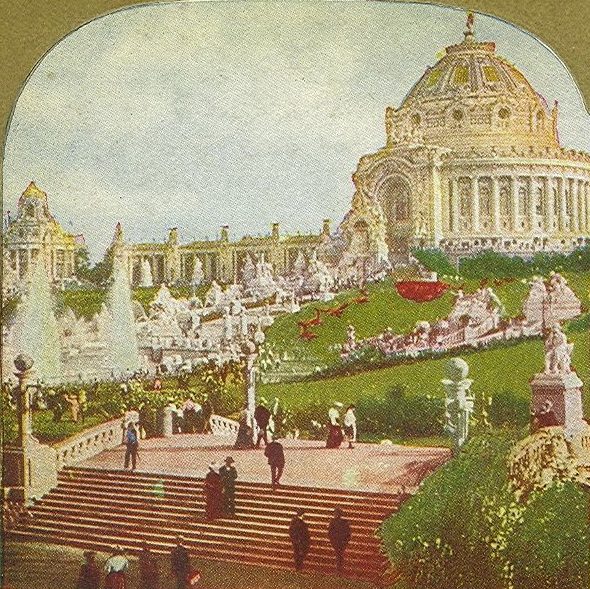
Four years before Haskins’s piece, an article on the upcoming Indian exhibition at the St. Louis World’s Fair played the other side of the ambivalence spectrum while employing much the same rhetoric regarding Indian racial traits.  Titled “Pageant of a Dying Race,” the feature dramatically promised the “last live chapter of the red man in American history is to be read by millions of pale faces at the Universal Exposition.”  Like Haskins, the author of “Pageant of a Dying Race,” T. R. MacMechen, describes the persistence of Indian racial traits, observing that “(the) blood of Pontiac, of Black Hawk, of Tecumseh and his wily brother, The Prophet, flows in the veins of the descendants who will be at the exposition,” and that “(no) student of American history will view the five physical types of the Ogalalla Sioux without memories of Red Cloud, nor regard the (word unclear) without recalling the crafty face of that Richelieu of Medicine Men, Sitting Bull.”  However, MacMechen argues that despite the seeming durability of Indian traits, “the savage is being fast fused by marriage and custom into a dominant race, so that this meeting of warriors becomes the greatest and probably the last opportunity for the world to behold the primitive Indian.”  In MacMechen’s account, marriage and custom function as ways to counterbalance, or perhaps mask, the otherwise durable Indian blood.

Festival Hall at World Fair (via Wikipedia)

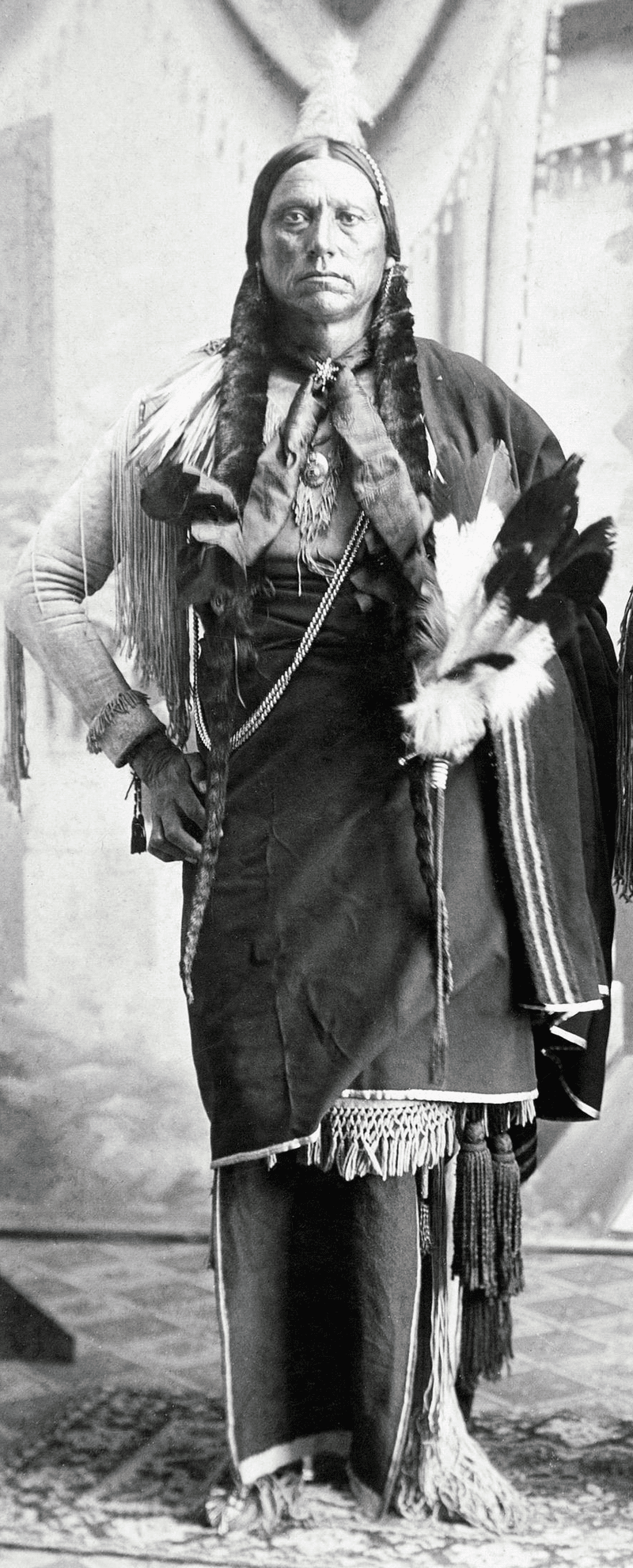
White supremacy dictated the ways in which whites interacted with racial “others,” but not in such a way that all of these interactions were uniform across groups.  That is to say that while intermarriage between blacks and whites was prohibited throughout much of the country on either a de facto or de jure basis, intermarriage between settlers and Indians was, at least at times, encouraged.  A 1906 Dallas Morning News piece reported that “Quanah Parker is advocating the intermarriage of whites with the Indians for a better citizenship among the Indians.”  The piece noted that “Quanah’s mother was a white woman and several of his daughters have married into white families.”  The item quoted Parker as saying “Mix the blood, put white man’s blood in Indians, then in a few years you will have a better class of Indians,” and noted that “(Parker) hopes to live to see the time that his tribe will be on the level with those of pure anglo-saxon blood.”  Another DMN article from two years later seems to reveal a gendered wrinkle to such unions, reporting that “(with) the coming of Yuletide Chief Quanah Parker of the Comanche Indians realized one of the greatest ambitions of his life when his young son, Quanah Jr., a Carlisle graduate, was married to Miss Laura Clark, a graduate of the Lawton High School last year,” and that “(this) is the first time in the history of Indians of this section where an Indian has been married to a girl of white blood.”

If persistent racial traits were attributed to Indian blood, but Indians were being “fast fused by marriage and custom” into white society, the result might be some Indians in unexpected places, or at least circumstances.  Haskins, in his piece, noted that at the 1904 St. Louis Exposition, “. . . the strong voice at the entrance of the Indian Building calling through a megaphone, . . . (the) barker who thus hailed the passing throng in the merry, jocular fashion of the professional showman was a full-blooded Indian boy, a product of the new dispensation of things, just as Geronimo was of the old.”  Of Charles Curtis, a US Senator from Kansas, Haskins observed that “(he) is not of pure Indian heritage, but his mother belonged to the Kaw tribe.  . . . He has the hair and color of an Indian, but in politics does not play an Indian game.”  A Dallas Morning News correspondent reported in 1906 that Quanah Parker had been elected a delegate to the Republican convention, but that he had declined, stating that he had no interest in politics.  The anonymous scribe went on to comment that

Quanah is a half-breed, his mother having been Cynthiana (sic) Parker.  Having
white blood in his veins, his conduct is absolutely incomprehensible.  For who
ever heard before of a white man, or any kind of a man with white blood in his
veins, who did not want the honors or the salary of office?  Still we must remember
that Quanah is King of the Comanches, and that is a pretty good position itself.

The writer’s tone indicates he was speaking somewhat in jest, but the gist of his comment was that Quanah, although possessing “half” white blood by his estimation, was “playing the Indian game” by staying out of politics, and, in doing so, positioned himself a world away from “any kind” of white man.

(via Wikimedia)

This is all to say that if one wanted to track the uses of “blood” in white America’s Progressive-Era discourse on Indians, the results would be—excuse the pun—mixed, to say the least.  Like their feelings on Indians in general, the habitual deployment of blood as an explanatory concept nonetheless exhibited a remarkable ambivalence; white Americans seemed to think both that “Indian blood” definitely was of immense importance and that it could mean about anything they needed it to.  This ambivalence stands out even more starkly when compared to the aforementioned belief in the complete impenetrability of African blood of the same period.  A cynical reading might well deduce that white Americans said anything and everything about blood that would help to fortify white supremacy.  A devil’s advocate counterpoint might argue that the rise of the eugenics movement indicated that white Americans of the time indeed believed in at least some of what they said.  And still another would remind us that both of those could be, and probably were, the case.

You May Also Like:

Fandangos, Intemperance, and Debauchery
The Illegal Slave Trade in Texas
Conflict in the Confederacy: William Williston Heartsill’s Diary

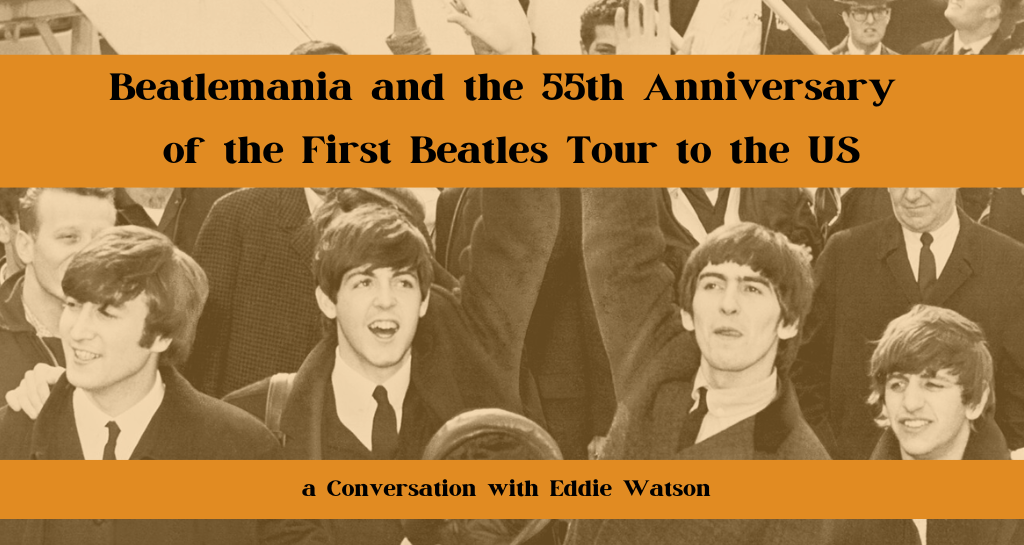
Episode 119 – Beatlemania and the 55th Anniversary of the First Beatles Tour to the US

The Beatles arrived for their first concert in the United States on February 11, 1964, to rabid fanfare. Legions of screaming women greeted John Lennon, Paul McCartney, George Harrison, and Ringo Starr at every stop of the U.S. tour, leading to observers dubbing the period “Beatlemania.” As one of the most commercially successful and influential musicians of all time, almost every pop music artist cites their influence over their music. Yet who were the Beatles? What was their music like? And why were they so popular?

Ph.D. student in history Eddie Watson and host Augusta Dell’Omo take us deep into the history of the Beatles’ first tour in the United States and reveal why we should understand these popular cultural movements. But, perhaps most importantly, Eddie tells us who is the best Beatle, reveals their greatest hits, and regales us of his own attempt at the Beatle bowl cut.

Episode 118: The Caribbean Roots of Biodiversity

Host: Christopher Rose, Department of History
Guest: Megan Raby, Department of History

Biodiversity has been a key concept in international conservation since the 1980s, yet historians have paid little attention to its origins. Uncovering its roots in tropical fieldwork and the southward expansion of U.S. empire at the turn of the twentieth century, ecologists took advantage of growing U.S. landholdings in the circum-Caribbean by establishing permanent field stations for long-term, basic tropical research.

Megan Raby describes how, from these outposts of U.S. science, a growing community of American “tropical biologists” developed both the key scientific concepts and the values embedded in the modern discourse of biodiversity.

https://notevenpast.org/wp-content/uploads/2019/03/15-Minute-History-Megan-Raby-1.mp3

« Previous Page
Next Page »

Recent Posts

  • The Radical Spanish Empire Roundtable – Introduction
  • All Eyes on the Petition: Reflections on The Radical Spanish Empire
  • Forgery, Invention, and the History of Skepticism in The Radical Spanish Empire
  • Iberian Subaltern Political Philosophies and The Radical Spanish Empire
  • Lawfare and the Legal Construction of Race in The Radical Spanish Empire
NOT EVEN PAST is produced by

The Department of History

The University of Texas at Austin

We are supported by the College of Liberal Arts
And our Readers

Donate
Contact

All content © 2010-present NOT EVEN PAST and the authors, unless otherwise noted

Sign up to receive our MONTHLY NEWSLETTER

  • New
  • Features
  • Reviews
  • Texas
  • Teaching
  • Digital
  • Watch & Listen
  • Authors
  • About