• Features
  • Reviews
  • Teaching
  • Watch & Listen
  • About

The past is never dead. It's not even past

Not Even Past

Review of The Years of Theory: Postwar French Thought to the Present (2024).

Fredric Jameson has a new book—his last. Published posthumously in 2024, only a few months after his passing, it offers an idiosyncratic philosophical journey through his own deeply personal engagement with French theory. Just as he has done since 1985 as a Professor at Duke University, in this work Jameson takes the time to reflect on what “theory” is trying to do—how, why, by whom, when, and where. The point of the book, he tells us, is to identify the “name and phone numbers” (115) of the makers and shakers of theory, rather than to explain what theory itself is. This is not, in other words, an introduction to French theory. Readers seeking such orientation would be better served by primers such as French Philosophy: A Very Short Introduction. And even then, the search may prove unsatisfying, for French theory resists definition. This resistance, as we shall shortly see, is structural. “Theory,” as it came to be known, is a subject that deftly avoids its own subjectivity, stubbornly eluding definition and self-reflection. Modular, open-ended, and often obscure, it faces outward, lending itself to use and reinvention across disciplines—from comparative literature and cultural studies to architecture, anthropology, gender studies, psychology, and beyond. Each field, indeed each thinker, forges a distinctive variant of Theory. Historians, too, have ours—but more on that later, as this is, first and foremost, Jameson’s experience with theory.

Born in Ohio in the midst of the Great Depression, Jameson attended a liberal arts college in Pennsylvania, where he pursued French studies. He graduated in 1954, just in time to immerse himself in the existentialist carnival sweeping Paris and much of Europe. Existentialism became the subject of his doctoral dissertation at Yale, that of his first book, and, more importantly, a lifelong passion through which he thinks about the world. In addition to his immersion in French thought, Jameson—like many intellectuals of the 1960s—was profoundly influenced by the Frankfurt School, pioneers of a Marxist critique that analyzed capitalism through cultural rather than strictly socio-economic lenses. The German School’s central concern was understanding why revolutions, which Marxist theory predicted, did not occur. This focus led them to prioritize cultural analysis over materialist concerns, inspiring subsequent generations of so-called “cultural critics”—a public persona and political role they effectively helped to invent. Jameson, for his part, embraced this role.

Fusing these two traditions—French and German—Jameson approached the cultural record holistically, viewing it as a vast, expansive field encompassing every sphere of human activity: politics, philosophy, art, literature, music, cinema, architecture, and psychology. By engaging all these spheres, he wrote about “everything,” as the interdisciplinary forebears of the Frankfurt School had envisioned. Progressing steadily, by the 1980s he was widely recognized as the leading Marxist literary and cultural critic in the United States.  Observing what he called the slow de-Marxification of Europe, he shifted his focus to the phenomenon that had taken its place: postmodernism (or post-structuralism). Approaching it from the “outside,” he transformed postmodernism—despite its resistance—into a philosophical topic, in need of inquiry.
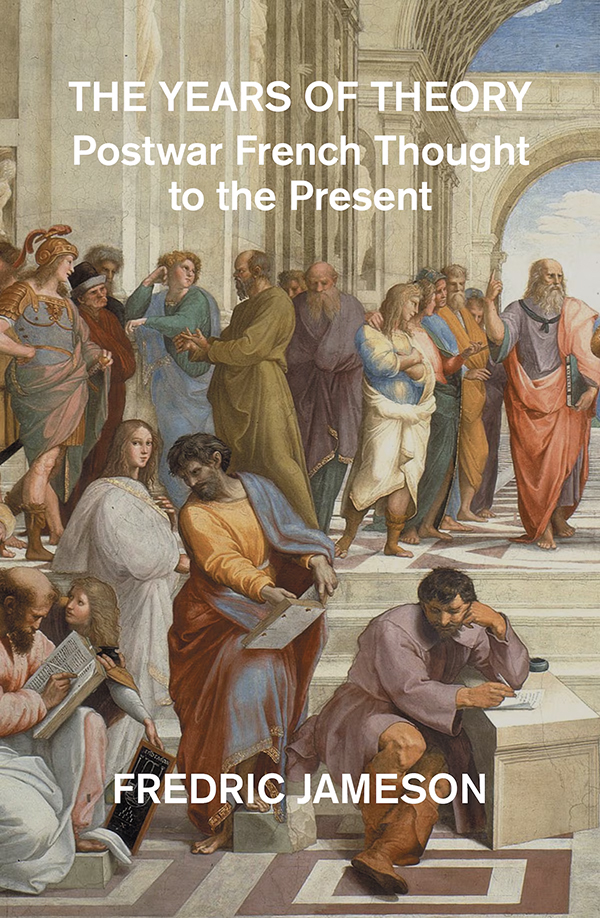
Book cover The Years of Theory (2024)

Approaching postmodernism critically, but without hostility and at times even sympathetically, he emerged as a preeminent critic of this new globalized form of culture, eventually publishing Postmodernism, or The Cultural Logic of Late Capitalism (1991). Thereafter, he followed postmodernism, engaging both its promise and exhaustion in our own neo-liberal times. To translate his stance to the world of art, one might contrast Edvard Munch’s turn-of-the-century modernist painting The Scream, which connotes existential anguish as a quintessential modern condition, and Andy Warhol’s 1970s silkscreens which blur the boundary between high and low culture, foreground reproduction, repetition and surface over depth, embrace irony and ambiguity, and de-center the artist as sole author. Jameson appears to have preferred the recognizable modern subject of Munch, an image hollow enough to project ourselves onto it.
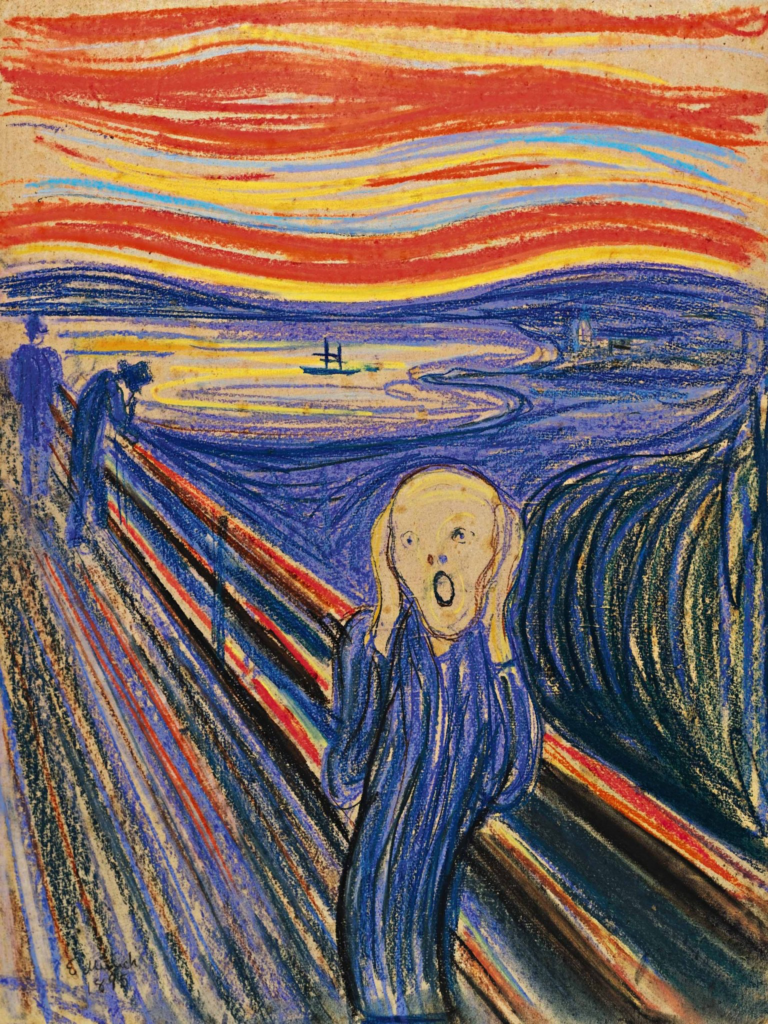
The Scream by Munch

The Scream by Edvard Munch, ca. 1893.

But all of this is rather old news. In his latest book, a more relaxed Jameson circles back to the golden age of French theory—from its initiation with Sartre’s Being and Nothingness (1943), through the late-century experiments of postmodern thinkers such as Alain Badiou’s Being and Event (1988), and on to its American offshoots. For although postmodernism is French in origin, it is also an American tradition: from the late 1970s onward, the United States became the place where French theory found its most fervent reception and political applicability, perhaps even eclipsing its influence in its native country.

Indeed, it was in America that an amplified “theory” crystallized into a heavyweight academic category bearing the aura of exclusivity, elitism, and the promise of an esoteric path to hidden knowledge—what its practitioners often treat as “truth.” To partake in this secular theology—a characterization that critical thinkers vehemently reject—is to enter the worlds of its prophets and saints: Lévi-Strauss, Althusser, Barthes, Lacan, Derrida, Guattari, Deleuze, Kristeva, Foucault, Lyotard, Rancière, Baudrillard, and many others. You may never have read these iconic thinkers, yet if you have ever used terms like discourse, intervention, or narrative, you are already using their language. Also deploying the metaphor of theory as language, Jameson writes of how one “…learns Deleuzian, Derridean…” (96), and many other dialects with which to find truth in the world.

However, the theory-as-language metaphor has some obvious limitations, as, unlike language, the horizon of theory is always normative: concerned not simply with describing the world or explaining how things are, but more urgently with how they might or should be. That feature makes theory a highly political affair. Indeed, what binds the diverse strands of theory is the (Marxist) expectation that the writing and reading of theory will culminate in a revolt against the institutionalized order, or in its 1960s name, “the system.” Another way of understanding it is as a new addition, or an upgrade, to “counter-Enlightenment” thought; a tradition that is as old as the Enlightenment and whose icons are people like Friedrich Nietzsche and Martin Heidegger. With the anti-establishment message baked into its DNA, it is an irony that the only true revolution in which theory participates is that of transforming itself into what it came to destroy: a system. In Jameson’s wise words: “Theory was never supposed to turn into a system; it was supposed to destroy systems in some way and to exist as a kind of local enterprise.” (437-8).
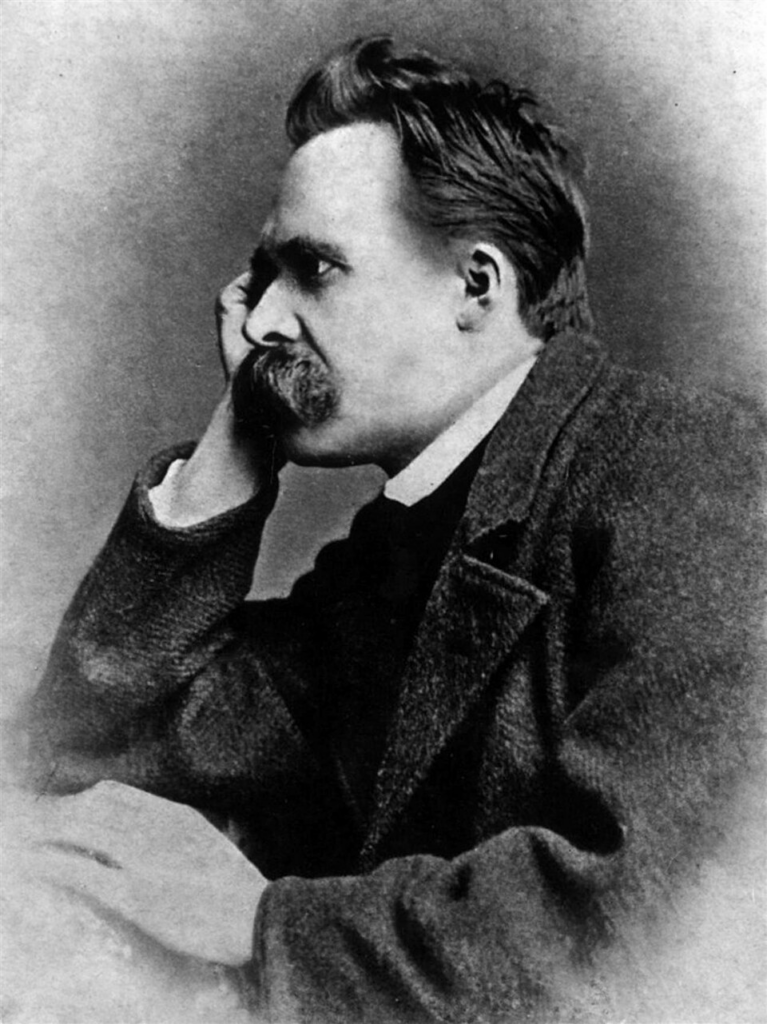
Portrait of Nietzsche

Friedrich Nietzsche by photographer Gustav Schultze, 1882. Source: Wikimedia Commons

Delivered as an online seminar in 2021—the Zoom year of Covid—the twenty-four lectures that make up this book arrive in a composed conversational prose. This is a deliberate stylistic choice, emphasizing the power of narrative and standing in sharp contrast to the often impenetrable and self-referential language of theory. It is, in itself, a political choice. Thematically, Jameson traces a linear progression through philosophy: from existentialism, structuralism, and semiotics to post-structuralisms and the bifurcated intensities of postmodernism. All of this unfolds against the backdrop of shifting ideological, social, and institutional contexts—the liberation of Paris, the politics of the French Communist Party, the Algerian War, May ’68, the rise of Maoism, the long socialist presidency of François Mitterrand (1981-1995), and the triumphant ascendancy of American-made neoliberalism globally.

Jameson engages each philosophical turn and twist on his own terms—autobiographically—which is why The Years of Theory is not an introduction to French theory but a meditation on it. He begins with the philosophical fountainhead of German phenomenology, which displaced an older tradition preoccupied with epistemological questions such as “How can we know that we know?” and “What guarantees the certainty of a scientific proof?” In their place, phenomenologists like Husserl and Heidegger shifted attention to the question of how we experience the world—that is, to the problem of being. With this shift, philosophy moved away from concepts of “essence” and “substance” toward a relational perspective, one that understands “…things of the world and the people of the world” (42), in other words, existence itself, as an interactive process.

Concerning that major shift toward existentialism, Jameson—like many others—credits Jean-Paul Sartre with translating phenomenology into a philosophy of freedom. Central to this is Sartre’s foundational theorization of otherness, a concept that has since become a mainstream feature of contemporary culture, especially in television and media. If you find yourself wondering about the current language of otherness—for example, the “objectifying look” or the “gaze” (le regard), which reduces a woman to an object of another’s desire and need, or what is now framed as “microaggression”—Jameson points you back to Sartre.

Sartre also endures in our lives through his coinage of the term commitment (engagement), by which he pioneered a new political model of intellectual activism—demanding that intellectuals not merely describe the world, as in socially detached scholarship, but actively work to transform it. This, too, resonates strongly today. Jameson, who matured intellectually in the world that existentialism had ushered in, remained permanently marked by Sartre’s insistence that individuals accept responsibility for their own freedom (“Freedom has to be your own act,” Jameson explains, 41). Yet although an enthusiastic follower, Jameson is also keenly aware of Sartre’s philosophical shortcomings: his failure to translate the philosophy of freedom into a universal ethics applicable across the globe; his reckless conceptualization of anti-colonial violence as a form of freedom; and—most painfully for Jameson—his inability to reconcile existentialism with Marxism.
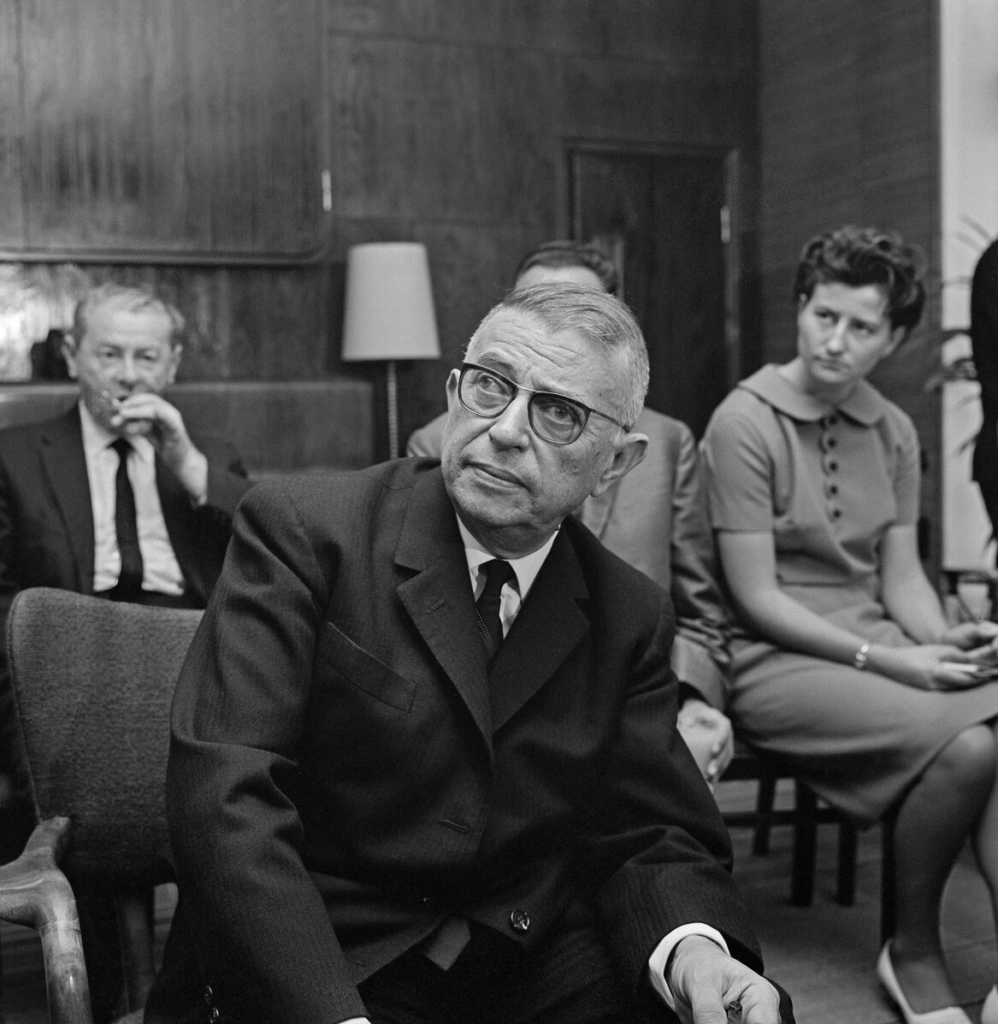
Picture of Jean-Paul Sartre

Jean-Paul Sartre, 1965. Source: Wikimedia Commons

Next, Jameson turns to structuralism, a movement that unfolded alongside existentialism but whose roots reach back to early twentieth-century studies of linguistic structures. “…in the structuralist period,” Jameson writes, “the major thought was that language produces us, that what we think of as our identity and our subjectivity is an effect of language” (251). From this perspective, anthropologists, historians, and literary critics built an entire conceptual universe of specialized jargon through which they sought to identify and analyze systems whose structures and rules were understood as binding, holistic, and universal, rather than culturally specific, decentralized, or random.

In their effort to map these structural grids, structuralists like anthropologist Claude Lévi-Strauss and literary critic Roland Barthes advanced ironclad assumptions: isolated subjects and words derive their meaning only through their function within a larger system, such as tribal patrimony, never on their own. In this view, a word signifies not in itself but by virtue of its difference from other words. Structuralist analysis thus emphasized how meaning is produced through a structure of binary oppositions such as modern vs. traditional, male vs. female, metropole vs. colony, or city vs. countryside. These oppositions were thought to underlie myths, texts, and cultural practices—and, most relevant here, the writing of history. In one of the many original moments in the book, Jameson reflects on how structuralists transformed problems into solutions, not by “solving” them, but by describing and exploring their structures and rules. This helps explain why, in those years, so many graduate seminars in history bore the title “Problems in Social History,” encouraging Ph.D. students to identify, articulate, and analyze the structure of the past.

As a system of interpretation that subordinated individual agency to overarching structures, structuralism had already reached its limits before the revolutionary moment of May ’68, when it became clear that individuals were lost within societies remarkably resilient to fundamental change. A piece of graffiti from the time mocking structural Marxist Louis Althusser—“Althu sert à rien” (“Althusser is worthless”)—captured the stasis that pushed a new generation to revisit an old question: Where does power come from, and how does it operate? This new focus on power signaled the arrival of post-structuralism—an imprecise umbrella term marking the postmodern liberation of theory from the constraints of organized, or rather structured, philosophy. In the 1970s, French thought staged a decisive break with the Cartesian model of the autonomous rational subject (“I think therefore I am”), which constituted the very basis of Enlightenment.

Where structuralism conceived of the world in terms of fixed systems and universal rules, post-structuralism emphasized instability, plurality, and the impossibility of establishing meaning in any absolute sense. Post-structuralist thinkers argued that structures were not fixed, timeless, and universal but contingent, unstable, and constantly shifting—therefore subject to ongoing interpretation and reinterpretation. Viewing meaning as never fully present and always deferred, Jacques Derrida coined the term différance to describe the process by which meaning emerges through an endless play of differences, never reaching a final ground or essence. This shift implied an abandonment of stable definitions or absolutes of any kind, inaugurating a form of relativism that resisted the very possibility of ontological grounding in the form of authoritative truth. As sociologist and philosopher Jean Baudrillard put it in his book Simulacra and Simulation (1981), signs in culture no longer refer to any reality at all. They only refer to other signs, as in Warhol’s work. This is the age of pure simulation, where the distinction between reality and representation collapses and with it the ability to tell truth from fiction. About that, Jameson is clear: “There is no truth, so all you getting is effects.” (140). 
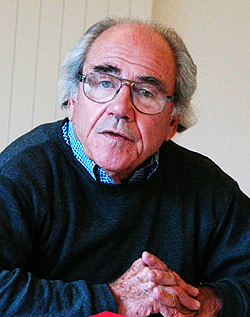
Picture of Jean Baudrillard

Jean Baudrillard in 2005. Source: Wikimedia Commons

Post-structuralists in particular challenged the supposed truth of binary oppositions, exposing them as instruments of vertical power that establish hierarchies of privilege—for instance, the white heterosexual man over his “others,” or civilization over the colonized “savage.” If you are following today’s culture wars, the language of privilege should sound familiar: its origins lie in this critique of binary opposition as the normative and seemingly objective order of things, as suggested by the title of Michel Foucault’s 1966 book The Order of Things: An Archaeology of the Human Sciences. Yet Foucault pushed the argument further, insisting that knowledge itself is conditioned by power relations that define what counts as truth, normality, or rationality. In doing so, he marked all forms of modern disciplinary knowledge as potentially oppressive.

Foucault, Roland Barthes, and others also began to treat texts, cultural practices, and institutions as socially constructed, shaped not by inherent essence but by discourse and social practices. A now-familiar claim within this line of thought is that “sex is a construction”: biological differences are not simply natural givens but are produced and sustained through cultural practices, including the assignment of roles, behaviors, and expectations to different bodies (male, female, or otherwise). This, too, strongly resonates with our current moment.

Taking yet another step, this perspective led post-structuralists to suggest that everything can be read—and unread—as a constructed text: not only literature, but also social practices (such as Independence Day), institutions (such as the archive), norms (such as objectivity), and, by implication, entire histories. Enshrining the autonomy of such texts, Roland Barthes famously proclaimed the “death of the author,” arguing, as in Warhol’s silkscreens, that meaning is not determined by an author’s intention but remains open to multiple readings. When Fredric Jameson and his colleagues co-founded the journal Social Text in 1979, they embraced the idea that texts lack any final, fixed meaning and instead exist within intertextual networks, where meanings are continually shaped and reshaped through other texts and contexts. Despite advancing a theoretical defense of narrative and storytelling as forms of criticism in his 1981 book The Political Unconscious, Jameson subscribed to a postmodern sensibility for much of the following decade. Eventually, however, he stepped off the train—while many of his colleagues remained aboard.

Since post-structuralists argued that any attempt to provide a complete, closed system of meaning is reductive, essentialist, functionalist, and thus both impossible and oppressive, they cultivated a deep suspicion of totalizing explanations—what François Lyotard famously called “grand narratives” in the style of books like The Making of The Modern World: From The Renaissance to the Present (1955). To expose their exploitative nature, post-structuralists developed a method of reading known as deconstruction, whose modus operandi was to identify the operation of binary oppositions within texts, along with instances of essentialism, functionalism, and reductionism—all of which function as agents of power concealed as normative order. Having taken American academia by storm in the early 1980s, the post-structuralist theoretical corpus as a whole, and deconstruction in particular, exerted enormous influence on the writing of history, forcing it to rethink its procedures, methods, norms, and utility. Forcing it to entertain anew an old question: What is History?
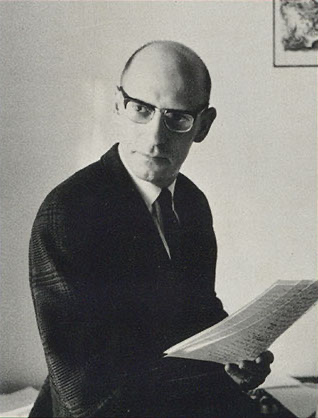
Picture of Foucault

Michele Foucault in 1970. Source: Wikimedia Commons

I recently spoke with a middle-aged man who, after a long and highly successful career in business, had returned to his alma mater as a distinguished fellow. As an undergraduate in the late 1980s, he had majored in history at an Ivy League school, studying with some of the most prominent historians in the country. Three and a half decades later, he was eager to rekindle his passion for the past by taking history courses once again. Yet, to his surprise, he found the discipline almost unrecognizable: “We used to study the past as it happened. We were tested and quizzed relentlessly on the nuts and bolts of historical events and processes—the making of modern Germany, the Russian Revolution, the decline and fall of imperial China. But now it seems as if students already know the facts, and all they do in class is philosophize. Much of it is about the past as an experience—whatever that means. What happened?” “French theory happened,” I answered, but immediately added, “that it is not as bad as it looks.” It will take a book to explain what was lost and gained in the historical profession since the 1970s, and, not being a professional historian, Jameson sheds light only on some of these aspects, particularly about the utility of historical narrative.

However, if you return to read the grand historical narratives of the 1980s, especially histories of Africa, the Middle East, Asia, and possibly Latin America too, you will likely find them profoundly unsatisfactory for all the reasons that post-structuralists have listed. These histories were written largely with the source material of the European states which dominated, indeed colonized, much of these lands for centuries on end, thus structurally failing to account for the lived experiences of those who suffered under their rule. But even the national histories of Europe were lacking: entirely overlooking the history of women and working classes, to cite two glaring examples of how more than half of the nation’s population was not represented in the supposedly inclusive story of the nation. Consult the big histories of the Cold War and, until recently, you are not likely to understand how global and violent this war was, the exact opposite of what its name suggests. All of these were selective histories in need of serious revision.

The dissatisfaction with these canonical narratives was routinely treated as symptomatic of the many problems of professional history. Attacks and counter-attacks between historians and theoreticians animated the scholarly scene for some decades now, most recently in 2018 with the publication of the Theory Revolt Manifesto against academic history. On all sides, this is a substantial debate with some serious arguments and counter-arguments. At its very heart, however, lies the issue of narrative, its delegitimization on one hand, and the desire to have orienting grand narratives on the other. Today, many of our students are fluent in deconstructing texts, identifying how power flows through them, raising serious questions about why our national history “begins” at this particular date and not another (for instance, the 1619 Project, which seeks to unseat 1776 as the founding moment of the United States). That, however, is not to say that they actually “know” history, its facts and sequences in the sense that a student of the 1980s was expected to. Or that they can even, in the absence of a shared world of facts and sequences, think with it with some level of sophistication. Thus, by way of a criticism, many in the profession, students included, practice history as what Jameson himself calls “search and destroy missions” (437) of enemy texts and authors. That is highly unfortunate.  
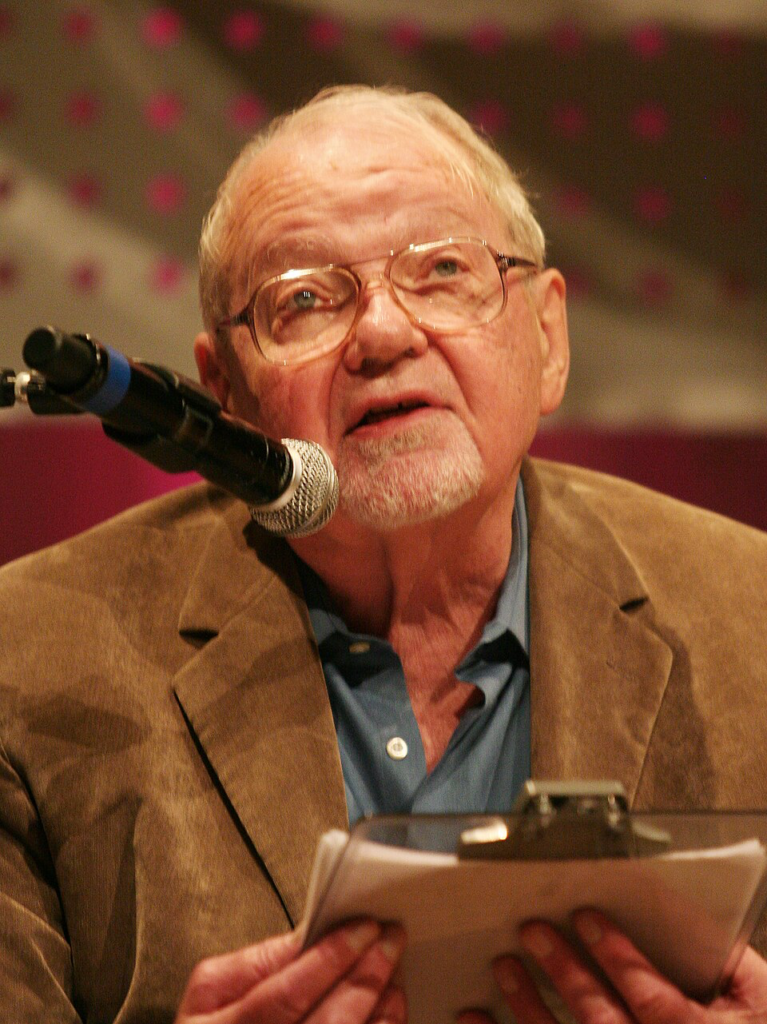
Picture of Fredric Jameson

Fredric Jameson in 2004. Source: Wikimedia Commons

To move forward, we must reject the notion that theoretical engagement—assumed to be inherently progressive, emancipatory, and just—is incompatible with historical narrative, which is often presumed to be reactionary, oppressive, and exclusionary. Instead, we should harness the remarkable postmodern insights of the last few decades to imagine and write new narratives. If the integrity of political community is to be preserved, we need histories capable of incorporating postmodern critique without collapsing into post-Enlightenment cultural pessimism (“oppression is everywhere”) and without losing sight of the common good. Crafting such humanizing narratives, in academic scholarship, public history, school textbooks, and in film, too, is nothing less than an urgent cultural mission. Without them, we risk a slow descent into political tribalism and chauvinistic nationalism. 

For this reason, despite his deep investment in criticism and Theory, Jameson, in this final book, offers several statements advocating a renewed engagement with narrative. Reflecting on the impossibility of representing Derrida, he writes: “I don’t see how you can write a good book about Derrida,” since, by design, there is no central work or masterpiece—only a method of reading and a theoretical attitude (252). In a more direct statement, Jameson insists that “…narrative is important, because it’s very hard to see how you can have any kind of history without a historical narrative. History is a historical narrative. It’s not the facts” (116). This, arguably, is one of the most important lessons we can draw from the life and work of such an intellectual giant.

Yoav Di-Capua teaches modern Arab intellectual history. He is the author of Gatekeepers of the Arab Past: Historians and History Writing in Twentieth-Century Egypt (2009) and No Exit: Arab Existentialism, Jean Paul Sartre and Decolonization (2018). He is currently completing a new history of the Global 60s in the Arab world. His work was supported by the National Endowment for the Humanities and the Alexander von Humboldt Foundation in Germany and the Simon Guggenheim Foundation.

The views and opinions expressed in this article or video are those of the individual author(s) or presenter(s) and do not necessarily reflect the policy or views of the editors at Not Even Past, the UT Department of History, the University of Texas at Austin, or the UT System Board of Regents. Not Even Past is an online public history magazine rather than a peer-reviewed academic journal. While we make efforts to ensure that factual information in articles was obtained from reliable sources, Not Even Past is not responsible for any errors or omissions.
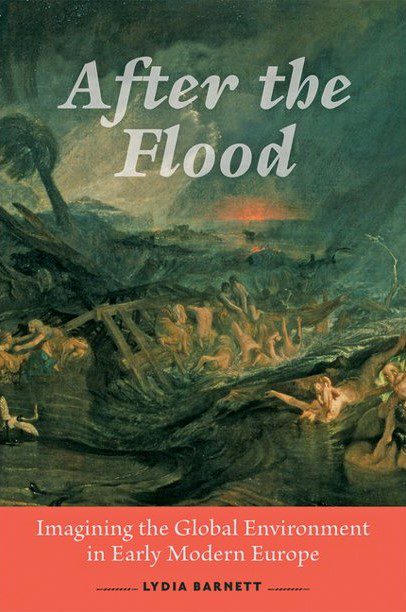
Review of After the Flood: Imagining the Global Environment in Early Modern Europe by Lydia Barnett (2019)

banner image for Review of After the Flood: Imagining the Global Environment in Early Modern Europe by Lydia Barnett (2019)

Lydia Barnett’s first book, After the Flood, examines how early modern Europeans sought to understand the relationship between human activity, morality, and the environment through narratives of Noah’s flood. Barnett frames her post-Medieval history through the modern concept of an Anthropocene, or an era in which humans are a dominant influence on the environment. Although this term was coined to describe how man-made greenhouse gases have altered the planet since the Industrial Revolution, Barnett’s anachronous use of the term reveals a previously unexplored throughline in environmental history.

As a historian of science and religion, Barnett analyzes European texts from the 1570s to 1720s to expand upon two decades of scholarship on the advent of environmental consciousness in Europe and the relationship between religious and scientific knowledge. She contributes to academic conversations on the advent of the Anthropocene, arguing that a theological concept of man’s impact on nature and climate preceded the geological concept proposed in the twentieth century. Barnett also engages with foundational texts on the role of scale in environmental history—exploring early modern ideas of the flood on local, national, transnational, and global scales. Barnett argues that the search for evidence of a universal flood collapsed early modern Europeans’ conceptions of time and space and reflects prominent scholars’ acknowledgment of the human capacity “to instigate geologic change on human timescale” (21).

book cover

In the first chapter, Barnett explores different dimensions of gender in early modern Europeans’ conceptions of the biblical flood. Scholars of this time would often cite the flood as the end of the Edenic period of Earth, during which men were giants who lived for hundreds of years and fathered many children. Thus, the flood epitomizes the era’s focus on the effects of sin on male bodies and masculinity. Barnett highlights the rather obscure work of Camilla Erculiani, the only woman known to have published a text on natural philosophy in Renaissance Italy. A Paduan philosopher and apothecary, Erculiani conceived of both supernatural and natural explanations of the biblical flood and suggested that the disaster’s moral implications apply only to men. Barnett argues that, paradoxically, Erculiani’s gender allowed her to voice controversial opinions about sacred texts during a time of religious persecution but also limited her ability to fully engage in European scientific communities.

Next, Barnett investigates the motivations behind the desire to globalize the flood—both in a geographical and a moral sense—as part of the European imperial project and Christian evangelism. Early modern Europeans fixated on reconciling a universal flood narrative with a perception of their own moral and racial superiority. Efforts to collect fossil evidence of a universal flood provided both Protestant and Catholic scholars a mode of participating in a diverse (though primarily European) exchange of fossils across the Republic of Letters, a transnational community of intellectuals. Barnett’s synthesis of scholarship on the Republic of Letters, the biblical flood, and European environmental consciousness demonstrates a unique approach, as it falls somewhere between environmental history and the history of knowledge.

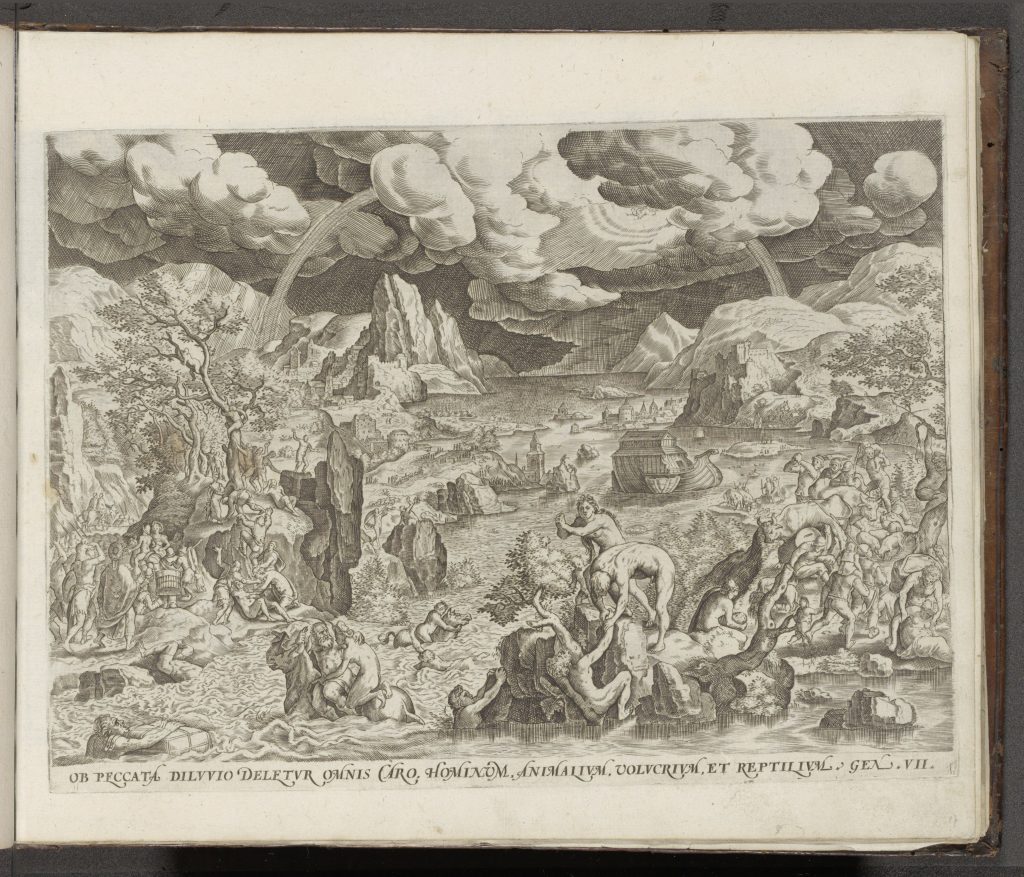
Deluge (anonymous, after Hans Bol, 1579), a print from an illustrated sixteenth-century Bible
Deluge (anonymous, after Hans Bol, 1579), a print from an illustrated sixteenth-century Bible. Source: Rijksmuseum

Finally, the end of After the Flood returns full circle to Italy—where Erculiani was one of the first scholars to merge natural and supernatural explanations of the flood—to describe how scientist Antonio Vallisneri combined theories from Swiss Protestants and Italian Catholics to challenge English scholars and deemphasize a natural explanation for the biblical flood.

An expert of early modern European history, Barnett deftly weaves different European narratives of Noah’s Flood together over the span of a century and a half. Although beyond the scope of this text, Barnett’s analysis would benefit from a contextualization of the ways in which other forms of Christianity across the globe—such as the Egyptian Coptic Church and Ethiopian Orthodox Church—and other Abrahamic religions depicted Noah’s flood around the same time. Contrasting flood narratives between European and African Christians would yield more nuanced insights into Protestant and Catholic Europeans’ motivations for debating the scale and significance of the biblical flood, which Barnett herself acknowledges in her introduction. Furthermore, Barnett sometimes sacrifices broader accessibility of her book in favor of obscure Latin words and religious terms, potentially excluding readers less familiar with early modern Europe and Christianity. But overall, she has crafted a sophisticated argument with highly readable prose. After the Flood has wide appeal to historians and graduate students from different fields—such as geography, ecology, theology, gender studies—and deftly explores the intersection of these different disciplines.

Emily Cantwell is a Master’s in Global Policy Studies Candidate at the University of Texas at Austin’s LBJ School of Public Affairs.


The views and opinions expressed in this article or video are those of the individual author(s) or presenter(s) and do not necessarily reflect the policy or views of the editors at Not Even Past, the UT Department of History, the University of Texas at Austin, or the UT System Board of Regents. Not Even Past is an online public history magazine rather than a peer-reviewed academic journal. While we make efforts to ensure that factual information in articles was obtained from reliable sources, Not Even Past is not responsible for any errors or omissions.
Five Sisters: Women Against The Tsar

This year, Not Even Past asked UT History faculty to tell us about a book that they love to teach. What makes it a great book for teaching history? What interesting and revealing questions does it raise? How do students respond to it?  This is the first article in what we hope will be a series on books we love to teach.

Why would anyone give up a life of the utmost leisure and privilege to become a revolutionary, isolated from society and hunted by the police? How does an individual choose to become a terrorist – to kill for an idea or an ideology? What country comes to mind when you think about these questions? It is probably not nineteenth-century Russia and you are probably not imagining women in these roles. Yet arguably, modern terrorism was born in the aristocratic manor houses of the Russian empire. This collection of translated memoirs takes us deep into the everyday lives of the girls who assassinated Tsar Alexander II in 1881.

book cover

I have taught this book almost every year since I began teaching in 1985, every time I teach my survey of Russian history from 1613 to 1917. These fascinating and accessible memoirs give us a highly detailed and deeply personal view of the decisions five revolutionary women made on the journeys they took to the revolutionary underground. Vera Figner (1852-1942) is especially thoughtful and reflective about her path from childhood innocence to growing awareness of social and economic inequality on her parents’ estate, to her desire to help the impoverished in her province, to her frustration with her own abilities and government obstacles for personal improvement and social-economic justice. In 1872, at age nineteen, Figner went to Zurich to study to be a doctor so that she could come back and have a greater impact at home serving the poor. But in Switzerland, she met radical thinkers and activists who cast doubt on her ideas about individual service and reform. When she and her friends returned to Russia, they decided that the only way to effect change was through revolution, and the only way to bring about a revolution –to spark a peasant uprising — was to assassinate the tsar. Figner was one of the chief agents of that plot, but instead of igniting revolution, the assassination ushered in a period of reaction and repression. Figner was eventually arrested but not executed, which gave her decades in prison to think about her life and write her revealing – and unapologetic — memoirs.

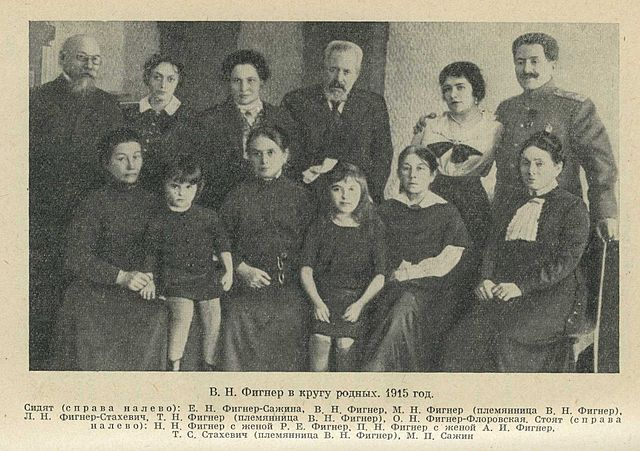
Vera Figner (sitting second to the right) and her family, 1915.
Source: Wikimedia Commons.

The moral ambiguities of the women’s ideas and actions fascinate my students year after year. Were these young women nothing more than spoiled rich kids with no sense of political realities, or were they dedicated realists, taking the only steps possible to transform people’s lives in a country where the government was indifferent to the suffering of ninety percent of the population? How did they understand the moral stakes of their choices? What did they hope to accomplish? How did their lives as revolutionary women compare to those of revolutionary men? And are they comparable to terrorists in the twentieth century and today? The students’ discussion of these questions changes, often dramatically, from year to year, reflecting current events and their current political concerns, which provides its own set of historical lessons, and has the added benefit of giving me a sense of the issues that matter to the succeeding generations of students in my classes.

Five Sisters: Women Against the Tsar
Edited and translated by Barbara Alpern Engel and Clifford Rosenthal
Original publication: New York: Knopf/Random House 1975


You might also like:
Policing Art in Early Soviet Russia
Great Books on Women’s History: Asia
Eisenstein’s “Ivan the Terrible” in Stalin’s Russia

_________________________________________________________________________________________

The views and opinions expressed in this article or video are those of the individual author(s) or presenter(s) and do not necessarily reflect the policy or views of the editors at Not Even Past, the UT Department of History, the University of Texas at Austin, or the UT System Board of Regents. Not Even Past is an online public history magazine rather than a peer-reviewed academic journal. While we make efforts to ensure that factual information in articles was obtained from reliable sources, Not Even Past is not responsible for any errors or omissions.
The Shock of the Anthropocene: The Earth, History and Us by Christophe Bonneuil and Jean-Baptiste Fressoz (2015)

By Marisol Bayona Roman

Though the authors of The Shock of the Anthropocene apply their skills as historians of science throughout, the book is far more than a straightforward history. Written at the intersection of science, history, and the broader humanities, Bonneuil and Fressoz provide well-reasoned and well-founded arguments that surgically take apart the dominant view of the Anthropocene as an epoch of human-provoked environmental crises that have only recently come to our attention, and for which scientific advances and sustainability-oriented mindsets are the only solution.

The book is divided into three parts, each oriented toward a particular goal. The first part introduces the scientific data on greenhouse gas emissions, biosphere degradation, changing biogeochemical cycles, and energy mobilization upon which the definition of the Anthropocene rely. Fressoz and Bonneuil show how the distinction between the realms of nature and culture—think, for example, of the opposition that emerges in Europeans’ quests to conquer the wilderness of the New World and impose their ways onto “savage” and “uncultured” natives in the fifteenth and sixteenth centuries—is no longer so clear-cut, and how placing the blame for the environmental crises of the Anthropocene on an ambiguous human whole can propagate a hegemonic narrative. These observations set up part two of the book, in which the authors reintroduce the political and break down the hegemonic qualities of the Anthropocene discourse. They show the ways in which scientific research has helped produce an undifferentiated and distanced view of the Earth and the anthropos that minimizes the key role of major nation-states in the development of today’s environmental crises, and the dangers of designating the scientist as the ultimate hero of the epoch. This completes the foundation for part three, a collection of seven histories that expose the imprecision inherent in the concept of the Anthropocene by focusing on one aspect of its development. For example, in their history of energy—the Thermocene, as they call it—the authors note how the dominant account, which asserts that the transitions from wood to coal to oil have been driven by a search for efficiency, obfuscates responsibility for the negative consequences of these decisions. Bonneuil and Fressoz demonstrate instead that the history of energy is one of successive additions (i.e. wood and coal and oil) shaped by political, military, and ideological decisions that have often gone against principles of efficiency and technological progress. The authors close this history by addressing the political on a global level, highlighting the key role of Anglophone countries such as the United States and Great Britain in the technological changes and environmental consequences of the Thermocene.

This publication is of great merit. The sheer breadth of knowledge on which the authors rely is a wonderful example of interdisciplinary research, and the clarity with which they synthesize and present the information is impressive, to say the least. However, this feat produces a dense text that limits its potential readership. The section “The discourse of a new geopower,” for example, is crucial to the transition between Part Two and Part Three because it reveals how the current “authorized narrative” of the Anthropocene represents, reproduces, and supports certain hegemonies on a global scale. But in order to follow the thread of this chapter, the reader must contend with Michel Foucault’s notion of biopower, Peder Anker’s imperial ecology, and Vladimir Vernadsky’s biosphere, all introduced in the span of three pages. These concepts are explained briefly and cited appropriately, but their complexity prohibits this book from being a leisurely read for those who are not already familiar with the ideas. These shortcomings aside, The Shock of the Anthropocene is a welcome and necessary read for scholars of any field concerned with the status of the concept of the Anthropocene.

Other Articles You Might Like:

City in a Garden: Environmental Transformations and Racial Justice in Twentieth-Century Austin, Texas
Her Program’s Progress
Boomtown, USA: An Historical Look at Fracking

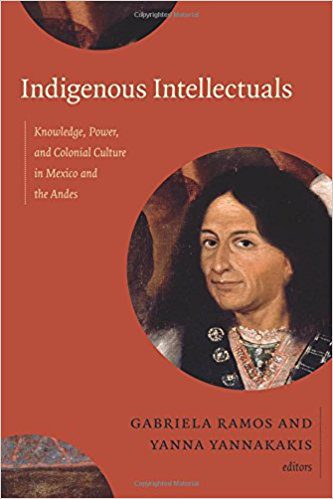
Indigenous Intellectuals: Knowledge, Power, and Colonial Culture in Mexico and the Andes edited by Gabriela Ramos and Yanna Yannakakis (2014)

By Abisai Pérez Zamarripa

This collective book is about the role of Indian thinkers as actors who preserved pre-Columbian knowledge within the new social order and recreated it to enforce or contest Spanish imperial rule. The book editors integrated several essays of top historians that explain how indigenous intellectuals in the colonial Andes and Mexico were important for the success of both the Spanish authorities and Indian elites in reaching political power and legitimacy.

Together, the book’s articles offers a comparative perspective of colonial Mexico and Peru focusing on the indigenous scholars’ lives, productions, and epistemological networks. This comparative analysis shows that knowledge production was more culturally and linguistically diverse in Mexico than in the Andes. On the one hand, Spanish prevailed on the Quechua as the principal written medium. This meant the indigenous people of the Andes had to learn a new foreign language to achieve social mobility and the Spanish government could centralize more rapidly its political power in the Andean region. On the other hand, in colonial Peru, Spanish rule gradually marginalized the Inca quipu system –records expressed with numerical terms while in colonial Mexico the Mesoamerican pictographic writing tradition –codex with images and words that recorded all kind of information– rapidly adapted the Castilian alphabet scripture. This exemplifies how the Spaniards were reluctant to utilize the numerical system of the Inca people while they accepted the continuity of the Mesoamerican tradition of communicating whole ideas by combining images and words. In her contribution, Gabriela Ramos suggests that the former centralized power of the Inca empire limited knowledge to very few hands while in Mexico the fragmented structure of the Aztec empire allowed a linguistic diversity that survived Spanish colonization. Ramos explains how the indigenous language, Quechua, became the lingua franca in colonial Cusco and Lima., The standardization of one language allowed the Spaniards to exert control more effectively, but also allowed natives to use the legal culture to their own benefit.

The essays also explain how indigenous intellectuals used their ancient knowledge  to transform and thus critique, resist, or accommodate with the colonial system. Religious orders played an important role in the critique of power through evangelizing and educating the natives. John Charles addresses this in his study of Jesuit colleges in the colonial Andes. He demonstrates that Jesuit schooling allowed young indigenous nobles to learn the Spanish law and language to protect local self-rule and their family’s interests and investments. Andean nobles who were schooled by Jesuits did not hesitate to confront corrupt Spanish authorities using their knowledge in the litigation process. Alan Durston offers another example of resistance by Indians thinkers. He analyzes the Huarochirí Manuscript (Quechua language text that describes the traditions and myths of the natives of pre-Columbian Peru)  to explain how an indigenous intellectual and nobleman prioritized local indigenous traditions that expressed historical narratives through ancient Inca myths, the huaca tales. Durston shows that indigenous writers chose to preserve their ancient records instead of embracing completely Europeans forms of knowledge.

Concerning the issue of the political adaptation of Indians to the colonial system, María Elena Martínez provides one of the most compelling aspects of the book, a study of the political functions of Indian genealogies in central Mexico and Peru. Martínez shows that genealogical narratives empowered Indian noblemen in both regions by adapting ancient traditions to understanding the Spanish conquest as a pact of vassalage with the Spanish crown. During the 17-18th centuries, indigenous intellectuals created a great variety of títulos primordiales (Titles of land in colonial Mexico referring both to the pre-Columbian and colonial periods) and visual representations of dynasties (Peru) to retain or gain privileges from the crown. Those genealogical narratives shows that natives elites in colonial Peru conceived of Spanish rule as a peaceful and voluntary transfer of power between the Indians and the Spanish crown, not as a military conquest.

All the authors in this collection have a clear and concise writing style and use a wide range of primary sources: chronicles, confesionarios, trial records, lawsuits, petitions, contemporaneous histories, photographic representations that combines European and Indian forms of knowledge, and so forth. Particularly, the authors show how the analysis of chronicles and histories shed light on the intellectuals’ networks and the role of Indian scholars in  preserving the oral memory of native societies that today are not well known. For instance, John F. Schwaller examined the productions of the brothers Fernando de Alva Ixtlixochitl and Bartolomé de Alva. The first served to interpret and translate the native history into models that were understood by the Spanish rulers while the second used his wide knowledge of native religious practices to enforce a better Christianization. For her part, Camila Townsend shows that Nahua historian Don Juan Zapata and other Nahua historians claimed to be the responsible for preserving their communities’ memories. The essays of Schwaller and Towsend also are also remarkable as they include an insightful analysis of the Nahuátl language. Yanna Yannakakis examined the translation process for understanding the relationship between indigenous people and the legal system. She argues that translation practices in colonial Mexico led to a process of commensuration, that is, the Spanish and native languages established a common ground so that Christianity could become comprehensible both for Spaniards and indigenous communities. She demonstrates how the Zapotec language integrated the Christian notion of sin to create a discourse on criminality, which the Indian elites then used to dispute colonial power.

This collection of essays draws attention to the importance of intellectuals in the construction of alternative ways to achieve power and social mobility. The Indian intellectuals of colonial Mexico and the Andes demonstrated the validity of the common idea that “knowledge is power.” And it is power because it offers a pathway to contest or to improve the ways that people interact with their rulers.

You may also like:

Andean Tapestry: Colonial Latin America Through Objects by Irene Smith
The National Museum of Anthropology in San Salvador by Brittany Erwin
Jorge Cañizares-Esguerra reviews Jerónimo Antonio Gil and the Idea of the Spanish Enlightenment

We Were Eight Years in Power by Ta-Nehisi Coates (2017)

by Brandon Render

Prior to the publication of “The Case for Reparations” in 2013, Ta-Nehisi Coates was a little-known blogger turned Senior Editor of The Atlantic magazine. Today, Coates has emerged as not only the top contemporary black intellectual, but a leading American thinker – regardless of race – with stinging critiques of President Barack Obama’s administration and American racism. Coates’ We Were Eight Years in Power: An American Tragedy traces the evolution of his writing career as it coincides with the eight years of the first black presidency, detailing Coates’ personal life as he completed each assignment, his relationship with Obama, and the public reaction to his essays. Coates chooses an article for each year of Obama’s presidency to describe the disparate moods of Americans towards racism, each essay blending testimonies and historical research. Coates provides a brief introduction to each article, all of which are published by The Atlantic, to describe the financial struggles he and his family faced while establishing himself as a writer, the inspiration and reasoning behind his subject choice, and his post-publication thoughts on each essay.

As Coates became a best-selling author with the publication of Between the World and Me, more attention was placed on his journalistic work. According to the author, these articles are joined here in an effort to provide a fresh take on the previous eight years to describe the historical and contemporary ideas of Black America, from within and without: the black conservatism of Bill Cosby; the nuances of black identity represented by Michelle Obama; the Civil War in the collective black memory and historical imagination; the uses and misuses of Malcolm X’s legacy; the limitations of a black presidency due to “white innocence”; the stifling of black wealth through discriminatory housing policies; the destructive power of negative stereotypes of black families and its relationship to mass incarceration; and Obama’s reflection on his eight years in office. Coates’ concluding epilogue, “The First White President,” describes how the “bloody heirloom” – or centuries of white supremacy and violence against black communities – is used to negate the first black presidency through the election of Donald Trump.

Coates seeks to push boundaries, not only to demystify notions of a post-racial society, but to contextualize America’s first black presidency within the broader scope of American racism. The author explores the complexities of Obama’s attempts to carve out a path in American politics, pitting the impact of black radicalism and the president’s rich knowledge of black history against a persona made palatable for white Americans – what Coates refers to as the “third way – a means of communicating his affection for white America without fawning over it.” The irony in Coates’ assessment is that a distinctly black man, one who refrained from common ideas of assimilation, could rise to the nation’s highest office while still facing the limitations that black Americans experience individually and collectively. While Coates makes the simplified argument that a black presidency does not equate to the end of racism, in these articles he also seeks to uncover the nuances of racial discrimination in Obama’s response to white racial sensibilities.

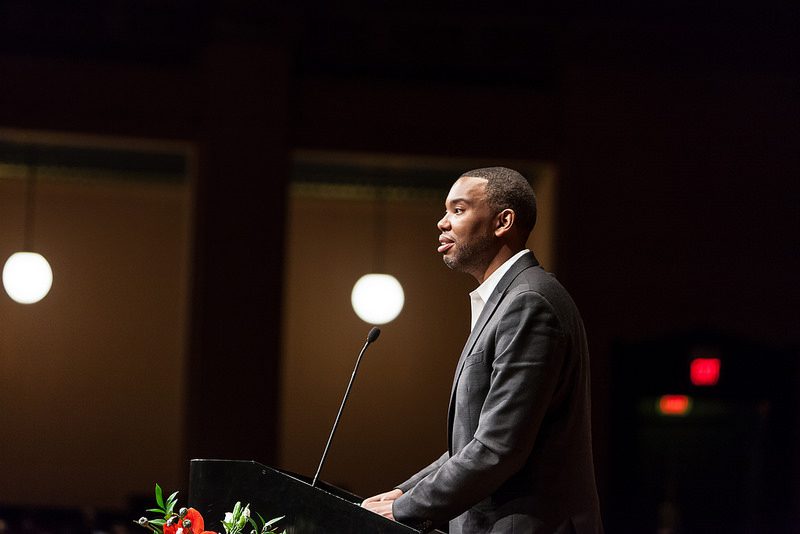
Ta-Nehisi Coates (via Flickr)

The unique writing career of Ta-Nehisi Coates has produced a leading black voice in public discourse on historical and contemporary American race relations. In a way, it is fitting for Coates to trace his writing career alongside Obama’s presidency given the remarkable similarities of a black journalist and a black politician maintaining their distinctive racial qualities when, historically, they would be rejected by white America in such fields.  Coates’ platform in The Atlantic gives him for a wide, predominately white audience that most black journalists do not enjoy. Coates recognizes this fact in the introduction to his article on reparations, claiming that this particular essay “was a lesson in what serious writing married to the right platform could actually achieve.” In other words, arguments that not only surround reparations, but the systematic oppression of black Americans found in black publications that target a black readership are reduced by white audiences to unimportant racial grievances who dismiss “legitimate ideas” because they are not considered by “people of the right ‘reputation.’”

When evaluated individually, each of Coates’ articles tackles a sensitive subject involving the black community, past and present, that is often hidden or unacknowledged by white America. Placed alongside each other, Coates’ powerful illustrations capture the broad, ever-changing nature of American racism. Coates’ thoughts, however, are a departure from the black intellectual tradition, most notably due to his lack of religious faith as evidenced throughout his work. Not only does Coates identify as an atheist, but he makes no attempt to comfort his audience by offering faith or promoting values that transcend America’s history of racism and oppression. Instead, he forces his audience to confront the destructive nature of prejudice, telling the reader that no one can save us but ourselves; ultimately, it is up to us to decide the next move.

You may also like:

Slavery in America: Back in the Headlines
Muhammad Ali Helped make Black Power into a Global Brand
Stokely Carmichael: A Life

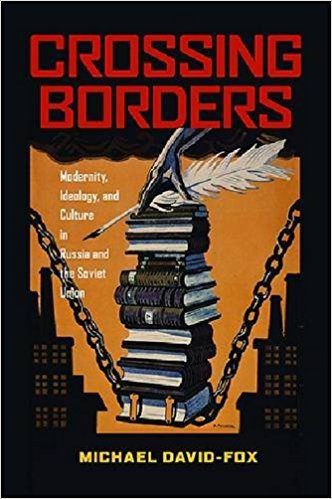
Crossing Borders: Modernity, Ideology, and Culture in Russia and the Soviet Union by Michael David-Fox (2015)

By Stuart Finkel

One of the pivotal issues that western historians of the USSR have debated since its collapse more than 25 years ago is its so-called “exceptionalism.” That is, to what extent should the history of the Soviet Union be considered as but one variation of the remarkable process of state modernization in the twentieth century, and to what extent might we posit a distinctively “Soviet modernity,” distinguished by its communist ideology, its party-based state, and its social and/or nationalist “neo-traditionalism.” In Crossing Borders, Michael David-Fox, a prolific scholar and one of the founding editors of the field-defining journal Kritika, brings together significantly revised versions of earlier publications with new material in a volume that takes aim at a comprehensive, holistic reframing of these much-debated questions. The very sensible central thrust is that we should and can transcend the binarisms that have developed — modernity vs. neo-traditionalism, exceptionalism vs. likeness. As he asserts in an ambitious introduction that sets a frame for the disparate chapters that follow, there is a way to “thread the needle” between the various interpretations that will allow scholars to arrive at richer understandings.

David-Fox determinedly asserts that the way out of historiographical and theoretical conundrums is not to abandon the terms of debate but rather to expand them. In particular, he suggests, that the way out of the impasse between proponents of Soviet modernity and neo-traditionalism is to utilize the concept of “multiple modernities,” which can resolve or at least contain some of the paradoxes. Of course, deconstructing binaries to arrive at a more sophisticated synthesis is not in itself a radically novel solution to historical debates, and the author strives to avoid oversimplifications of the numerous scholarly works that he examines. Threading the needle requires more than simply saying that the answer lies “in between,” and to his credit David-Fox claims to be aiming at that (or, more precisely, beginning the process of doing that) in compiling these essays and articles.

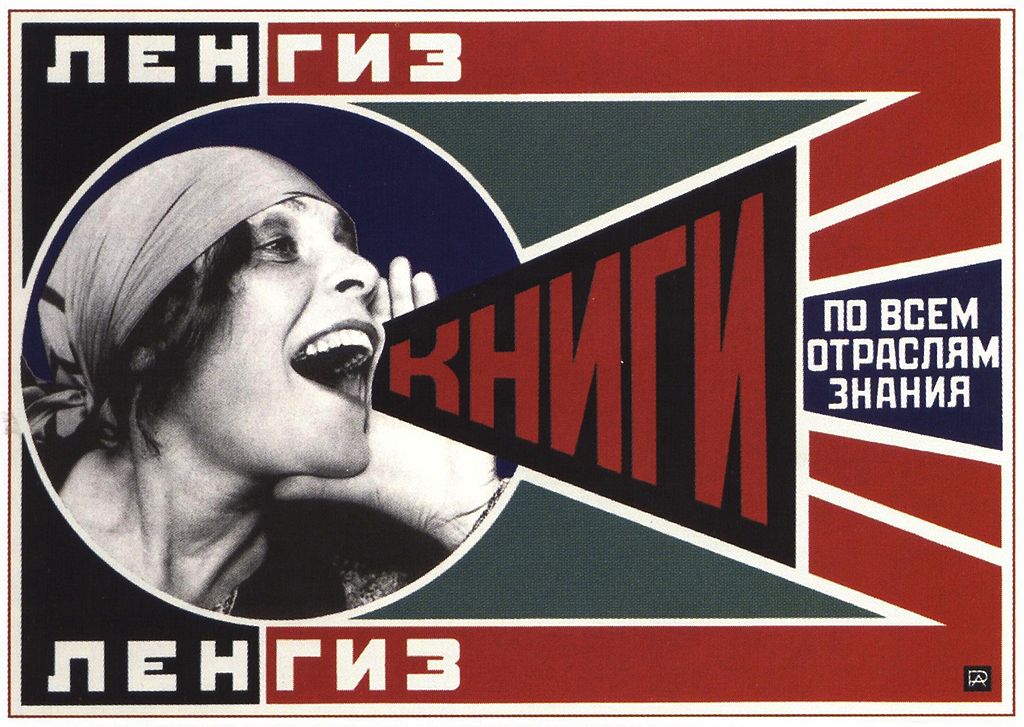
1924 pro-literacy poster by Alexander Rodchenko (via Wikipedia)

The chief features of this interpretation include a rigorous examination of what is denoted by modernity, and, in particular by an approach that is not merely comparative but aggressively transnational. Any evaluation of Soviet modernity must be done not only via comparison with multiple other modernities (and not just a stereotype of Western modernity), but also through an empirical examination of international interactions at the time. Focused primarily, but not exclusively, on the interwar period, David-Fox aims to demonstrate – in work building on his previous scholarship, in particular the recent Showcasing the Great Experiment – that patterns of influence were complex and multifaceted and cannot be reduced to a simple question of imitation. This volume aims not to resolve these complexities but rather to show empirically how intricate these interactions could be, and thus to suggest the need for still further examination by the field.

The book aims to “cross borders” not just between nations but also among various subdisciplines and approaches. In a new essay entitled “The Blind Men and the Elephant,” David-Fox examines definitions of “ideology,” asserting that for a concept so ubiquitous it has been curiously undertheorized by Soviet historians. This explication of six different modalities for studying ideology (as doctrine, as worldview, as historical concept, as discourse, as performance, as faith, and in the mirror of French revolutionary and Nazi historiography) offers a useful, concise, and comprehensive overview. Together with the examination of Soviet modernity and a significantly revised and expanded version of the author’s well-known “What is the Cultural Revolution?” the historiographical and theoretical chapters might offer, among other things, a precise introduction to the basic questions of Soviet history for graduate students and general readers.

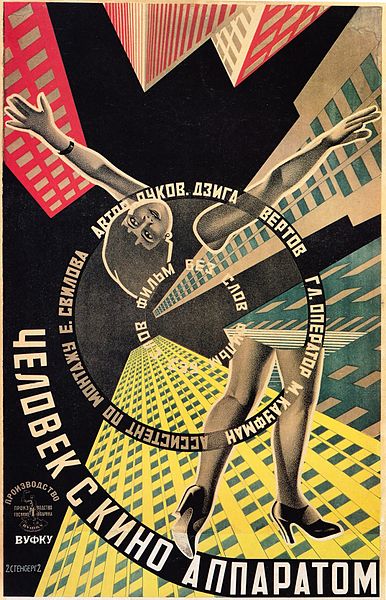
Poster of the experimental Soviet silent film “Man with a Movie Camera,” 1929 (via Wikimedia Commons)

The other major new inquiry in this volume is “The Intelligentsia, the Masses, and the West,” which provides a sort of précis of the author’s own original interpretation of what he calls “intelligentsia-statist modernity.” Impressively integrating the work of a diverse array of scholars, David-Fox posits that Russian/Soviet modernity was marked by “the way long-standing traditions of state-sponsored transformation were wedded to Westernized elites’ attempts to overcome Russian backwardness, and they all revolved around enlightenment from above and a search for alternatives to the market.” At the center of this conception is the well-known impulse of the Russian intelligentsia, the Kulturträger tradition, to disseminate “culture” to the masses. Here and in the revised version of his piece on the Communist Academy and the Academy of Sciences included later in the volume, David-Fox studiously avoids reducing the complexities and paradoxes of the Soviet integration of long-standing intelligentsia traditions. At the same time, in a book that strives to analyze and deconstruct major interpretative categories (modernity, ideology, etc.), it might be argued that this essay reifies a notion of “the intelligentsia” that is not sufficiently complicated. From at least the turn of the century, intelligentsia conceptions had been debated and contested, so that the original, more integral understanding had already been broken down. While there were undoubted strong étatist and tutelary propensities among the Russian/Soviet intellectual classes, there were also contradictory tendencies, including anti-intelligentsia sentiment and debates over fundamental concepts of social and intellectual life.

But it is clear that both this essay and the rest of the volume’s impressively erudite analysis represent far from the author’s last word on these matters. One expects an even more comprehensive framework will be built on these thought-provoking foundations.

You may also like:

Rebecca Johnston discusses policing Soviet art in early Soviet Russia
Julia Mickenberg on American girls in red Russia
Jessica Werneke reviews Consuming Russia: Popular Culture, Sex, and Society since Gorbachev ed. Adele Marie Barker (1999)

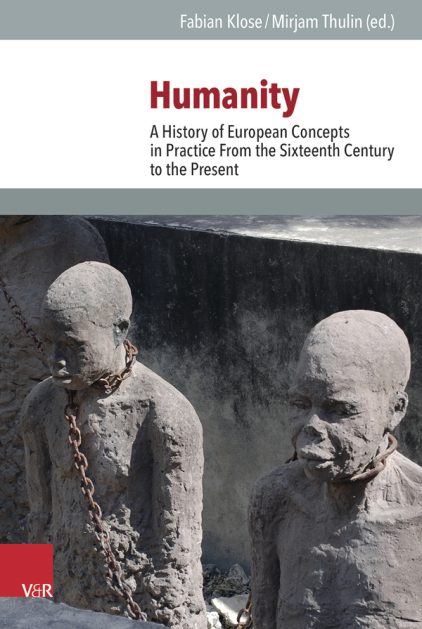
Humanity: A History of European Concepts in Practice From the Sixteenth Century to the Present, edited by Fabian Klose and Mirjam Thulin (2016)

This review was originally published on the Imperial & Global Forum on May 22, 2017. 

By Ben Holmes (University of Exeter)

What does it mean to belong to the human race? Does this belonging bring with it particular rights as well as responsibilities? What does it mean to act with humanity? These are some of the big questions lying at the heart of a new edited collection from Fabian Klose and Mirjam Thulin, Humanity: A History of European Concepts in Practice From the Sixteenth Century to the Present (2016). Based on a 2015 conference at the Leibniz Institute in Mainz, the book, as the title suggests, is not a purely conceptual history of the term “humanity.”[1] Rather it looks to discover “the concrete implications of theoretical discourses on the concept of humanity.” In other words, how did ideas of “humanity” guide European practices in areas like humanism, imperialism, international law, humanitarianism, and human rights?[2] The editors argue that despite the implied timeless, universal nature of the term, humanity is both a changing, dynamic concept, and has been prone to create divisions as much as it promotes commonality. Although the volume is a study of European conceptions of humanity, the contributions are transnational, displaying how conceptions of humanity were practiced in Europe and in the continent’s interactions with the wider world over the course of five-hundred years.

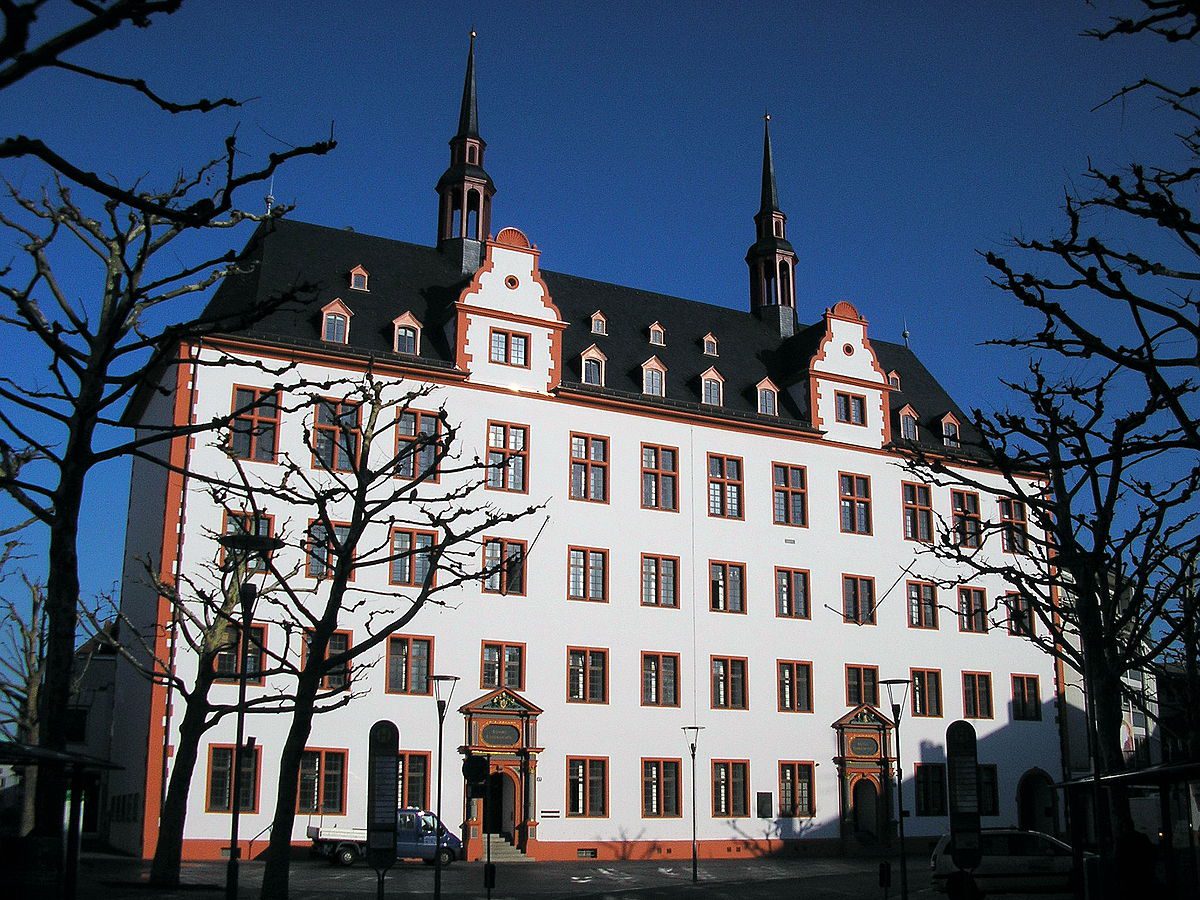
Leibniz Institute of European History (via Wikimedia Commons).

The volume is divided into four sections. The two chapters in section one explore how ideas of humanity developed over the volume’s five-hundred year period. Francisco Bethencourt demonstrates how, since antiquity, ideas of the humanity or sub-humanity of different categories of people have created legal and political divisions between the rights of free man and slave, civilized and barbarian, or man and woman. Although these distinctions have gradually eroded in response to more inclusive notions of humanity, Bethencourt warns that hierarchical ranking of peoples remains “one of the persistent realities of [the] human condition,” thus disabusing “triumphalist narratives” which would portray modern notions of “humanity” as the culmination of an inevitable progress of enlightened beneficence.[3] Paul Betts looks more closely at the politicization of humanity during the twentieth century. He also shows humanity was not the sole property of progressive politics; throughout the century “humanity remained a slippery term, and could be aligned to various causes,” including fascist, communist, or racist ones which legitimated what many would consider inhuman practices like apartheid. Betts provocatively concludes by suggesting that an intellectual estrangement exists between the aspirational notions of common humanity today and those notions that characterized previous generations of internationalists.

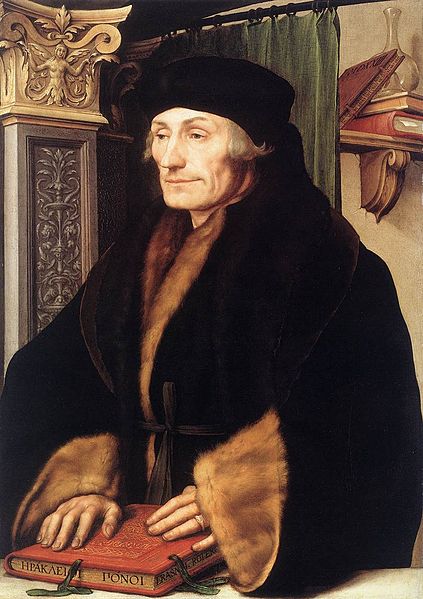
The rest of the chapters in the book are structured according to what the editors describe as”‘three essential areas” that constitute sub-topics of humanity. Thus, Part II revolves around the development of ideas and debates surrounding morality and human dignity in the context of major transnational movements like humanism, colonialism, or missionary activity. Compared to the later sections, some of the chapters in Section II study humanity in a slightly more theoretical fashion than as a “concept in practice.” Mihai-D. Grigore’s chapter situates Desiderius Erasmus’s (1466-1536) sixteenth-century political writings as emblematic of a wider transition from theological to political understandings of humanity, and Mariano Delgado’s chapter presents the Spanish Franciscan friar Bartolmé de Las Casas’s (1484-1566) arguments for recognizing the humanity of indigenous populations of Spain’s “New World.” In doing so, they provide a study of the changing ideological conceptions of humanity rather the practical implications of these ideas. This should not detract from two very useful case studies of sixteenth-century debates about human nature; but it does raise the question of how far one pushes the idea of a “concept in practice” In contrast, Judith Becker’s contribution on nineteenth-century German Protestantism in India illustrates the practical implications of ideas of humanity by showing how the missionaries’ belief in the unity of mankind guided both the evangelistic and humanitarian aspects of their missionary work in India.

Portrait of Desiderius Erasmus of Rotterdam, by Hans Holbein the Younger, 1523 (via Wikimedia Commons).

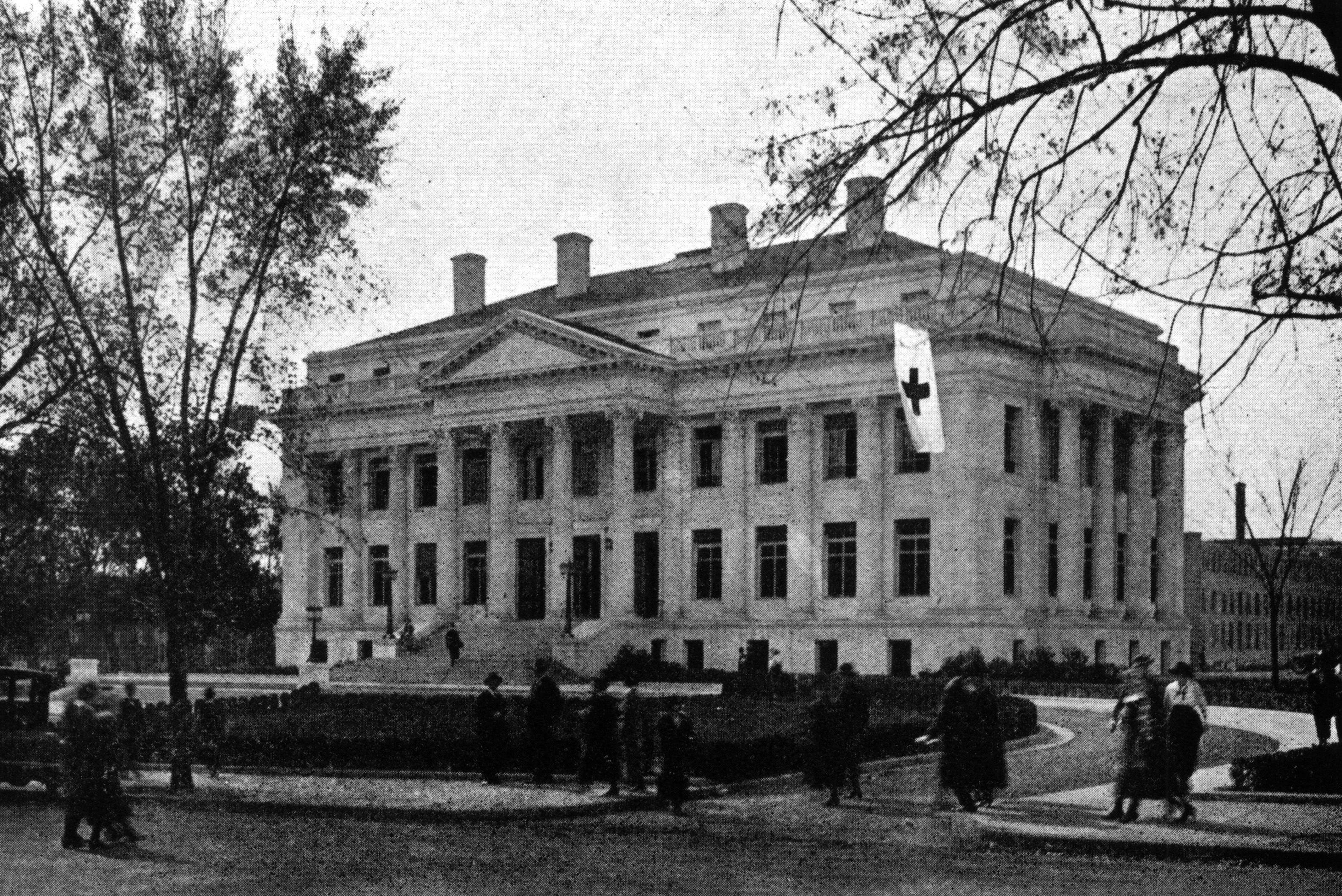
Section III examines themes around humanitarianism, violence, and international law, and illustrates how theories of humanity practically affected European attempts to remedy or restrain the violence of warfare or slavery. Thomas Weller provides an intriguing case study on the contributions the sixteenth-century Hispanophone world made to the arguments later famously espoused by eighteenth-century Anglo-American abolitionists in their protests against the transatlantic slave trade. While questioning any straightforward evolution between the arguments of sixteenth-century writers like Tomás de Mercado (1525–1575) or Luis de Molina (1535-1600) and eighteenth-century transatlantic abolitionists like William Wilberforce (1759-1833), Weller does highlight an under-researched topic concerning what he considers “humanitarianism before humanitarianism.” Picking up the antislavery story, Fabian Klose shows that while British abolitionist narratives about African humanity helped shape the national and international legislation that ended the transatlantic slave trade, these same appeals to protect humanity also legitimated new forms of violence, like armed intervention and colonial expansion in order to enforce the ban. Further emphasizing that the relationship between humanity and humanitarianism is far from straightforward, Esther Möller shows the tensions over the concept in the Red Cross Movement in the second half of the twentieth century. Specifically, the implementation of humanity as the first of the seven Fundamental Principles of the Red Cross precipitated debates in the movement between those who saw humanity as a politically neutral concept, and those national societies involved in anti-colonial struggles, which argued that engagement with politics was a humanitarian duty. Humanity, intended as a principle to unite national societies, actually highlighted the regional and political divisions in the movement.

American Red Cross Society Building, 1922 (via Wikimedia Commons)

The final section focuses on how humanity has influenced social and benevolent practices like charity, philanthropy, and solidarity movements. Picking up the themes of Möller’s chapter, Joachim Berger shows the difficulties of using humanity as a rhetorical device to unite a transnational movement like international Freemasonry. In international forums for European Freemasons, humanity acted as an “empty signifier” which papered over national differences, but these regional differences were re-exposed whenever practical action to support “universal brotherhood,” like transnational charity, was proposed. Studying nineteenth century Catholic philanthropic groups’ promotional campaigns for child-relief in Africa and Asia, Katharina Stornig highlights the at-times dissonant nature of European conceptions of humanity. These philanthropic campaigns used universalist rhetoric of a common humanity to present a moral imperative to save distant children, while simultaneously emphasizing the “barbarity” and “inhumanity” of these children’s parents, who they deemed responsible for this suffering. Gerhard Kruip’s chapter, using church documents to explore the Catholic Church’s attitudes towards solidarity and justice, is part history and part call-to-arms. Kruip exhorts the current Catholic hierarchy to do more to promote global justice by becoming less western-centric, less centralized, “and more open to all the different cultures of the human family,” while also calling for greater state regulation and collective action to ensure a fairer distribution of “common goods for humanity as a whole.”

Cardinals leaving St. Peters (via Wikimedia Commons).

Johannes Paulmann concludes the volume by tying the big themes together with his four main perceptions on humanity. Firstly, humanity has often been defined by its antonyms, most obviously by behaviors of inhumanity. Secondly, the abstract nature of humanity allowed the concept to fulfill a diverse array of functions for a multiplicity of causes. Paulmann’s third and fourth perceptions question the static nature and universality of humanity. Not only was humanity dynamic, which its proponents often understood as a process and goal rather than a fixed reality, but many of these ideas of ‘progress’ implied notions of hierarchies in terms of civilization or development. Paulmann’s conclusion provides a welcome theoretical summary, bringing together the volume’s diverse collection of topics.

The volume’s scale and scope will make this book attractive to scholars of humanitarianism, international law, and human rights. The structure of the volume, while generally clear, could have been explained in more depth for the benefit of non-specialists. For instance, dividing humanitarianism and charity into two separate sections may require clarification to anyone unfamiliar with the theoretical difference between the two. Moreover, some chapters occasionally skirted between themes of humanitarianism, charity, and missionary, which created a bit of confusion. Nevertheless, this is a very important collection of case studies exploring the European concept of humanity and its spread, and leaves the door open to future works focusing on non-European conceptions of the term and how non-Europeans may have actively re-shaped and reinterpreted European ideas.


[1] For such histories, see Hans Erich Bödeker, ‘Menscheit, Humanitӓt, Humanismus’, in Otto Brunnter et. al. (eds.) Geschtliche Grundbegriffe. Historisches Lexikon zur politisch-sozialen in Deutschland vol.3 (Stuttgart, 1982).

[2] A vast corpus of works exist on each of these areas, which are too many to list here. For humanitarianism see Michael Barnett, Empire of Humanity: A History of Humanitarianism (Ithaca, 2011). For humanitarianism’s relationship with imperialism see Rob Skinner and Alan Lester, ‘Humanitarianism and Empire: New Research Agendas’, Journal of Imperial and Commonwealth History 40:2 (2012), 729-747. On human rights see Stefan-Ludwig Hoffman (ed.), Human Rights in the Twentieth Century (Cambridge, 2011).

[3] For more criticism on ‘triumphalist narratives’ of human rights see Samuel Moyn, The Last Utopia: Human Rights in History (London, 2012).


You may also like:

The Price for Their Pound of Flesh, by Daina Ramey Berry
Walter Benjamin on Divine Violence, by Joshua Abraham Kopin
Age of Anger: A History of the Present, by Pankaj Mishra (2017), reviewed by Ben Weiss

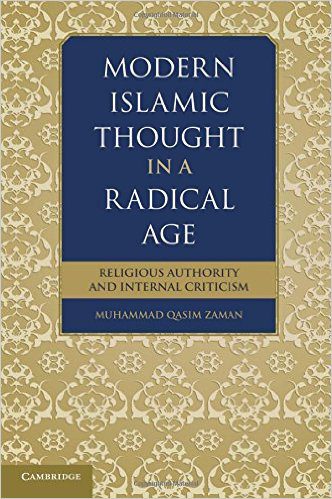
Modern Islamic Thought in a Radical Age, by Muhammad Qasim Zaman (2012)

by David Rahimi

coverStarting with the encounter with European colonialism and modernity in the eighteenth century, Muslims increasingly began to worry that Islam was beset by existential crises as Muslim countries slowly fell under colonial domination. Some thought Islam had stagnated and made Muslims weak; others said true Islam already had the answers to modernity. Consequently, many prominent Muslim intellectuals from the Middle East and South East Asia, like Rashid Rida, Shah Wali Allah, Muhammad Iqbal, ‘Ubayd Allah Sindhi, and Jamal al-Din al-Afghani, insisted over the course of the next two centuries that Islam must in some way rediscover, renew, or reform itself to address the challenges of a changing world. This, of course, raised a host of questions. What needed to be reformed? How should reform be enacted? Who or what had the authority to decide such matters? Were these crises even real?

800px-miqbal4

Muhammad Iqbal was knighted in 1922, by King George V (via Wikimedia Commons)

Muhammad Qasim Zaman takes these concerns as his starting point to examine Muslim contestations of religious authority and “evolving conceptions of [Sunni] Islam” from the nineteenth century to the present day.” At its core, this is a story of inconclusive debates, ambiguity, and cyclical tension as old wounds reopen and close, as lay and traditional religious scholars (the ‘ulama) contest how Islam should be understood and lived. By tracing the contextualized debates of the modern ‘ulama in a comparative, transnational framework, Zaman shows the multifaceted dimensions of internal debate and how this fosters ongoing fragmentation of religious authority in Islam, despite efforts to the contrary. Disposing with an overall chronology or single narrative, Zaman divides his book into the following key thematic issues: religious consensus, ijtihad (i.e. independent analogical reasoning), the common good, religious education, the place of women in law and society, socioeconomic justice, and violence. The problems surrounding these issues have continuously resurfaced within Muslim intellectual and religious circles since the nineteenth century. What links these hot-button, yet seemingly disparate, topics together are the fundamental issues of religious authority, that “aspiration, effort, and ability to shape people’s belief and practice on recognizably ‘religious’ grounds,” and internal criticism among Muslims. Each chapter topic, then, serves as a vehicle through which to explore the interplay between authority and criticism, and what the consequences and implications are for Islamic thinkers and Muslims more broadly.

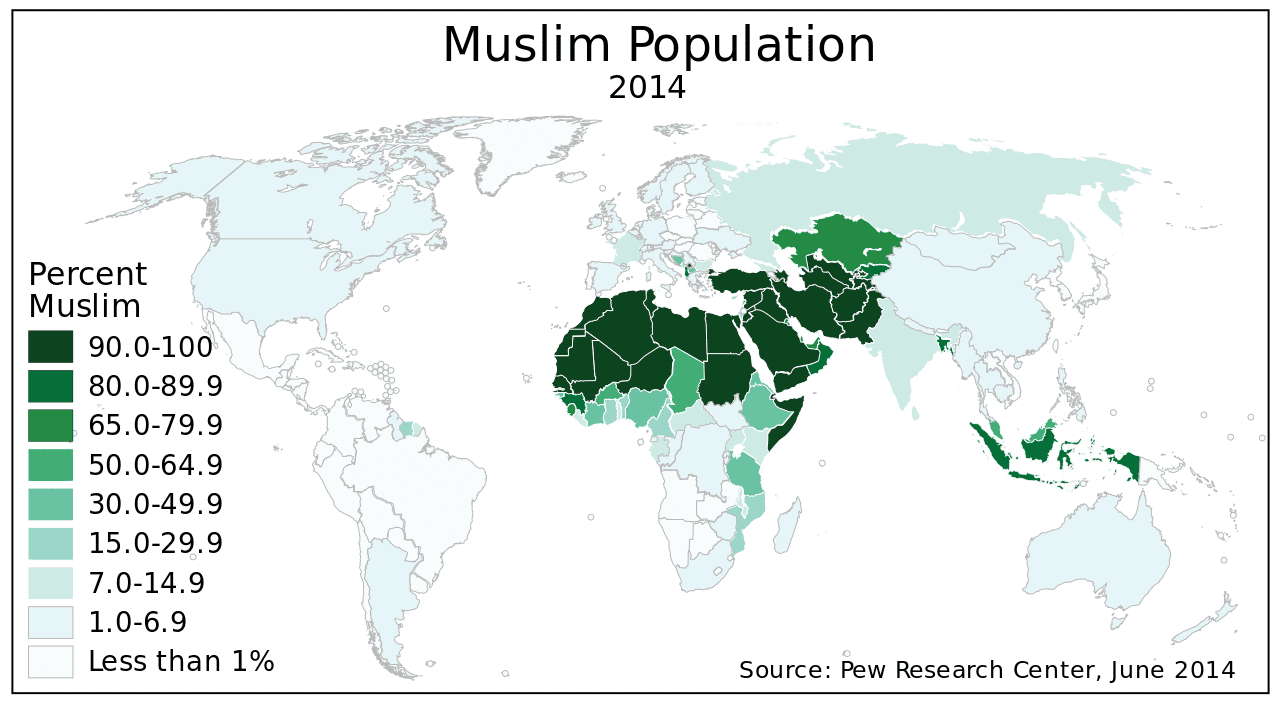
muslim_percent_population_v2-svg

Countries with Muslim-majority populations (via Wikimedia Commons).

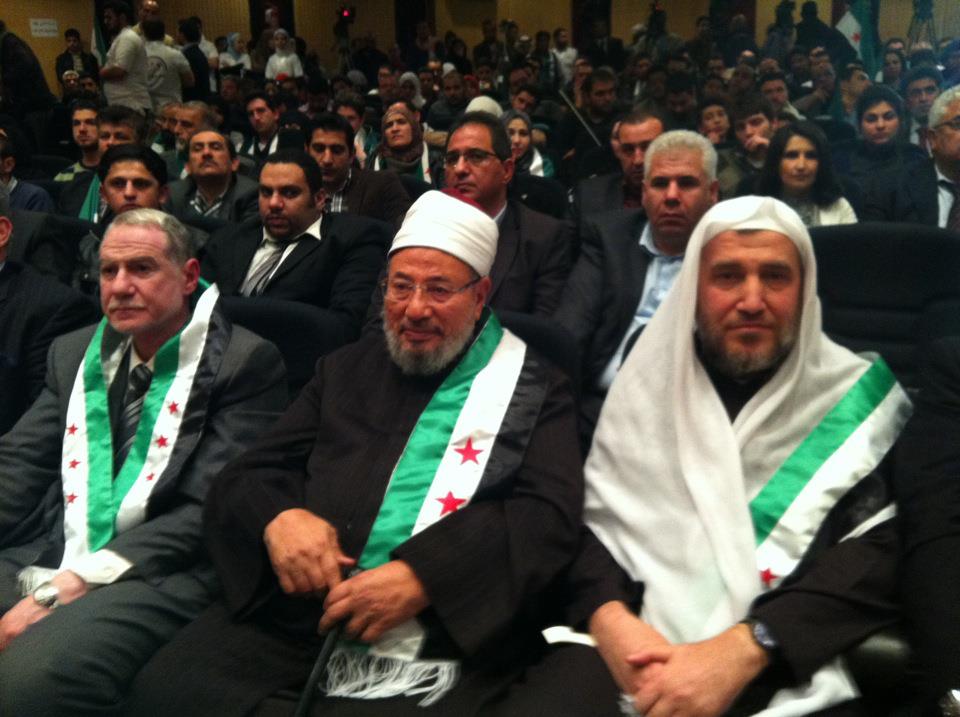
The real world consequences of this battle over religious authority through internal criticism come across strongly in the chapter on violence. For example, the moderate Yusuf al-Qaradawi, the head of the European Council for Fatwa and Research (ECFR), wrote in his 2008 magnum opus Jurisprudence of Jihad that jihad was only permissible in cases of defense. Zaman shows, however, that this opinion does not align with the majority of classical Islamic jurisprudence, to which Qaradawi claims to faithfully adhere. Furthermore, another prominent moderate, Taqi ‘Uthmani of the Pakistani branch of the Deobandi school, had previously rejected purely defensive jihad in the 1970s and 1980s. In 2009, ‘Uthmani reaffirmed this theory of offensive jihad, adding that it only applied, however, to “formal” Islamic states and not to individuals. This disagreement about jihad conveys Zaman’s central point that is replicated across the other chapters as well. The ‘ulama are active in articulating their views, but who or what holds ultimate authority to resolve these religious problems remains unclear, since even the theory of authoritative scholarly consensus is hotly contested. Ultimately, Zaman argues that greater attention must be given to religious authority as a relational concept, formed by the specificities of the context in which this authority is performed. Abstract authority not only comes into tension with authority as it is practiced in real life, but historical circumstances and individual beliefs shape how Muslims respond to or recognize religious authority. The ECFR, founded in 1997, exemplifies this tension, since on the one hand, it seeks to create a new authoritative consensus around a particular set of ‘ulama, yet on the other hand, it claims not to compete with the authority of the many non-affiliated ‘ulama. The unsettled nature of these debates, Zaman insists, results in an “authority deficit” and persistent fragmentation within Muslim intellectual and religious circles.

qaradawi_wih_free_syria_flag

Yusuf al-Qaradawi (center) in 2013 (via Wikimedia Commons).

Modern Islamic Thought in a Radical Age is a work of tremendous insight and compelling vignettes. The weakest portions are its introduction and conclusion, which both tend to be verbose and slightly disorganized. It is also unclear at moments whether the author intends to offer a strong overarching argument or to merely “open a new window onto the Muslim religious and public sphere” – one that forefronts debates among the ‘ulama. Thankfully, these are minor problems. While not meant for readers looking for an introduction to Islam, those hoping for a meticulously researched study of the internal religious dynamics of Sunni Islamic thought will find their expectations well met.

Muhammad Qasim Zaman, Modern Islamic Thought in a Radical Age: Religious Authority and Internal Criticism (New York: Cambridge University Press, 2012).
bugburnt

You may also like:
Listen to 15 Minute History Episode 58: Islam’s First Civil War 
See our suggestions for Great Books on Islam in American Politics & History
Lior Sternfeld recommends Making Islam Democratic: Social Movements and the Post-Islamist Turn by Asef Bayat (2007)
bugburnt

Gramsci on Hegemony

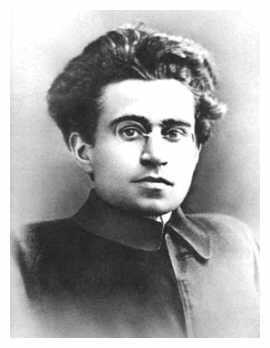
Antonio Gramsci was an Italian Marxist intellectual and politician who can be seen as the perfect example of the synthesis of theoreticians and politicians. He was not only a thinker involved in the revision and development of Marxism, who wrote in several socialist and communist Italian journals, but also a politically active militant. The fascist government of Benito Mussolini imprisoned him between 1926 and 1937.

Antonio Gramsci, early 1920s
Antonio Gramsci, early 1920s. Source: Wikimedia Commons

Gramsci’s political activities were not only related to his publications. His actions as a politician, activist, and intellectual were consistent with his ideas. He believed that the proletariat needed “organic” intellectuals (described below) to become a hegemonic class, and during his lifetime, he himself assumed such a role. As a member of the Socialist Party and, later, the Communist Party, he wrote in several journals seeking to reach a wide audience and indoctrinate it in the basic ideas and principles of the proletariat and social struggle. While incarcerated, and away from mass media, he wrote his most celebrated and influential theoretical contributions to Marxist theory. Among these, two concepts would become most important to scholars of different disciplines: hegemony and historical bloc. In what follows, this piece will concentrate on the concept of hegemony in Gramsci and the sources upon which he built it.

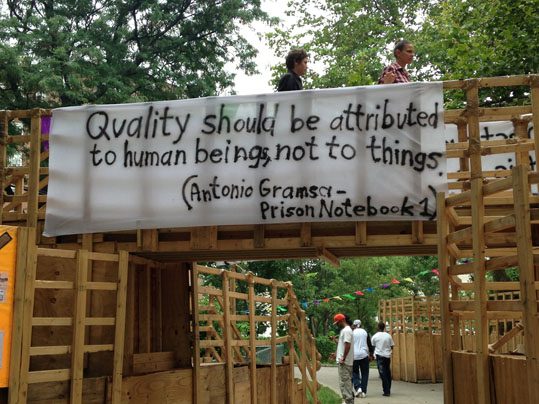
Gramsci Monument, Forest Houses, Bronx, New York. Designed by Swiss artist, Thomas Hirschhorn
Gramsci Monument, Forest Houses, Bronx, New York. Designed by Swiss artist, Thomas Hirschhorn, built by residents (2013)

Gramsci developed the notion of hegemony in the Prison Writings. The idea came as part of his critique of the deterministic economist interpretation of history; of “mechanical historical materialism.” Hegemony, to Gramsci, is the “cultural, moral and ideological” leadership of a group over allied and subaltern groups.  This leadership, however, is not only exercised in the superstructure –or in the terms of Benedetto Croce– is not only ethico-political, because it also needs to be economic, and be based on the function that the leading group exercises in the nucleus of economic activity. It is based on the equilibrium between consent and coercion. Gramsci first noted that in Europe, the dominant class, the bourgeoisie, ruled with the consent of subordinate masses. The bourgeoisie was hegemonic because it protected some interests of the subaltern classes in order to get their support. The task for the proletariat was to overcome the leadership of the bourgeoisie and become hegemonic itself.

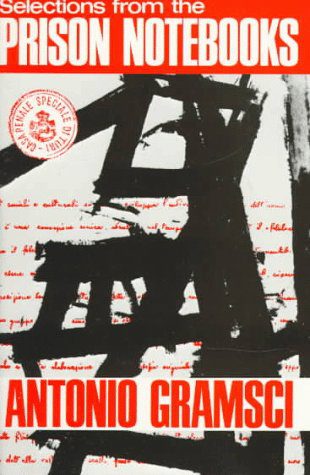
cover of the prison notebooks.

Although for some scholars the Gramscian concept of hegemony supposes the leading role of the dominant class in the economy, Gramsci believed that the leading role of the dominant class must include ideology and consciousness, that is, the superstructure. The location of cultural, ideological, and intellectual variables as fundamental for the proletariat in its struggle to become a leading class is Gramsci’s main contribution to Marxist theory. With it, the Italian intellectual sought to undermine the economic determinism of historical materialism. He was acknowledging that human beings had a high degree of agency in history: human will and intellect played a role as fundamental as the economy.

Even though Gramsci was harshly critical of what he called the “vulgar historical materialism” and economism of Marxism, as a Marxist he assumed the fundamental importance of the economy. At this point, however, economic determinism seems to be a problem for the Gramscian concept of hegemony, and the ways the proletariat can become hegemonic. According to Gramsci, only a hegemonic group that has the consent of allies and subalterns can start a revolution, which would mean that it is necessary to establish proletarian hegemony before the socialist revolution.

However, how can the proletariat have a dominant position in the world of economy before the socialist revolution? How could the proletarians dominate the economy if the bourgeoisie is the class that controls the means of production and, therefore, controls the economy? Here Gramsci proposes that, in order to achieve a hegemonic position, the proletariat must ally with other social groups struggling for the future interests of socialist society, like the peasantry. The idea was to establish a new historical bloc (one that breaks the order established by the capitalist structure and the political and ideological superstructures on which the bourgeoisie relies) and a new collective will of the subaltern classes. This, in words of Im Hyug Baeg, can be interpreted as “counter-hegemony” something that “is not a real hegemony in strict sense, but economic, political and ideological preparations for hegemony before overthrowing capitalism or before winning state power” (Hyug Baeg, 142).

Gramsci Monument, Forest Houses, Bronx, New York. Designed by Swiss artist, Thomas Hirschhorn, built by residents
Gramsci Monument, Forest Houses, Bronx, New York. Designed by Swiss artist, Thomas Hirschhorn, built by residents (2013)

One of the ways the proletariat must undertake such a task is through “organic intellectuals,” which for Gramsci, “are the dominant group’s ‘deputies’ exercising the subaltern functions of social hegemony and political government.” Their “function in society is primarily that of organizing, administering, directing, educating or leading others.” These specialized cadres, formed both in the working-class political party and through education, had the duty of organizing, administering, directing, educating or leading others. The formation of a national-popular collective is not an autonomous process, nor is the will of that collective. The organic intellectuals, who must be unrelated to the intellectuals of the bourgeoisie, must organize and mediate in the formation of the national-popular collective will.

Sources and Further reading:

Antonio Gramsci, The Antonio Gramsci Reader, eds. David Forgacs and Eric Hobsbawm (New York: NYU Press, 2000).

Carlos Emilio Betancourt, “Gramsci y el concepto del bloque histórico”. Historia Crítica. Julio-Diciembre 1990, pp. 113-125.

Derek Boothman, “The Sources for Gramsci’s Concept of Hegemony,” Rethinking Marxism: A Journal of Economics, Culture & Society (2008), 20:2, pp. 201-215.

Im Hyug Baeg, “Hegemony And Counter-Hegemony In Gramsci.” Asian Perspective, Vol. 15, No. 1 (Spring-Summer 1991), pp. 123-156.

Gramsci Monument, Bronx, New York


The views and opinions expressed in this article or video are those of the individual author(s) or presenter(s) and do not necessarily reflect the policy or views of the editors at Not Even Past, the UT Department of History, the University of Texas at Austin, or the UT System Board of Regents. Not Even Past is an online public history magazine rather than a peer-reviewed academic journal. While we make efforts to ensure that factual information in articles was obtained from reliable sources, Not Even Past is not responsible for any errors or omissions.
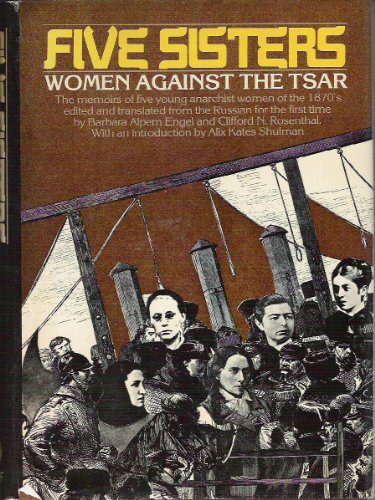
Next Page »

Recent Posts

  • Review of Brown Skins, White Coats: Race Science in India, 1920-66 (2022)
  • Las cosas tienen vida:  Un podcast sobre el rol de los objetos coloniales en nuestras vidas actuales 
  • Las cosas tienen vida: A Podcast About the Role of Colonial Objects in Our Present Lives 
  • Review of Disenfranchised: The Rise and Fall of Industrial Citizenship in China (2019).
  • Review of The Years of Theory: Postwar French Thought to the Present (2024).
NOT EVEN PAST is produced by

The Department of History

The University of Texas at Austin

We are supported by the College of Liberal Arts
And our Readers

Donate
Contact

All content © 2010-present NOT EVEN PAST and the authors, unless otherwise noted

Sign up to receive our MONTHLY NEWSLETTER

  • Features
  • Reviews
  • Teaching
  • Watch & Listen
  • About