• New
  • Features
  • Reviews
  • Texas
  • Teaching
  • Digital
  • Watch & Listen
  • Authors
  • About

The past is never dead. It's not even past

Not Even Past

The Cold War’s World History and Imperial Histories of the US and the World

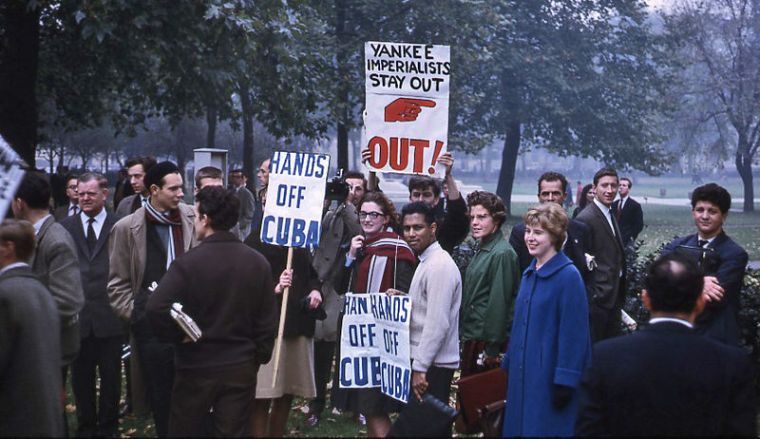
Hyde Park Protesters, October 1962, during the Cuban Missile Crisis

By John Munro
St. Mary’s University [1]

First published by the Imperial & Global Forum on February 14, 2018.

The gap between the Cold War’s history and its new historiography spanned only about a decade and a half. The Cold War concluded during the George H.W. Bush presidency, but for the field we now call “the US and the world,” the Cold War paradigm reached its terminus, if we have to be specific, in 2005. That year saw the publication of two books that together marked a milestone in how scholars would write about the Cold War. John Lewis Gaddis’ The Cold War: A New History told its story through engaging prose and a top-down approach that gave pride of place to Washington and Moscow as the centers of a bifurcated world. For its part, Odd Arne Westad’s The Global Cold War: Third World Interventions and the Making of Our Times offered a triangular model in which empires of liberty and of justice interacted with Third World revolutionaries who led campaigns for decolonization that shifted into high gear after World War II. Gaddis’ survey represented a culmination of the traditional two-camps schema which tended to reflect self-understandings of the US government but which, after Westad’s concurrent synthesis, could no longer stand without qualification, without reference to the colonial dimension of the Cold War itself. In this sense, 2005 was a before-and-after historiographical event.

The classic Cold War concept, in which the governing and formal decolonization of Western Europe’s empires was one thing, and the rivalry between the superpowers something altogether else, has become diminished, but not because of one book alone. Various social movements have rejected the tenets of the Cold War at different times, and as far back as 1972, historians Joyce and Gabriel Kolko argued that “The so-called Cold War…was far less the confrontation of the United States with Russia than America’s expansion into the entire world.”[2] In 2000, Matthew Connelly called attention to the distortions accompanying attempts to have postwar history fitted to the constraints of the Cold War paradigm. The “Cold War lens,” as Connelly memorably called it, had obscured racial and religious realities. As more scholars began to push the weight of culture, decolonization, gender, public opinion, and more against the Cold War paradigm’s once stable conceptual walls, the foundations faltered. And since Westad’s 2005 landmark, a notable tendency has developed across the disciplines in which scholars – notably Mark Philip Bradley, Jodi Kim, Heonik Kwon, and the authors (including Westad) contributing to Joel Isaac and Duncan Bell’s volume on the Cold War idea – have further troubled the notion that what followed World War II is best understood by focusing on how the leaders of the US and USSR saw the world.[3]

It’s also worth noting that the recent literature’s rough division between works that sit more comfortably within the Cold War paradigm and those that prompt a rethinking of its foundations does not map neatly onto the difference between local and globally-oriented studies. Melvin Leffler’s 2008 transnational history of US-Soviet relations and Samuel Zipp’s New-York focused book on urban renewal of 2010 both fit within Cold War studies, for example, while Masuda Hajimu’s global reinterpretation of the Korean War and Yulia Komska’s cultural genealogy of the West German-Czech borderlands (both published in 2015) render suspect what we thought we knew about the Cold War.[4] All four books are excellent, and it would be unhelpful to make a “without paradigm good, within paradigm bad” argument across wide swaths of insightful scholarship. The point is, rather, to note that The Cold War: A World History arrives at what Federico Romero calls a historiographical crossroads, on a conceptual terrain conspicuously remapped since the publication of The Global Cold War.
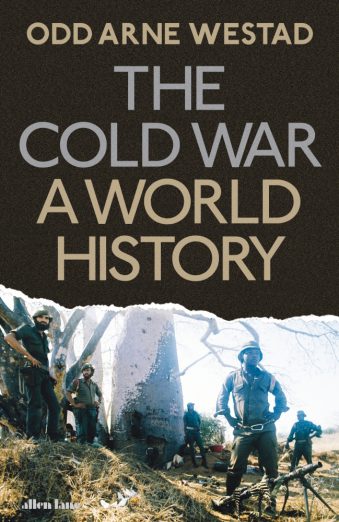
As astute reviewers of this new book have already noted, there’s much to admire in Westad’s World History. It’s difficult to think of a more capable and knowledgeable guide to this nearly-overwhelming topic than its author, and the book’s promise is delivered in full. Organization must have been a challenge for a book that knows so much, but the chapter headings strike just the right balance between telegraphing what’s coming and revealing the not-completely-expected around various corners, as when an analysis of mid-sixties coups in Congo and Indonesia shows up amid a discussion of the US war against Vietnam, or Tito’s Yugoslavia appears amid Nehru’s India, or Bandung amid Suez. Then there’s the sources. The library of secondary sources that A World History must certainly have been based on remains offstage, beyond covers of the book, meaning that readers are presented with a curated set – the final authority within which, as readers will find on page 675, provides a synth-pop surprise – of footnoted primary sources to consult and consider. Within the body of the text, these sources leave a trail of anecdotes at turns entertaining and instructive, and as readers of Westad’s history of China and the world might expect, he shares a small sampling of personal reminiscences along the way that only add to the narrative.

Crucially for a work that seeks to take a complex subject off campus, A World History features a steady stream of interpretive insights and lively, often economical, prose. Among the insights, the account of the Cold War’s end as the decomposition of a diplomatic structure rather than an all-of-a-sudden event marks a particular advance in our understanding, and should hopefully put to rest simplistic theories of Ronald Reagan’s single-handed victory over the USSR. The final chapters show how shifts in the global economy, in technology, in environmental awareness, in ideas about identity, and in the ascendancy of rights discourses, all of which have roots traceable to at least the 1970s, wound down the superpower contest more than any presidential policy. In terms of writing, between European and US teenagers “more united by Brando than NATO” in the 1950s, Indian Five Year Plans that were “more Lenin than Laski,” and a state of affairs originating in the 1980s in which “neoconservative politics upheld neoliberal economics, and vice versa,” World History’s style is another of its strengths. This is all the more so because Westad not only explains various episodes clearly but also maintains a brisk pacing that never lingers too long on a given topic. No one could possibly read this book and not learn something, probably many things, new. Did you know that Algerian President Ahmed Ben Bella was overthrown in 1965 by forces who posed as extras during the filming of Gillo Pontecorvo’s Battle of Algiers?

If the main distinction between Westad’s Global and World histories is that between scholarly breakthrough and wide-audience overview, both books should be counted as equally successful. But both also exist in relation to academic literatures, and their relationship to imperial history constitutes a notable difference between the two volumes. The Global Cold War kicked open the doorway between an older binary model and one in which “the Cold War was a continuation of colonialism through slightly different means.” A World History takes a more ambiguous stance toward the question of empire. Even the table of contents suggests the change: in the earlier book, anticolonialists of the global South are the subject of the third chapter, the first two dedicated respectively to the empires of the US and USSR. In the new book, global decolonization does not come fully into focus until chapter 10.

This is not to say that imperial history is relegated to the side lines of Westad’s new Cold War story. In the introduction, we are told – in an echo from The Global Cold War – that both the communist and capitalist conceptions of modernity grew out of European expansion. A World History also points out that for “Third World leaders the Cold War was an outgrowth of the colonial system,” and that from this perspective, the “Cold War was against the interests of the Third World.” Speaking more directly in his own voice, Westad opens a chapter on the Middle East with the following sentence: “As everywhere else in Asia and Africa, the Cold War in the Middle East must be understood as part of a long-term struggle between colonialism and its opponents.” The Cold War, then, was colonialism. But in multiple other places in the book, the Cold War is presented as something other than imperial. “Postwar US Administrations,” for instance, “mostly failed to prioritize anticolonialism over Cold War concerns.” In Algeria, “the Cold War priorities of the United States had little time for France’s last colonial war,” while in Vietnam, the postwar conflict “started as a revolt against colonial oppression and ended as a set of wars deeply enmeshed with the global Cold War.” The Cold War, here, was distinct from colonialism. If The Global Cold War marked an imperial turn within Cold War studies, A World History seems to take a step back. Just when Cold War studies appears poised to productively merge into the fold of imperial studies, Westad’s authoritative new synthesis stops short of telling the story of the Cold War as one of colonialism’s chapters.

And it is in this very tension between the Cold War and the imperial, one left unresolved in this new and very worthwhile book, that speaks most directly to what remains at stake in the study of the Cold War. For Cold War studies, World History indicates that the field is in a period of flux, its future uncertain. Whether the study of the Cold War will be reinvigorated by a greater engagement with colonial studies or instead become overwhelmed by it remains to be seen. Meanwhile, Cold War and colonial themes, as everyone knows, animate contemporary political debate. Influential arguments hailing from within the classic paradigm assume the Cold War while redeploying its ideological tools in service of the political status quo. A World History gives such arguments precious little oxygen, but as more writers present the Cold War as colonial history, the tenets of old style anticommunism will seem all the less tenable.

A World History takes us some of the way toward a deeper interaction between Cold War and colonial studies, but there is farther to go and more to be gained by venturing a greater distance in this direction. For example, bringing these fields into greater conversation could further enhance insights about race, gender, and culture that have already done so much to transform the study of the Cold War. It could also help make sense of US politics that connect to larger continuities but seem since 2016 to have cast aside assumptions subscribed to by both main parties since the late-1940s. It could potentially bring greater comparative clarity to the public discussion about whether rigor or apologia is the better way to approach the topic of imperialism. It could further enliven analyses of the Cold War with revelatory retheorizations and promising lines of historical inquiry from new perspectives on decolonization, non-alignment, and the Fourth World. It could make more apparent how the colonial policies of incarceration grew out of Cold War narratives of security and the criminalization of dissent. It could more fully demonstrate, as Timothy Nunan puts it, how “Cold War entanglements reflected bigger debates abut Third World sovereignty.”

Such an interaction could see Cold War studies become a subfield of colonial studies.[6] And why not? “It is quite possible,” World History’s introduction notes, “that the Cold War will be reduced in significance by future historians.” That process, one which Westad himself has played a decisive role in propelling, is already discernible in the historiography, especially in relation to the history of imperialism. But before saying good bye to all that has comprised the Cold War paradigm, we needed a full account, a last word, that summed it all up, something like what John Lewis Gaddis did in 2005. World History has given us that. So let’s read it and learn from it as we witness the event that is a shift between paradigms.

[1] Thank you to Radhika Natarajan and Padraig Riley for sharing their very invaluable insights with me on the relationships between empire and the Cold War.

[2] Joyce and Gabriel Kolko, The Limits of Power, The World and United States Foreign Policy, 1945-1954 (New York: Harper & Row, 1972), 31.

[3] Mark Philip Bradley, “Decolonization, the global South, and the Cold War, 1919-1962,” in The Cambridge History of the Cold War, Volume I: Origins, Eds. Melvyn P. Leffler and Odd Arne Westad (New York: Cambridge University Press, 2010), 464-485; Jodi Kim, Ends of Empire: Asian American Critique and the Cold War (Minneapolis: University of Minnesota Press, 2010); Heonik Kwon, The Other Cold War (New York: Columbia University Press, 2010); Joel Isaac and Duncan Bell, Eds., Uncertain Empire: American History and the Idea of the Cold War (New York: Oxford University Press, 2012). Although its argument is not explicitly concerned with reframing the Cold War idea, Vijay Prashad’s essential The Darker Nations: A People’s History of the Third World (New York: New Press, 2007) demonstrates how decolonization in the twentieth century can be narrated without reliance upon a Cold War framing.

[4] Melvyn P. Leffler, For the Soul of Mankind: The United States, the Soviet Union, and the Cold War (New York: Farrar, Strauss, and Giroux, 2007); Samuel Zipp, Manhattan Projects: The Rise and Fall of Urban Renewal in Cold War New York (New York: Oxford University Press, 2010); Masuda Hajimu, Cold War Crucible: The Korean Conflict and the Postwar World (Cambridge, MA: Harvard University Press, 2015); Yulia Komska, The Icon Curtain: The Cold War’s Quiet Border (Chicago: University of Chicago Press, 2015).

[5] For the Soviet side, see, for example, the argument that “Stalin’s design for ‘socialism in one country’ became in reality colonialism in one country” in Kate Brown’s brilliant A Biography of No Place: From Ethnic Borderland to Soviet Heartland(Princeton: Princeton University Press, 2003), 115, and a discussion of some of the more recent literature in Moritz Florin, “Beyond Colonialism? Agency, Power, and the Making of Soviet Central Asia,” Kritika 18, no. 4 (Fall 2017): 872-838. For US empire, the starting point remains Paul A. Kramer’s superb summation of the literature, from which I borrow some of my title here: “Power and Connection: Imperial Histories of the United States and the World,” American Historical Review 116, no. 5 (December 2011): 1348-1391.

[6] Though not a work about the Cold War per se, the ways that the Cold War as a subject is folded into a larger history of US empire in the essays of Nikhil Singh’s Race and America’s Long War (Berkeley: University of California Press, 2017) make that book an exemplary model of the kind of approach I’m thinking of here.

You may also like:

Undergraduate Essay Contest Honorable Mention: The Global Cold War by Odd Arne Westad (2007)
Ideological Origins of a Cold Warrior: John Foster Dulles and his Grandfather
Cold War Crucible: The Korean Conflict and the Postwar World, by Hajimu Masuda (2015)
Historians on Marriage and Sexuality in the United States

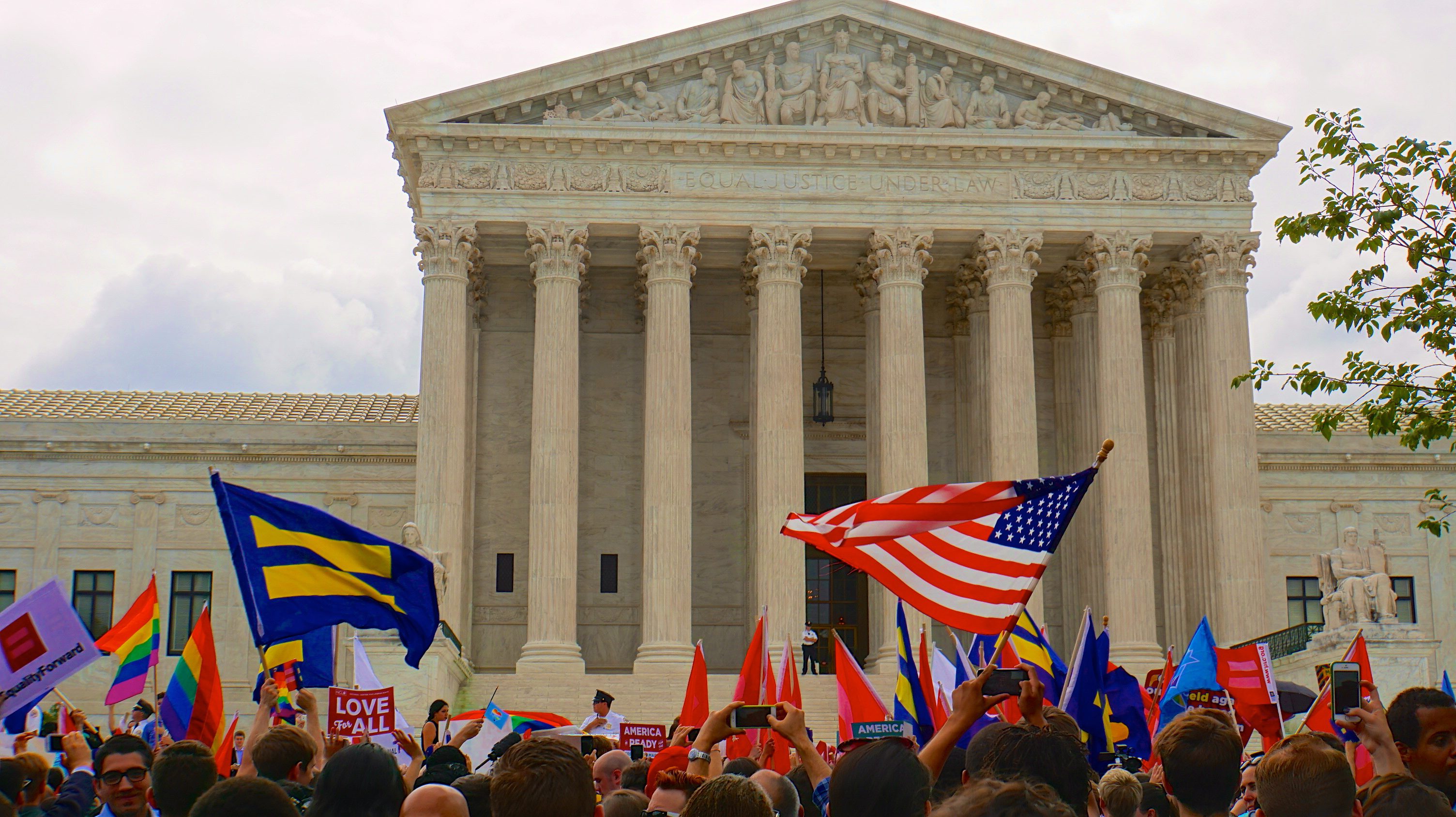
People celebrate the Obergefell vs Hodges decision in front of the Supreme Court in 2015 (Ted Eytan, via Flickr)

by Alexander Taft

In June 2015, by a vote of 5 to 4, the Supreme Court of the United States resolved decades of debate by declaring marriage a fundamental right regardless of sexual orientation. The Obergefell v. Hodges decision changed the landscape of American marriage law, but what was this landscape in the first place? Two historians of marriage and sexuality in the United States have spent decades taking on that very question. Nancy Cott and George Chauncey have both participated in recent history as expert witnesses, amicus curiae (friend of the court) brief writers, and eminent scholars analyzing marriage and homosexuality. They show us how incorrect we often are when we think of these histories in the United States. These historians have made history a friend to the court as much as any lobbyist or interest group.

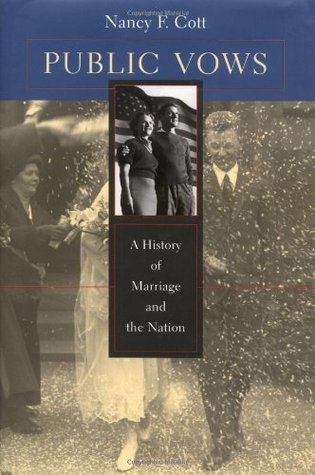
Nancy Cott’s Public Vows: A History of Marriage and the Nation lays out centuries of marriage law in the United States. Far from the moral absolute marked by religious teachings that many might assume marriage was, it is a complicated and shifting concept in the history of the Western world. Cott points out that marriage has a national concern that secular governments legislate in order to create the best “civic units” out of the family. Society became concerned with civic character and then tried to improve these norms by engineering a certain type of family. The common practice of unofficial divorce and separation led to a formal legal process for divorces just as much as the legal definition led to formal divorces. We are accustomed to thinking of these everyday things as defined from above, yet our community practices often find their way into law as often as the other way around.

The history of marriage in the United States certainly does not have the kind of unchanging moral character that many opponents to marriage equality claim. “Traditional” families are constantly changing. Two centuries ago, the most important people in deciding a match may well have been the community in which the couple lived. Small rural towns had a deep interest and broad powers in marital arrangements. Cott’s book is full of such examples of unofficial activities that reflected community interests, not the interests of the individuals involved. Marriage today is much more of an individual choice based on one’s own expectations from life, even if still affected by an idea of “normalcy” and pressures to fit into a family, a faith, or some other kind of community. Ultimately, the majority of Americans are free to marry outside of their “tribe,” because whatever social costs that are associated are considerably lower.  Similarly, marriage was limited to “consenting” and “free” individuals. This meant that slaves were barred from this institution while also condemned as immoral for engaging in extramarital intercourse; a key aspect of reconstruction was the construction of ex-slave marriage. If marriage is an ever-changing reality, why shouldn’t the court consider homosexuals simply another kind of marriage?

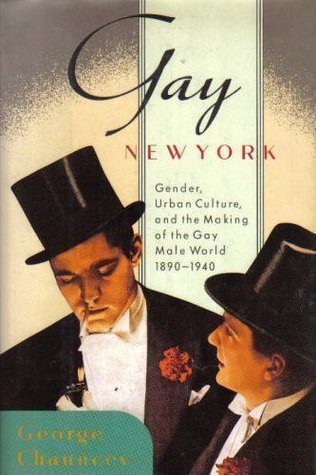
Marriage may be a concept in flux, but what about homosexuality? Today we identify people with their sexual orientation, but was that the case in the past? Many assume that throughout history, these communities were wholly underground — persecuted and kept hidden by families ashamed of their “perverse” siblings. But George Chauncey, along with a wide field of historians, have helped us to reconsider. Rather than being a gay or a lesbian, often individuals engaged in various kinds of sexual behaviors. In fact, Chauncey’s ground-breaking book, Gay New York: Gender, Urban Culture, and the Making of the Gay Male World, 1890-1940, outlined how urban men who participated in homosexual behaviors often considered themselves to be “normal,” that is, not defined by their same-sex intercourse, as long as they played the “active” role in intercourse. Those men engaging in the “passive” role in intercourse were seen from the outside as primarily a public nuisance on par with prostitution (which they often engaged in). The homosexual subculture of turn-of-the-century New York was visible and defined by specific kinds of sexual activities, not necessarily nature-born identities. In fact, the words we use today, such as “gay,” “lesbian,” and likely even “homosexual” would not have been known by the vast majority of people.

Twelve years before Obergefell, the Supreme Court laid the groundwork for this legal breakthrough. The June 2003 case, Lawrence v. Texas, challenged and then overturned what were commonly known as “sodomy laws” that declared sodomy illegal. Much of the debate surrounding these laws considered them to be expressions of long-standing morals; an accepted societal conclusion that homosexuality itself was illegal. However, Chauncey’s amicus curiae brief (with input from a number of historians) decimated this belief by pointing out that “sodomy” itself was a dubious term that had shifted throughout history. He pointed out for example that famed thirteenth-century theologian Thomas Aquinas considered every sexual act that was not direct penetrative vaginal sex to be sodomy. He also explained that the history of sexuality shows that these “morals” were recent inventions and historically changeable. His brief was specifically quoted by Justice Anthony Kennedy, the swing vote, whose opinion overturned decades of legal persecution.

Historians have much to teach, but not only to students. Society is improved by their scholarship, often because our collective memories are too short and our ability to see past our biases and preconceptions is often lacking.

Further Reading:

George Chauncey, Gay New York: Gender, Urban Culture, and the Making of the Gay Male World, 1890-1940 (1995)

George, Chauncey, “What Gay Studies Taught the Courts: The Historians’ Amicus Brief in Lawrence v. Texas,” in GLQ 10, 3 (2004): 509-538.

Nancy Cott, Public Vows: A History of Marriage and the Nation (2002)

You may also like:

Loving v. Virginia after 50 years
The Lavender Scare: The Cold War Persecution of Gays and Lesbians in the Federal Government reviewed by Joseph Parrott
Daina Ramey Berry on Slavery, Work, and Sexuality


The American “Empire” Reconsidered

by A. G. Hopkins

Whether commentators assert that the United States is resurgent or in decline, it is evident that the dominant mood today is one of considerable uncertainty about the standing and role of the “indispensable nation” in the world. The triumphalism of the 1990s has long faded; geopolitical strategy, lacking coherence and purpose, is in a state of flux. Not Even Past, or perhaps Not Ever Past, because the continuously unfolding present prompts a re-examination of approaches to history that fail to respond to the needs of the moment, as inevitably they all do.

This as good a moment as any to consider how we got “from there to here” by stepping back from the present and taking a long view of the evolution of U.S. international relations. The first reaction to this prospect might be to say that it has already been done – many times. Fortunately (or not), the evidence suggests otherwise. The subject has been studied in an episodic fashion that has been largely devoid of continuity between 1783 and 1914, and becomes systematic and substantial only after 1941.
There are several ways of approaching this task. The one I have chosen places the United States in an evolving Western imperial system from the time of colonial rule to the present. To set this purpose in motion, I have identified three phases of globalisation and given empires a starring role in the process. The argument holds that the transition from one phase to another generated the three crises that form the turning points the book identifies. Each crisis was driven by a dialectic, whereby successful expansion generated forces that overthrew or transformed one phase and created its successor.

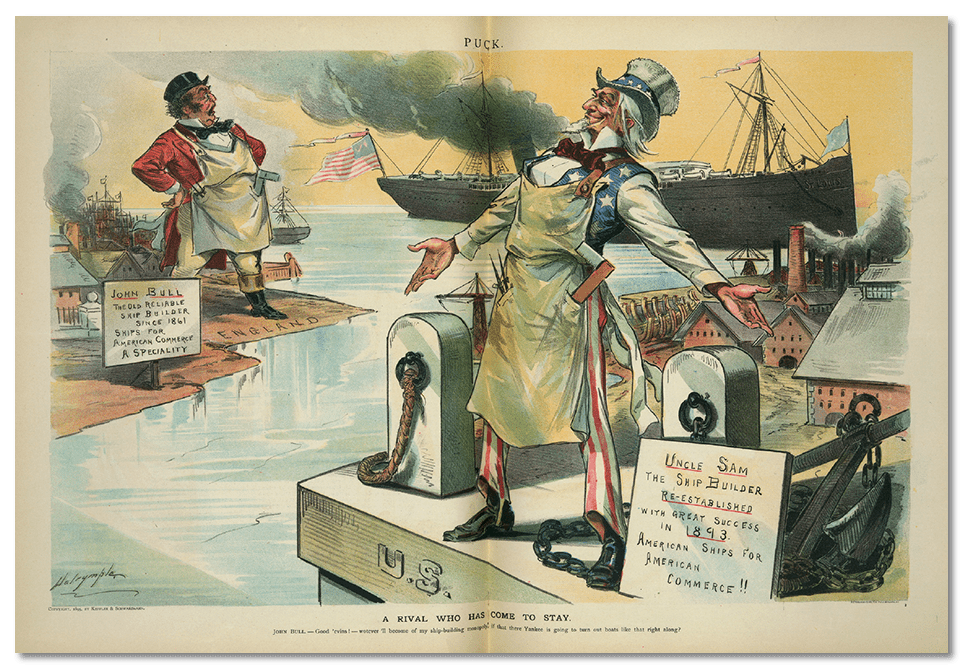
The first phase, proto-globalisation, was one of mercantilist expansion propelled by Europe’s leading military-fiscal states. Colonising the New World stretched the resources of the colonial powers, produced a European-wide fiscal crisis at the close of the eighteenth century, and gave colonists in the British, French, and Spanish empires the ability, and eventually the desire, to claim independence. At this point, studies of colonial history give way to specialists on the new republic, who focus mainly on internal considerations of state-building and the ensuing struggle for liberty and democracy. Historians of empire look at the transition from colonial rule rather differently by focussing on the distinction between formal and effective independence. The U.S. became formally independent in 1783, but remained exposed to Britain’s informal political, economic and cultural influences. The competition between different visions of an independent polity that followed mirrored the debate between conservatives and reformers in Europe after 1789, and ended, as it did in much of Europe, in civil war.

“A Rival Who Has Come to Stay. John Bull – Good ‘evins! – wotever ‘ll become of my ship-building monopoly, if that there Yankee is going to turn out boats like that right along?” Puck magazine, July 24, 1895 (via Library of Congress)

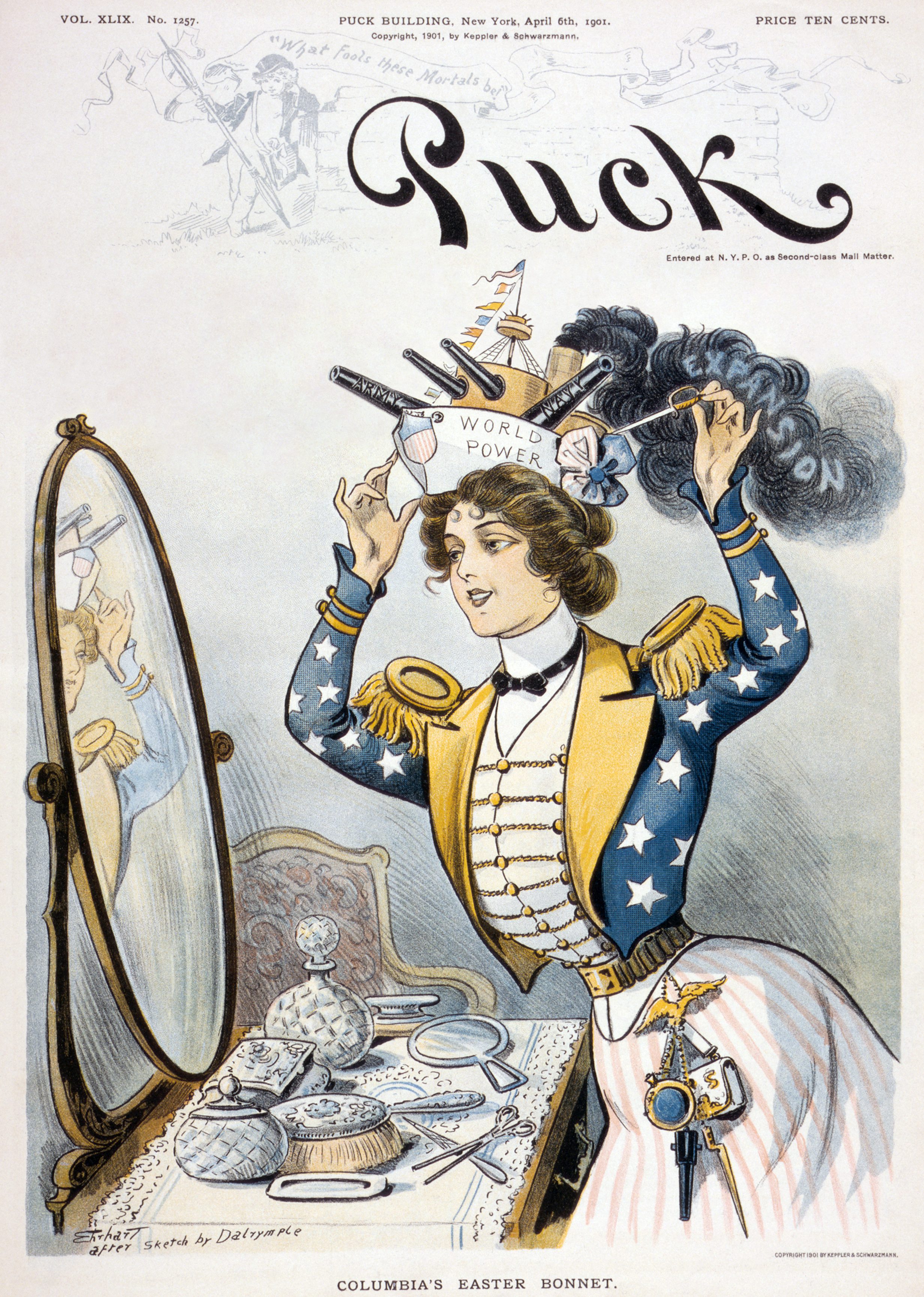
The second phase, modern globalisation, which began around the mid-nineteenth century, was characterised by nation-building and industrialisation. Agrarian elites lost their authority; power shifted to urban centres; dynasties wavered or crumbled. The United States entered this phase after the Civil War at the same time as new and renovated states in Europe did. The renewed state developed industries, towns, and an urban labor force, and experienced the same stresses of unemployment, social instability, and militant protest in the 1880s and 1890s as Britain, France, Germany and other developing industrial nation-states. At the close of the century, too, the U.S. joined other European states in contributing to imperialism, which can be seen as the compulsory globalisation of the world. The war with Spain in 1898 not only delivered a ready-made insular empire, but also marked the achievement of effective independence. By 1900, Britain’s influence had receded. The United States could now pull the lion’s tail; its manufactures swamped the British market; its culture had shed its long-standing deference. After 1898, too, Washington picked up the white man’s burden and entered on a period of colonial rule that is one of the most neglected features of the study of U.S. history.

Columbia’s Easter Bonnet: In the wake of gainful victory in the Spanish–American War, Columbia—the National personification of the U.S.—preens herself with an Easter bonnet in the form of a warship bearing the words “World Power” and the word “Expansion” on the smoke coming out of its stack on a 1901 edition of Puck (via Library of Congress)

The third phase, post-colonial globalisation, manifested itself after World War II in the process of decolonisation. The world economy departed from the classical colonial model; advocacy of human rights eroded the moral basis of colonial rule; international organisations provided a platform for colonial nationalism. The United States decolonised its insular empire between 1946 and 1959 at the same time as the European powers brought their own empires to a close. Thereafter, the U.S. struggled to manage a world that rejected techniques of dominance that had become either unworkable or inapplicable. The status of the United States was not that of an empire, unless the term is applied with excessive generality, but that of an aspiring hegemon. Yet, Captain America continues to defend ‘freedom’ as if the techniques of the imperial era remained appropriate to conditions pertaining in the twenty-first century.

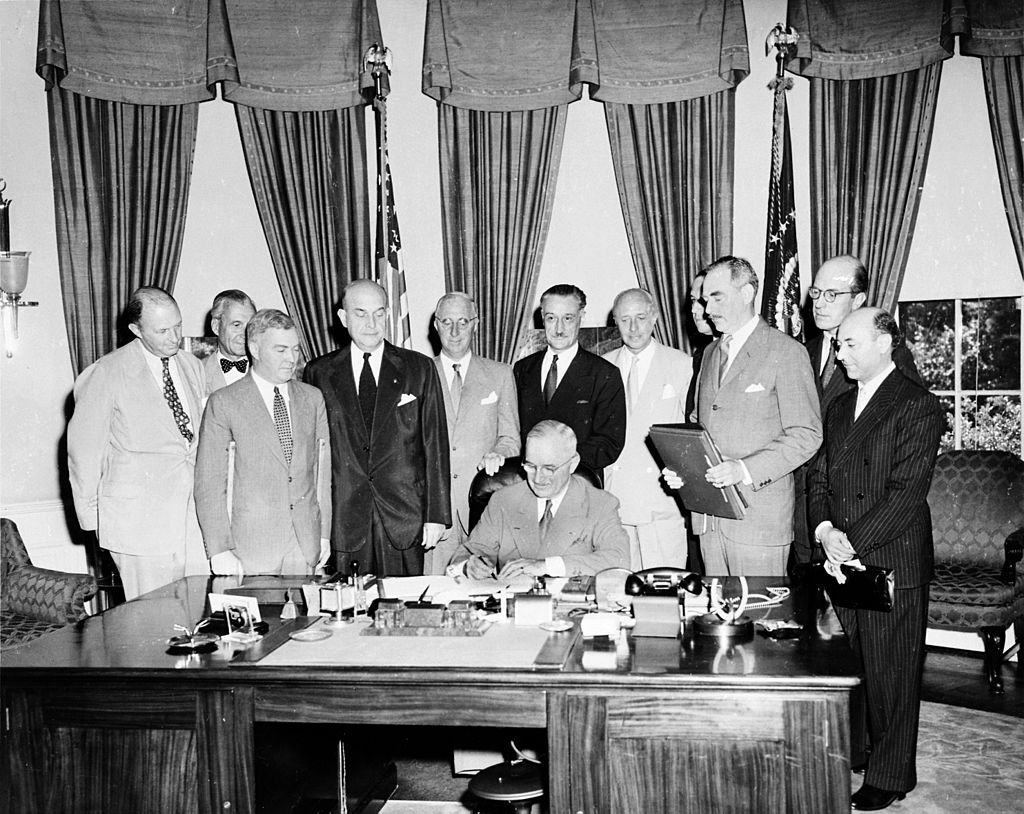
The signing of the NATO Treaty, 1949 (via Wikimedia Commons)

This interpretation inverts the idea of “exceptionalism” by showing that the U.S. was fully part of the great international developments of the last three centuries. At the same time, it identifies examples of distinctiveness that have been neglected: the U.S. was the first major decolonising state to make independence effective; the only colonial power to acquire most of its territorial empire from another imperial state; the only one to face a significant problem of internal decolonisation after 1945. The discussion of colonial rule between 1898 and 1959 puts a discarded subject on the agenda of research; the claim that the U.S. was not an empire after that point departs from conventional wisdom.

The book is aimed at U.S. historians who are unfamiliar with the history of Western empires, at historians of European empires who abandon the study the U.S. between 1783 and 1941, and at policy-makers who appeal to the ‘lessons of history’ to shape the strategy of the future.

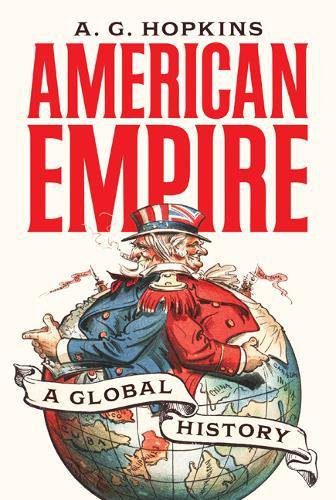
A.G. Hopkins, American Empire: A Global History

Legacies of the Vietnam War

(via Flickr)

The Ken Burns and Lynn Novick documentary The Vietnam War (2017), shown in 10 parts on PBS, once again brought a divisive and contested conflict into American living rooms. Mark A. Lawrence, Associate Professor of History at the University of Texas at Austin and preeminent historian of the Vietnam War, recently wrote about what we are learning from historians’ renewed interest in the subject, especially with new scholarship based on Vietnamese sources. Last month, Lawrence discussed the legacies of the Vietnam War on a panel marking the 35th anniversary of the Vietnam Veterans Memorial at the National Archives in Washington D.C. and on a CSPAN program on the state of the war in 1967.

Watch: 35th Anniversary of the Wall

“In partnership with the Vietnam Veterans Memorial Fund (VVMF), we present a panel discussion about the history and legacy of the Vietnam Veterans Memorial, dedicated on November 13, 1982. Participating in the discussion will be Jan Scruggs, Founder and President Emeritus (VVMF), Jim Knotts, President and CEO (VVMF), author and historian Kristin Ann Hass (Carried to the Wall: American Memory and the Vietnam Veterans Memorial), and others.”

Watch: State of the War in 1967

“Historians Mark Atwood Lawrence of the University of Texas at Austin and Lien-Hang Nguyen of Columbia University responded to viewer calls and tweets about the state of the Vietnam War in 1967, President Lyndon B. Johnson’s strategy, and the politics and motivations of the North Vietnamese government and Viet Cong guerrilla forces.”

Also by Mark A. Lawrence on Not Even Past:

Studying the Vietnam War: How the Scholarship has Changed
Must Read Books on the Vietnam War
The Prisoner of Events in Vietnam
Changing Course in Vietnam – or not
LBJ and Vietnam: A Conversation

You may also like:

Aden Knaap reviews Kill Anything that Moves: The Real American War in Vietnam
Janet Davis on cultural memory and the Vietnam War
Clay Katsky reviews Kissinger’s Shadow

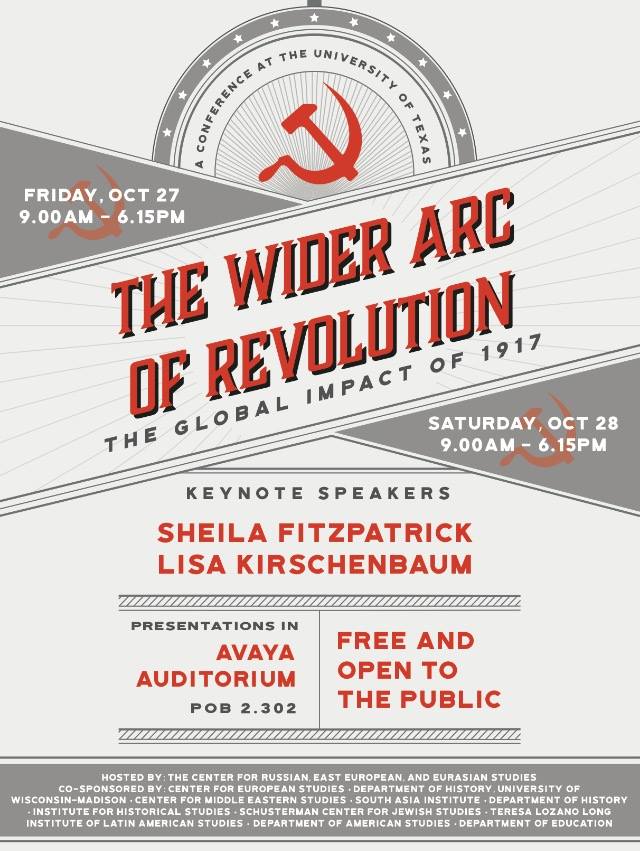
Watch: The Wider Arc of Revolution: The Global Impact of 1917 (Part II)

To commemorate the centenary of the Russian Revolution, the UT Center for Russian, East European, and Eurasian Studies held an international conference entitled, “The Wider Arc of Revolution: The Global Impact of 1917.”

The second keynote speech was given by Professor Lisa Kirschenbaum, Professor of History at West Chester University. Professor Kirschenbaum has published three books, including: Small Comrades: Revolutionizing Childhood in Soviet Russia, 1917-1932; The Legacy of the Siege of Leningrad, 1941-1995: Myth, Memories, and Monuments; and International Communism and the Spanish Civil War: Solidarity and Suspicion.

Watch a recording of Professor Kirschenbaum’s keynote here.

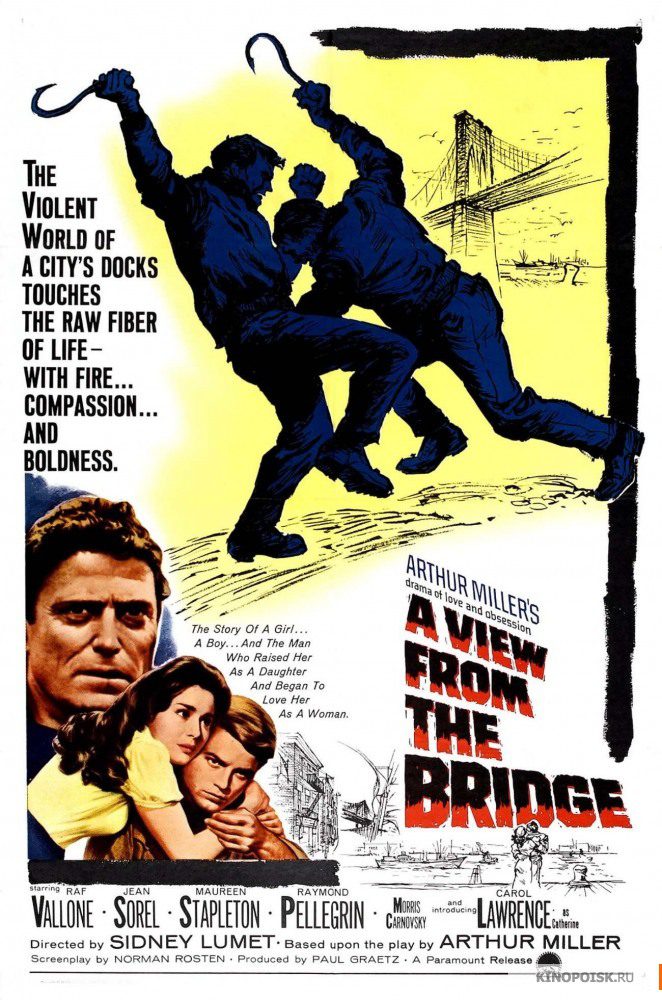
Film Review – A View From the Bridge (Directed by Sidney Lumet, 1962)

By Yael Schacher

A View from the Bridge is the story of an Italian American longshoreman named Eddie who informs on two of his wife’s relatives, illegal immigrants Marco and Rodolpho, in order to prevent Rodolpho from marrying his niece, Catherine. Critics of the film, and of the play by Arthur Miller on which it is based, have generally paid scant attention to the representation of migration in the story and as a result have often found the characters’ motives hard to read. Miller’s original inspiration for his “Italian tragedy” was the immediate post-WWII context, when he was immersed in the labor conflicts on the Brooklyn waterfront and made a trip to Italy to visit the families of Brooklyn longshoremen. Over the next 15 years, as is clear from many drafts of the story in the Ransom Center collection, Miller, Norman Rosten (who wrote the screenplay), and Lumet, shifted the emphasis to downplay the history of illegal Italian immigration.

This history begins in the 1920s when the United States passed a law that drastically limited the number of immigrants who could enter the United States from Italy (and elsewhere). But because crewmembers on ships arriving in American ports were given temporary shore leave, Italians began entering as sailors or as stowaways, who then remained in the United States permanently, often with the help of regular crew members. After WWII, when unemployment in Italy increased the pressure to emigrate,.immigration authorities saw  these seaman-stowaways, known as “submarines,’ as a major problem. They began to screen crews for potential deserters and conduct targeted raids in immigrant communities (frequently based on tips from informants). Italian American longshoremen facilitated illegal immigration for various reasons. Some were smugglers and contractors who got the migrants off the ships and found them jobs as stevedores in exchange for portions of their pay. On the New York waterfront these fixers could function well because of the power of a longshoremen’s union to manipulate the hiring process and demand kickbacks. Around the same time Miller began working on A View From the Bridge, he wrote a screenplay also set on the Brooklyn waterfront that depicted the connection between the longshoremen’s union and illegal Italian immigration. In The Hook, a corrupt union boss attempts to maintain his power by forcing “submarines” to vote for him in a union election. Miller depicts the illegal immigrants as vulnerable, but not as passive or weak; once an Italian American longshoreman explains to them, in Italian, what is at stake—“Paisani! Is this the America you broke your backs to come to? We’re trying to live like human bein’s…We’re your brothers! We’ll protect you!…Dishonor on you if you steal my bread!…I have children! I am a family head!…You’re an honest worker, no?”—some of the submarines walk out of the union hall rather than vote against reform.

Early versions of the play that became A View from the Bridge, imply that Eddie himself may have originally come into the country as a submarine; he sees in Marco a version of his young self.  The pre-film versions of the story also imply that Eddie is involved in smuggling immigrants. In these early versions, Eddie is nervous about the arrival of the cousins from the ship and his concern about informants in the neighborhood is not just dramatic irony but also fear given his own involvement in illegal immigration.

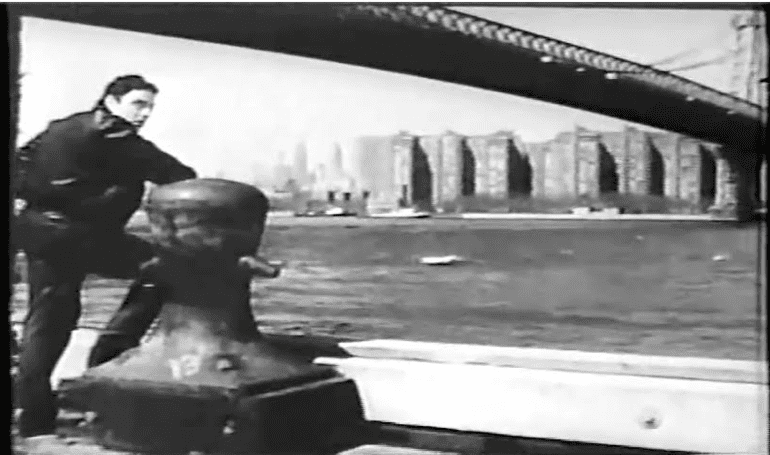
Eddie, brooding and apart from the other longshoremen, under the Brooklyn Bridge

Dialogue in the earlier versions of the play conveys a fuller account of migration and the motives of the characters. After Eddie claims that many Italian men who return home after working for several years in America find their wives have had a couple more children in their absence, Marco insists that surprises like this are few.  In one early version Beatrice insists that she knows half a dozen such men with two families. Eddie and Beatrice have two children in this version of the story and there is an implication, in Eddie’s defensiveness, that he might have another family abroad. In this version of the story, Rodolpho also frankly addresses the accusation that he is using Catherine to get citizenship in the United States. Refuting the binary either-or logic used by the immigration authorities to assess the intentionality of migrants and whether they are subverting the law, Rodolpho insists that he came to America seeking economic opportunity and wants to be a citizen so that he can work, but that he also sincerely fell in love with Catherine.

Rodolpho: What is this country—a prize? That you only win on your knees? I came to America to work. The same reason he [Eddie] wants to be an American. So I can make myself better before I die…You don’t trust me! You think I only want the papers…But there are no words to say this is a lie…it’s true, when I hold you I hold America also…But if I did not love you Catherine…then I could not have kissed you for a hundred Americas….I want to be an American so that I can work and eat; I want to be your husband so that I can love. It is the same thing, Catherine, there is nothing to deny.  (He smiles tenderly—and sardonically): I kiss America.

Catherine: No, you’re kissing me; I know.

Rodolpho: Both . . . Both I love. Why not? It’s no crime.

In the late 1940s and early 1950s, Italian Americans quietly used marriage, adoption, and other family provisions to get around immigration restrictions. Alfieri, the attorney who narrates the story in all of the versions of Miller’s play, encapsulates the tentative and partial way that the established Italian American community challenged restrictionist immigration policy at midcentury.  On the one hand, Alfieri insists that Rodolpho’s intention is unknowable and that it is no crime for him to desire to remain in the country permanently. Alfieri is also sympathetic to the desperate need to provide for a starving and sick family that drove Marco to immigrate illegally and to the hard work and sacrifices he has made since arriving. Alfieri offers to bail Marco out and delay his hearing so that he can work for a few more weeks and send additional money home.  On the other hand, Alfieri doesn’t challenge Marco’s deportation—the law is the law. Alfieri accepts the divide between legal and illegal manners of entering the country. The best he can do is find selective relief in individual cases like Rodolpho’s that seem “natural” and demonstrate the ability of Italian immigrants to successfully and quickly assimilate. “We settle for half and I like it better that way,” Alfieri explains.

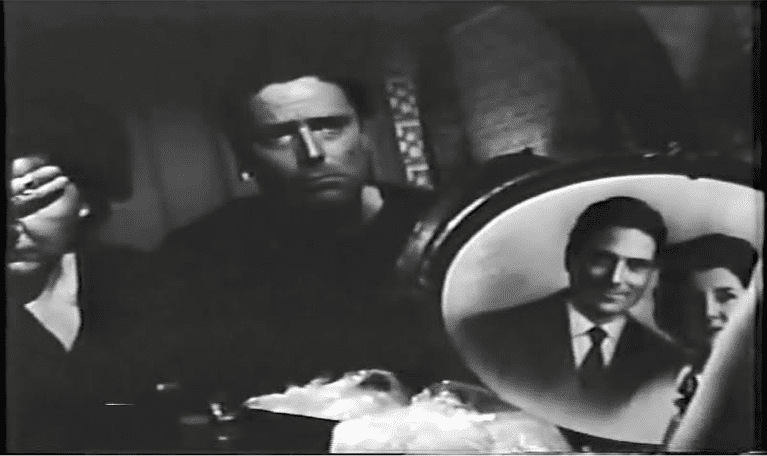
Lumet’s film version shifts the emphasis to focus on Eddie’s unruly emotions and threatened masculinity. The film is a story about illicit sexual desire, betrayal, and desolation, more than it is about migration and freedom. Eddie’s marriage with Beatrice is childless and sexless. Rodolpho’s passionate speech about his combined intentions is shortened. Lumet replaces the discussion of Italian women who wait and men having two families with a claustrophobic scene of the extended family around the dinner table (filmed from above and behind Eddie) and then in the crowded living room (with the camera focused on Beatrice and Marco as they watch Eddie), everyone reluctant to speak or to clap to the music lest Eddie erupt. What discussion there is revolves around Marco and Rodolpho’s travel on fishing boats before they came to America—a mobility in sharp contrast to the feeling of entrapment in the Red Hook apartment. While in the original play, Beatrice challenges a sexual double standard, she comes across in the film as simultaneously subordinated and nervous—using silly small talk as a means of defense—and demanding and unsympathetic to Eddie; she gets and takes much of the blame for all that happens.  The scene in the apartment ends with Marco ominously holding a chair over Eddie’s head; Lumet captures, through paired, expressionistically lit close-ups, Eddie’s weakness and Marco’s strength. Eddie comes across as a beleaguered man trying to maintain a control as he loses it, which is emphasized by changing the ending to Eddie’s suicide (rather than his murder by Marco, as in Miller’s play).

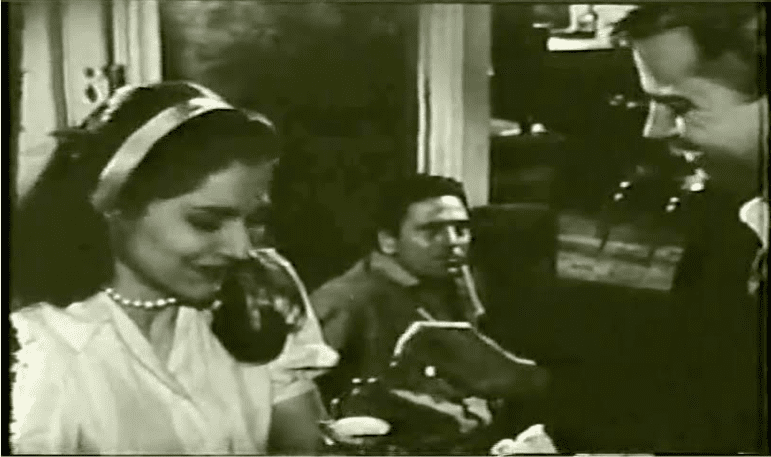
Rodolpho and Catherine flirt, while Eddie looks on ominously

Lumet’s Eddie has a lot more to lose than Miller’s. In the beginning of the film, Eddie is far removed from illegality, violence, and dishonesty as the opening scene on the docks makes clear. Eddie is presented as a man above the dockworkers, called upon to help settle disputes, a leader, close to  elder lawyer, Alfieri.  Eddie’s involvement with submarine smuggling is a thing of the past; the film makes no mention, as do all the other versions of the story, of any “syndicate.”  Eddie asserts his distance from submarines, telling Catherine that he came into the country “in broad daylight, on a quota.” This word is used only in the film, not in versions of the story by Miller or Rosten.  In the film, Eddie is more insistent that Catherine marry up, interact with “a better class of people,” work in a lawyer’s office in a neighborhood unlike Red Hook, and look and act like a college girl, all as a testament to Eddie’s sacrifice and respectability.

In the film, Eddie’s desire for Catherine is also about a desire for her Americanness. This is perhaps best captured in a scene that Lumet invents depicting Eddie watching Catherine and Rodolpho on a date at an automat. The sound in this scene is distinctive: as we watch Rodolpho work the machine and pile up Catherine’s tray, we hear the noise of the dishes and of the restaurant but not of the couple’s banter and laughter. This perfectly captures Eddie’s feeling of being privy to but apart from an American dream.  Eddie feels challenged by Rodolpho not only because Catherine loves him but also because Rodolpho—dressed in newly purchased sharp clothes, interested in music and the movies—is better in tune with the emerging culture of consumption and leisure in postwar America.  Alfieri and Beatrice frequently tell Eddie he must let go and make way for the next generation. He not only resents Catherine growing up, but feels threatened by Rodolpho’s soft masculinity. He feels out of step with the new social mores and sexual freedoms of the late 1940s that seemed to undermine his authority and that would provoke resentful backlash from men like him in the 1950s. Eddie feels rootless and estranged; Lumet frequently captures this in angled close ups that make Eddie seem ominous and trapped. He is unable to be the man he used to be (a struggling provider like Marco) or to become a new one, fit for changing times (a popular and open-hearted man like Rodolpho). Eddie’s kisses of Catherine and Rodolpho are passionate attempts to achieve potency.  When that doesn’t work, Eddie turns informant; Lumet marks his walk to the telephone booth to call the immigration authorities with asynchronous beating sounds, giving a sense that Eddie is simultaneously determined and not in control.  As Eddie makes the call, Lumet pans out to show him in a glass cage, emphasizing that his tragedy is social.

Misery in the bedroom, where Beatrice and Eddie are estranged from their young love

Miller’s original title for the story—“The Men from Under the Sea”—emphasized illegal immigrants and submarines but his final title shifted focus to a distant observation of Eddie’s unfolding tragedy; a view from above and afar. Given the differences between the film and Miller’s original conception, the bridge seems to signify separation rather than connection and emphasizes the distance between the audience and the action on stage and screen.  By invoking myth and tragedy, Miller’s play depicts migration as fundamental and universal. But in the film, Eddie foists his insecurities and illicit desire onto the migrants. Lumet’s A View from the Bridge points to how migration prompts people to draw boundaries, divide, castigate, and scapegoat, and literally fight each other. The film begins and ends with shots of the hooks used to haul cargo off of ships; in this way, Lumet shows how Eddie turns a workingman’s tool into a weapon to use against Marco. Eddie associates illegality with being “a punk”—taking and spending selfishly rather than earning and providing; stealing what others have made through hard labor, dedication, and suffering. Though the slang term punk was a general epithetic diminutive by the post WWII period, it still retained sexual connotations. The word originated as term that referred to a physically slight youth who was used sexually by an older and more powerful man in exchange for money, frequently a prostitute on the waterfront. By the 1950s, calling someone a homosexual was akin to naming him a communist. In the film, Rodolpho’s refusal to keep his head down prompts Eddie’s desire to subordinate him and thereby prove his own dominance. The film shows how anti-immigrant sentiment has less to do with migrants and more to do with the people who resent them and images of what “good immigrants” should be. All versions of the story (the plays, the screenplay, and Lumet’s film) include a short scene where a longshoreman suggests to Eddie that “we oughta leave the country and come in under the water. Then we get work.” The implication is that illegal Italian immigrants unfairly have it better than Italian American workers.  This divisive mentality is far from the solidarity glimpsed in The Hook. But the longshoreman’s line also shows that hatred of the other and desire to be the other are two sides of the same coin. In 1948, when jotting down his earliest notes about what would become A View from the Bridge, Miller wrote: “One of the main cements holding this country together is the fact that everybody thinks he is being persecuted…and they deny each other. It is a massive, impossibly complicated cancelation machine.”

Historical context and biographical clues helps explain the focus of the later versions of the play and the film. It makes sense that “the syndicate” is downplayed as Miller was wary of right wing attacks on union corruption, prominent in Congressional investigations in the 1950s and in Elia Kazan’s On the Waterfront (1954), which also heroized informants. Eddie, instead, is a tragic hero; Miller tries to portray what might drive someone to inform. Part of what drove Eddie to inform was illicit sexual passion, the same kind of passion that led Miller into an affair with Marilyn Monroe and ruined his marriage. Still, there was more driving Eddie, as is clear from his reference to the quota. By the 1960s, Italian American leaders were advocating for the abolition of the existing quota system to help relatives of Italian Americans emigrate, but endorsing a new ceiling on immigration from the Western Hemisphere, and, especially, Mexico.  By the time Lumet’s film came out, Italians were, already, not most people’s idea of illegal immigrants.

Arthur Miller’s manuscripts referred to here can be found in The Harry Ransom Center, The University of Texas at Austin, Manuscript Collection MS-2831, container 6, folder 7; container 11, folders 13-14; and container 4, folder 3.

You may also like:

History Museums: Race, Eugenics, and Immigration in New York History Museums
Domesticating Ethnic Foods and Becoming American
Film Review of A Separation (2011)

Check out the schedule for our film series “Faces of Migration: Classic and Contemporary Films”
More on this year’s Institute for Historical Studies theme “Migration, Exile, and Displacement”

Watch: The Wider Arc of Revolution: The Global Impact of 1917 (Part I)

To commemorate the centenary of the Russian Revolution, the UT Center for Russian, East European, and Eurasian Studies held an international conference entitled, “The Wider Arc of Revolution: The Global Impact of 1917.”

The first keynote speech was given by Sheila Fitzpatrick, preeminent historian of Russia and the Soviet Union, Professor of History at The University of Sydney and Distinguished Service Professor Emerita at the University of Chicago. Professor Fitzpatrick taught at UT Austin from 1980-1989.

Click here to watch a recording of Professor Fitzpatrick’s keynote.

Dorothy Parker Loved the Funnies

by David Ochsner

Interminable…The last thing Dorothy Parker wanted in her funnies was some fine print. In Frank King’s Gasoline Alley strip from 1927, Walt gets full custody of the orphan Skeezix (via hoodedutilitarian.com)

“It is amazing, it is even a little terrifying to see how the spirit of the comic strip has changed,” wrote Dorothy Parker in her Dec. 3, 1927 “Reading and Writing” column for The New Yorker. Time was, she lamented, when the daily strips concerned themselves “with chubby children blowing their elders to hell with generous charges of dynamite,” and “each set of pictures ended gloriously, with a Bam and Pow, in the portrayal of the starlit delirium induced by a cracked skull.”

Dorothy Parker in the 1920s (via Wikipedia)

Most of us know Parker as one of America’s great satirists and a founding member of the Algonquin Round Table. She could also be a tough critic. No author was sacred in her book review column, which ran in The New Yorker from 1927 to 1931. She summed up the beloved “Pooh” poems in A.A. Milne’s Now We Are Six as “affected, commonplace, bad,” and when Sinclair Lewis published The Man Who Knew Coolidge, she dismissed it as “an outrageously irritating book.”

So it was a bit of a surprise to discover that Parker was also a dedicated reader of the funny pages, which doubtless offered her respite from the bouts of depression she suffered throughout her life. When favorite strips such as The Gumps abandoned broad humor in favor of long-form melodrama, Parker was crestfallen, lamenting that she hadn’t “seen a Pow or a Bam in an egg’s age.”

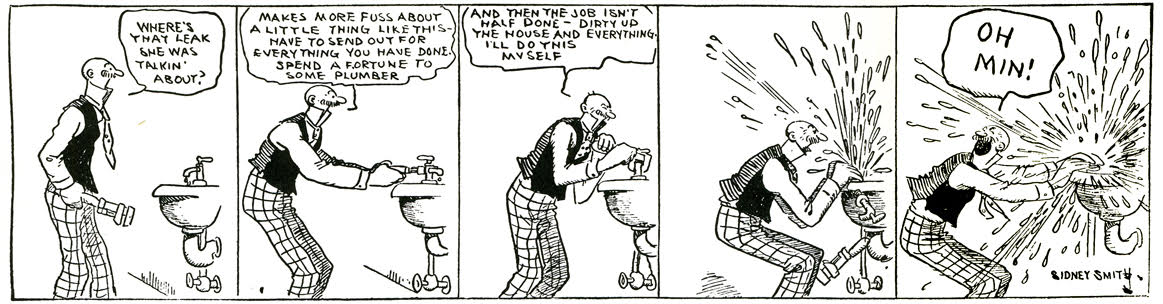
Andy Gump, in simpler times, from a 1920 strip featuring The Gumps, by Sidney Smith (via newspapers.com)

Sidney Smith, creator of The Gumps, is often credited as the originator of the comic strip melodrama. Unlike a daily, stand-alone gag, this serial approach kept readers waiting for the next installment. Smith was also the first cartoonist to kill off a regular character. His “Saga of Mary Gold,” which ran during 1928-29, ended with sweet Mary’s tragic death and prompted a flood of letters from readers demanding her resurrection.

Busying himself with charity work while being mixed up with spies, Andy Gump had “lost his touching and epic sympathy,” Parker wrote. On top of that, Little Orphan Annie had also gone soft, Annie helping a widowed neighbor with her housework rather than “fighting various gangs of desperadoes.”

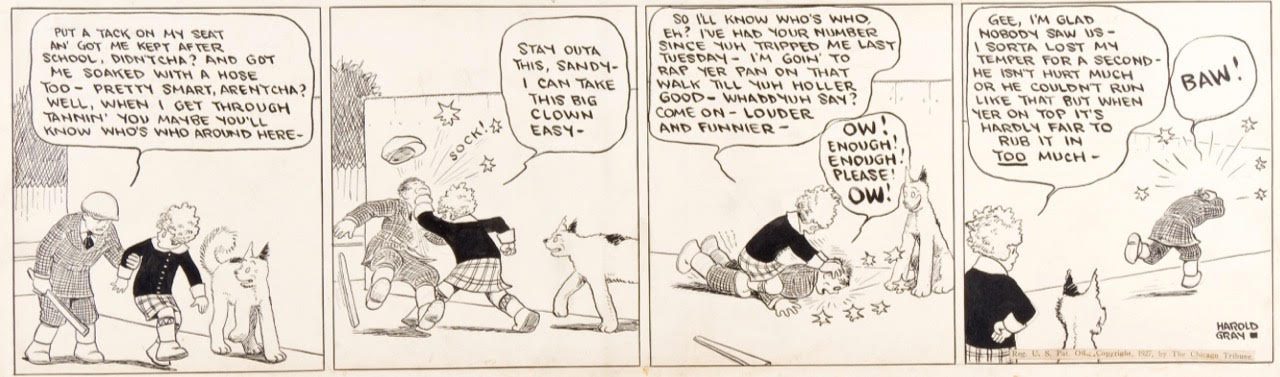
Not Your Broadway Annie…Before she went domestic, Harold Gray’s Little Orphan Annie could kick some butt, as she did in this 1927 strip

Over in Gasoline Alley, a gag strip that featured the simple life of guys and their cars, the strip’s creator, Frank King, was allowing his characters to age naturally. “That hurts, Parker wrote. “We ask our comic artists for bread, and they give us realism.” She lamented the strip’s “interminable” storyline, which at the time was mired in a custody battle in which “Unca Walt” (the strip’s patriarch) was desperately trying to adopt little Skeesix, who had been left on Walt’s doorstep in a 1921 strip. Parker feared that by the time the custody battle was settled, “Skeesix is going to be a kindly old gentleman with a flowing beard” (Skeesix, now 96, is still occasionally featured in the strip).

Parker concluded that the melodramatic comics “are unquestionably what the readers want,” and was “surely indicative of something…I cannot bear to analyze it. My great heart is broken for my people. What this country needs is more Bams and more Pows.” If Dorothy were still around today, she would find plenty of Bams and Pows at the Multiplex.

David Ochsner writes the blog, A New Yorker State of Mind, in which he chronicles his experiences reading every issue of the New Yorker magazine. He is currently mired in the fall of 1928.

Also by David Ochsner on Not Even Past:

Reading Every Issue of the New Yorker

You may also like:

Hearing the Roaring Twenties: The New Archive (No. 12)
The Civil War, as seen by the artists of Harper’s Weekly
Digital Teaching: Mapping Networks across Avant-Garde Magazines
Media and Politics From the Prague Spring Archive, by Ian Goodale

“Doing” History in the Modern U.S. Survey: Teaching with and Analyzing Academic Articles

Originally posted on Process History on September 5, 2017.

by Christopher Babits

Near the end of the spring semester, my department asked me to teach a summer session of U.S. History since 1865. I had a short time to think about what I’d teach and how I’d teach it. For me, it was important for students to “do” the work of historians. This meant more than reading primary sources, though. In addition to this, students would engage with “essential questions” that are key for understanding the United States’ recent past. Moreover, in lieu of assigning a traditional textbook, which might not fully align with these essential questions, I decided that my students would read, analyze, and critique articles from the Journal of American History.

My first preparatory task was to frame the course around the essential questions. I wanted to create questions around a broad range of potential student interests. I chose four topics: 1) America’s role in the world; 2) economics and labor; 3) women and gender; and 4) comparative civil rights. These topics covered some of the important themes of post-Civil War U.S. History.

The questions I crafted (see Figure #1: The Course’s Essential Questions) were beneficial on several levels. Initially, they helped me with one of the most daunting challenges of syllabus creation—picking and choosing content to cover. These essential questions narrowed what I would focus on; lectures and in-class activities would always have to answer (at least) one of these questions. On top of this, I used the four questions to pick articles from the Journal of American History. From a content standpoint, these articles would provide additional detail that my lectures and in-class activities might not be able to cover in depth.

Selecting academic articles for an introductory survey can be tricky. I had to think about whether students would have enough prior knowledge to truly engage with the secondary source. At the same time, I needed to be cognizant of whether the article covered a fair amount of time, which might then help students understand important historical concepts, like change over time and contingency. Moreover, if I could, I wanted the articles to be useful for answering more than one of the course’s essential questions.

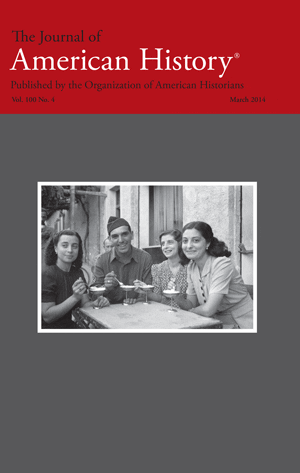
The Journal of American History, March 2014

I ultimately chose fifteen articles from the Journal of American History to help students answer the course’s four essential questions. (See Figure #2: Academic Articles for a complete list.) Erika Lee’s “Enforcing the Borders,” for example, helped students compare and contrast a wide-range of racialized lived experiences from the Chinese Exclusion Act through the 1924 Immigration Act. Her article complemented lecture material on and primary sources about the history of white supremacy. Julia Mickenberg’s “Suffragettes and Soviets,” on the other hand, highlighted the interconnections between domestic and global events. Mickenberg’s article proved useful for students interested in women’s and gender history as well as those fascinated by the events of the First World War. Jacquelyn Dowd Hall’s classic, “The Long Civil Rights Movement,” was one of my students’ favorite articles. Hall famously critiqued the “classical” phase of the Civil Rights Movements in her article. Yet, for the purposes of my course, Hall’s article also helped students better understand the history of African Americans, the intersection of race and gender, and racialized economics. Hall’s seminal article, then, could assist students with three of the course’s four essential questions.

Students who are used to reading textbooks, however, can find reading academic articles challenging. To have them gain the skills necessary to successfully engage with these academic articles, I devoted a fair amount of in-class time to reading, interpreting, and analyzing these sources. I viewed my role as an encouraging coach who kept his approach to the analysis of academic articles straightforward and accessible. For the first three articles assigned in the class, I had students (re)read the introduction and the conclusion with a partner or in small groups. I asked students to underline and annotate where the historian(s) articulated their argument. Sometimes this meant that students had to mark several parts of the introduction and conclusion, trying to make sense of complex arguments which had multiple supporting parts. At first, this was a tough task for students, consuming upwards of 20 minutes of a 75-minute class. However, as we spent more time on this skill, students slowly gained more confidence. I was able to go around the room to work with small groups of students, focusing them on specific parts of introductions and conclusions. After a couple sessions, I asked students to paraphrase arguments in their own words. Students’ confidence grew the more they worked with one part of “doing” history—understanding historical arguments. Over time, what had taken 20 or 25 minutes soon dwindled to 12 or 15.

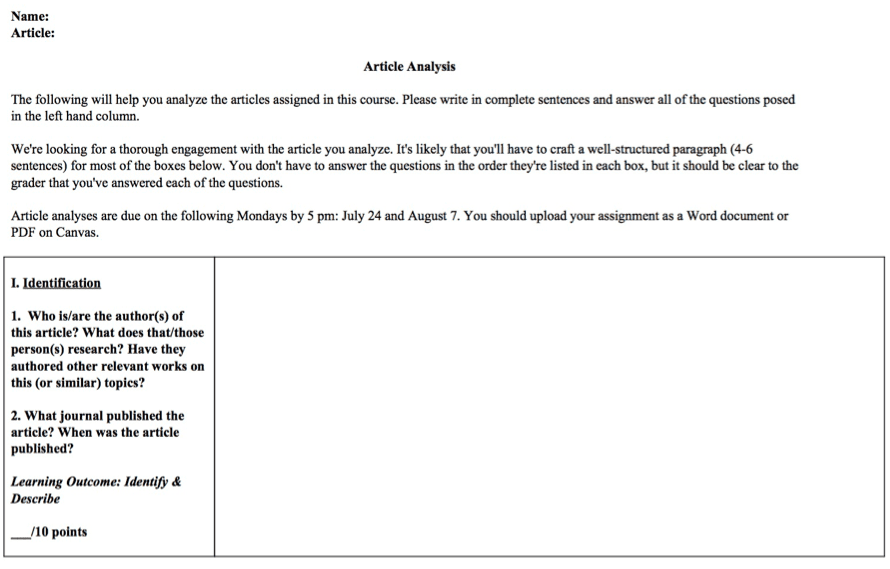
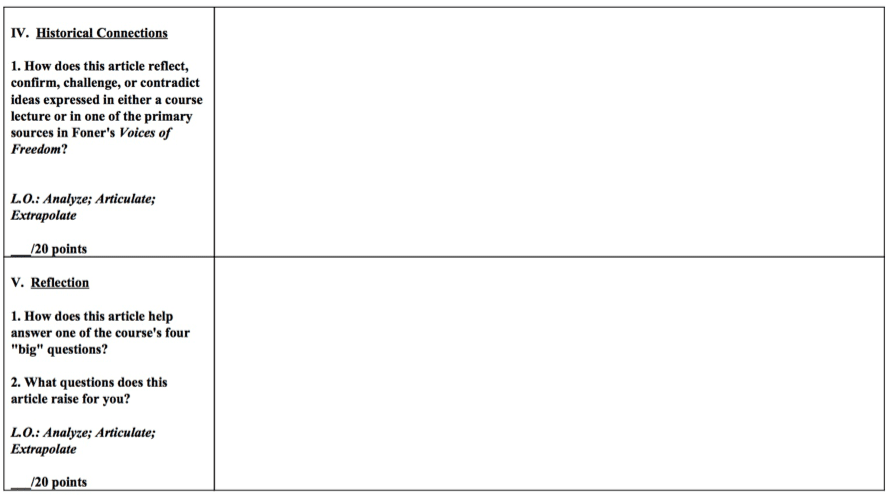
Students were required to write an analysis for two of the academic articles they read. To ensure further success, students were provided a fair amount of scaffolding on these assignments. To assist with article analyses, I created a reading grid that asked students to: research the historian/scholar; note and critique the sources used in the article; make historical connections to lectures and/or primary sources; and reflect on how the source could answer one of the course’s essential questions. I had detailed questions for each box of the reading grid, providing a fair amount of guidance for students to understand what they should be looking for when analyzing an article. Figure #3:The Reading Grid displays the course’s emphasis on scaffolding the analysis of academic articles.

By the end of the term, I could see that the focus on teaching with and analyzing academic articles worked on several levels. The most important, in my opinion, was how students improved from their first to their second article analysis. They had a much more nuanced understanding of historical argumentation in their second analyses. In addition, students wrote more critically about the historians’ source bases and felt more comfortable critiquing “master narratives” they had learned in high school. For those afraid of using academic articles in their surveys, I want to offer a simple reassurance: students never shied away from this hard work. My provisional course instructor survey scores indicate that students recognized article analyses as a core part of their learning. I already have a strong sense of which articles students enjoyed, but I hope my course instructor surveys include constructive criticism about the articles students viewed as least helpful for answering the course’s essential questions.

There were other outcomes to using academic articles. Many of the articles I selected emphasized U.S. History in a transnational perspective. As a result, students had to think about the United States as a place which influences—and is influenced by—others parts of the world. By carefully selecting articles, I also made it so I did not have to assign a traditional textbook. Lectures, primary sources, and the articles covered enough material for students to understand the American experience and to walk away with their own informed interpretation of the nation’s history.

As an educator now weeks removed from the course I taught, I see an even greater purpose to teaching with academic articles. As we navigate a period of deep political division, one that is fraught with fear for many, teaching with academic articles has the possibility to instill crucial civic skills in our students. By respectfully challenging those who came before them, each scholar I assigned demonstrated that disagreement is a core part of the democratic experience. Using academic articles instead of a textbook allowed my students to see that disagreement does not need to be hateful or vitriolic. Instead, it can be a productive way to move forward, pushing in the direction of the “more perfect Union” enshrined in the Constitution.

Figure 1: The Course’s Essential Questions

America’s role in the world Determine how the United States’ foreign policy changed and/or remained consistent from the Spanish-American War through the Cold War. How did the U.S. confront the challenges it faced around the globe? Are there core tenets (or beliefs) that have guided American foreign policy? If so, what are they? If not, how do foreign policy conflicts differ from each other?
Economics and labor Evaluate the ways the American economy has changed over the past 150 years. How did “big business” alter the landscape of U.S. industry? Why did Progressive Era and New Deal reformers pass the reforms they did? Have Americans found a way to balance economic growth and workers’ rights in the post-World War II period?
Women and gender Analyze the political and economic fight for women’s equality. To what extent has the role and status of women changed over the past 150 years? What have been landmark victories for women’s rights? Why have various political factions opposed women’s and feminist groups? Is there work left to be done?
Comparative civil rights The continued fight for equality has, in many ways, defined the American experience. Compare and contrast the struggle for civil rights that two of the following segments of the population experienced: 1) African Americans; 2) women; 3) Mexican Americans; 4) Asian Americans; and/or 5) LGBTQ individuals. Are there commonalities that you see in the political rhetoric and tactics of these two groups? How would you describe the unique challenges these segments of the population faced? What are the arguments, agendas, challenges, etc. that have made coalitions difficult to form, both within and between different rights movements?


Figure 2: Academic Articles

Author Article title Year of publication Essential question(s) answered
Erika Lee Enforcing the Borders: Chinese Exclusion along the U.S. Borders with Canada and Mexico, 1882-1924 2002 America’s role in the world & comparative civil rights
Richard White Information, Markets, and Corruption: Transcontinental Railroads in the Gilded Age 2003 Economics and labor
Jürgen Martschukat “The Art of Killing by Electricity”: The Sublime and the Electric Chair 2002 Economics and labor & comparative civil rights
Julia L. Mickenberg Suffragettes and Soviets: American Feminists and the Specter of Revolutionary Russia 2014 America’s role in the world; women and gender; & comparative civil rights
Lisa McGirr The Passion of Sacco and Vanzetti: A Global History 2007 America’s role in the world; economics and labor; & comparative civil rights
Julia C. Ott “The Free and Open People’s Market”: Political Ideology and Retail Brokerage at the New York Stock Exchange, 1913–1933 2009 Economics and labor
Rachel Louise Moran Consuming Relief: Food Stamps and the New Welfare of the New Deal 2011 Economics and labor & women and gender
James J. Weingartner Americans, Germans, and War Crimes: Converging Narratives from “the Good War” 2008 America’s role in the world & comparative civil rights
Thomas A. Guglielmo Fighting for Caucasian Rights: Mexicans, Mexican Americans, and the Transnational Struggle for Civil Rights in World War II Texas 2006 America’s role in the world; economics and labor; & comparative civil rights
Elaine Tyler May Security against Democracy: The Legacy of the Cold War at Home 2011 America’s role in the world; economics and labor; women and gender; & comparative civil rights
Nancy Bernkopf Tucker Taiwan Expendable? Nixon and Kissinger Go to China 2005 America’s role in the world & comparative civil rights
Jacquelyn Dowd Hall The Long Civil Rights Movement and the Political Uses of the Past 2005 Economics and labor; women and gender; & comparative civil rights
Michael B. Katz et al. The New African American Inequality 2005 Economics and labor & comparative civil rights
Kevin J. Mumford The Trouble with Gay Rights: Race and the Politics of Sexual Orientation in Philadelphia, 1969-1982 2011 Women and gender & comparative civil rights
Michael H. Hunt In the Wake of September 11: The Clash of What? 2002 America’s role in the world

Figure 3: The Reading Grid (PDF)

Also by Christopher Babits on Not Even Past:

Finding Hitler (in all the Wrong Places?)
The Rise of Liberal Religion by Matthew Hedstrom (2013)
Encountering America: Humanistic Psychology, Sixties Culture, and the Shaping of the Modern Self by Jessica Grogan (2012)
Another perspective on the Texas Textbook Controversy

You may also like:

A collection of articles by faculty and graduate students on teaching US survey courses
Teaching Assistants in the Department of History share stories on learning to teach
History Professor Jeremi Suri experiments with teaching US history survey courses digitally

Searching for Armenian Children in Turkey: Work Series on Migration, Exile, and Displacement

By Christopher Rose

Editor’s Note: To accompany this year’s Institute for Historical Studies theme and the theme of our film series Faces of Migration, Not Even Past will be showcasing a series of posts featuring graduate students working on topics related to migration, exile or displacement.

Nearly every historian can attest to the fact that working in the archives can lead you down unexpected paths that provide tantalizing, and often frustratingly abbreviated, glimpses into areas outside of their usual research. I had such an experience with a file that had the innocuous name “Near East Refugee Aid” one afternoon at the United Nations Archive in Geneva.

Near East Refugee Aid (NERA) was the name of a tiny League of Nations program that operated in the early- to mid-1920s. It consisted of only three agents—a director and secretary in Constantinople, and a female case worker based in Aleppo (now in Syria)—and operated on a tiny budget (none of its employees were paid). As I read through the documents in the file, I realized that NERA’s mission was far more specific than its name suggested: to seek out child survivors of the Armenian genocide.

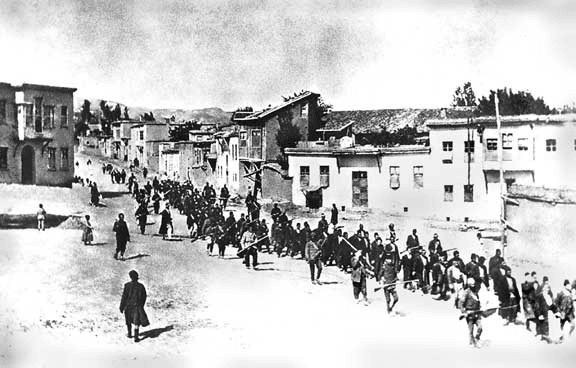
The genocide began with the purge of prominent Armenian intellectuals and political activists by the Ottoman government in the spring of 1915. In the months that followed, the majority of Armenians residing in Asia Minor were rounded up and sent on forced marches toward the city of Deir ez-Zor, located in the Syrian desert along the Euphrates River. The vast majority of deportees never arrived, having been shot or hanged, or starved or frozen to death. Those few who managed to survive the trek found that almost no arrangements had been made to provide housing or other supplies for them once they arrived in Syria.

Armenians are marched to a nearby prison in Mezireh by Ottoman soldiers, 1915 (via Wikimedia Commons)

Estimates of the number of victims vary wildly. The Armenians claim over 1.5 million dead. While most historians—including a number of Turkish academics—recognize the events of 1915 as genocidal, the Turkish government does not and offers a revised death toll of around 700,000 (not coincidentally equal in number to the estimated Turkish civilian casualties during the war).

The documents in the NERA file complicated the usual polarized narrative of Turkish barbarism and Armenian suffering, and made the already tragic story even more heartbreaking.

NERA’s agents were looking for the children of Armenians who had been taken in by Turkish families. In some cases, Armenian parents left infants and toddlers with Turkish neighbors, coworkers, and friends who offered to take them in as deportation orders were issued. Other children were given away en route—sometimes, tragically, even sold—as their starving parents foresaw their own fates and desperately sought any chance for their children to live.

NERA’s mission was to find these children and, in the language of the Christian missionaries who staffed the organization, “to rescue them from Islam.” NERA’s reports laid out a narrative of victimhood: the children had been stripped of their identities, given new names, raised as Turkish speaking Muslims, forced to suppress their Armenian identities.

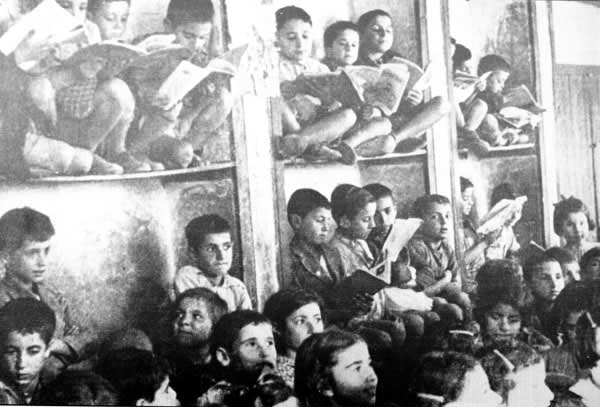
Armenian child refugees in cramped classrooms in Aleppo, 1915 (via Wikimedia Commons)

When NERA agents arrived in a town or village, some of the Turkish families came forward in hopes that their foster children might be reunited with their families, but others were quite reluctant to do so. It was unclear from the file what other methods NERA’s agents used to identify children suspected of being Armenian (neighborhood gossip appeared to be one source of information). Children would be summoned for an interview with a caseworker and an Armenian speaking volunteer. Since many of the children had been infants at the time and did not remember the Armenian language, more elaborate methods might be used. Children who could recognize traditional Armenian lullabies, for example, were assumed to be of Armenian origin. Once “recovered,” the children would be taken to a group home in Constantinople or Aleppo, until arrangements could be made to send them to relatives in Greece, France, or the United States.

While in some cases—usually those of children who were abandoned during the death marches—they had been treated as servants and never really considered part of the family, the opposite seemed to be true for those taken in by friends and coworkers in the child’s home town. However, NERA’s agents appeared to completely reject the idea the children might have formed a bond with the only family they had ever known. Some did not know they were not the natural born children of their Turkish parents. Tears and protestations of the Turkish parents at having the children taken away were usually dismissed as parlor tricks. In several cases police intervention was necessary to remove the children from their homes.

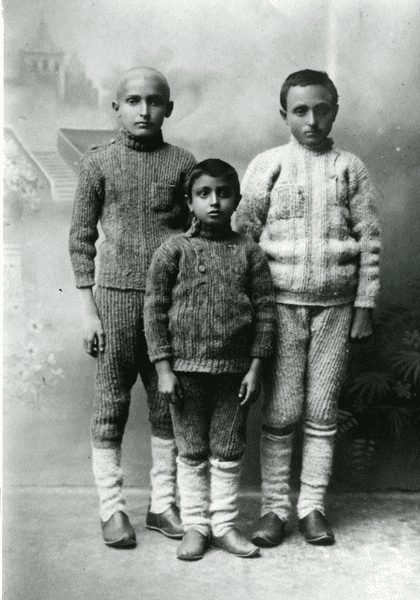
Armenian children in an orphanage in Merzifon, Turkey, 1918 (via Wikimedia Commons)

It was clear from the documents that the situation, which was represented by NERA as morally black and white, of rescuing Armenian children from “duplicitous” Turks, was far more complex in many cases. The traumatic effects on these children were clear from the file, although unrecognized at the time by the case workers on site. Some became violent and had to be restrained or sedated. A handful fled from the group homes and were eventually declared “lost.”

Frustratingly, the children’s stories contained in these files ended once they left Turkey. The file contained no information about what happened once they were reunited with relatives. Whether they fared well; if they kept in contact with their Turkish foster parents; or if any had eventually come back to Turkey to visit or live remains a mystery.

NERA’s work was short-lived, and came to an end toward the end of the 1920s, having successfully reclaimed just over one hundred children with relatives and, biases aside, provide a fascinating glimpse into the aftermath of the genocide. Several scholars (see note below) have begun working on the issue of Islamized Armenians living in Turkey after the genocide, and are contributing to a more nuanced analysis of what has become one of the most polarizing historical debates of the 20th century.

Related Reading:

A Question of Genocide: Armenians and Turks at the End of the Ottoman Empire. Ronald Grigor Suny, Fatma Muge Göçek, and Norman M. Naimark, eds. Oxford: University Press 2011.

The preface and introduction to this book contain a recap of the differing interpretations of the events of 1915, the suitability of the term “genocide” to describe them, and a survey of differing narratives and those who support them.

While, to my knowledge, there has been no scholarly study regarding NERA’s work specifically, a summary of major works regarding Islamized Armenians in Turkey after World War I can be found in Ayse Gül Altinay, “Gendered Silences, Gendered Memories: New Memory Work on Islamized Armenians in Turkey,” Eurozine (2014),  accessed September 16, 2017.

Of particular note:

Vahé Tachjian , “Gender, Nationalism, Exclusion: The Reintegration Process of Female Survivors of the Armenian Genocide,” Nations and Nationalism 15, 1 (2009): 60–80

Ayşeynur Korkamaz, “’Twenty-five Percent Armenian’: Oral History Accounts of the Descendants of Islamized Armenians in Turkey,” unpublished Master’s thesis, Central European University, 2015.

Also by Christopher Rose on Not Even Past:

Mapping & Microbes: The New Archive (No. 22)
Exploring the Silk Route
Review: The Ottoman Age of Exploration (2010) by Giancarlo Casale
What’s Missing from Argo (2012)

You may also like:

Kelly Douma reviews Justifying Genocide: Germany and the Armenians from Bismarck to Hitler (2016) by Stephan Ihrig
Andrew Straw on the Tatars of Crimea: Ethnic Cleansing and Why History Matters

Check out the schedule for our film series “Faces of Migration: Classic and Contemporary Films”
More on this year’s Institute for Historical Studies theme “Migration, Exile, and Displacement”


« Previous Page
Next Page »

Recent Posts

  • The Radical Spanish Empire Roundtable – Introduction
  • All Eyes on the Petition: Reflections on The Radical Spanish Empire
  • Forgery, Invention, and the History of Skepticism in The Radical Spanish Empire
  • Iberian Subaltern Political Philosophies and The Radical Spanish Empire
  • Lawfare and the Legal Construction of Race in The Radical Spanish Empire
NOT EVEN PAST is produced by

The Department of History

The University of Texas at Austin

We are supported by the College of Liberal Arts
And our Readers

Donate
Contact

All content © 2010-present NOT EVEN PAST and the authors, unless otherwise noted

Sign up to receive our MONTHLY NEWSLETTER

  • New
  • Features
  • Reviews
  • Texas
  • Teaching
  • Digital
  • Watch & Listen
  • Authors
  • About